
Why Is There Water in My Air Compressor: Causes, Risks, and Solutions for 2026
Wondering why is there water in my air compressor? Learn how condensation forms inside tanks, how to drain it, and the best ways to keep air lines dry in October 2026.
 By Clint DeBoer
Updated October 8, 2026
By Clint DeBoer
Updated October 8, 2026
Pneumatic tools demand clean, dry air to operate smoothly, but many workshop owners notice liquid spraying from quick-connect couplers during everyday tasks. Ambient air contains invisible moisture that undergoes an aggressive thermodynamic shift whenever an air compressor pump cycles. If you find yourself asking why is there water in my air compressor, the reality is that water condensation is a natural byproduct of compressing atmospheric air rather than an immediate mechanical defect. Understanding how this moisture develops helps prevent catastrophic tank rust and premature pneumatic tool failure.
Compressor pumps draw in large volumes of ambient humidity, rapidly increasing both air pressure and operating temperatures before pushing the charge into a receiver tank. As the compressed air cools against the metal tank walls, water vapor condenses into liquid pooling directly along the tank floor. Unchecked water buildup can wash away internal tool oil, ruin fresh automotive paint finishes, and accelerate pinhole tank leaks. Installing reliable filtration equipment and establishing regular draining habits ensures your compressed air system stays dry and dependable.
| Award | Product | ACR Score About ACR ScoreThe ACR Score is our own rating from 0 to 10, based on performance, design and build, ease of use, and value. It reflects independent research and is never influenced by manufacturers, retailers, or affiliate commissions. Learn more › | |
|---|---|---|---|
| Best Overall |
VEVOR 3/8 Inch NPT Air Compressor Filter Regulator
|
8.9/10 | Buy |
| Best Value |
 VEVOR 3/8" NPT Dual Stage Air Compressor Filter
|
8.1/10 | Buy |
VEVOR 3/8 Inch NPT Air Compressor Filter Regulator
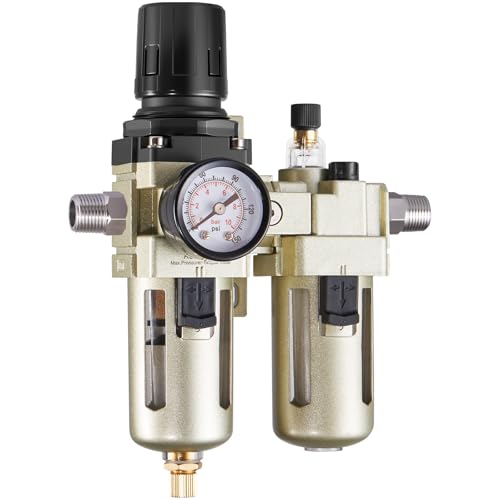
The VEVOR 3/8-inch NPT Filter Regulator Lubricator (FRL) combines a 5-micron brass water separator, adjustable pressure regulator, and micro-fog oiler rated up to 145 PSI. It provides clean, lubricated air for automotive mechanics and workshop woodworkers seeking to extend the service life of pneumatic tools.
Pros
- Compact 3-in-1 modular footprint cleans, regulates, and lubricates air in a single installation point
- Cleanable 5-micron brass filter element offers better durability than disposable paper filter media
- Semi-auto drain discharges condensation automatically when the compressor stops, helping prevent neglected bowl overflow
- Sturdy metal bowl cages protect the polycarbonate reservoir from bumps and accidental tool strikes
Cons
- Maximum 145 PSI operating limit is not rated for heavy-duty 175 PSI two-stage industrial compressor systems
- Inline oiler lubricates downstream hoses, requiring a separate dedicated line if you need dry air for spray painting or tire inflation
- Threaded 3/8-inch NPT ports require careful thread sealing with PTFE tape or paste to prevent slow joint leaks
VEVOR 3/8" NPT Dual Stage Air Compressor Filter
The VEVOR 3/8-inch NPT dual-stage filter regulator combines 25-micron and 5-micron brass elements with a semi-automatic drain to remove moisture and particulate from air lines up to 145 PSI. It provides dependable moisture separation and pressure control for garage hobbyists, woodworkers, and DIY mechanics.
Pros
- Two-stage 25-micron and 5-micron brass elements offer thorough particle and water separation
- Semi-automatic drain releases trapped condensation when the system depressurizes
- Polycarbonate bowls with metal protective guards allow quick visual inspection while resisting damage
- Standard 3/8-inch NPT threads integrate smoothly into common workshop air lines
Cons
- Maximum working pressure is limited to 145 PSI, so it is not suitable for 175 PSI two-stage systems without upstream regulation
- Polycarbonate bowls are vulnerable to damage from harsh chemical solvents or synthetic compressor lubricants
- Continuous air setups where pressure never drops require manual intervention to purge water from the drain
Understanding Tank Condensation and Moisture Control
Compressing air concentrates everything floating in your ambient shop environment, including microscopic moisture vapor, dust, and airborne debris. When you notice moisture spitting from an impact wrench or pooling beneath a drain valve, your compressor is merely responding to fundamental laws of physics. Managing this liquid requires understanding why condensation forms, how it harms pneumatic equipment, and what filtration setups effectively isolate moisture before it ruins your work.
The Thermodynamics of Compressed Air Condensation
Atmospheric air naturally holds water vapor, with warm air holding significantly more moisture than cool air. When an electric compressor pump draws in cubic feet of ambient air, it compresses that volume into a fraction of its original physical space. Compressing air generates intense friction and thermal energy, causing the air temperature inside the pump head to rise sharply. This heated air retains high moisture capacity while traveling through the discharge tube toward the storage reservoir.
Once hot compressed air enters the receiver tank, it encounters cooler ambient metal surfaces and begins shedding its thermal load. As the air temperature drops below its pressure dew point, the air can no longer support the suspended water vapor. The excess vapor instantly condenses into liquid droplets that cling to the tank walls and cascade to the bottom. A compressor operating in moderate humidity can easily produce several ounces of liquid water during a single afternoon of steady operation.
Environmental Factors That Accelerate Moisture Buildup
Relative humidity in your garage, basement, or jobsite plays a dominant role in total water accumulation. Compressors running in humid summer weather ingest substantially more water vapor per intake cycle than those operating in crisp, dry winter conditions. High humidity forces the pump to ingest saturated air, which leads to rapid water pooling in the tank receiver. Even high-efficiency pumps cannot prevent water intake because standard intake air filters only trap particulate matter, not gaseous water vapor.
Workplace ventilation and ambient temperature shifts also influence condensation rates within the compressed air system. Operating a compressor in a cramped, unventilated closet causes the pump to run hotter, which elevates the intake air temperature and moisture content. When that superheated air hits an uninsulated tank exposed to cooler floor temperatures, the temperature differential spikes. This sharp temperature drop accelerates condensation, filling the tank reservoir with moisture far quicker than normal shop baselines.
Risks of Ignoring Water in Receiver Tanks and Air Lines
Allowing liquid water to sit at the bottom of a steel receiver tank poses severe long-term safety and mechanical hazards. Water mixes with acidic atmospheric contaminants and warm air, creating an ideal environment for aggressive internal rust and pitting. Over time, internal oxidation weakens the structural steel walls from the inside out, potentially causing hazardous pinhole leaks or catastrophic tank integrity failures. Regular visual inspection of drained liquid often reveals orange-brown rust scale, which signals ongoing corrosion inside the vessel.
Beyond structural tank damage, downstream moisture wreaks havoc on sensitive pneumatic air tools and paint spray systems. Liquid water travels through flexible air hoses, stripping specialized pneumatic lubricants from nailer O-rings, air ratchets, and rotary sanders. This loss of lubrication leads to scoring on piston walls, internal rust on cylinder sleeves, and sluggish tool performance. In paint spraying or plasma cutting applications, tiny water droplets create fisheyes in basecoats or cause sputtering arcs that destroy expensive workpieces.
Receiver Tank Draining Procedures and Best Practices
Draining accumulated moisture from your receiver tank is the single most critical daily maintenance routine for any air compressor owner. Manufacturers universally recommend cracking the bottom drain valve open at the end of every work session or after every few hours of continuous operation. Leaving standing water trapped inside a pressurized tank overnight allows chemical oxidation to attack weld seams and lower tank contours. Purging the tank promptly ensures that accumulated moisture is ejected before it has time to trigger galvanic corrosion.
To drain the tank safely, reduce working pressure down to a manageable level between ten and twenty PSI using your line regulator or safety relief ring. Position a catch basin or disposable rag beneath the lower drain valve to capture messy rust-tinted water and oily sludge. Slowly twist the drain petcock or quarter-turn brass ball valve counterclockwise until the pressurized air forces the standing water out through the discharge port. Keep the valve open until the hissing air turns completely dry, then retighten the valve snugly to ensure an airtight seal for your next run.
Point-of-Use Water Separators and Filter Regulators
While daily tank draining removes bulk water from the receiver floor, it does not stop vapor-laden air from carrying suspended mist downstream into your hoses. Installing a dedicated point-of-use water separator and regulator combo downstream provides an essential defense against moisture traveling toward your tools. Units like the VEVOR Air Compressor Filter Regulator utilize standard 3/8-inch NPT connections to integrate smoothly into typical workshop air delivery setups. These devices intercept moisture droplets through centrifugal swirling and sintered filtering before air ever enters your work hose.
Multi-stage filtration brings distinct advantages when clean, dry air is non-negotiable for sensitive tasks like automotive painting or fine woodworking. The VEVOR Air Compressor Filter Regulator incorporates a dual-stage air-drying design featuring both twenty-five micron and five micron brass filter elements. The initial twenty-five micron element captures coarse liquid droplets and larger particulate debris, while the secondary five micron brass element traps fine mist and microscopic contaminants. Rated for up to 145 PSI maximum working pressure, this dual-stage system maintains stable line pressure while shielding air tools from moisture contamination.
Comparing Filter Regulator Lubricators Against Dedicated Dryers
Selecting the right air treatment unit depends heavily on the specific pneumatic equipment you plan to connect to your air supply. For general mechanical tools like impact wrenches, pneumatic ratchets, and framing nailers, a 3-in-1 combo offers comprehensive utility. The VEVOR Air Compressor Filter Regulator Lubricator integrates particulate filtration, precision pressure regulation, and inline oil lubrication into a single compact station. Its five micron brass filter element extracts water while the adjustable oiler continuously atomizes lubricant into the dry air stream to keep tool motors spinning freely.
Certain applications require completely dry air with zero added oil, which means lubrication ports must be excluded or strictly isolated. Spray guns, sandblasters, plasma torches, and tire inflation chucks cannot tolerate oil contamination in the air line. If you alternate between mechanical impact tools and paint sprayers, consider mounting a dry dual-stage filter regulator on one dedicated manifold branch and an oiled line on another. Both VEVOR units feature semi-auto drain mechanisms that automatically expel collected water when tank pressure drops, sparing users the hassle of constant manual bowl purging.
Workshop Air Delivery Plumbing and Drop-Leg Layouts
Connecting an air hose directly to a portable compressor tank often draws warm, moisture-heavy air straight into your pneumatic tools before the air has time to cool. Designing a permanent or semi-permanent hardline air distribution system gives warm compressed air distance to cool and drop out liquid before reaching your workbench. Running rigid copper, aluminum, or specialized compressed air piping along shop walls encourages heat exchange through the pipe walls. As the air drops in temperature over a twenty-foot run, suspended moisture condenses onto the pipe interior where it can be managed systematically.
Proper hardline layouts incorporate sloped overhead lines and vertical drop legs to collect liquid away from tool attachment points. Main overhead feeder lines should slope slightly backward toward the compressor reservoir or a central low-point drain leg. Each tool drop should emerge from the top of the main header using an upward loop, preventing liquid running along the pipe bottom from tumbling directly down into your drop hose. Adding a drain valve at the base of every vertical drop leg creates a reliable sediment pocket where trapped moisture gathers safely.
Troubleshooting Chronic Water Buildup and Line Contamination
When an air compressor discharges excessive amounts of liquid despite frequent tank draining, operating duty cycles and compressor sizing warrant close inspection. An undersized compressor forced to run continuously at a one-hundred percent duty cycle never has an opportunity to cool down. Continuous pump cycling produces scorching air temperatures, which keeps moisture suspended in vapor form until it cools inside your flexible rubber air hose. Ensuring your compressor pump matches your tool air consumption allows the pump to cycle off periodically, letting the air cool inside the receiver.
Regular inspection of transparent filter bowls and internal drain floats is also vital for preventing sudden water carryover into your tools. Polycarbonate filter bowls equipped with protective metal guards, like those on VEVOR filter regulators, allow quick visual checks of trapped fluid levels. If semi-auto drain ports become clogged with rust flakes or compressor oil residue, the reservoir bowl can overflow and send standing water directly down the line. Cleaning brass filter elements and wiping down collection bowls keeps semi-auto drainage mechanisms functioning smoothly under varying operating pressures.
Moisture in compressed air is an inescapable reality of physics, but it does not have to ruin your pneumatic tools or compromise your workshop projects. Pairing daily receiver tank purges with high-efficiency brass filtration components keeps water safely contained and away from expensive equipment. Investing in a solid multi-stage filter regulator or FRL unit provides dependable line pressure while systematically catching condensation before it exits the coupler. With proper drainage habits and smart inline filtration in place, your pneumatic system will deliver dry, consistent power for years of reliable service.
About the author
Clint DeBoer is an experienced tool-industry specialist with decades of involvement in technical media, hands-on product evaluation, and testing methodology. His focus on performance, practical usability, and data-driven comparisons makes his expertise highly relevant to professional air compressors, pneumatic tools, and workshop equipment.