
Can I Use Engine Oil in Air Compressor: Practical Guide for 2026
Wondering can i use engine oil in air compressor systems? Learn the mechanical risks, oil grades, and correct lubricants for October 2026.
 By Kenny Koehler
Updated October 8, 2026
By Kenny Koehler
Updated October 8, 2026

Workshop tasks can grind to an abrupt halt when an oil-lubricated air compressor pump runs low on fluid during heavy air tool operation. Reaching for a spare bottle of automotive 5W-30 or 10W-40 motor oil resting on a garage shelf feels like an effortless shortcut. Many equipment owners inevitably ask themselves: can i use engine oil in air compressor pumps without ruining the mechanical assembly? Pouring standard automotive motor oil into an industrial or home workshop pump crankcase often introduces serious mechanical hazards that can compromise your pump valves, cylinder walls, and overall operational safety.
Internal combustion engines and reciprocating compressor pumps operate under fundamentally different mechanical environments, thermal profiles, and filtration conditions. Engine oils contain specific detergent additive packages designed to hold combustion contaminants in suspension until reaching an automotive spin-on filter. Because most reciprocating compressor pumps lack internal oil filters and oil pumps, detergent additives keep suspended debris circulating directly through splash-lubricated bearings. Choosing proper non-detergent compressor lubricants prevents dangerous valve carbonization, minimizes emulsified moisture, and ensures reliable CFM delivery under demanding workshop duty cycles.
| Award | Product | ACR Score About ACR ScoreThe ACR Score is our own rating from 0 to 10, based on performance, design and build, ease of use, and value. It reflects independent research and is never influenced by manufacturers, retailers, or affiliate commissions. Learn more › | |
|---|---|---|---|
| Best Overall |
Triax Kompressor ISO 46 SAE 20 Full Synthetic Air
|
9.1/10 | Buy |
| Best Premium |
 Milton 1002 SAE 30W Compressor Oil, 1 Gallon
|
8.8/10 | Buy |
| Best Value |
 Campbell Hausfeld ST1253 Compressor Oil (16 oz)
|
8.6/10 | Buy |
 TSI Supercool 24940 Synthetic Hybrid A/C
|
8.6/10 | Buy | |
 TRIAX Kompressor ISO 68 Full Synthetic Air
|
8.6/10 | Buy | |
 Milton 1002-32 ISO-100 Compressor Oil, 32 oz
|
8.4/10 | Buy | |
 EMAX Smart Oil 1-Quart Synthetic Piston Compressor
|
8.3/10 | Buy | |
| Best Budget |
 MAG 1 Air Compressor Oil 16 oz
|
7.8/10 | Buy |
 Triax Kompressor ISO 100 SAE 30 Oil
|
7.8/10 | Buy |
Triax Kompressor ISO 46 SAE 20 Full Synthetic Air
Triax Kompressor ISO 46 SAE 20 is a commercial-grade, full synthetic non-detergent compressor oil engineered for oil-lubricated reciprocating, rotary screw, and vane pumps operating in temperatures from -49°F to over 140°F. It provides exceptional thermal protection and extended component life for garage mechanics and shop owners maintaining heavy-duty pneumatic systems.
Pros
- Extreme all-weather operating range from -49°F to 140°F+ prevents cold-start motor stalling and high-heat viscosity breakdown
- Non-detergent full synthetic formula protects internal bearings and provides up to 20,000 hours of service longevity
- Lowers operating pump temperatures by 30% and actively sheds condensation to prevent internal crankcase rust
- Compatible with oil-lubricated reciprocating, rotary screw, and rotary vane compressor pumps from major manufacturers
Cons
- Not suitable for oil-free or maintenance-free dual-piston compressor designs that do not use crankcase oil
- Explicitly prohibited for use in breathing air systems, oxygen compressors, or liquid natural gas (LNG) units
- Single-quart volume may require purchasing multiple bottles for larger stationary 60-gallon or 80-gallon shop pump crankcases
Milton 1002 SAE 30W Compressor Oil, 1 Gallon
Milton 1002 is a non-detergent ISO-100 SAE 30W conventional lubricant engineered specifically for reciprocating air compressors. The one-gallon capacity makes it a sensible option for regular workshop equipment upkeep.
Pros
- Non-detergent formula tailored for reciprocating compressors
- Standard ISO-100 SAE 30W viscosity rating
- Generous one-gallon volume covers multiple refills
Cons
- Conventional mineral formula instead of synthetic blend
- Heavy container can be awkward to pour directly
Campbell Hausfeld ST1253 Compressor Oil (16 oz)
Formulated for workshop and industrial setups, this 30-weight lubricant protects compressor pumps against rust, sludge, and component wear. The compact 16-ounce bottle makes routine top-offs and crankcase servicing straightforward.
Pros
- Formulated specifically for compressor pumps and motors
- 30-weight viscosity helps minimize component wear
- Inhibits rust, sludge, and internal corrosion
- Compact bottle enables controlled, mess-free pouring
Cons
- 16-ounce volume may require multiple bottles for large units
- Single 30-weight viscosity is not suitable for all models
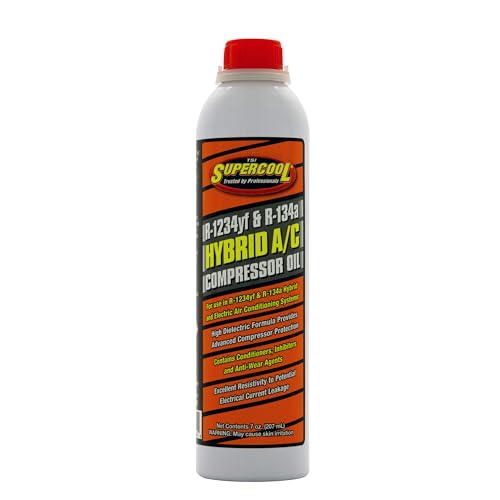
TSI Supercool 24940 Synthetic Hybrid A/C
TSI Supercool 24940 is a specialized synthetic lubricant engineered for electric hybrid air conditioning compressors, featuring high dielectric resistivity to prevent electrical leakage. It provides essential anti-wear protection for automotive mechanics and DIYers servicing high-voltage automotive A/C systems.
Pros
- Engineered with high dielectric resistivity to safeguard high-voltage vehicle electrical systems against current leakage
- Proprietary blend of conditioners, inhibitors, and anti-wear additives helps extend internal compressor life
- Durable aluminum can protects the synthetic fluid from contamination and moisture prior to installation
- Convenient 7 oz container size supports precise measuring for routine maintenance top-offs and system recharges
Cons
- Specialized formulation is intended strictly for hybrid electric A/C compressors, not for standard shop air tools or pneumatic compressors
- Injecting lubricant into sealed automotive A/C lines requires compatible manifold gauges or dedicated oil injector tools
- Total volume of 7 ounces may require multiple cans depending on the specific vehicle manufacturer oil capacity specification
TRIAX Kompressor ISO 68 Full Synthetic Air
TRIAX Kompressor ISO 68 is a commercial-grade, full synthetic compressor lubricant engineered for oil-lubricated reciprocating, rotary screw, and vane pumps operating between -49°F and 140°F+. It is an excellent maintenance solution for auto mechanics, shop owners, and contractors seeking lower pump operating temperatures and up to 20,000 hours of service life.
Pros
- Extended 20,000-hour service life minimizes routine maintenance intervals on high-demand shop compressors
- All-season stability from -49°F to 140°F+ prevents cold-morning motor drag and high-heat viscosity breakdown
- Non-detergent formulation separates condensation cleanly to safeguard internal crankcase bearings
- Broad compatibility across major reciprocating, rotary screw, and rotary vane compressor manufacturers
Cons
- Not suitable for maintenance-free oil-free compressor designs or oxygen and Liquid Natural Gas (LNG) systems
- One-gallon container size exceeds the immediate refill capacity of small single-stage DIY splash-lube pumps
Milton 1002-32 ISO-100 Compressor Oil, 32 oz
Formulated specifically for oil-lubricated reciprocating compressors, this ISO-100 non-detergent lubricant shields pumps against wear and deposit buildup. It separates easily from moisture and remains fluid down to -15°F for dependable cold-weather starts.
Pros
- Protects internal components against wear and corrosion
- Non-detergent formula resists foaming and separates water
- Inhibits sludge and carbon deposit formation
- Maintains fluidity in temperatures down to -15°F
Cons
- Designed strictly for reciprocating pump mechanisms
- Conventional oil base rather than full synthetic
EMAX Smart Oil 1-Quart Synthetic Piston Compressor
EMAX Smart Oil is a specialized 1-quart 30W synthetic lubricant engineered to reduce friction, lower operating temperatures, and extend reciprocating pump life up to 2X. It serves as an ideal maintenance fluid for auto mechanics, woodworkers, and contractors operating oil-lubricated piston air compressors after the initial break-in period.
Pros
- Engineered specifically to reduce friction and operating temperatures in reciprocating piston compressor pumps
- Manufacturer-rated to extend pump operational lifespan by up to 2X compared to standard petroleum oils
- Promotes quieter pump cycles and provides up to 15% energy efficiency savings under regular shop use
- Convenient 1-quart packaging matches standard crankcase fluid capacities for single oil change intervals
Cons
- Cannot be used as a break-in oil on new or recently overhauled compressor pumps
- Incompatible with oil-free or maintenance-free compressor architectures
- Carries a higher cost per quart compared to generic non-synthetic petroleum lubricants
MAG 1 Air Compressor Oil 16 oz
MAG 1 Air Compressor Oil is a specialized 16-ounce petroleum lubricant formulated with anti-foam agents and rust inhibitors to protect oil-lubricated compressor pumps under heavy operating conditions. It offers essential wear protection and thermal stability for home garage hobbyists, auto mechanics, and shop owners maintaining oil-lubricated pneumatic equipment.
Pros
- Formulated specifically for compressor pump crankcases rather than generic detergent automotive motor oils
- Anti-foam chemistry helps prevent oil foaming and maintains steady lubrication under rapid piston strokes
- Helps protect internal metal components against rust and oxidation caused by ambient moisture buildup
- Convenient 16-ounce bottle size fits easily into garage maintenance cabinets and tool chests
Cons
- Not suitable for maintenance-free oil-free air compressors
- A 16-ounce volume may require multiple bottles for larger stationary multi-stage shop compressors with high crankcase capacities
Triax Kompressor ISO 100 SAE 30 Oil
Formulated for demanding commercial applications, this full synthetic fluid delivers up to 20,000 service hours across an extreme -49°F to 140°F+ temperature range. It is well suited for operators seeking extended drain intervals and cooler operating temperatures across rotary, screw, or reciprocating systems.
Pros
- Exceptional 20,000-hour operational service life
- Performs reliably in sub-zero and high-heat climates
- Significantly lowers operating temperatures
- Broad compatibility across major compressor manufacturers
Cons
- Incompatible with oxygen air and LNG compressors
- One-quart container requires multiple purchases for larger reservoirs
Air Compressor Lubrication and Motor Oil Compatibility
Pouring automotive engine oil into an air compressor crankcase remains a frequent mistake among workshop owners and jobsite contractors. The direct answer to whether you can use standard automotive motor oil is an emphatic no. Standard motor oil is engineered specifically for internal combustion engines that feature pressurized oil pumps, spin-on oil filters, and active exhaust cycles. Reciprocating air compressor pumps operate under a completely different mechanical regime that demands non-detergent lubrication, rapid water separation, and exceptional resistance to high-temperature valve carbonization.
While straight-weight non-detergent automotive oil may serve as a desperate temporary stopgap in rare emergencies, modern multi-viscosity automotive oils should never enter your pump. Fluids formulated specifically for pneumatic pumps provide dedicated anti-wear protection and thermal stability tailored to high-pressure air compression. Understanding why automotive motor oil causes premature pump failure helps you select the right lubricant and avoid costly cylinder rebuilds.
The Chemical Difference Between Detergent and Non-Detergent Oils
Chemical detergents represent the foundational difference between automotive motor oil and dedicated air compressor lubricant. In an automobile engine, combustion blow-by introduces carbon soot, unburned fuel, and chemical byproducts directly into the crankcase oil supply. Detergent additives actively encapsulate these microscopic carbon particles and hold them in permanent suspension so they do not settle onto engine components. The engine oil pump then pushes this fluid through a paper filter element that traps suspended particulate matter before clean oil returns to the bearings.
Reciprocating compressor pumps, by contrast, rely almost universally on splash lubrication and completely lack oil filters or pressurized circulation pumps. When you pour detergent motor oil into a compressor crankcase, the detergents hold wear metals and ambient dust in continuous circulation across critical friction surfaces. Instead of dropping out of the fluid to rest harmlessly on the crankcase floor, abrasive contaminants repeatedly scour the connecting rod journals, wrist pins, and cylinder bore. Non-detergent oils allow heavy metallic debris and sediment to settle safely to the bottom of the sump where they cannot cause accelerated pump wear.
Industrial non-detergent fluids, such as Milton 1002 High Performance Conventional Air lubricant and Campbell Hausfeld ST1253 Air Compressor Oil, are specifically blended without detergent packages. These dedicated lubricants provide a calm settling environment within the pump crankcase, preserving critical clearances over thousands of operational hours. Using a detergent automotive oil defeats this fundamental mechanical design and subjects the pump to continuous abrasive friction.
Moisture Emulsification and Water Separation in Compressor Pumps
Every cubic foot of atmospheric air drawn into an air compressor contains ambient humidity that condenses during the compression cycle. As the pump compresses intake air, elevated pressures and temperature swings cause moisture to separate inside the cylinder and seep past the piston rings into the oil sump. Automotive motor oils contain emulsifiers designed to blend with water droplets to prevent free water from freezing or pooling inside a vehicle engine. In an automobile, operational temperatures routinely exceed 212 degrees Fahrenheit, which naturally boils off suspended moisture through the crankcase ventilation system.
Workshop air compressors frequently operate in short, intermittent cycles where the pump crankcase never reaches the sustained operating temperature needed to vaporize water. When automotive detergent oil emulsifies with compressor condensation, it forms a thick, milky, acidic sludge that coats internal components. This emulsified mixture destroys the lubricating film on the cylinder walls and accelerates rust formation on polished steel wrist pins and cast-iron crankshafts. Once sludge accumulates within the crankcase, oil passages become restricted and connecting rod splash dippers can no longer circulate fluid effectively.
Dedicated compressor lubricants possess superior demulsibility, meaning they actively separate from water rather than emulsifying with it. Products such as Milton 1002-32 High Performance Conventional Air compressor oil allow condensed water to separate cleanly and drop to the bottom of the crankcase sump. Because water remains isolated at the base of the sump, the lubricating oil floats on top and maintains pure metal-to-metal film strength across the piston rings and cylinder walls. Workshop technicians can easily drain accumulated water during routine oil changes without dealing with sticky emulsion sludge.
High-Temperature Valve Carbonization and Ignition Risks
Compression chambers generate intense localized thermal spikes, often exceeding 300 to 400 degrees Fahrenheit directly at the discharge reed valves. Automotive motor oils contain complex additive packages, including zinc compounds, friction modifiers, and viscosity index improvers that break down rapidly under these severe thermal conditions. When thin films of detergent motor oil splash onto hot discharge valve plates, the volatile compounds vaporize while the metallic additives bake into brittle carbon crusts. This hard carbon buildup prevents the thin steel reed valves from seating tightly against the valve plate.
Leaking discharge valves cause compressed, superheated air to wash backward into the compression cylinder during the intake stroke. This re-compression cycle creates an uncontrolled thermal runaway loop where cylinder temperatures escalate far beyond safe engineering limits. As temperatures spike, the baked carbon deposits on the valve assembly can begin to glow red hot like glowing charcoal embers. At the same time, the excessive heat breaks down the motor oil further, filling the discharge air stream with volatile aerosolized hydrocarbon vapors.
This combination of glowing carbon embers, atomized oil mist, and high-pressure oxygen creates a legitimate risk of internal crankcase fires or discharge line flash ignition. Dedicated compressor lubricants feature elevated flash points and low carbon-forming tendencies to prevent this dangerous failure mode. Formulations such as TRIAX Kompressor ISO 100 SAE 30, Full Synthetic oil are specifically engineered to resist thermal breakdown and eliminate carbon crusting on sensitive flapper valves. Keeping valve assemblies clean and cool ensures safe air containment and consistent CFM delivery.
Viscosity Ratings: ISO Grades versus SAE Engine Oil Weights
Navigating compressor oil viscosity can feel confusing because industrial lubricants use the ISO viscosity classification while automotive fluids use SAE engine oil grades. The International Organization for Standardization measures kinematic viscosity in centistokes at 40 degrees Celsius, whereas automotive motor oils are rated at 100 degrees Celsius. In general workshop terms, an ISO 46 compressor oil correlates roughly to an SAE 20 weight, ISO 68 matches a heavy SAE 20 or light SAE 30, and ISO 100 aligns with a standard SAE 30 weight.
Multi-viscosity automotive engine oils, such as 5W-30 or 10W-40, rely on long-chain polymer viscosity index improvers to flow like thin oil in cold weather while maintaining film thickness at operating heat. In the harsh mechanical shearing environment of an air compressor pump, reciprocating piston rings slice these delicate polymer molecules apart in a process known as mechanical shear. Within just a few dozen operating hours, a 10W-30 automotive motor oil can permanently thin down to an unstable 10-weight base fluid. This drastic viscosity drop starves connecting rod bearings of hydrodynamic lift and leads to catastrophic metal-to-metal galling.
Industrial compressor oils maintain straight, stable viscosity profiles that resist mechanical shear under continuous compression loads. Products like MAG 1 Air Compressor Oil use highly refined petroleum base stocks formulated to provide consistent viscosity without shearing down during demanding cycles. Choosing the exact ISO viscosity specified in your pump manual ensures that splash dippers generate the precise droplet dispersion required to lubricate cylinder walls without creating excessive drag on the electric motor.
Synthetic versus Conventional Air Compressor Oils
Selecting between conventional mineral compressor oils and advanced synthetic lubricants depends largely on your operating environment, equipment duty cycles, and workshop climate. Conventional mineral lubricants, such as Milton 1002 High Performance Conventional Air oil, provide dependable wear resistance and water separation for standard single-stage and two-stage reciprocating compressors. For hobbyist woodworkers and light garage maintenance, quality mineral oils offer cost-effective protection when changed at regular seasonal intervals. They provide adequate thermal resistance for intermittent duty cycles where pump heat remains moderate.
Heavy-duty commercial workshops, continuous paint spraying operations, and production framing crews benefit significantly from full synthetic formulations. High-performance synthetic lubricants, such as TRIAX Kompressor ISO 46 SAE 20, Full Synthetic and TRIAX Kompressor ISO 68, Full Synthetic, utilize synthetic hydrocarbon base stocks that resist oxidation over thousands of operational hours. Synthetic molecules feature uniform molecular chains that remain fluid during frigid sub-zero mornings while resisting thermal thinning during blistering summer afternoons. This broad thermal stability reduces mechanical friction, lowers pump operating temperatures, and delivers substantial energy savings by reducing motor startup drag.
However, synthetic compressor oils carry specific operational rules that equipment owners must observe. Products like EMAX Smart Oil, Piston Compressor Synthetic Oil are specifically engineered for piston compressors to extend pump longevity, yet manufacturer specifications note that synthetic oil cannot be used as an initial break-in oil. New cast-iron pump cylinders require standard petroleum oils during the initial run-in period so piston rings can properly seat against the cross-hatch hone of the cylinder walls. Transitioning to full synthetic only after completing proper break-in ensures optimal ring seating and maximum long-term compression efficiency.
Cold-Weather Performance and Incompatible Specialized Fluids
Cold ambient temperatures present severe operational hurdles for oil-lubricated air compressors located in unheated garages, mobile service trailers, and outdoor jobsites. When ambient temperatures drop toward freezing, high-viscosity mineral oils thicken significantly, creating immense fluid drag against the connecting rods and crankshaft. When the pressure switch signals the electric motor to start against high head pressure, the stiff oil creates massive startup resistance. This sudden surge in electrical inrush current frequently trips standard 15-amp or 20-amp household circuit breakers before the pump can even complete a single rotation.
Selecting the correct winter viscosity grade resolves cold-weather motor stalling and protects internal pump components from dry startup friction. In freezing conditions, switching from a heavy ISO 100 (SAE 30) oil down to an ISO 46 (SAE 20) fluid allows the pump to turn freely without overloading the motor start capacitor. Multi-viscosity synthetic oils maintain fluid pour points down into deep sub-zero conditions while maintaining high-temperature film strength when the pump reaches full operating heat.
Equally important is recognizing that not all products bearing compressor oil labels are suitable for workshop pneumatic systems. Automotive air conditioning systems utilize specialized refrigeration lubricants such as TSI Supercool 24940 Hybrid A/C Compressor Oil 7oz. This lubricant features high dielectric resistivity formulated specifically for hermetic electric hybrid vehicle air conditioning systems operating with high-voltage electrical circuits and chemical refrigerants. Pouring specialized A/C compressor oil into an industrial workshop air pump causes severe lubrication failure because refrigeration oils lack the extreme-pressure anti-wear chemistry and rust inhibitors required for atmospheric air compression.
How to Flush Contaminated Crankcases and Maintain Pump Health
If you or an associate accidentally added automotive engine oil to your air compressor crankcase, swift corrective action can prevent permanent internal damage. Immediately disconnect the compressor from its electrical power supply to eliminate the risk of accidental motor startup. Pull the ring on the ASME safety relief valve or open the tank drain valve to completely vent all pressurized air from the receiver tank before attempting any mechanical maintenance. Never loosen crankcase drain plugs or service fittings while the pump or air receiver remains under pressure.
Locate the crankcase drain plug at the base of the pump, position a clean drain pan beneath it, and remove the plug along with the crankcase breather cap. Allow the contaminated motor oil to drain completely, tipping portable compressors slightly if necessary to ensure all heavy sludge and sediment exit the sump. Inspect the drained fluid for metallic glitter or thick milky emulsion that might indicate pre-existing bearing damage or water contamination. Once the crankcase is fully drained, reinstall the drain plug securely using fresh thread sealant to prevent oil leaks on your garage floor.
Refill the crankcase with a fresh charge of certified non-detergent compressor oil, such as Milton 1002 High Performance Conventional Air lubricant, filling precisely to the center dot of the sight glass. Reconnect power and run the compressor unpressurized with the tank drain open for five minutes to allow the fresh oil to circulate and dissolve remaining detergent residue. Shut down the machine, depressurize, drain this sacrificial flush oil completely, and refill with fresh compressor lubricant. This double-drain flush procedure effectively purges harmful detergent chemistry, eliminates trapped carbon particles, and restores pristine lubrication dynamics to your pump.
Long-term pump maintenance also requires daily attention to tank moisture levels and regular oil sight glass checks. Make it an unbreakable workshop habit to inspect the oil sight glass before every work session, verifying that the fluid level sits squarely on the indicator mark. In addition, purge accumulated moisture from the bottom of your air tank every day after completing work using the tank drain valve. Pairing clean non-detergent compressor oil with disciplined condensation drainage guarantees optimal efficiency, preserves pneumatic tool internals, and ensures peak performance for all your shop projects.
About the author
Kenny Koehler is a power-tool specialist with more than a decade of hands-on evaluation experience and a science-based approach to product testing. His expertise in repeatable testing, tool performance, impact wrenches, and professional equipment brings a practical, data-focused perspective to compressor and pneumatic-tool comparisons.