
What Type of Air Compressor Is the Quietest: Practical Guide for 2026
Learn what type of air compressor is the quietest in October 2026, comparing motor speeds, dual-piston pumps, and quiet workshop designs.
 By Tony Carrick
Updated October 8, 2026
By Tony Carrick
Updated October 8, 2026
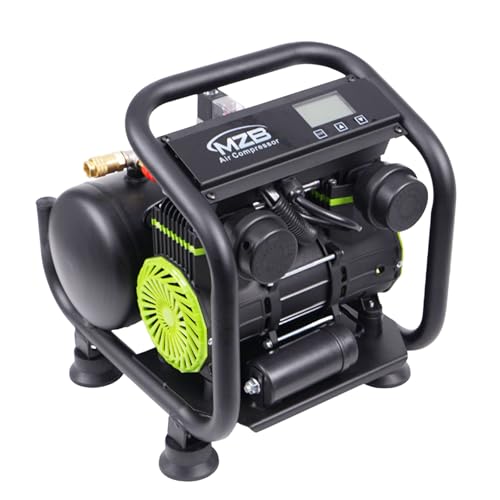
Operating a standard air compressor inside an enclosed garage or basement workshop can quickly create an unbearable auditory environment. Traditional jobsite compressors frequently generate sound levels exceeding 80 decibels, which drowns out conversation and creates severe ear fatigue within minutes. Woodworkers, DIY enthusiasts, and residential mechanics often struggle to maintain workable spaces while powering staple guns, brad nailers, and inflation tools. Understanding what type of air compressor is the quietest allows you to select a reliable machine that powers pneumatic tools without driving everyone out of the house.
A truly quiet pneumatic setup relies on specialized mechanical engineering rather than simple cosmetic sound dampening. Units designed with low-RPM electric motors, opposed dual-piston oil-free pumps, and specialized intake silencers operate at sound levels as low as 60 decibels. These refined pump designs deliver stable airflow for carpentry decoration, auto repair, and spray painting while operating at sound levels comparable to a normal conversation. Evaluating motor rotational speeds, tank recovery cycles, and electrical amp draw ensures you find a peaceful compressor that still fulfills your pneumatic workload.
| Award | Product | ACR Score About ACR ScoreThe ACR Score is our own rating from 0 to 10, based on performance, design and build, ease of use, and value. It reflects independent research and is never influenced by manufacturers, retailers, or affiliate commissions. Learn more › | |
|---|---|---|---|
| Best Overall |
MZB MZB-900H-6 1.6-Gallon Air Compressor
|
9.2/10 | Buy |
| Best Premium |
 California Air Tools 2010A 2-Gallon Compressor
|
9.1/10 | Buy |
 California Air Tools CAT-4610S Ultra-Quiet 1.0 HP
|
9.1/10 | Buy | |
| Best Budget |
 Ipflin 160 PSI Portable Tire Inflator and Air
|
8.9/10 | Buy |
| Best Value |
 MZB MZB-1100H-50 13.2-Gallon Air Compressor
|
8.8/10 | Buy |
 MZB MZB-900H-24 6.4-Gallon Air Compressor
|
8.6/10 | Buy | |
 AstroAI 160 PSI Cordless Tire Inflator
|
8.4/10 | Buy | |
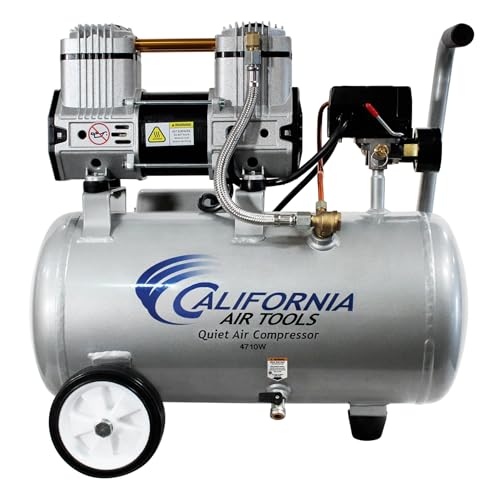 California Air Tools CAT-4710W 4.7-Gal Compressor
|
8.3/10 | Buy | |
 AstroAI Dual Power Portable Tire Inflator
|
8.1/10 | Buy | |
 VEVOR 10HP 3-Cylinder Air Compressor Pump Head
|
8.0/10 | Buy |
MZB MZB-900H-6 1.6-Gallon Air Compressor
Built for trim carpentry and light pneumatic tasks, this compact MZB unit pairs a 1.6-gallon steel tank with an oil-free pump. It produces up to 115 PSI while keeping operating sound around 70 decibels.
Pros
- Low-maintenance oil-free pump design
- Moderate 70 dB operating sound level
- Compact footprint is convenient to transport
- Sturdy steel air tank construction
Cons
- Small 1.6-gallon capacity limits continuous air tool runtimes
- Modest maximum output pressure of 115 PSI
California Air Tools 2010A 2-Gallon Compressor
Operating at just 60 decibels, this compact unit delivers reliable airflow with minimal noise disruption. Its rust-free aluminum tank and oil-free dual-piston pump make it well suited for indoor trim work and noise-sensitive spaces.
Pros
- Exceptionally quiet operation at only 60 decibels
- Lightweight rust-free aluminum tank design
- Low-maintenance oil-free dual-piston system
- Quick 14-second recovery time between cycles
Cons
- Modest 2-gallon tank limits continuous heavy tool use
- 120 PSI maximum pressure is below heavy-duty standards
- Air output is insufficient for sustained high-demand air tools
California Air Tools CAT-4610S Ultra-Quiet 1.0 HP
The California Air Tools CAT-4610S delivers a remarkably quiet 60 dB sound profile with 2.20 CFM at 90 PSI from an oil-free dual-piston pump and a 4.6-gallon steel twin tank. Drawing only 8.5 amps, it is an excellent pneumatic choice for trim carpenters, woodworkers, and garage hobbyists working in noise-sensitive spaces.
Pros
- Ultra-quiet 60 dB sound level allows normal conversation while the pump runs
- Low 8.5-amp electrical draw prevents nuisance circuit breaker trips on 110V household lines
- Oil-free dual-piston pump requires no crankcase oil changes and boasts a 3000-plus hour life cycle
- Durable 4.6-gallon steel twin-tank configuration delivers steady air storage for sequential fastening
Cons
- Rated 2.20 CFM @ 90 PSI is insufficient for continuous-demand pneumatic tools like sanders or paint sprayers
- Weighs 56.2 pounds without transport wheels, requiring a solid two-handed carry between work areas
Ipflin 160 PSI Portable Tire Inflator and Air
The Ipflin portable air compressor provides up to 160 PSI and 30 L/min airflow with a built-in 9600mAh battery and 12V DC vehicle backup. It is an ideal emergency inflator for motorists, garage DIYers, and cyclists who need quick tire pressure adjustments without hauling a heavy air tank.
Pros
- True dual-power flexibility allows cordless battery operation or direct 12V DC automotive corded power during roadside emergencies
- High 160 PSI maximum pressure rating handles high-pressure bike tires, trailer tires, and passenger vehicle inflation
- Automatic shutoff system prevents over-inflation by stopping airflow as soon as the preset pressure target is reached
- Built-in 9600mAh battery eliminates the need for separate external power tool batteries or standalone chargers
Cons
- High-pressure tire inflator design is strictly intended for inflation and cannot operate pneumatic tools like brad nailers or air ratchets
- Cordless lithium-ion battery requires periodic top-off charging during storage to maintain emergency readiness
- Continuous inflation runtime is capped at 30 minutes before requiring a short cool-down period
MZB MZB-1100H-50 13.2-Gallon Air Compressor
Designed for indoor workshops and residential garages, this compressor keeps operating noise down to a manageable 70 decibels. Its 13.2-gallon steel tank and wheeled frame suit DIY woodworkers, painters, and mechanics needing reliable airflow without regular pump maintenance.
Pros
- Quiet 70dB sound level ideal for indoor spaces
- Maintenance-free oil-free pump design
- Large 13.2-gallon durable steel tank
- Wheels and handle make transport manageable
Cons
- Hefty 72-pound weight makes vehicle loading difficult
- 115 PSI maximum pressure is modest for heavy-duty pneumatic tools
MZB MZB-900H-24 6.4-Gallon Air Compressor
Delivering 5.65 CFM at 115 psi, this 1.2 HP oil-free unit rapidly pressurizes its 6.4-gallon tank in about one minute while maintaining a low 70-decibel noise output. It serves well for home garages and workshops handling nail guns, air tools, and light painting.
Pros
- Quiet 70 dB operating volume
- Fast tank recovery under 65 seconds
- Generous 5.65 CFM output at 115 psi
- Low-maintenance oil-free motor design
- Integrated wheels assist mobility
Cons
- Steel construction adds significant carrying weight
- Tank capacity limits continuous heavy spraying sessions
- Corded operation requires standard electrical outlet
AstroAI 160 PSI Cordless Tire Inflator
Delivering up to 160 PSI with both a 20V battery and a 12V car adapter, this handheld compressor provides versatile roadside and garage tire maintenance. Its auto shut-off feature and integrated LED light make pressure adjustments straightforward in any condition.
Pros
- Dual power options via 20V battery and 12V adapter
- Automatic shut-off stops inflation at preset targets
- Durable metal cylinder supports 20 minutes continuous use
- Built-in LED light improves visibility in the dark
- Includes storage bag and multiple valve adapters
Cons
- Relatively heavy for a handheld unit at 4.14 pounds
- Continuous runtime capped at twenty minutes
- Battery capacity limited to four tires per full charge
California Air Tools CAT-4710W 4.7-Gal Compressor
Built for garage workshops and DIY tasks, this mobile unit features an oil-free dual-piston pump that fills its 4.7-gallon steel tank in 78 seconds. Its low 7.5-amp motor draw ensures smooth startups on standard household circuits without tripping breakers.
Pros
- Fast 78-second tank fill time from empty
- Low 7.5-amp draw prevents tripped breakers
- Low-maintenance oil-free pump operation
- Wheels and pull handle ease transport at 35 pounds
Cons
- Delivers only 2.2 CFM at 90 PSI for demanding tools
- Steel tank construction is heavier than aluminum alternatives
AstroAI Dual Power Portable Tire Inflator
Designed for both home garages and roadside needs, this inflator operates on 120V AC and 12V DC power. It offers dual pressure modes with automatic shut-off, making it a dependable choice for standard vehicles and household inflatables.
Pros
- Runs on both home outlets and car sockets
- Dual modes handle tires and high-volume inflatables
- Accurate digital preset with automatic shut-off
- Lightweight and compact 2.6-pound design
- Built-in LED light aids emergency roadside repairs
Cons
- Not suitable for heavy-duty truck tires
- Continuous runtime capped at 15 minutes
VEVOR 10HP 3-Cylinder Air Compressor Pump Head
Built for demanding pneumatic applications, this heavy-duty cast-iron pump head delivers 17.5 CFM at 90 PSI with a two-stage compression system. It serves as a solid replacement unit for workshops and auto repair facilities running high-pressure air tools.
Pros
- High 185 PSI maximum working pressure
- Rugged cast-iron construction resists wear
- Strong 17.5 CFM airflow output at 90 PSI
- Integrated sight glass simplifies oil level monitoring
Cons
- Drive motor is not included
- Heavy unit weighing over 72 pounds
- Requires precise pulley alignment to reduce vibration
The Mechanics of Low-Noise Air Compressors: Types, Decibels, and Performance
Locating a compressor that provides reliable air pressure without producing deafening noise requires understanding how different pump mechanisms generate and suppress sound. Standard workshop compressors have long carried a reputation for obnoxious rattling and screeching, primarily due to cost-effective motor choices and direct-drive configurations. Modern engineering has introduced specialized low-noise compressors specifically tailored for noise-sensitive environments like home garages, residential basements, and occupied living spaces. Examining pump architecture, motor rotational speed, and acoustic ratings will reveal precisely why certain designs run significantly quieter than others.
The Direct Answer: Low-RPM Dual-Piston Oil-Free Compressors
Low-RPM dual-piston oil-free air compressors represent the quietest type of compressor readily available for consumer, DIY, and light commercial use. These specialized machines operate at sound levels between 60 and 70 decibels, which allows users to carry on a normal conversation right next to the running unit. Manufacturers achieve this remarkable noise reduction by utilizing electric motors that turn at approximately 1,680 revolutions per minute rather than the standard 3,400 RPM found in conventional equipment. The dual-piston setup balances mechanical forces by utilizing opposed cylinders, drastically reducing vibration while displacing air efficiently.
While industrial rotary screw compressors also deliver exceptionally quiet performance, their high physical footprint and heavy power requirements make them impractical for residential garages or portable jobsites. For general woodworking studios, auto repair tasks, and home workshops, the low-RPM electric dual-piston configuration remains the undisputed standard for quiet operation. Brands like California Air Tools have demonstrated that operating at 60 dBA provides ample air delivery for trim nailers and tire inflation without disturbing nearby family members or neighbors. Investing in this specific architecture eliminates the jarring acoustic shock that usually accompanies compressor motor cycling.
How Motor Rotational Speed Dictates Compressor Volume
Motor rotational speed serves as the primary mechanical factor that dictates the overall sound volume of an air compressor. Standard pancake and hot dog compressors commonly employ universal electric motors that spin at speeds between 3,000 and 3,600 RPM to maximize air output from a small cylinder. These high rotational speeds force the internal piston to strike the cylinder walls thousands of times per minute, generating sharp mechanical clatter. Furthermore, the cooling fan blades attached to these high-speed shafts whip violently through the air, producing a distinctive high-pitched whine that pierces through walls.
Low-noise air compressors address this mechanical problem by utilizing slow-turning induction motors operating around 1,400 to 1,750 RPM. By cutting the motor speed roughly in half, the frequency of piston strikes and air intake pulses decreases dramatically. The attached cooling fans also spin at moderate speeds, moving adequate air across thermal fins without generating turbulent aerodynamic screeching. Although a lower motor speed requires dual cylinders to achieve acceptable air delivery rates, the resulting acoustic signature is a deep, muffled hum rather than an abrasive roar.
Decibel Ratings Decoded: The Reality of the Logarithmic Scale
Understanding decibel ratings requires recognizing that sound pressure levels follow a logarithmic scale rather than a standard linear progression. An increase of 10 decibels represents a ten-fold increase in acoustic sound energy and sounds approximately twice as loud to human ears. A conventional pancake compressor rated at 80 dBA is not just twenty percent louder than an ultra-quiet unit rated at 60 dBA; it is perceived as roughly four times louder. This massive perceptual difference explains why an 85 dBA compressor feels unbearable in an enclosed garage, while a 60 dBA unit sounds like quiet background chatter.
Sound ratings provided by manufacturers generally reflect operating volume measured under full compression load at a standardized distance of three feet. Units operating at 60 dBA, such as the California Air Tools 2010A and CAT-4610S, allow operators to speak comfortably without raising their voices. Moderate units operating around 70 dBA, including the MZB 6.4 gallon and 13.2 gallon models, generate volume comparable to an indoor vacuum cleaner. Once a compressor pushes past 78 dBA, sustained exposure can cause ear fatigue, making hearing protection mandatory according to occupational safety guidelines.
Compressor Pump Types Compared by Noise Output
Compressor pump designs vary substantially across the pneumatic industry, and each mechanical category exhibits a distinct acoustic footprint. Low-RPM dual-piston oil-free pumps stand at the very top of the quiet spectrum for residential and contractor use. These pumps utilize precision-machined cylinders fitted with durable composite piston rings, operating smoothly without oil lubrication while keeping operational noise between 60 and 65 dBA. They provide an ideal compromise of low carry weight, zero pump maintenance, and quiet performance for finish carpenters working indoors.
Belt-driven oil-lubricated cast-iron piston pumps represent another category capable of respectable sound management, especially in stationary shop configurations. In these systems, a heavy electric motor connects to a large cast-iron pump head via rubber drive belts, similar to the VEVOR 10HP dual-stage replacement pump architecture. The rubber belts absorb motor vibration, while the heavy cast-iron cylinders dampen internal acoustic resonance. Operating speeds on belt-driven pumps often remain around 1,000 to 1,500 RPM, producing a steady mechanical chug that sounds far less grating than direct-drive universal motors, though overall decibel levels typically sit between 72 and 78 dBA.
Direct-drive single-piston oil-free compressors occupy the loudest end of the spectrum, frequently registering between 80 and 90 dBA. These economical units connect a high-speed universal motor shaft directly to a single compression piston. The absence of drive belt isolation, combined with plastic motor shrouds that act as acoustic amplifiers, creates an aggressive clatter during operation. While these compressors offer lightweight portability and affordable entry points for occasional DIY framing, their intense sound makes them frustrating to use in enclosed workshops.
Portable 12V DC and cordless battery-powered tire inflators utilize miniature motorized piston mechanisms that produce their own acoustic profile. Models such as the AstroAI cordless and dual-power inflators operate with high-speed internal gears and compact metal cylinders. While their smaller displacement prevents them from shaking an entire garage floor, their compact housings emit a focused mechanical buzz that can range from 70 to 78 dBA up close. These specialized tools prioritize emergency vehicle readiness and roadside convenience over sound dampening, making their operational noise acceptable for brief tire top-offs.
Mechanical Noise-Dampening Features and Acoustic Engineering
Acoustic isolation in quiet compressors depends heavily on specialized intake silencer systems. Every time an air compressor draws atmospheric air into its cylinders, the rapid opening and closing of internal intake valves creates a rapid acoustic thump. High-performance quiet compressors incorporate large intake mufflers packed with thickened filter cotton and internal baffles. These dual silencers disrupt turbulent sound waves before they escape into the room, filtering out fine dust particles while muting the rhythmic intake pop.
Dual-cylinder mechanical balance also plays a crucial role in eliminating unwanted vibration before it reaches the floor. When two opposing pistons share a central crankshaft, their physical movements counterbalance each other dynamically. This balanced stroke minimizes harmonic vibration, preventing the compressor pump from shaking violently on top of its steel air reservoir. In contrast, single-cylinder pumps deliver uneven mechanical pulses that rattle throughout the chassis and turn the metal storage tank into a sounding board.
Structural dampening components complete the sound mitigation package on modern quiet compressors. Manufacturers utilize thick rubber vibration-isolation feet beneath the tank legs to decouple the vibrating metal from hard concrete workshop floors. Heavy-duty rubber mounting bushings are also placed directly between the electric motor frame and the tank mounting bracket. These rubber barriers absorb structural resonance, ensuring that motor vibrations dissipate harmlessly instead of radiating through the surrounding room.
Air Delivery Trade-offs: Balancing CFM Output Against Low Decibels
Evaluating a quiet compressor requires looking closely at cubic feet per minute (CFM) air delivery under actual working pressure. Reducing pump rotational speed naturally reduces the volume of air compressed per minute unless cylinder size or dual-piston displacement increases proportionally. Consumer quiet compressors typically feature a 1.0 horsepower motor that delivers approximately 3.10 CFM at 40 PSI and 2.20 CFM at 90 PSI. This flow rate provides excellent performance for brad nailers, staple guns, and tire inflation, but it requires careful planning when running air-hungry continuous tools.
Continuous pneumatic tools such as dual-action orbital sanders, high-torque impact wrenches, and HVLP spray guns demand sustained air volume ranging from 5 to 15 CFM at 90 PSI. Running continuous tools on a small 1.0 HP quiet compressor will quickly drain the air reservoir, causing line pressure to drop and forcing the pump to run without stopping. When continuous air delivery is required, users must pair low-noise technology with larger tank capacities, such as 6.4 gallon or 13.2 gallon reservoirs. A larger tank provides a pressurized buffer that supports intermittent high-draw bursts while allowing the quiet pump to recover at its natural pace.
Tank fill times and recovery cycles reflect how efficiently a quiet pump replenishes its stored air volume. For example, the California Air Tools 2010A fills its 2.0 gallon aluminum tank from zero to 120 PSI in roughly 50 seconds and recovers from 90 to 120 PSI in just 14 seconds. Larger steel tanks take proportionally longer to reach full pressure, with 4.7 gallon reservoirs requiring around 78 seconds from empty. Knowing these recovery benchmarks helps operators pace their work without experiencing sudden pressure loss during critical spraying or fastening sequences.
Electrical Circuit Compatibility and Low Amp Draw Benefits
Electrical circuit demands represent a major advantage of low-RPM quiet air compressors over traditional high-speed units. High-RPM universal motors create a massive electrical inrush spike when starting against trapped head pressure, frequently tripping standard 15-amp household circuit breakers. In contrast, low-RPM induction motors operate with remarkably low electrical draw, pulling between 7.5 and 8.5 running amps on standard 110V or 120V household outlets. This gentle electrical load allows operators to plug into regular garage circuits without worrying about flickering lights or tripped breakers.
Low electrical draw also improves cold-weather starting reliability, an area where high-speed compressors often struggle. Thickened grease or cold cylinder seals create extra rotational resistance that causes high-draw motors to stall and trip thermal overloads during sub-freezing starts. Induction motors paired with dual-piston oil-free pumps face less internal friction, enabling smooth startups across varying ambient temperatures. Verifying that your compressor pulls under 10 amps ensures compatibility with common extension leads or temporary power boxes on remote work sites.
Practical Workshop Applications and Tool Compatibility
Quiet compressors excel in trade applications where excessive noise harms productivity or customer relations. Trim carpenters, cabinet installers, and flooring specialists rely on ultra-quiet 60 dBA units when working inside occupied homes or commercial offices. The low sound profile allows tradespeople to fire finish nailers and brad guns without disturbing clients or requiring bulky hearing protection. The lightweight design of compact 2.0 gallon models, weighing around 35 pounds, makes carrying equipment up staircases and across finished floors effortless.
Residential garages and hobby workshops benefit equally from low-noise pneumatic equipment. Auto repair enthusiasts can power tire inflators, blow guns, and electrical automatic screwdrivers without waking sleeping household members late at night. Woodworking studios utilize 6.4 gallon to 13.2 gallon quiet compressors for spray painting and carpentry decoration, relying on dual intake silencers to maintain a clean and peaceful workspace. Matching the tank size to your specific pneumatic tools ensures consistent working pressure across both short fastener cycles and extended painting sessions.
Essential Maintenance to Preserve Quiet Operation
Maintaining a quiet compressor requires routine inspection to prevent mechanical wear from gradually increasing operating volume. Air intake silencers must be checked regularly, as clogged filter cotton restricts airflow, forcing the electric motor to work harder and generate extra heat. Operators should also inspect pneumatic fittings, quick-connect couplers, and pressure regulator knobs for minor leaks that force the motor to cycle more frequently. Depressurizing the tank completely before tightening fittings or inspecting valves ensures user safety and maintains tight airtight seals throughout the system.
Moisture management remains vital for protecting internal tank integrity and preventing structural resonance from changing over time. Compressing air naturally condenses atmospheric humidity inside the steel or aluminum storage reservoir. Operators should open the tank drain valve at the bottom of the vessel after every work session to purge accumulated water. Leaving condensation inside can cause internal corrosion, reducing storage volume and potentially damaging air tools with rust-laden moisture. Establishing a strict daily drainage routine preserves the compressor tank and keeps the machine running at its original factory sound rating for thousands of operating hours.
Selecting the Right Low-Noise Machine for Your Space
Choosing the quietest air compressor ultimately involves matching sound ratings, tank reserves, and mobility to your daily workshop demands. If ultimate silence and interior portability matter most, a 60 dBA dual-piston oil-free compressor with an aluminum tank provides the smoothest indoor experience. If your tasks include continuous spray finishing or automotive repair that requires higher airflow, a 70 dBA model with a larger 6.4 to 13.2 gallon steel tank balances sound suppression with substantial air storage. Prioritizing low motor RPM, dual-piston balance, and quality silencers guarantees that your pneumatic tools deliver exceptional power without sacrificing peaceful working conditions.
About the author
Tony Carrick is an experienced product researcher and writer specializing in tools, home improvement, automotive maintenance, and consumer equipment. With extensive experience reviewing tools and tackling hands-on renovation projects, he brings a buyer-focused perspective to compressor performance, usability, and overall value.