
How to Remove Water From Air Compressor: Practical Guide for 2026
Learn how to remove water from air compressor tanks and air lines effectively in October 2026 to prevent line rust and preserve pneumatic tools.
 By Kenny Koehler
Updated October 8, 2026
By Kenny Koehler
Updated October 8, 2026

Moisture accumulation inside compressed air lines causes rust in pneumatic tools, ruins spray paint finishes, and corrodes air tanks from the inside out. When ambient air is drawn into the pump cylinder and compressed, water vapor condenses rapidly into liquid runoff that settles at the base of the storage vessel or travels straight into downstream air hoses. Understanding how to remove water from air compressor systems is essential for protecting expensive air tools, preventing pressure drop, and maintaining clean, dry air delivery for demanding shop jobs.
Daily manual tank draining combined with inline filtration creates a dependable defense against moisture carryover and internal tank corrosion. Whether you run continuous tools like paint sprayers and plasma cutters or intermittent finish nailers, managing moisture requires a mix of proper tank maintenance and downstream filtration hardware. From simple brass drain valves to multi-stage coalescing filters and desiccant drying beads, setting up an effective moisture control system keeps your air lines dry and your pneumatic tools running reliably across every project.
| Award | Product | ACR Score About ACR ScoreThe ACR Score is our own rating from 0 to 10, based on performance, design and build, ease of use, and value. It reflects independent research and is never influenced by manufacturers, retailers, or affiliate commissions. Learn more › | |
|---|---|---|---|
| Best Overall |
RVMARINEPAT 1/2-Inch 4-Stage Air Drying System
|
9.2/10 | Buy |
| Best Premium |
 DAIERTEK 1/2" NPT 3-Stage Air Dryer
|
9.1/10 | Buy |
| Best Budget |
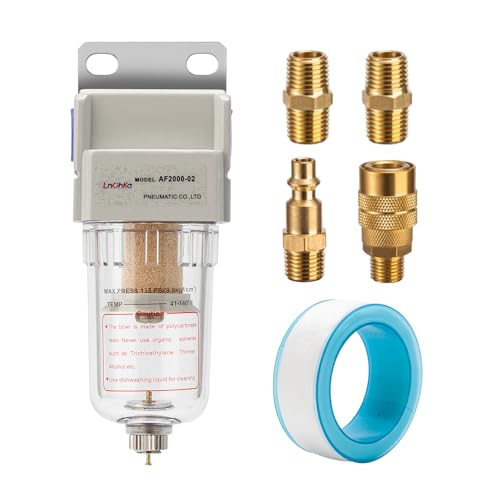 LNCHKA 1/4-Inch NPT Air Compressor Water Separator
|
8.9/10 | Buy |
| Best Value |
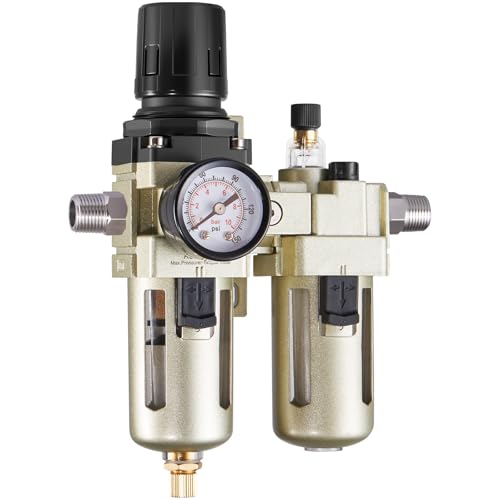 VEVOR 3/8 Inch NPT Air Compressor Filter Regulator
|
8.9/10 | Buy |
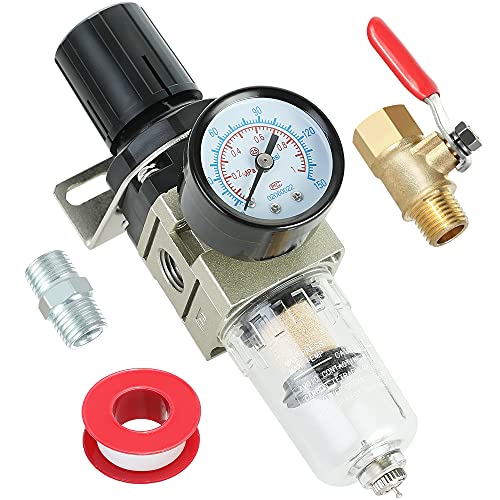 Hromee AW2000-02 1/4-Inch Filter Regulator
|
8.1/10 | Buy | |
 LE LEMATEC 1/4-Inch NPT Water Separator
|
7.8/10 | Buy |
RVMARINEPAT 1/2-Inch 4-Stage Air Drying System
Built for moisture-critical tasks like spray painting and plasma cutting, this 4-stage system combines particulate, coalescing, and desiccant filtration with an integrated 0-240 PSI regulator. It includes replacement elements and an automatic drain to maintain clean air lines with minimal maintenance.
Pros
- Filters particulates and oil aerosols down to 0.01 microns
- Automatic drain valve minimizes routine maintenance
- Includes spare filter elements and extra desiccant packs
- Pop-up indicator signals when coalescing element needs replacement
Cons
- Desiccant beads require periodic replacement or regeneration
- Multi-stage configuration requires considerable wall mounting space
DAIERTEK 1/2" NPT 3-Stage Air Dryer
Designed for moisture-critical tasks like spray painting and plasma cutting, this 3-stage filtration unit combines particulate, coalescing, and desiccant drying with integrated pressure regulation. Durable metal bowls and color-changing media make routine monitoring straightforward in workshop setups.
Pros
- Comprehensive three-stage filtration delivers dry, clean air
- Durable metal bowl construction for workshop environments
- Color-changing desiccant beads simplify maintenance tracking
- Generous bundle includes spare filters and fittings
Cons
- Requires vertical mounting for proper auto-drain operation
- Desiccant media requires regular maintenance and replacement
LNCHKA 1/4-Inch NPT Air Compressor Water Separator
The LNCHKA 1/4-inch NPT air line filter is a compact moisture separator engineered to trap condensation and particulates using a durable 5-micron brass element. Supporting up to 145 PSI and an 18 SCFM flow rate, it is an effective, budget-friendly addition for DIYers and home garage mechanics looking to protect pneumatic tools from water damage.
Pros
- Durable 5-micron porous brass filter element resists corrosion better than paper or plastic cartridges
- Generous 18 SCFM flow capacity easily accommodates common DIY and small-shop pneumatic tools
- Includes brass quick-connect fittings, bracket, and Teflon tape for straightforward installation out of the box
- Transparent polycarbonate bowl provides effortless visual inspection of fluid buildup
Cons
- Polycarbonate bowl can be vulnerable to cracking if exposed to harsh synthetic solvents or chemical fumes
- Manual drain requires proactive monitoring and regular physical purging to prevent water re-entry into the line
- 1/4-inch NPT port size and 18 SCFM rating are not suitable for large multi-operator industrial airline networks
VEVOR 3/8 Inch NPT Air Compressor Filter Regulator
The VEVOR 3/8-inch NPT Filter Regulator Lubricator (FRL) combines a 5-micron brass water separator, adjustable pressure regulator, and micro-fog oiler rated up to 145 PSI. It provides clean, lubricated air for automotive mechanics and workshop woodworkers seeking to extend the service life of pneumatic tools.
Pros
- Compact 3-in-1 modular footprint cleans, regulates, and lubricates air in a single installation point
- Cleanable 5-micron brass filter element offers better durability than disposable paper filter media
- Semi-auto drain discharges condensation automatically when the compressor stops, helping prevent neglected bowl overflow
- Sturdy metal bowl cages protect the polycarbonate reservoir from bumps and accidental tool strikes
Cons
- Maximum 145 PSI operating limit is not rated for heavy-duty 175 PSI two-stage industrial compressor systems
- Inline oiler lubricates downstream hoses, requiring a separate dedicated line if you need dry air for spray painting or tire inflation
- Threaded 3/8-inch NPT ports require careful thread sealing with PTFE tape or paste to prevent slow joint leaks
Hromee AW2000-02 1/4-Inch Filter Regulator
Designed for compact workspaces, this piggyback system integrates moisture filtration and pressure regulation into a single unit. Its brass filter element helps protect pneumatic tools from water and debris, while the included bracket and shutoff valve simplify setup.
Pros
- Durable brass filter element resists wear over time
- Dual-unit gauge provides clear pressure readings
- Compact piggyback design suits space-constrained setups
- Includes shutoff valve, bracket, and seal tape
Cons
- Requires manual operation to drain collected fluids
- Pressure capacity is capped at 150 PSI
LE LEMATEC 1/4-Inch NPT Water Separator
Built for paint sprayers, plasma cutters, and pneumatic tools, this inline filter strips moisture and oil directly at the tool intake. Its heavy-duty aluminum body and push-button drain valve ensure straightforward maintenance in demanding workshop setups.
Pros
- Durable aluminum and brass construction
- Quick push-button drain release
- Universal 1/4-inch NPT line compatibility
- Compact footprint fits directly onto tools
Cons
- Manual drain requires ongoing user attention
- Small chamber capacity fills quickly under heavy condensation
Effective Strategies to Remove Water from Compressed Air
Removing water from a compressed air system requires addressing moisture at both the storage tank and along downstream air lines. Because water vapor naturally condenses whenever ambient air is pressurized and cooled, moisture control is an essential maintenance task for any workshop. Combining routine tank purging with mechanical filtration, coalescing units, and desiccant drying protects pneumatic tools from rust and ensures clean air delivery.
Why Moisture Accumulates in Compressed Air Tanks
Ambient air always contains dissolved water vapor, with volume determined by relative humidity and room temperature. When a compressor pump draws in atmospheric air and compresses it into a smaller volume, the moisture cannot disappear. The compression process creates friction and heat, temporarily keeping the moisture in a vaporized state as the hot air enters the steel receiver tank.
As the hot compressed air contacts the cooler metal walls of the tank, the air temperature drops below its dew point. This cooling process forces moisture vapor to condense into liquid water, which pools at the bottom of the storage tank. Without regular draining, escaping air currents pick up this pooled water and send rust-laden moisture straight through hoses into your pneumatic equipment.
Draining Water from the Receiver Tank
The most straightforward way to manage liquid buildup is through the receiver tank drain valve located at the lowest point of the tank. Liquid condensation settles on the tank floor under gravity, allowing internal pressure to push water out when the valve opens. Small portable compressors usually rely on threaded thumb petcocks, while larger stationary units feature quarter-turn brass ball valves or automated electric drains.
Draining the storage tank daily prevents standing water and compressor oil residue from corroding the internal steel walls. Allowing water to accumulate creates acidic sludge that causes rust flakes and can eventually cause pinhole leaks in the tank shell. Routine draining also maintains full tank capacity, because pooled water occupies space that should store compressed air, forcing the motor to cycle more frequently.
Step-by-Step Tank Draining Safety and Procedure
Draining an air receiver tank requires basic safety habits to manage pressurized spray and airborne rust particles. Before opening any drain valve, switch off the compressor motor and put on proper eye and hearing protection. Place a catch pan or shop towel directly beneath the drain port to collect dirty liquid and prevent oily floor stains.
Turn the drain valve open slowly while maintaining between 10 and 20 PSI of residual air pressure inside the tank. That modest pressure provides enough force to blow out accumulated sludge without generating a dangerous high-velocity blast. Keep the valve open until the hissing air stream turns completely clear and free of liquid spray.
Close the valve securely once the liquid stops exhausting so the tank holds an airtight seal for the next run. Listen closely for faint hissing sounds around the valve fitting to ensure the valve seated properly without catching rust grit. If debris prevents a tight seal, bleed all remaining tank pressure before removing, cleaning, or replacing the drain valve assembly.
Installing Mechanical Water Separators and Particulate Filters
Draining the receiver tank clears standing water, but warm air leaving the tank can still carry suspended water droplets. A standard mechanical water separator, such as the LNCHKA AF2000-02 or Hromee 1/4-inch unit, uses centrifugal force to spin moisture out of the air stream. Incoming air strikes curved internal baffles that spin the airflow, throwing heavier liquid droplets against the bowl walls where they run down into the sump.
Most mechanical separators use a porous 5-micron sintered brass filter element to capture rust particles, pipe scale, and large water droplets. Devices like the VEVOR filter regulator lubricator combo combine 5-micron filtration with an adjustable pressure regulator to deliver dry, stable airflow for mechanical repairs. Clear polycarbonate bowls or metal bowls with sight glasses make it simple to monitor water collection and empty the trap before water re-enters the line.
For optimal water separation, install mechanical filters at least twenty to thirty feet down the line from the compressor pump. Placing the filter down the line gives hot compressed air sufficient time to cool inside the piping so moisture vapor condenses into liquid droplets. Placing a filter directly on the compressor discharge port is rarely effective because hot vapor passes right through 5-micron filters without condensing.
Trapping Fine Aerosols with Coalescing Filters
Standard 5-micron particulate filters capture coarse liquid drops, but microscopic moisture aerosols and atomized oil vapors pass right through them. A coalescing filter, found in advanced systems like the RVMARINEPAT 4-stage system and DAIERTEK 3-stage dryer, provides filtration down to 0.01 microns. These units push air through dense borosilicate microfiber layers that force tiny moisture droplets to collide and join into larger droplets that drain away.
This coalescing action removes up to 99.9 percent of tiny liquid aerosols and oil mists before they reach sensitive tools. Many 0.01-micron coalescing units include pop-up differential pressure indicators that signal when the dense filter element has become loaded with captured impurities. Because fine coalescing elements clog quickly if exposed to heavy grit, they must always be installed downstream of a standard 5-micron particulate pre-filter.
Oil-lubricated compressors benefit substantially from coalescing filters because pump piston blow-by adds fine oil mist into the discharge line. In plasma cutting setups, oil and moisture mist cause arc sputtering, rough edges, and rapid consumable wear. In spray painting, oil droplets produce fish-eyes and adhesion problems, making coalescing filtration a vital stage for high-quality finishing work.
Using Desiccant Dryers for Deep Moisture Removal
Mechanical separators and coalescing filters capture liquid droplets, but they cannot remove dissolved water vapor or lower the dew point. For tasks that demand truly dry air, like automotive spray painting or media blasting, a chemical desiccant dryer provides the necessary final drying step. Systems from DAIERTEK and RVMARINEPAT feature sturdy metal bowls loaded with silica gel desiccant beads designed to draw vapor directly from the air stream.
As compressed air flows through the desiccant bed, the chemical beads adsorb vapor molecules into their porous surface structure. Premium desiccant beads feature color indicators, changing from blue to pink as they absorb moisture and reach their holding limit. This visual shift shows operators exactly when to change the beads or reactivate them in an oven according to manufacturer guidance.
Desiccant drying stages require dependable upstream filters to keep bulk liquid water from reaching the chemical media. If raw liquid water strikes desiccant beads directly, the silica can fracture and saturate in minutes, ruining its ability to lower dew points. When shielded by standard particulate and coalescing filters, a desiccant stage supplies clean, dry air that prevents painting defects and tool corrosion.
Point-of-Use Inline Filters for Spray Guns and Air Tools
Even with dedicated stationary filters on a workshop wall, moisture can still condense inside long rubber hoses between the wall and the tool. Point-of-use inline filters, like the LE LEMATEC 1/4-inch NPT separator, attach directly to the air inlet of spray guns, airbrushes, or sanders. These compact filters catch any last-minute condensation that forms in the flexible hose before the air enters your tool.
These inline filters feature lightweight aluminum housings and brass fittings that withstand workshop drops without adding heavy drag to the operator hand. Many models feature a push-button drain valve that lets you vent trapped liquid with a quick press between painting passes without uncoupling lines. Using a point-of-use filter offers dependable peace of mind during finish painting or trim carpentry where a single water drop could ruin work.
Always verify that point-of-use filters are mounted with the airflow direction arrow pointing toward the tool inlet. In addition, never install an inline pneumatic oiler upstream of a point-of-use spray gun filter. Point-of-use filters must receive clean, unlubricated air to maintain filter integrity and keep oil from contaminating your spray finishes or sandblasting media.
Workshop Piping Layout and Gravity Drip Legs
The physical layout of workshop air delivery piping plays a major role in keeping moisture away from tools. Running rigid copper, aluminum, or iron piping with a slight downward slope away from the compressor directs condensed water toward designated drain drops. Installing the main supply pipe high along workshop walls uses gravity to keep liquid runoff separated from the rapid center airflow.
Every vertical drop line connecting to a workbench or hose reel should branch off the top of the main horizontal pipe via an upward loop. Taking air from the top prevents condensation flowing along the bottom of the main line from running straight down the drop pipe. The drop pipe should then extend below the tool regulator port to create a dedicated drip leg with a manual ball valve at the bottom.
Drip legs serve as passive collection tubes that capture moisture descending the vertical drop before air enters flexible tool lines. Cracking the ball valve on each drip leg at the start of each workday purges trapped condensation safely onto a collection rag. Proper pipe slope, top-mounted drops, and bottom drip legs can eliminate a major share of line moisture before air reaches mechanical filters.
Selecting and Maintaining Automatic and Manual Drain Valves
The type of drain valve installed on your compressor tank and filter bowls determines how much daily attention your system demands. Manual drain valves, like simple petcocks and quarter-turn ball valves, require someone to open the valve by hand after every work session. While manual valves offer rugged mechanical simplicity, forgotten manual maintenance is the primary reason tanks rust out and water floods downstream lines.
Semi-automatic drain valves, such as the mechanism on the VEVOR FRL unit, vent trapped moisture whenever line pressure drops below a specific level. When the compressor shuts off at the end of the day and system pressure bleeds off, an internal spring opens the drain port. This semi-automatic action protects equipment from forgotten draining routines without requiring electrical wiring or timers.
Fully automatic float drains, used on industrial bowls in RVMARINEPAT and DAIERTEK drying assemblies, expel collected water continuously during active tool use. An internal float rises as liquid collects in the bowl, opening a discharge needle valve once water reaches a set level. Periodic cleaning of automatic float mechanisms is necessary because fine grit or sticky oil mist can cause the float to stick open or closed over time.
Diagnosing and Preventing Excessive Water Problems
When an air compressor suddenly delivers excessive moisture into tool lines, the issue often stems from operating habits rather than component failure. Running an air compressor past its intended duty cycle overheats the pump head and air lines, turning all moisture into superheated vapor. Superheated vapor cannot condense inside a small tank and travels straight down hoses until it cools and turns into liquid inside your tools.
High summer humidity also increases the volume of water vapor entering the compressor intake with every compression stroke. To reduce intake moisture, make sure the compressor pump pulls cool, dry air from a well-ventilated space rather than a damp basement or humid wash bay. In high-demand shops, adding an auxiliary aftercooler between the pump and tank check valve helps cool the air before it enters the receiver.
Routinely inspect your air lines, brass filter elements, desiccant bead colors, and drain valves to keep every drainage path clear of obstruction. Check that replacement filter elements match the original micron ratings and verify that bowl seals remain airtight during pressure cycles. A disciplined combination of tank draining, inline mechanical filtering, and desiccant drying keeps your air supply dry and protects your pneumatic equipment year after year.
About the author
Kenny Koehler is a power-tool specialist with more than a decade of hands-on evaluation experience and a science-based approach to product testing. His expertise in repeatable testing, tool performance, impact wrenches, and professional equipment brings a practical, data-focused perspective to compressor and pneumatic-tool comparisons.