
What Oil for Air Compressor Pump: Practical Guide for 2026
Learn what oil for air compressor pump crankcases requires in October 2026, covering non-detergent ratings, synthetic blends, and viscosity specs.
 By Tony Carrick
Updated October 7, 2026
By Tony Carrick
Updated October 7, 2026

Reciprocating compressor pumps generate immense mechanical friction and heat inside the crankcase as pistons compress ambient air up to high pressures. Operating an air compressor without the correct lubricant leads to rapid thermal breakdown, piston ring scoring, and severe carbon buildup on delicate reed valves. Selecting the proper lubricant ensures that internal bearings remain protected while preventing oil vapor from contaminating downstream pneumatic lines. Many equipment owners struggle with what oil for air compressor pump maintenance requires because common automotive motor oils behave very differently from dedicated compressor fluids.
Understanding the fundamental distinctions between detergent-heavy motor oils and non-detergent industrial formulations protects your investment over years of demanding operation. Standard motor oils keep contaminants in suspension, whereas compressor crankcases rely on non-detergent fluids that allow moisture and particulate matter to settle harmlessly at the bottom of the oil reservoir. Dedicated compressor oils also feature specialized anti-foam agents and thermal stabilizers engineered for high-heat reciprocating cylinders. Whether servicing a portable twin-stack jobsite unit or a stationary two-stage workshop compressor, using the correct oil viscosity and formulation prevents premature pump failure and expensive shop downtime.
| Award | Product | ACR Score About ACR ScoreThe ACR Score is our own rating from 0 to 10, based on performance, design and build, ease of use, and value. It reflects independent research and is never influenced by manufacturers, retailers, or affiliate commissions. Learn more › | |
|---|---|---|---|
| Best Overall |
Mag 1 1-Gallon Air Compressor Oil
|
9.2/10 | Buy |
| Best Budget |
 Triax Kompressor ISO 46 SAE 20 Full Synthetic Air
|
9.1/10 | Buy |
| Best Value |
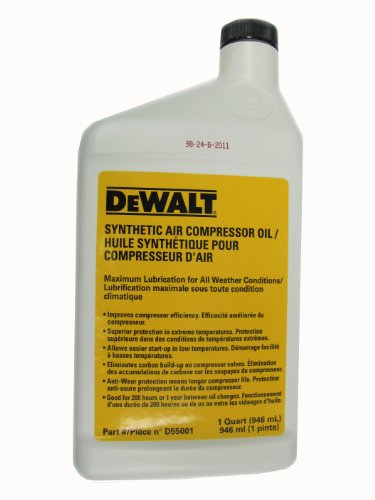 DeWalt D55001 1-Quart Compressor Oil
|
9.1/10 | Buy |
 Valvoline Non-Detergent SAE 30 Motor Oil
|
8.9/10 | Buy | |
| Best Premium |
 Milton 1002 SAE 30W Compressor Oil, 1 Gallon
|
8.8/10 | Buy |
 TRIAX Kompressor ISO 46 SAE 20 Full Synthetic Air
|
8.8/10 | Buy | |
 Ingersoll Rand All Season Select Lubricant, 1L
|
8.6/10 | Buy | |
 Mobil Rarus 427 ISO 100 Compressor Oil, 1 Qt
|
8.3/10 | Buy | |
 MAG 1 Air Compressor Oil 16 oz
|
7.8/10 | Buy | |
 Triax Kompressor ISO 100 SAE 30 Oil
|
7.8/10 | Buy |
Mag 1 1-Gallon Air Compressor Oil
Formulated for reliable workshop maintenance, Mag 1 Air Compressor Oil uses refined petroleum base stocks paired with anti-foam additives to maintain stable lubrication. The generous one-gallon volume makes it a practical choice for keeping reciprocating or stationary compressors running smoothly over time.
Pros
- Anti-foam additives maintain steady lubrication
- Refined petroleum stocks promote smooth operation
- Formula helps extend compressor service life
- Generous 1-gallon volume handles multiple refills
Cons
- Jug weighs 7.25 pounds and can be heavy to pour
- One-gallon size may exceed small top-off needs
Triax Kompressor ISO 46 SAE 20 Full Synthetic Air
Triax Kompressor ISO 46 SAE 20 is a commercial-grade, full synthetic non-detergent compressor oil engineered for oil-lubricated reciprocating, rotary screw, and vane pumps operating in temperatures from -49°F to over 140°F. It provides exceptional thermal protection and extended component life for garage mechanics and shop owners maintaining heavy-duty pneumatic systems.
Pros
- Extreme all-weather operating range from -49°F to 140°F+ prevents cold-start motor stalling and high-heat viscosity breakdown
- Non-detergent full synthetic formula protects internal bearings and provides up to 20,000 hours of service longevity
- Lowers operating pump temperatures by 30% and actively sheds condensation to prevent internal crankcase rust
- Compatible with oil-lubricated reciprocating, rotary screw, and rotary vane compressor pumps from major manufacturers
Cons
- Not suitable for oil-free or maintenance-free dual-piston compressor designs that do not use crankcase oil
- Explicitly prohibited for use in breathing air systems, oxygen compressors, or liquid natural gas (LNG) units
- Single-quart volume may require purchasing multiple bottles for larger stationary 60-gallon or 80-gallon shop pump crankcases
DeWalt D55001 1-Quart Compressor Oil
Formulated for regular air compressor maintenance, the DeWalt D55001 comes in a handy one-quart bottle to keep pump components operating smoothly. It is a solid choice for workshops and job sites running oil-lubricated compressors that require dedicated manufacturer-grade fluid.
Pros
- Convenient 1-quart size for routine maintenance
- OEM formulation from an established tool brand
- Compact bottle design stores easily
Cons
- Not applicable for oil-free compressor models
- May require multiple bottles for high-capacity industrial tanks
Valvoline Non-Detergent SAE 30 Motor Oil
Tailored for specialized equipment, this SAE 30 formulation uses oxidation inhibitors to prevent fluid thickening and minimize deposit buildup. It delivers dependable wear defense for air compressors, older engine designs, and hydraulic systems requiring non-detergent lubricant.
Pros
- Durable anti-wear additives provide long-lasting component protection
- Enhanced oxidation control prevents fluid thickening
- Helps minimize deposit formation in critical areas
- Compatible with various compressors and vane pumps
- Meets API SB and Denison HF-2 requirements
Cons
- Restricted to equipment requiring non-detergent fluid
- Straight SAE 30 weight lacks multi-grade cold versatility
- API SB rating is not for modern automotive engines
Milton 1002 SAE 30W Compressor Oil, 1 Gallon
Milton 1002 is a non-detergent ISO-100 SAE 30W conventional lubricant engineered specifically for reciprocating air compressors. The one-gallon capacity makes it a sensible option for regular workshop equipment upkeep.
Pros
- Non-detergent formula tailored for reciprocating compressors
- Standard ISO-100 SAE 30W viscosity rating
- Generous one-gallon volume covers multiple refills
Cons
- Conventional mineral formula instead of synthetic blend
- Heavy container can be awkward to pour directly
TRIAX Kompressor ISO 46 SAE 20 Full Synthetic Air
TRIAX Kompressor ISO 46 SAE 20 is a commercial-grade, full-synthetic non-detergent lubricant engineered for oil-lubricated reciprocating, rotary screw, and vane air compressors. It provides reliable extreme-temperature wear protection and multi-viscosity all-season performance, making it an excellent maintenance choice for auto shops, contractors, and home garage workshops.
Pros
- Full synthetic non-detergent formulation extends pump life across severe operating conditions
- True all-season multi-viscosity rating maintains fluid flow from -49 deg F up to 140 deg F+
- Formulated to lower operating temperatures by up to 30% and eliminate oil vapor odor
- Compatible with a wide array of compressor pumps including reciprocating and rotary screw designs
Cons
- Not formulated for oil-free air compressors, breathing air systems, oxygen setups, or LPG gas pipelines
- Users must verify whether their pump manufacturer specifically calls for ISO 46 (SAE 20) rather than heavier ISO 68 or ISO 100 weights
- Requires careful manual crankcase draining and filling without an included pour spout
Ingersoll Rand All Season Select Lubricant, 1L
Engineered as an all-weather OEM fluid, this synthetic lubricant protects reciprocating compressors during continuous duty while resisting carbon buildup on critical valves. It is a solid pick for equipment owners who want fewer oil changes and reliable year-round operation.
Pros
- Maintains stable viscosity in hot and cold seasons
- Lasts four times longer than petroleum oil
- Keeps valves and rings free of carbon deposits
- Protects bearings under continuous duty cycles
Cons
- Formulated specifically for reciprocating compressor systems
- One-liter bottle requires buying multiples for large pumps
Mobil Rarus 427 ISO 100 Compressor Oil, 1 Qt
Mobil Rarus 427 provides an ISO 100 viscosity grade lubricant designed for compressor applications. Packaged in a 1-quart container and made in the United States, it suits routine automotive and shop maintenance jobs.
Pros
- Convenient 1-quart volume for routine top-offs
- Standard ISO 100 viscosity formulation
- Manufactured in the United States
- Lightweight and easy to store
Cons
- Limited 1-quart volume for large compressor reservoirs
- ISO 100 viscosity is not universally compatible with all compressors
MAG 1 Air Compressor Oil 16 oz
MAG 1 Air Compressor Oil is a specialized 16-ounce petroleum lubricant formulated with anti-foam agents and rust inhibitors to protect oil-lubricated compressor pumps under heavy operating conditions. It offers essential wear protection and thermal stability for home garage hobbyists, auto mechanics, and shop owners maintaining oil-lubricated pneumatic equipment.
Pros
- Formulated specifically for compressor pump crankcases rather than generic detergent automotive motor oils
- Anti-foam chemistry helps prevent oil foaming and maintains steady lubrication under rapid piston strokes
- Helps protect internal metal components against rust and oxidation caused by ambient moisture buildup
- Convenient 16-ounce bottle size fits easily into garage maintenance cabinets and tool chests
Cons
- Not suitable for maintenance-free oil-free air compressors
- A 16-ounce volume may require multiple bottles for larger stationary multi-stage shop compressors with high crankcase capacities
Triax Kompressor ISO 100 SAE 30 Oil
Formulated for demanding commercial applications, this full synthetic fluid delivers up to 20,000 service hours across an extreme -49°F to 140°F+ temperature range. It is well suited for operators seeking extended drain intervals and cooler operating temperatures across rotary, screw, or reciprocating systems.
Pros
- Exceptional 20,000-hour operational service life
- Performs reliably in sub-zero and high-heat climates
- Significantly lowers operating temperatures
- Broad compatibility across major compressor manufacturers
Cons
- Incompatible with oxygen air and LNG compressors
- One-quart container requires multiple purchases for larger reservoirs
Essential Technical Guide to Air Compressor Pump Lubrication
Splash-lubricated compressor pumps rely entirely on the mechanical motion of connecting rod dippers to distribute fluid across crankshaft bearings, wrist pins, and cylinder walls. Because reciprocating pumps lack automotive-style pressurized oil pumps and paper filter elements, the physical properties of the fluid dictate mechanical longevity. Choosing the right lubricant requires balancing base stock chemistry, viscosity ratings, and thermal stability against workshop operating conditions.
Non-Detergent Formulations versus Standard Motor Oils
Standard automotive engine oils contain heavy detergent packages designed to scrub carbon deposits and hold combustion blow-by in suspension. In an internal combustion engine, an oil filter continuously removes these suspended particles before the fluid recirculates through pressurized journals. Air compressor crankcases do not utilize oil filters, meaning detergent additives keep abrasive metal wear particles circulating continuously against precision bearings and cylinder walls.
Non-detergent lubricants like Valvoline Daily Protection Non-Detergent 30 and Milton 1002 allow microscopic wear debris to drop safely out of circulation. These suspended particles settle at the bottom of the crankcase sump, where they cannot score polished metal surfaces during normal operation. Using non-detergent oil prevents bearing abrasion and maintains tighter tolerances between the piston rings and cylinder sleeves over extended operating hours.
Detergent motor oils also react poorly to the intense localized heat produced at compressor discharge valve plates. Under continuous compression cycles, detergent chemistry breaks down and forms gummy, carbonaceous deposits on spring-steel reed valves and port seats. These carbon crusts prevent reed valves from sealing flat against the valve plate, leading to lost compression efficiency, extended pump recovery times, and severe head overheating.
Understanding Viscosity Ratings: ISO Grades and SAE Weights
Industrial compressor lubricants utilize the International Organization for Standardization (ISO) viscosity grading system, while automotive oils use Society of Automotive Engineers (SAE) numbers. An ISO 100 lubricant corresponds closely to a straight SAE 30 non-detergent weight at standard operating temperatures. Conversely, an ISO 46 or ISO 68 lubricant corresponds roughly to an SAE 20 weight, offering thinner fluid dynamics during cold starts.
Heavier ISO 100 or SAE 30 oils provide a robust hydrodynamic cushion that resists film rupture under heavy commercial workloads. Premium options like Mobil Rarus 427 and TRIAX Kompressor ISO 100 maintain film thickness when cast-iron cylinders run hot during prolonged tool use. If an operator installs an oil that is too thin into a heavy-duty single-stage or two-stage pump, the fluid film can shear, resulting in direct metal-on-metal friction and accelerated wrist pin wear.
Lighter ISO 46 or SAE 20 lubricants suit smaller direct-drive pumps or compressors operating in unheated winter environments. Fluids such as TRIAX Kompressor ISO 46 flow readily at lower temperatures, reducing viscous drag on electric motor shafts during startup. Selecting between an ISO 46 and an ISO 100 grade depends heavily on ambient workspace temperatures and manufacturer specifications for your pump displacement.
Synthetic versus Conventional Petroleum Base Stocks
Conventional compressor lubricants rely on solvent-refined mineral base stocks enriched with rust and oxidation inhibitors. Mineral blends such as Mag 1 Air Compressor Oil deliver reliable lubrication for intermittent garage use, light carpentry nailing, and inflation tasks. These petroleum formulas offer affordable protection for machines that cycle on and off infrequently throughout the workweek.
Full synthetic compressor oils utilize engineered hydrocarbon molecules that resist thermal oxidation under continuous commercial duty cycles. Formulas like Ingersoll Rand All Season Select Synthetic and TRIAX Kompressor Full Synthetic withstand elevated cylinder discharge temperatures without thinning out or burning. Synthetic base stocks maintain molecular consistency across thousands of operating hours, reducing crankcase sludge formation and oil varnish on cylinder walls.
Synthetic lubricants also produce significantly less oil vapor carryover past the piston rings into the compressed air stream. Lower volatility means less lubricant enters the air storage tank, which protects air lines and downstream pneumatic tools from oily contamination. Shops running continuous air tools like rotary sanders or paint sprayers benefit substantially from the cleaner discharge air that synthetic formulations facilitate.
Anti-Foam Additives and Demulsibility Characteristics
Splash-lubricated pumps feature a small aluminum or steel dipper attached to the bottom of each connecting rod cap. As the crankshaft spins at speeds up to 3,400 RPM, this dipper strikes the oil reservoir thousands of times per minute to create a heavy lubricating mist. Dedicated compressor oils incorporate specialized silicone-free anti-foam agents to keep the fluid from turning into an aerated froth.
Aerated oil cannot maintain an unbroken hydrodynamic boundary layer between moving crankshaft journals and connecting rod bearings. Foam collapses under compression loads, allowing rotating metal surfaces to make contact and generate destructive friction heat. Quality compressor oils like MAG 1 16 oz use targeted anti-foam additives that rapidly release entrained air bubbles before the dipper strikes the sump again.
High demulsibility is another critical characteristic of dedicated compressor pump lubricants. Atmospheric air naturally contains humidity that condenses into liquid water inside the crankcase during cooling cycles between pump runs. Quality compressor oils separate cleanly from moisture, allowing free water to sink beneath the oil layer where it cannot corrode polished steel crankshaft journals.
Protecting Reed Valves, Piston Rings, and Cylinder Walls
Reciprocating compressor pumps rely on thin flexible steel reed valves or disc valves to regulate air intake and discharge. These valves operate under extreme thermal conditions as air heats rapidly during compression up to 135 to 175 PSI. If a compressor oil vaporizes and deposits carbon on these valves, the pump loses volumetric efficiency and struggles to reach its rated cut-out pressure.
Clean-burning synthetic and non-detergent oils keep valve seats clear of baked carbon flakes and sticky residues. When reed valves seat tightly against the precision valve plate, the pump achieves rapid recovery times and operates at normal cylinder head temperatures. Uncompromised valves also prevent hot compressed air from leaking back into the cylinder during intake strokes, which protects intake filters from thermal damage.
Proper lubrication also maintains the hydraulic seal between cast-iron cylinder walls and expanding piston compression rings. This fluid boundary prevents blow-by gases from pressurizing the crankcase and blowing out oil fill breathers or crankshaft seals. Consistent cylinder lubrication minimizes friction scuffing, ensuring that the pump maintains strong CFM output across its entire operating lifespan.
Managing Temperature Extremes and Cold-Weather Starting
Operating an air compressor in an unheated garage or jobsite during freezing winter weather creates severe mechanical resistance. Thick, cold mineral oil increases viscous drag on the crankshaft, forcing the electric motor to draw massive inrush amperage upon startup. This excessive electrical current spike frequently trips standard 15-amp household circuit breakers before the motor can reach running RPM.
All-season synthetic lubricants maintain pump fluidity at sub-freezing temperatures, allowing the crankshaft to spin freely on initial startup. Blends engineered for broad temperature ranges prevent motor stalling and reduce mechanical strain on start capacitors and unloader valves. In freezing environments, switching from a conventional SAE 30 oil to an all-season synthetic or ISO 46 fluid resolves nuisance circuit breaker tripping.
High ambient summer temperatures present the opposite mechanical challenge for air compressor crankcases. When garage temperatures exceed 90 degrees Fahrenheit and the pump runs high-demand tools, crankcase oil temperatures can surpass 200 degrees. High-viscosity synthetic oils resist thermal thinning under these demanding conditions, maintaining the necessary film strength to protect rod bearings from heat-induced galling.
How to Check Oil Levels Accurately
Maintaining the proper fluid volume inside the crankcase requires regular inspection before powering on the compressor. Most modern oil-lubricated pumps feature a clear acrylic or brass sight glass located near the base of the crankcase housing. The ideal oil level rests precisely at the center of the sight glass, covering the red target dot when the machine sits on a level surface.
Older or industrial stationary compressors often utilize a threaded dipstick integrated into the crankcase oil fill breather cap. To check the oil level with a dipstick, shut off the power, wipe the blade clean with a lint-free cloth, and reinsert it without threading it down into the neck. Remove the dipstick again to verify that the fluid level sits squarely between the upper and lower crosshatch indicators.
Overfilling a compressor crankcase is just as damaging to pump internals as running the machine low on fluid. Excessive oil causes the connecting rod dippers to churn through liquid rather than skimming the surface, generating extreme aeration and hydraulic drag. Overfilling also forces liquid oil past the piston rings, causing severe oil discharge into air hoses and downstream pneumatic tools.
Step-by-Step Compressor Pump Oil Change Procedure
Changing the pump oil begins with running the compressor for two to three minutes to warm the fluid slightly. Warm oil carries suspended sediment toward the drain port and flows out much faster than cold, viscous fluid. Always disconnect the power supply cord or switch off the dedicated circuit breaker before servicing any mechanical component on the compressor.
Depressurize the air storage tank completely by pulling the ring on the ASME safety relief valve or opening the tank drain valve. Position a suitable oil catch pan directly beneath the crankcase drain plug, which is located at the lower edge of the pump casting. Remove the drain plug with a proper box wrench, taking care not to misplace the small aluminum or copper sealing washer.
Allow the spent lubricant to drain completely until the flow slows to an occasional drip. Clean any metallic residue from the magnetic drain plug threads, reinstall the plug with its sealing washer, and tighten it securely without stripping the aluminum casting. Remove the crankcase breather fill plug and pour fresh non-detergent or synthetic oil through a clean funnel until the sight glass reaches its halfway mark.
Initial Break-in Requirements and Routine Service Intervals
Brand-new air compressor pumps require a dedicated break-in cycle before powering air tools under full working pressure. Open the tank drain petcock fully, plug the unit into a dedicated circuit, and run the motor continuously for twenty to thirty minutes without allowing tank pressure to build. This zero-pressure run allows the piston rings to mate with cylinder hone marks while dippers distribute oil across fresh bearings.
After completing the zero-pressure break-in period and running the compressor under normal load for its first 20 to 50 operating hours, perform a complete oil change. This initial service flushes out microscopic metal shavings, casting sand, and machining debris generated during ring seating. Neglecting this crucial early oil change leaves abrasive metal dust circulating inside the crankcase, causing premature bearing play and ring grooving.
Following the initial break-in period, routine service intervals depend on whether you use conventional petroleum oil or industrial synthetic formulations. Conventional non-detergent mineral oils typically require replacement every 100 to 250 operating hours, or at least twice a year in active workshops. Premium synthetic lubricants like Ingersoll Rand All Season Select can provide extended service intervals up to thousands of running hours, provided operating environments remain clean and dry.
Matching Lubricant Selection to Your Pneumatic Workload
Hobbyists and homeowners running finish nailers, tire chucks, and blowguns place relatively modest thermal demands on an air compressor. For these intermittent applications, dependable non-detergent mineral oils such as Milton 1002 or DEWALT Compressor Oil D55001 provide ample protection at an affordable maintenance cost. These standard lubricants deliver reliable performance for equipment that cycles on for brief intervals and rests between tasks.
Automotive mechanics and woodworkers powering continuous CFM tools like dual-action sanders, die grinders, or HVLP paint sprayers demand far greater thermal endurance from pump fluids. Continuous tool operation keeps single-stage and two-stage pumps running near their maximum duty cycles, driving cylinder temperatures into severe ranges. Utilizing heavy-duty synthetic lubricants like TRIAX Kompressor Full Synthetic prevents lubricant oxidation, keeps reed valves clean, and minimizes oil mist carryover into critical paint finishes.
Investing in the correct non-detergent or full synthetic compressor oil ensures that your pneumatic equipment operates at peak efficiency for years to come. Checking the sight glass regularly, respecting recommended break-in routines, and draining crankcase moisture preserve critical cast-iron and aluminum components against costly wear. Matching your lubricant chemistry directly to your operating environment and tool demands delivers smooth starts, quiet operation, and reliable air pressure whenever you power on your shop compressor.
About the author
Tony Carrick is an experienced product researcher and writer specializing in tools, home improvement, automotive maintenance, and consumer equipment. With extensive experience reviewing tools and tackling hands-on renovation projects, he brings a buyer-focused perspective to compressor performance, usability, and overall value.