
How to Drain Water From Air Compressor: A Practical Guide for 2026
Learn how to drain water from air compressor tanks properly to stop internal corrosion, protect air tools, and maintain pressure in October 2026.
 By Tom Scalisi
Updated October 7, 2026
By Tom Scalisi
Updated October 7, 2026
Moisture accumulation inside a steel receiver tank represents one of the quickest ways to ruin pneumatic nailers, paint sprayers, and internal pressure vessels. Every time ambient air enters the compression pump, atmospheric humidity gets compressed alongside air molecules and condenses into pooling liquid water at the bottom of the tank. Understanding how to drain water from air compressor systems preserves storage volume, prevents severe internal corrosion, and stops dirty water droplets from ruining delicate pneumatic tool valves. Daily water purging keeps equipment running reliably across demanding garage and jobsite environments.
Many compressor owners struggle with inaccessible factory petcocks, frozen thumb drain plugs, or messy water spraying across workshop floors during manual maintenance cycles. Upgrading to flexible extension assemblies, reliable quarter-turn brass valves, or timed electronic discharge kits transforms this routine chore into a fast, manageable task. Establishing a consistent purging routine protects valuable pneumatic nailers and spray guns, reduces unexpected downtime, and ensures clean, dry air delivery for every workshop project.
| Award | Product | ACR Score About ACR ScoreThe ACR Score is our own rating from 0 to 10, based on performance, design and build, ease of use, and value. It reflects independent research and is never influenced by manufacturers, retailers, or affiliate commissions. Learn more › | |
|---|---|---|---|
| Best Overall |
SUNROAD 2-Pack Extended Air Compressor Tank Drain
|
9.1/10 | Buy |
| Best Budget |
 Reluen 1/4-Inch Male NPT Brass Air Compressor
|
8.6/10 | Buy |
| Best Premium |
 Hromee Automatic Air Compressor Tank Drain Valve
|
8.6/10 | Buy |
| Best Value |
 SUNROAD 10-Inch Compressor Tank Drain Kit
|
8.3/10 | Buy |
 SUNROAD Automatic Electronic Air Compressor Tank
|
8.3/10 | Buy | |
 SUNROAD 1/4" NPT Brass Drain Ball Valve (2-Pack)
|
8.1/10 | Buy | |
 LitOrange Brass Blow Out Adapter (2-Pack)
|
8.0/10 | Buy | |
 LEONTOOL 1/4-Inch Compressor Drain Valve 2-Pack
|
7.8/10 | Buy | |
 QWORK 10-Inch Tank Drain Valve Kit
|
7.8/10 | Buy |
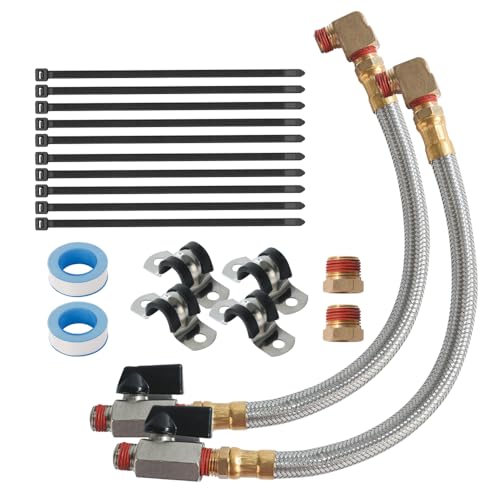
SUNROAD 2-Pack Extended Air Compressor Tank Drain
The SUNROAD 2-Pack Extended Tank Drain Valve Kit relocates awkward tank drain ports using a 10-inch braided steel hose rated to 175 PSI and a smooth quarter-turn brass ball valve rated to 300 PSI. It provides DIYers, garage mechanics, and woodworkers with a clean, ergonomic way to purge tank condensation and help protect air receiver vessels from internal rust.
Pros
- Eliminates having to reach or crawl beneath bulky air tanks to turn stiff factory drain screws
- Rugged 10-inch braided steel hose handles up to 175 PSI working pressure and 200 degrees Fahrenheit
- Smooth quarter-turn chrome-plated brass ball valve provides reliable shutoff without leaking air
- Supplied with 3/8-inch adapter bushings, thread seal tape, and vibration-damping mounting clamps
Cons
- Hose working pressure is capped at 175 PSI, making it unsuitable for high-pressure industrial systems operating above that threshold
- Initial installation into tight bottom bungs on low-clearance tanks may require tipping the compressor
- Thread connections require careful wrapping with the included Teflon tape to ensure an airtight seal
Reluen 1/4-Inch Male NPT Brass Air Compressor
The Reluen 1/4-inch male NPT hand-turn petcock is a solid brass drain valve rated up to 150 PSI, built for manual moisture drainage on compressed air tanks. It provides garage DIYers and mechanics with a reliable, corrosion-resistant replacement for stuck or leaking factory drain plugs.
Pros
- Solid brass body resists rust and corrosion caused by internal tank water buildup
- Standard 1/4-inch male NPT threading fits common compressor female drain bungs
- Rated up to 150 PSI to match common homeowner and garage compressor tanks
- Winged petcock head enables manual draining without searching for hand tools
- Compact overall footprint fits low ground-clearance compressor configurations
Cons
- Manual hand-turn operation requires reaching under the tank compared to extended ball-valve kits
- Over-torquing the winged petcock handle with pliers can bend or damage the shutoff wings
- Requires proper application of thread sealant tape during install to avoid slow seeps
Hromee Automatic Air Compressor Tank Drain Valve
The Hromee Automatic Air Compressor Tank Drain Valve Kit automates moisture removal from pneumatic receiver tanks and filters using an adjustable electronic timer and durable braided steel hose. It is an ideal preventative upgrade for garage hobbyists, woodworkers, and shop owners looking to protect their air equipment from internal rust without manual draining.
Pros
- Fully adjustable cycle and duration timers match purge frequency to workshop humidity levels
- Extensive adapter collection fits common 1/4-inch, 3/8-inch, and 1/2-inch NPT tank drain ports
- Braided steel lead hose provides generous clearance to route moisture away from hard-to-reach petcocks
- Pre-wired 6-foot grounded 110V-120V plug eliminates the need for electrical hardwiring
- IP65 enclosure provides dependable protection against dust and workshop moisture
Cons
- Requires an accessible 110V-120V electrical outlet positioned near the compressor location
- Minimum operating ambient temperature of 32°F makes it unsuitable for unheated sub-freezing shops
- Audible pressurized purge bursts may startle users inside small, quiet residential garages
SUNROAD 10-Inch Compressor Tank Drain Kit
Draining moisture prevents compressor tank rust, and this SUNROAD kit simplifies routine maintenance with a flexible braided steel line and an accessible quarter-turn shutoff. It provides a practical upgrade for standard 1/4-inch and 3/8-inch drain ports operating under 175 PSI.
Pros
- Durable braided steel hose prevents kinks
- Corrosion-resistant chrome-plated brass valve
- Complete installation kit with clamps and tape
- Rubber-coated handle allows easy quarter-turn operation
Cons
- 10-inch hose may be short for large tanks
- Working pressure is limited to 175 PSI
- Requires manual operation after every compressor use
SUNROAD Automatic Electronic Air Compressor Tank
The SUNROAD Automatic Electronic Tank Drain Kit automates compressor moisture maintenance by purging water and oily sludge on an adjustable 0.5-50 minute cycle. Powered by standard 110V-120V current and equipped with an inline isolation ball valve and strainer, it is an essential upgrade for garage mechanics and woodworkers seeking to protect their pressure vessels from internal rust.
Pros
- Automates daily tank draining with easily adjustable cycle interval and purge duration dials
- Built-in ball valve and strainer allow quick isolation and screen cleanout without emptying the air system
- Supplied with a flexible braided stainless steel discharge tube and multiple brass plumbing adapters
- Plugs into standard 110V-120V household wall outlets with an IP65 rated timer enclosure
Cons
- Requires an accessible 110V-120V electrical outlet positioned near the bottom of the compressor tank
- Sudden discharge bursts create a sharp air hiss that can be startling in quiet, enclosed home garages
- Minimum operating ambient temperature of 32°F means condensation can freeze in unheated winter shops
SUNROAD 1/4" NPT Brass Drain Ball Valve (2-Pack)
Designed for fast compressor maintenance, this brass ball valve set replaces fiddly screw-style drain cocks with a straightforward quarter-turn aluminum lever. Rated for 150 PSI and broad temperature swings, it provides a dependable upgrade for expelling tank moisture and oil.
Pros
- Corrosion-resistant solid brass construction
- Quick 90-degree quarter-turn operation
- Durable design without internal O-rings
- Wide temperature tolerance up to 250°F
- Includes thread seal tape and storage case
Cons
- Unthreaded outlet prevents attaching drain hoses
- Limited to a maximum working pressure of 150 PSI
LitOrange Brass Blow Out Adapter (2-Pack)
Machined from lead-free brass, this adapter pair connects standard air compressors to outdoor faucets and irrigation systems to blow out standing water. It offers an easy, durable winterizing solution for homeowners, RV travelers, and boat owners.
Pros
- Durable, lead-free brass construction
- Compact design fits confined plumbing areas
- Standard 3/4-inch hose and 1/4-inch air compressor fit
- Convenient two-pack bundle
Cons
- Requires a compatible external air compressor to operate
- Requires eye protection and caution during pressure blowout
LEONTOOL 1/4-Inch Compressor Drain Valve 2-Pack
Built from galvanized brass, this two-pack of drain valves provides quick-turn moisture and oil release for compatible compressor tanks. The winged handles allow fast manual operation, though the reverse left-hand threading requires specific matching ports.
Pros
- Durable rust-proof galvanized brass construction
- Convenient wing handle enables easy manual drainage
- Includes sealing tape to prevent leaks
- Versatile for air, gas, liquid, and steam applications
Cons
- Reverse left-hand threading restricts universal fit
- Incompatible with standard right-hand threaded ports
QWORK 10-Inch Tank Drain Valve Kit
This braided steel extension kit simplifies tank draining by relocating hard-to-reach compressor valves. Rated up to 175 PSI and packaged with an adapter, it offers a reliable setup for standard workshop compressors.
Pros
- Corrosion-resistant braided steel construction
- Pre-applied sealant speeds up installation
- Includes adapter for 3/8-inch ports
- Handles up to 175 PSI reliably
Cons
- Fixed 10-inch length restricts mounting flexibility
- Not rated for high-pressure industrial systems
Complete Guide to Draining Air Compressor Tanks and Condensation Management
Water accumulation inside an air tank is a natural byproduct of compressing ambient air rather than an equipment defect. When compressors concentrate atmospheric humidity into a pressurized vessel, moisture condenses against cool steel walls. Mastering how to drain water from air compressor tanks preserves storage capacity, prevents internal corrosion, and keeps downstream air tools free of liquid moisture. A regular purge routine paired with reliable hardware keeps your compressed air system operating safely and efficiently.
Why Water Condenses Inside Air Compressor Tanks
Atmospheric air naturally contains moisture vapor, with humidity levels shifting based on regional weather and shop conditions. When the pump compresses air to pressures between 120 and 175 PSI, air temperatures rise dramatically. As this hot air enters the steel tank, it cools rapidly against the metal walls. Because cool air cannot hold as much moisture vapor, condensation droplets form and pool at the bottom of the vessel.
Stagnant condensation inside a receiver tank creates serious structural and operational hazards. Liquid water accelerates rust formation along bare carbon steel surfaces, creating flakes that plug internal valve ports. Standing water also occupies physical volume inside the vessel, shrinking your air reserve buffer and forcing the motor to cycle more frequently. This extra cycling accelerates pump wear and sends dirty moisture directly into your pneumatic tools.
Step-by-Step Procedure for Manual Tank Draining
Executing a manual tank drain requires proper preparation to avoid messy splatters across your workspace. Switch off the compressor power switch and unplug the electrical cord to prevent unexpected motor cycling. Bleeding tank pressure down to roughly 10 to 20 PSI provides sufficient pneumatic force to push out accumulated sludge without violent turbulence. Draining at excessive pressure creates messy sprays and risks launching loose rust particles across the floor.
Position a shallow drain pan or bucket beneath the drain valve port on the underside of the tank. Wear ANSI-approved safety goggles and hearing protection before opening the valve to protect against sudden spray and hissing exhaust. Slowly open the valve by rotating the petcock counterclockwise or shifting a ball valve lever parallel to the port. Liquid water and brown sludge will discharge first, followed by a fine mist as the tank empties.
Tilt portable compressors slightly toward the drain opening to ensure every drop of pooled water escapes the tank belly. Keep the valve open until the escaping air stream runs clean and free of visible moisture. Close the valve firmly once only dry air escapes, aligning the lever perpendicular to the body or seating the petcock threads snugly. Hand-tight tension on petcock fittings prevents thread damage while ensuring a tight air seal.
Draining Frequency and Environmental Factors
Draining frequency depends directly on local humidity levels, daily compressor runtime, and tool air consumption. In humid summer environments, continuous-draw tools like sanders or spray guns can deposit several ounces of water in just a few hours. Commercial shops operating high-demand pneumatic equipment should purge receiver tanks at the end of each workday. Daily draining prevents condensation from sitting in stagnant pools where internal corrosion accelerates rapidly overnight.
Home hobbyists running light-duty nailers or tire inflators can adjust their purge schedule to match usage cycles. Purging the tank before storing the machine remains essential even after brief twenty-minute work sessions. Storing a pressurized compressor in an unheated garage overnight causes rapid condensation as temperatures drop below the ambient dew point. Depressurizing and draining the tank after every project keeps the receiver vessel dry and ready for the next task.
Types of Drain Valves and Replacement Upgrades
Most factory air compressors include basic brass thumb petcocks or knurled drain cock fittings installed in the bottom port. These standard needle petcocks feature narrow internal orifices that clog easily with fine rust sediment and mineral scale. Their low clearance beneath the tank belly requires awkward bending, which often discourages operators from draining moisture daily. When factory thumb screws seize from grime or road grit, neglected maintenance leads directly to internal tank corrosion.
Upgrading to a quarter-turn brass ball valve provides an immediate ergonomic and operational improvement over stock needle screws. Models like the SUNROAD Air Compressor Valve Brass Drain Cock Ball and the Air Compressor Drain Valve from Reluen utilize standard 1/4-inch NPT male threads and smooth lever action. These ball valves provide wider internal passages that allow thick sediment and oily moisture to flush out without clogging. A quick 90-degree turn opens or closes the port positively without painful finger strain.
Options like the LEONTOOL 1/4″ Air Compressor Drain Valve, 2Pcs feature durable brass construction with wing handles for versatile shop use. Check fitting thread direction carefully before installation, as specific valves may feature reverse thread patterns that tighten counterclockwise. Solid brass valves rated up to 150 PSI withstand normal workshop pressure and persistent pump vibration. Installing durable replacement hardware ensures reliable moisture drainage and hassle-free operation across years of ownership.
Installing an Extended Tank Drain Valve Kit
Installing an extended drain assembly solves the problem of tight clearance beneath bulky stationary or portable air tanks. Kits like the 2 Pack Extended Tank Drain Valve Assembly Kit and the QWORK Extended Tank Drain Valve Assembly Kit include a 10-inch braided steel hose that relocates the valve to an accessible position. Depressurize the tank completely until both gauges read zero PSI before beginning any installation work. Disconnect the electrical cord and confirm that zero stored pressure remains inside the tank bung.
Unthread the factory petcock from the tank port using an open-end wrench. Clean the female port threads thoroughly with a brass wire brush to clear away old pipe sealant and metal debris. Apply several wraps of PTFE thread seal tape clockwise around the male threads of the kit elbow fitting. If your tank uses a 3/8-inch female port, install the included 3/8-inch male to 1/4-inch female brass bushing adapter first before attaching the elbow.
Thread the flexible braided steel hose into the elbow and tighten both connections using two wrenches to avoid twisting the line. Secure the hose along the compressor frame using the supplied routing clamps and cable ties. Attach the chrome-plated brass ball valve at the hose end, orienting the rubberized handle for effortless reach. Working pressure ratings up to 175 PSI on braided steel lines easily handle standard compressor cycles while isolating the valve from floor dirt.
Hardware kits such as the Extended Tank Drain Valve Assembly Kit for Air provide matching 1/4-inch NPT fittings, flexible braided lines, and rubber-coated shut-off levers. Close the ball valve and pressurize the compressor once all connections are tight. Apply soapy water to every joint to confirm that no microscopic air leaks exist along the newly installed extension assembly. An accessible extension valve makes draining moisture an effortless five-second task that you can perform without kneeling.
Configuring Automatic Electronic Tank Drains
Busy commercial garages and production woodshops often benefit from automated moisture purging systems that run on programmed timers. Units like the Hromee Automatic Air Compressor Tank Drain Valve and the Automatic Electronic Tank Drain Kit combine solid-state electronic timer modules with direct-acting solenoid valves. These automatic assemblies plug into standard 110V to 120V AC wall outlets using grounded three-prong cords. Cycling automatically throughout the day, electronic drains eliminate manual maintenance and prevent condensation buildup inside the receiver tank.
Programming an electronic drain valve involves adjusting two separate dials for the pause interval and the discharge duration. The OFF dial controls the rest time between purges, offering adjustable intervals from 0.5 to 45 or 50 minutes. The ON dial controls how long the solenoid stays open, releasing air and moisture for 0.5 to 10 seconds. Setting the timer to purge for two seconds every thirty minutes maintains a dry tank without wasting excessive compressed air.
Quality electronic kits include an integrated mesh strainer and manual ball valve located upstream of the solenoid mechanism. This strainer captures rust scale and oil sludge before particulate debris can foul the internal solenoid seal. The manual isolation valve also lets operators clean the strainer screen without depressurizing the entire compressor tank. Built with IP65 water-resistant housings, these automatic drain valves deliver reliable moisture management in demanding shop environments.
Troubleshooting Stuck or Clogged Drain Valves
Years of neglected maintenance can cause rust scale and oily sludge to form a solid plug over the drain port. When an operator opens the drain petcock and hears no escaping air, a thick sediment crust has sealed the opening. Leaving this blockage untreated allows trapped water to corrode the steel shell from the inside out. Operators can clear minor sediment blockages safely once the receiver vessel is completely depressurized.
Never attempt to dislodge a clogged drain valve while the receiver tank remains under air pressure. After verifying that tank pressure gauges show zero PSI, unthread the drain valve from the bottom port using an appropriate wrench. Insert a stiff copper wire or wooden dowel into the port opening to gently break up the sediment crust. Flush loose rust particles from the vessel by blowing a brief burst of low-pressure air through an upper port.
If a petcock valve continues to hiss after tightening, internal seat wear or mineral scale has damaged the seal. Disassembling and cleaning the threaded core sometimes stops minor leaks, but installing a new brass ball valve provides a much more permanent fix. Inspect the female bung threads for severe thinning or metal decay during valve replacement. If the threads crumble or the tank shell exhibits rust blisters, retire the vessel immediately due to structural fatigue.
Downstream Moisture Control and Air Line Filtration
Draining the bottom of your compressor tank removes pooled water, but discharged air still carries suspended vapor into your supply lines. As warm compressed air travels down your hoses, it continues to cool and condenses into droplets ahead of your air tools. Installing downstream coalescing filters and particulate water separators removes liquid water and oil mist before reaching spray guns or nailers. A complete moisture strategy pairs daily tank purges with dedicated point-of-use filtration along workshop airlines.
Seasonal maintenance also requires specialized blowout adapters to clear moisture from outdoor water systems and recreational vehicles. Fittings like the Litorange Lead-Free Brass Winterize Sprinkler adapter connect air lines directly to standard 3/4-inch garden hose threads using a 1/4-inch quick-connect plug. Using regulated compressed air to clear water lines prevents frozen pipe ruptures in cabins, campers, and irrigation manifolds during cold winter months. Keep line regulators below 50 PSI during blowout operations to protect residential plumbing fittings from excess pressure.
Essential Safety Practices During Tank Depressurization and Service
Working with compressed air systems requires strict adherence to basic safety protocols due to the high energy stored inside pressurized vessels. Never direct drain discharge streams toward skin, animals, or electrical panels, as escaping air can inject debris into soft tissue. Always wear sturdy work gloves and impact-resistant safety glasses when reaching under compressor tanks to turn drain levers. Hearing protection remains equally important because unbaffled air escaping from bottom drain ports frequently exceeds 90 decibels.
Routine compressor maintenance should always include a regular check of the ASME-certified safety relief valve on the manifold. Pull the brass safety ring outward while the tank holds moderate pressure to verify that the spring-loaded plunger moves freely. If the safety ring sticks, feels gritty, or fails to snap closed tightly, replace the valve with an identically rated part immediately. Never tamper with safety valve relief thresholds or disable pressure switches to compensate for moisture-related pressure drops.
Maintaining structural tank integrity is critical for safe operation in garages and busy jobsites. Receiver tanks showing deep external rust pitting, bubbling paint blisters, or pinhole leaks cannot be safely repaired or welded. Welding on a pressure vessel damages the structural heat treatment of the carbon steel and creates dangerous weak points. Establishing a consistent draining routine from the day you buy your compressor keeps the interior dry and ensures years of dependable performance.
Developing a regular routine for tank moisture draining preserves the structural safety and working efficiency of your entire pneumatic setup. Whether you install a replacement quarter-turn ball valve, an extended braided hose assembly, or an automated electronic timer kit, removing trapped condensation protects your air tools from water damage. Keep your drain fittings clean, purge receiver tanks after each work session, and ensure your compressor delivers clean, dry air for every project.
About the author
Tom Scalisi brings more than two decades of experience in construction, building maintenance, contracting, and hands-on tool use. His practical understanding of power tools, automotive work, repairs, and jobsite equipment helps readers evaluate compressors based on real workloads rather than specifications alone.