
What Kind of Air Compressor Do I Need: Practical Guide for 2026
Determine what kind of air compressor do i need for home workshops, tire inflation, or framing projects in this complete guide for October 2026.
 By Tony Carrick
Updated October 7, 2026
By Tony Carrick
Updated October 7, 2026
Stalling a paint gun mid-stroke or watching a framing nailer fail to sink nails usually traces back to an improperly matched pneumatic system. Selecting the right machine requires looking past inflated marketing terms to examine sustained airflow, storage reserves, and electrical draw. Answering what kind of air compressor do i need begins by evaluating whether your primary tasks involve brief pneumatic bursts or continuous air consumption. For example, deciding if a small air compressor capacity suits your garage depends entirely on the tools you plan to run.
Portable inflators and compact pancake units handle tire maintenance and light trim nailing with minimal power draw. In contrast, running high-demand air tools like rotary sanders or spray guns demands significantly higher continuous air delivery at 90 PSI alongside larger tank buffers. Noise output also plays a major role, as quiet induction motors operating near 68 to 70 decibels keep indoor workshops manageable compared to roaring open pumps. Reviewing these operating factors ensures you select equipment that powers your tools safely without tripping household breakers.
| Award | Product | ACR Score About ACR ScoreThe ACR Score is our own rating from 0 to 10, based on performance, design and build, ease of use, and value. It reflects independent research and is never influenced by manufacturers, retailers, or affiliate commissions. Learn more › | |
|---|---|---|---|
| Best Overall |
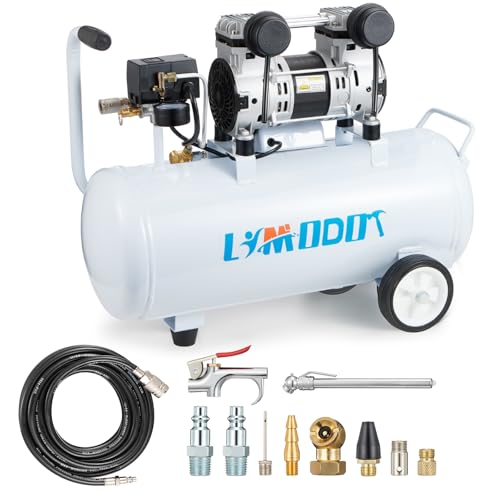
Limodot 8-Gallon Quiet Air Compressor
|
9.1/10 | Buy |
| Best Value |
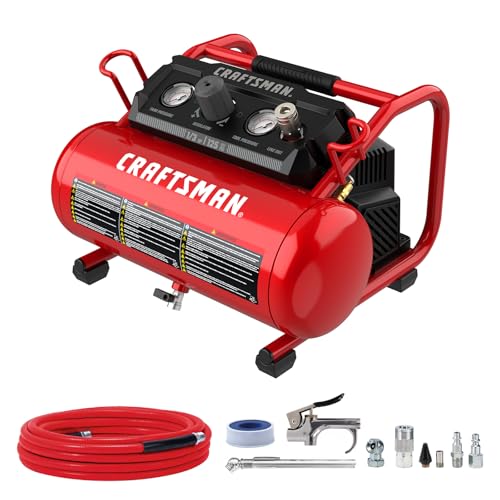 CRAFTSMAN 2-Gallon Portable Air Compressor
|
9.1/10 | Buy |
| Best Premium |
 MZB MZB-1100H-50 13.2-Gallon Air Compressor
|
8.8/10 | Buy |
 Metabo HPT 6-Gallon Pancake Air Compressor Review
|
8.6/10 | Buy | |
| Best Budget |
 VIAIR 88P 12V Portable Air Compressor
|
8.4/10 | Buy |
 DEWALT DWFP55130 2.5-Gallon 200 PSI Quiet Trim Air
|
8.4/10 | Buy | |
 CRAFTSMAN 12-Gallon Ultra-Quiet Oil-Free Air
|
8.3/10 | Buy | |
 CRAFTSMAN 6 Gallon 150 PSI Portable Oil-Free
|
8.1/10 | Buy | |
 AIRSURE Portable Cordless Tire Inflator
|
8.0/10 | Buy | |
 Limodot 5-Gallon Quiet Portable Air Compressor
|
8.0/10 | Buy |
Limodot 8-Gallon Quiet Air Compressor
Limodot pairs an 8-gallon capacity with a quiet 68-decibel motor, keeping noise disruption low during indoor trim or workshop jobs. Delivering 2.8 CFM at 90 PSI alongside a quick 30-second recovery time, it provides steady airflow for DIY pneumatic tools without messy oil maintenance.
Pros
- Low 68 dB output prevents loud workshop disruption
- Fast 30-second pressure recovery keeps projects moving
- Oil-free pump eliminates messy oil changes
- Comprehensive 11-piece accessory kit included out of the box
- Integrated wheels make moving the 8-gallon tank easy
Cons
- 2.8 CFM output limits high-demand continuous tools
- Included PVC hose is stiffer than rubber alternatives
CRAFTSMAN 2-Gallon Portable Air Compressor
This CRAFTSMAN 2-gallon portable compressor package pairs a max 125 PSI oil-free pump with a versatile 10-piece pneumatic accessory kit using standard 1/4-inch NPT fittings. It is a practical, lightweight solution for DIYers and homeowners tackling tire inflation, air dusting, and light fastening.
Pros
- Complete out-of-the-box pneumatic package with air hose, blow gun, tire chuck, and 1/4-inch NPT quick-connect hardware
- Lightweight 19-pound carry weight makes moving between the garage, driveway, and workbench effortless
- Oil-free pump eliminates crankcase oil checks and prevents oil aerosol contamination in downstream air lines
- Dual quick couplings allow quick hookups without needing additional brass splitters
Cons
- Small 2-gallon receiver tank and 1/3 HP motor are limited to light-duty pneumatic tasks rather than continuous air-hungry tools
- The included starter air hose and accessories are entry-level components that high-volume shops may eventually want to upgrade
- Fittings utilize standard 1/4-inch auto profile plugs which require matching couplers if your shop uses alternate pneumatic profiles
MZB MZB-1100H-50 13.2-Gallon Air Compressor
Designed for indoor workshops and residential garages, this compressor keeps operating noise down to a manageable 70 decibels. Its 13.2-gallon steel tank and wheeled frame suit DIY woodworkers, painters, and mechanics needing reliable airflow without regular pump maintenance.
Pros
- Quiet 70dB sound level ideal for indoor spaces
- Maintenance-free oil-free pump design
- Large 13.2-gallon durable steel tank
- Wheels and handle make transport manageable
Cons
- Hefty 72-pound weight makes vehicle loading difficult
- 115 PSI maximum pressure is modest for heavy-duty pneumatic tools
Metabo HPT 6-Gallon Pancake Air Compressor Review
The Metabo HPT EC711S is a portable 6-gallon pancake air compressor delivering 2.8 CFM at 90 PSI with a 165 PSI tank ceiling and an operating sound level of 73 dB. With its quick 46-second recovery cycle and dual quick couplers, it is an excellent choice for finish carpenters, punch-list contractors, and DIYers running pneumatic nailers.
Pros
- 73 dB operational sound rating is substantially quieter than standard job-site pancake units
- 165 PSI maximum pressure provides ample air storage with a swift 46-second recovery cycle
- Two 1/4-inch universal quick couplers support multi-tool setups right out of the box
- Sturdy steel roll cage protects gauges and the manifold assembly against knocks and drops
- Oil-free 1.0 HP motor ensures low maintenance and reliable cold-weather motor startup
Cons
- At 38.5 lbs, it is slightly heavier than ultra-compact 1-to-3-gallon trim compressors
- Airflow of 2.8 CFM at 90 PSI is designed for intermittent fastening, not continuous rotary tools or paint sprayers
- Bare-tool configuration means air hoses and pneumatic fastening tools must be purchased separately
VIAIR 88P 12V Portable Air Compressor
Designed for passenger cars and light trucks with tires up to 33 inches, the VIAIR 88P delivers dependable 120 PSI output directly from a vehicle battery. Its generous 26-foot total reach, built-in gauge, and integrated work light make it a practical emergency companion for road trips and camping.
Pros
- Solid 1.47 CFM flow rate provides brisk inflation
- Generous 26-foot reach easily accesses all four tires
- Built-in LED work light aids dark roadside repairs
- Compact body weighs under five pounds for convenient storage
Cons
- Requires direct battery connection instead of standard 12V outlet
- Limited to a 25-minute duty cycle before cooling
- Not designed for tires larger than 33 inches
DEWALT DWFP55130 2.5-Gallon 200 PSI Quiet Trim Air
The DEWALT DWFP55130 delivers a capable 3.0 SCFM at 90 PSI with a 200 max PSI 2.5-gallon tank, running at a quiet 71.5 dBA on an efficient 12-amp motor. It is an ideal pneumatic power source for trim carpenters, punch-list contractors, and DIYers working on residential circuits.
Pros
- Delivers 3.0 SCFM at 90 PSI with a high 200 max PSI ceiling for rapid pressure recovery during sequential fastening
- Quiet 71.5 dBA sound output makes indoor trim carpentry and remodeling far less disruptive to homeowners
- Low 12-amp draw reduces breaker trips when running on shared 15-amp household circuits
- Integrated roll cage and console protect critical components while supporting horizontal or vertical operation
- Dual quick couplers allow two trim carpenters to connect and work off a single compressor
Cons
- Bare-tool configuration means you must supply your own air hoses, couplers, and pneumatic nail guns
- At 36 pounds, it is heavier to haul up flights of stairs than ultra-compact 1-gallon finish compressors
- Air output of 3.0 SCFM is built for intermittent finish fastening and will not support continuous tools like rotary sanders or sprayers
CRAFTSMAN 12-Gallon Ultra-Quiet Oil-Free Air
Featuring a 12-gallon vertical steel tank, a 1.5 HP oil-free pump, and an advertised 45-second recovery time, this CRAFTSMAN compressor delivers up to 150 PSI of quiet pneumatic power. It is an ideal low-maintenance solution for DIY homeowners and garage hobbyists seeking compact, wheeled mobility for fastening and tire inflation.
Pros
- Space-saving 12-gallon vertical tank design stores ample air volume without cluttering shop walkways
- Oil-free 1.5 HP pump design requires zero crankcase oil maintenance and starts smoothly in chilly temperatures
- Fast advertised 45-second pressure recovery reduces waiting intervals between intermittent fastening bursts
- Integrated SPCC steel handle, rubber transport wheels, and manageable 40-pound dry weight support easy shop mobility
- Equipped with protective thermal overload and overheating safety mechanisms for dependable motor operation
Cons
- Manufacturer specifications omit continuous SCFM airflow delivery numbers at 90 PSI and explicit decibel ratings
- Not engineered for continuous high-consumption air tools like dual-action rotary sanders, paint blasters, or die grinders
- Structural steel receiver tank requires regular manual moisture draining after each work session to prevent internal rust
CRAFTSMAN 6 Gallon 150 PSI Portable Oil-Free
The CRAFTSMAN 6-Gallon 150 PSI Oil-Free Pancake Air Compressor delivers 2.6 SCFM at 90 PSI via a 1.0 HP low-voltage start motor with factory dual quick couplers. Weighing 30.8 pounds, it provides dependable air delivery for finish carpenters, DIY remodelers, and garage maintenance tasks.
Pros
- Delivers 2.6 SCFM at 90 PSI with a 150 PSI maximum tank ceiling for dependable finish fastening.
- Dual quick couplers allow two pneumatic tools to remain connected at the same time without splitters.
- Oil-free pump design ensures clean air delivery and zero periodic pump oil maintenance.
- Low-voltage start 1.0 HP motor supports reliable startups on standard 120V household outlets.
- Manageable 30.8-pound weight and integrated carry handle provide practical one-person jobsite transport.
Cons
- Air delivery rate of 2.6 SCFM at 90 PSI is not designed for continuous high-demand tools like rotary sanders or paint sprayers.
- Standard oil-free electric motor design generates typical high-pitch operational sound during tank recharge cycles.
- Sold as a bare compressor unit without included air hoses, couplers, or pneumatic nailers.
AIRSURE Portable Cordless Tire Inflator
The AIRSURE portable tire inflator is an ultra-compact cordless air pump powered by a 4000mAh rechargeable battery, reaching up to 150 PSI with digital auto shut-off. Weighing under a pound, it provides swift vehicle top-offs and sports gear inflation without tangled cables or heavy compressor tanks.
Pros
- Ultra-lightweight 0.95-pound chassis fits easily inside glove compartments, toolboxes, or bike bags
- Rechargeable 4000mAh battery eliminates cumbersome 12V cords and tangled power wires
- Digital auto shut-off prevents over-pressurizing bicycle tires and vehicle tires
- Includes four multi-purpose adapter nozzles and a bright built-in LED flashlight
Cons
- Tankless micro-pump design is strictly for inflation and cannot operate workshop pneumatic nailers or air tools
- Inflating high-volume light truck tires from zero will consume substantial battery capacity and take longer
- Does not include an alternate 12V DC auxiliary vehicle plug for direct power if the internal battery runs flat
Limodot 5-Gallon Quiet Portable Air Compressor
The Limodot 5-Gallon Quiet Air Compressor delivers 2.8 CFM at 90 PSI with an operating noise level of just 68 dB, making it a great match for indoor trim work, tire maintenance, and home workshops. With an 80-second full tank fill time, an oil-free pump, and an included 13-piece accessory kit, this wheeled unit offers solid utility for DIYers seeking quiet performance without routine oil changes.
Pros
- Quiet 68 dB operational sound level suitable for indoor spaces and attached garages
- Strong airflow rating of 2.8 CFM at 90 PSI with rapid 25-second recovery duration
- Maintenance-free oil-free pump ensures hassle-free operation and easy vehicle transport
- Integrated wheel assembly improves mobility around the shop, garage, and jobsite
- Bundled package includes a 25-foot air hose and a 13-piece starter accessory collection
Cons
- Continuous air-hungry tools like rotary sanders or spray equipment will quickly exceed the 2.8 CFM output
- Included PVC air hose can be stiff and prone to kinking in cold garage environments compared to hybrid polymer hoses
- At 5 gallons with a wheeled frame, it has a larger storage footprint than compact pancake or twin-stack trim compressors
Finding the Right Air Compressor for Your Workshop and Jobsite Tasks
Matching an air compressor to your workload prevents tool stalling, motor overheating, and premature equipment wear. Pneumatic applications demand contrasting volumes of pressurized air, ranging from brief bursts for brad nails to continuous streams for spray painting. Choosing the right setup requires understanding how airflow volume, tank storage, pump design, and electrical draw interact under real conditions. Mapping your specific tools to these mechanical factors makes selecting the proper machine straightforward.
Understanding Air Delivery: The Critical Balance of CFM and Operating PSI
Cubic feet per minute, abbreviated as CFM, measures the actual volume of air a pump delivers to your tools at a given pressure. Most pneumatic tools specify consumption at 90 PSI, which serves as the standard working benchmark for fasteners, ratchets, and wrenches. For example, compact units like the CRAFTSMAN 6-gallon pancake deliver 2.6 SCFM at 90 PSI, while the Metabo HPT pancake produces 2.8 CFM at 90 PSI. When a tool demands more air than the pump produces, line pressure drops rapidly and interrupts your work.
To size your airflow requirements, find the tool with your highest CFM rating and multiply that value by 1.25 to maintain a safe operational margin. Low-consumption tools like brad nailers or pneumatic staplers require less than 1.0 CFM, allowing compact pumps to keep pace easily. Continuous-demand tools like dual-action sanders or HVLP spray guns frequently require 4.0 to 10 CFM or more. Operating continuous tools on a small pump leads to severe pressure starvation and forces the motor to cycle constantly until it overheats.
Pounds per square inch, or PSI, indicates the pressure or force behind that delivered air volume. Although maximum ratings reach 150 to 200 PSI on models like the DEWALT trim compressor, standard tool regulators throttle that pressure down between 70 and 100 PSI. Storing air at higher pressures packs more air molecules into a smaller vessel. This high-pressure reserve allows longer operating runtime between motor recharge cycles.
Selecting Tank Capacity and Form Factor for Portability and Reserve
Tank capacity dictates how much pressurized air remains immediately available before the motor restarts. Compact tanks between 2 and 2.5 gallons, such as the CRAFTSMAN 2-gallon or DEWALT trim model, prioritize low carry weight and mobility. These smaller reservoirs easily handle intermittent firing for baseboards, pneumatic testing, and bicycle or passenger car tires. However, their limited storage means the pump cycles frequently during active projects.
Larger vessels, ranging from 5 to 13.2 gallons on Limodot and MZB models, provide sustained buffers for heavier workshop tasks. A generous reserve absorbs sudden bursts in demand, preventing rapid pressure drops when triggering demanding tools. Vertical tanks, such as the CRAFTSMAN 12-gallon model, save valuable floor space in compact residential garages while delivering ample volume. Horizontal tanks with rugged wheels provide a lower center of gravity for rolling across rough surfaces.
Tank shape also affects jobsite transport and everyday workshop storage. Pancake compressors feature wide, stable bases that resist tipping during transport in pickup beds and work well for finish carpenters. Upright vertical units use built-in wheels and tall handles to help one person move heavy equipment across garage floors. Balancing physical storage space against your air reserve ensures you do not buy a heavy stationary unit when mobile portability is required.
Evaluating Pump Mechanics: Maintenance-Free Oil-Free Versus Oil-Lubricated Designs
Consumer and prosumer air compressors commonly feature oil-free pumps utilizing Teflon-coated piston sleeves and precision cylinders. Compressors from Limodot, Metabo HPT, and CRAFTSMAN use this oilless design to eliminate crankcase oil checks and messy fluid changes. Oil-free pumps start effortlessly in cold weather because there is no cold lubricant creating viscous drag against internal components. They also deliver air free of oil vapor, which protects paint finishes and delicate wood coatings.
Oil-free pumps produce higher operating friction and thermal wear, giving them shorter operational lifespans than traditional cast-iron pumps. For residential garages and weekend DIYers, oil-free mechanisms offer more than enough durability without maintenance headaches. Industrial shops with continuous all-day air demands typically rely on cast-iron pumps that circulate non-detergent oil to manage heat. Understanding this tradeoff prevents overpaying for commercial machinery when a low-maintenance oil-free unit meets your needs.
Compression stages also influence pump efficiency and maximum operating pressure. Most portable jobsite compressors feature single-stage designs that compress air into the storage vessel in a single stroke. Reviewing our single-stage air compressor guide explains how these systems handle general pneumatic demands compared to complex two-stage systems. Single-stage oil-free models remain the standard choice for home garages, DIY carpentry, and everyday shop maintenance.
Managing Operational Noise: Comparing Low-RPM Induction Motors to Universal Pumps
Traditional jobsite compressors powered by universal motors regularly exceed 80 to 85 decibels under load. This intense noise causes quick operator fatigue and disrupts households when used in attached garages or basements. Motor speeds of 3,400 RPM or higher also generate substantial vibration, causing lighter compressors to shift across smooth concrete floors during compression cycles. For residential remodeling and indoor finish carpentry, excessive sound creates a major daily frustration.
Quiet compressor technology addresses this issue by pairing dual-piston pump heads with low-RPM induction motors. Models such as the Limodot 8-gallon and 5-gallon units operate at just 68 decibels, while the MZB 13.2-gallon compressor runs around 70 decibels. Operating below 72 decibels allows tradespeople to work inside occupied homes without disturbing clients or requiring constant hearing protection. DEWALT achieves a similar balance with their trim model running at 71.5 dBA for quiet indoor trim work.
Lower decibel ratings do not require sacrificing air output when dual opposing pistons are used. These dual cylinders compress air alternately on each stroke, delivering up to 2.8 CFM at 90 PSI while running at cooler motor speeds. Operating at lower temperatures reduces thermal stress on internal reed valves and piston seals, extending mechanical longevity. If you work in basements, home garages, or shared spaces, prioritizing quiet operation makes your workspace much more comfortable.
Electrical Demands and Household Circuit Breaker Compatibility
Electric compressors pull significant electrical current when starting against head pressure, creating a brief inrush current spike. Standard residential garage circuits generally supply 15 amps at 120 volts, which can trip if a motor draws high startup current. Compressors engineered with lower running draws, such as the DEWALT trim model rated at 12 amps, start smoothly without tripping standard breakers. Checking your motor amperage rating ensures your electrical panel can support your compressor alongside basic workshop lighting.
Using thin, light-duty extension cords often causes severe voltage drops that harm compressor motors. When voltage drops, electric motors pull higher current to compensate, triggering thermal overload switches and potentially burning out start capacitors. Instead of running a long electrical cord, plug the compressor directly into a grounded wall receptacle and reach your work area with an extended 3/8-inch air hose. Air hoses maintain pressure across long distances without risking electrical damage to your motor.
Specialized 12V direct-current compressors offer dedicated off-grid inflation when AC power is completely unavailable. The VIAIR 88P connects directly to vehicle battery terminals with alligator clamps, delivering 1.47 CFM free flow for tires up to 33 inches. Cordless handheld units like the AIRSURE inflator utilize rechargeable 4000mAh lithium batteries for convenient roadside tire top-offs and sports equipment. Choosing the right power source ensures your compressor matches where you physically perform your work.
Matching Specific Pneumatic Tools to the Right Compressor Class
Pneumatic fastening and finish carpentry require modest air volume, making portable pancake or trim compressors an excellent fit. Brad nailers, pin nailers, and finish staplers consume brief puffs of air under 1.0 CFM, allowing compact models like the CRAFTSMAN 6-gallon pancake or DEWALT trim compressor to keep up easily. These machines often include dual quick-connect couplers, enabling two carpenters to work from a single regulated manifold. Their light carry weight also makes moving between rooms effortless.
Framing nailers and roofing guns feature larger pneumatic cylinders that consume considerably more air per cycle. For framing work, rapid recovery times prevent fasteners from sinking unevenly into framing lumber. The Metabo HPT 6-gallon pancake compressor delivers a fast 46-second recovery time and 165 PSI max pressure, supporting steady framing cadence. Limodot models also provide swift recovery times under 30 seconds, maintaining steady line pressure during continuous fastening.
Automotive repair and continuous air tools require substantially higher air reserves than basic pancake units can provide. Air ratchets, impact wrenches, and tire chucks run effectively on medium tanks like the MZB 13.2-gallon or CRAFTSMAN 12-gallon vertical compressors. However, continuous tools like rotary sanders or automotive paint guns will quickly exhaust 12-gallon tanks, requiring larger commercial multi-cylinder setups. Matching your compressor capacity to your tool duty cycle prevents frustrating interruptions and tool stalling.
Routine Moisture Drainage, Air Lines, and Tank Corrosion Prevention
Atmospheric moisture naturally condenses into liquid water inside the steel storage tank as compressed air cools. Leaving water inside the tank causes internal rust, weakening structural steel walls and creating safety hazards over time. Trapped moisture also travels downstream into air hoses, washing away tool lubricants and ruining paint finishes. Opening your tank drain valve after every single work session remains the most important maintenance step for protecting your equipment.
Drain valve designs differ across models, directly affecting how easily you can complete daily maintenance. Basic threaded needle petcocks sit under the tank and often corrode or become difficult to twist with bare fingers. In contrast, quarter-turn brass ball valves provide smooth, instant condensation purges at the end of each session. Reading our guide on storing air in a compressor tank explains why leaving pressurized moisture inside tanks damages pneumatic equipment over time.
Delivering clean, dry air also requires setting up proper filtration and hose accessories. Adding an inline moisture filter or water separator directly after the pressure regulator captures residual droplets before they reach pneumatic tools. Choosing 3/8-inch internal diameter hybrid hoses minimizes dynamic pressure drop compared to thin 1/4-inch coiled lines. Quality air delivery accessories ensure that your regulated pressure remains steady when you pull the tool trigger.
Final Selection Strategy: Clarifying Your Pneumatic Priorities
Selecting the best air compressor comes down to balancing tool demand, mobility, and noise tolerance. For roadside emergency tire inflation and sports equipment, compact 12V or cordless battery models like the VIAIR 88P or AIRSURE inflator offer ideal convenience. For finish carpentry, brad nailing, and general home repair, 6-gallon pancake models like the Metabo HPT or CRAFTSMAN provide reliable power at an easy carry weight.
For home garages and basement hobby workshops, choosing an ultra-quiet 68 to 70 dB dual-piston unit like the Limodot or MZB models transforms your working environment. You get dependable air delivery and clean oil-free operation without annoying household members or neighbors. Vertical tanks between 12 and 13.2 gallons provide the extra reserve needed for light automotive repairs, impact wrenches, and intermittent spraying.
Auditing your primary pneumatic tools, verifying CFM output at 90 PSI, and checking circuit compatibility lets you choose the right model with confidence. Always look for durable pressure gauges, reliable quick-connect fittings, and an accessible tank drain valve. Selecting a compressor that matches your specific workload ensures dependable performance across every project you tackle.
About the author
Tony Carrick is an experienced product researcher and writer specializing in tools, home improvement, automotive maintenance, and consumer equipment. With extensive experience reviewing tools and tackling hands-on renovation projects, he brings a buyer-focused perspective to compressor performance, usability, and overall value.