
Can Air Compressors Be Outside? Operating and Storage Guide for 2026
Can air compressors be outside? Learn the risks of weather, moisture, and temperature on your equipment in October 2026.
 By Tom Scalisi
Updated October 7, 2026
By Tom Scalisi
Updated October 7, 2026

Moisture in the air, sudden rainstorms, and temperature swings can quickly ruin an unsealed electric motor and rust a pressurized steel vessel from the inside out. Pneumatic tools require consistent air delivery, so contractors and homeowners often want to move the loud pump out of an enclosed workshop or garage. This raises the question of whether can air compressors be outside during active projects or stored in the elements indefinitely. Standard consumer workshop compressors use open, drip-proof electric motors that lack water resistance. Exposing these units to weather creates shock hazards, motor winding failure, and rapid internal condensation.
Operating an air compressor outdoors on a dry driveway or active framing site is standard practice, but leaving equipment exposed overnight leads to severe damage. In contrast, specialized twelve-volt recovery pumps feature sealed switches and rugged metal housings built specifically for off-road trail conditions. If your project demands running standard electric shop equipment outdoors, you need to understand ventilation, moisture management, and electrical safety. Taking basic protective steps helps you prevent premature pump wear, avoid tripping ground fault circuit interrupters, and protect your steel tank from catastrophic rust.
| Award | Product | ACR Score About ACR ScoreThe ACR Score is our own rating from 0 to 10, based on performance, design and build, ease of use, and value. It reflects independent research and is never influenced by manufacturers, retailers, or affiliate commissions. Learn more › | |
|---|---|---|---|
| Best Overall |
ALL-TOP Dual Cylinder 12V Air Compressor
|
9.2/10 | Buy |
| Best Budget |
 CRAFTSMAN 2-Gallon Portable Air Compressor
|
9.1/10 | Buy |
 ALL-TOP 12V 7.06 CFM Air Compressor
|
8.8/10 | Buy | |
 VEVOR 6.3 Gallon Portable Air Compressor
|
8.8/10 | Buy | |
| Best Premium |
 ECOMAX 6-Gallon 150 PSI Portable Pancake Air
|
8.8/10 | Buy |
 RyanTek 15-Gallon 2HP Air Compressor
|
8.6/10 | Buy | |
| Best Value |
 Metabo HPT EC914S 6-Gallon 200 PSI Pancake Air
|
8.3/10 | Buy |
 CRAFTSMAN 6 Gallon 150 PSI Portable Oil-Free
|
8.1/10 | Buy | |
 GOYOJO 4500 PSI PCP Air Compressor
|
7.8/10 | Buy |
ALL-TOP Dual Cylinder 12V Air Compressor
Built for rapid tire inflation on large trucks and off-road rigs, this dual-cylinder pump pushes an impressive 12.35 CFM flow rate up to 150 PSI. The rugged metal frame, integrated thermal safeguards, and extended 26-foot hose provide reliable utility for heavy-duty vehicle recovery.
Pros
- High 12.35 CFM output swiftly inflates large tires
- Dual aluminum cylinder construction helps dissipate heat
- Generous 26-foot hose reaches all corners of large vehicles
- Equipped with automatic thermal and over-current safety switches
Cons
- Heftier 24-pound build demands extra carrying effort
- Third-party gauges require built-in over-pressure protection
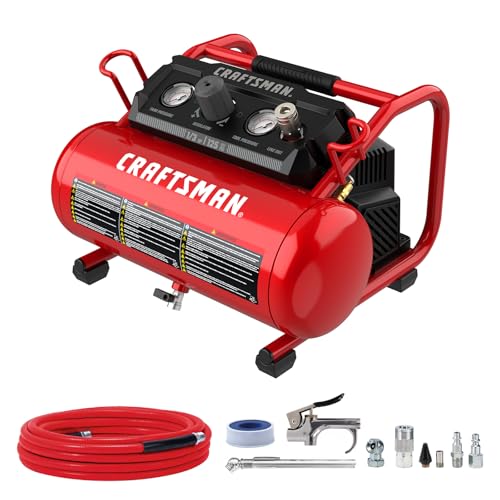
CRAFTSMAN 2-Gallon Portable Air Compressor
This CRAFTSMAN 2-gallon portable compressor package pairs a max 125 PSI oil-free pump with a versatile 10-piece pneumatic accessory kit using standard 1/4-inch NPT fittings. It is a practical, lightweight solution for DIYers and homeowners tackling tire inflation, air dusting, and light fastening.
Pros
- Complete out-of-the-box pneumatic package with air hose, blow gun, tire chuck, and 1/4-inch NPT quick-connect hardware
- Lightweight 19-pound carry weight makes moving between the garage, driveway, and workbench effortless
- Oil-free pump eliminates crankcase oil checks and prevents oil aerosol contamination in downstream air lines
- Dual quick couplings allow quick hookups without needing additional brass splitters
Cons
- Small 2-gallon receiver tank and 1/3 HP motor are limited to light-duty pneumatic tasks rather than continuous air-hungry tools
- The included starter air hose and accessories are entry-level components that high-volume shops may eventually want to upgrade
- Fittings utilize standard 1/4-inch auto profile plugs which require matching couplers if your shop uses alternate pneumatic profiles
ALL-TOP 12V 7.06 CFM Air Compressor
Built for heavy-duty off-road rigs and large tires, this 12V inflator delivers a rapid 7.06 CFM output with auto-thermal protection. Its generous 26-foot rubber hose and rugged metal housing make it well suited for remote trail maintenance.
Pros
- High 7.06 CFM flow rate fills large tires quickly
- Long 26-foot hose easily reaches all vehicle tires
- Auto-thermal shutoff prevents motor from overheating
- Durable aluminum cylinder enhances heat dissipation
- Includes storage bag and versatile nozzle adapters
Cons
- Heavy 16-pound weight makes transport cumbersome
- Short 6.5-foot power cord requires proximity to vehicle battery
- Limited to 12V vehicle power without AC compatibility
VEVOR 6.3 Gallon Portable Air Compressor
Delivering 3.35 CFM at 90 PSI with a 1450W 2 HP oil-free motor and 6.3-gallon steel tank, this VEVOR compressor offers dependable air delivery for pneumatic nailing, tire care, and garage repairs. Dual intake silencers and built-in thermal protection make it a low-maintenance, practical option for home workshops and DIY mechanics.
Pros
- Generous 3.35 CFM output at 90 PSI readily handles common intermittent garage and workshop pneumatic tools.
- Dual silencer assemblies help dampen intake sound and keep airborne dust out of the pump cylinders.
- Maintenance-free oil-free pump eliminates crankcase oil level checks and oil-contaminated air lines.
- Rugged Q235B steel pressure vessel features triple-layer rust and wear protection.
- Integrated dual cooling fans and thermal overload shutoff protect the electric motor from heat strain.
Cons
- Maximum working pressure tops out at 116 PSI, which is lower than typical 135 to 175 PSI jobsite compressors.
- At 43 pounds, manual transport across stairs or jobsites requires noticeable physical effort.
- Continuous high-demand tools such as rotary sanders or large sprayers will outpace the pump during extended use.
ECOMAX 6-Gallon 150 PSI Portable Pancake Air
The ECOMAX 6-Gallon 150 PSI Pancake Air Compressor delivers portable, low-maintenance pneumatic power with its 1.5 HP oil-free pump, dual quick-connect couplers, and bundled 10-piece accessory kit. Featuring cold-weather starting support and a flip-up handle, it is an accessible choice for DIYers, trim carpenters, and garage tire maintenance.
Pros
- Comes with a 10-piece accessory kit including an air hose, tire chuck, and blow gun ready out of the box
- Dual quick-connect couplers enable two operators to run pneumatic lines simultaneously
- Oil-free pump design requires zero motor oil maintenance and prevents oil discharge into air lines
- Low-voltage and cold-weather startup capability helps ensure reliable motor turnover in chilly garages
- Flip-up carrying handle and built-in cord bracket simplify transport and tidy storage
Cons
- PVC air hose included in the kit can become stiff and difficult to manage in freezing temperatures
- Not intended for continuous high-demand air tools such as rotary sanders or automotive paint sprayers
- Standard universal motor noise level makes hearing protection advisable during indoor use
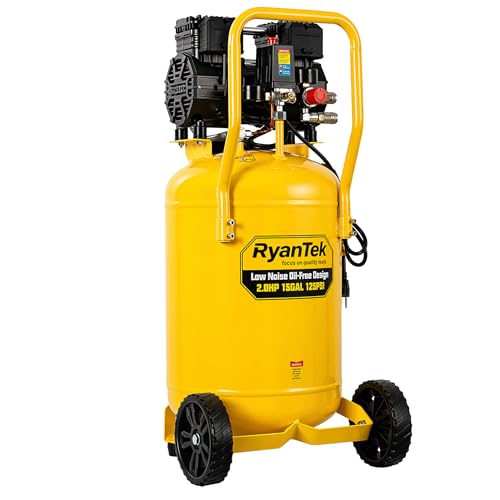
RyanTek 15-Gallon 2HP Air Compressor
Built for garage workshops and indoor tasks, this vertical compressor combines a quiet 66 dBA dual-cylinder motor with a spacious 15-gallon tank. It supplies a dependable 4.5 CFM at 90 PSI for continuous nailing, spraying, and inflation while conserving floor space.
Pros
- Quiet 66 dBA operation suitable for indoor spaces
- Generous 4.5 CFM output at 90 PSI
- Compact vertical tank saves workshop floor space
- Maintenance-free oil-free pump design
- Integrated wheels make rolling transport straightforward
Cons
- Heavy at 68.3 pounds to lift manually
- Maximum pressure caps at 125 PSI
Metabo HPT EC914S 6-Gallon 200 PSI Pancake Air
The Metabo HPT EC914S delivers an impressive 200 PSI maximum pressure and 4 CFM at 90 PSI from a 6-gallon tank, giving trim carpenters and remodelers the air volume needed to drive multiple nailers simultaneously. At roughly 41 pounds, it successfully combines high-pressure air storage with practical job-site portability.
Pros
- High 200 PSI tank ceiling stores substantially more usable air than conventional 150 PSI pancake models
- Generous 4 CFM at 90 PSI airflow rating supports multi-tool operation and reduces nailer drive hesitation
- Manageable 41-pound carry weight offers better portability than heavier twin-stack compressor configurations
- Engineered by Metabo HPT to support both lightweight trim nailers and larger framing or roofing guns
Cons
- At 41 pounds, it is noticeably heavier to carry than minimalist 1-to-3 gallon trim-only compressors
- Tank volume and CFM output remain inadequate for continuous high-demand air tools like HVLP sprayers or sanders
- Ships as a bare-tool compressor without included air hoses, pneumatic fittings, or nail guns
CRAFTSMAN 6 Gallon 150 PSI Portable Oil-Free
The CRAFTSMAN 6-Gallon 150 PSI Oil-Free Pancake Air Compressor delivers 2.6 SCFM at 90 PSI via a 1.0 HP low-voltage start motor with factory dual quick couplers. Weighing 30.8 pounds, it provides dependable air delivery for finish carpenters, DIY remodelers, and garage maintenance tasks.
Pros
- Delivers 2.6 SCFM at 90 PSI with a 150 PSI maximum tank ceiling for dependable finish fastening.
- Dual quick couplers allow two pneumatic tools to remain connected at the same time without splitters.
- Oil-free pump design ensures clean air delivery and zero periodic pump oil maintenance.
- Low-voltage start 1.0 HP motor supports reliable startups on standard 120V household outlets.
- Manageable 30.8-pound weight and integrated carry handle provide practical one-person jobsite transport.
Cons
- Air delivery rate of 2.6 SCFM at 90 PSI is not designed for continuous high-demand tools like rotary sanders or paint sprayers.
- Standard oil-free electric motor design generates typical high-pitch operational sound during tank recharge cycles.
- Sold as a bare compressor unit without included air hoses, couplers, or pneumatic nailers.
GOYOJO 4500 PSI PCP Air Compressor
The GOYOJO PCP Air Compressor delivers up to 4500 PSI for air rifles and paintball cylinders using a 300W oil-free pump and built-in auto shut-off. With dual 12V DC and 120V AC power inputs, it offers convenient high-pressure fills for outdoor shooting sports without needing an external adapter.
Pros
- Integrated internal transformer allows seamless switching between 12V DC car battery and 115V AC wall power without an external power brick
- Adjustable auto shut-off stops pumping automatically once target cylinder pressure is reached
- Maintenance-free oil-free pump design requires no fluid checks or crankcase refills
- Compact 18-pound steel chassis with an integrated carry handle for field transport
Cons
- Strictly intended for high-pressure air cylinders under 1L and cannot operate workshop air tools or inflate vehicle tires
- Cooling fan generates continuous operational noise and requires bleeding residual line pressure manually after each run
- Not designed for filling large scuba tanks exceeding 1000cc capacity
Everything You Need to Know About Running and Storing Air Compressors Outside
Directly answering whether can air compressors be outside depends entirely on the distinction between temporary outdoor operation and long-term outdoor storage. While almost any portable pneumatic unit can run outdoors on a clear day, standard electric compressors are strictly not weatherproof and will rapidly deteriorate if stored in the open. Understanding how rain, high ambient humidity, dust, and freezing temperatures interact with motor windings and pressurized air vessels is critical for jobsite safety and equipment longevity.
Running an Air Compressor Outdoors Versus Permanent Outdoor Storage
Operating an electric compressor outdoors on a jobsite or driveway is routine work for contractors and home mechanics. Portable units like the CRAFTSMAN Air Compressor or the Metabo HPT Portable Pancake Air Compressor are routinely carried outside to frame sheds, install trim, or inflate vehicle tires. In these operational settings, the user remains nearby, monitors environmental conditions, and brings the machine under cover once the workday concludes. This temporary use poses minimal danger as long as the ground remains dry and the compressor sits in an area clear of falling debris.
Permanent outdoor storage represents an entirely different scenario that quickly ruins standard electric shop machinery. Leaving an air compressor exposed to overnight dew, shifting seasonal temperatures, and sudden rainstorms allows water to enter electrical enclosures and pump assemblies. Even if an electrical tool survives a short shower without an immediate short circuit, prolonged dampness triggers silent corrosion on copper motor coils and internal bearings. Unless a unit is housed inside a dedicated, weatherproof, and properly ventilated shed, leaving shop compressors outdoors indefinitely is a recipe for equipment failure.
The Threat of Rain and Electrical Shock Hazards
Water intrusion poses the most dangerous hazard when running or storing standard electric compressors outdoors. Most consumer and commercial workshop compressors utilize open drip-proof electric motor casings designed to maximize airflow for cooling rather than block incoming liquid. Rain or blowing spray easily bypasses these vented louvers, landing directly on live electrical terminals, capacitors, and switch contacts. When water bridges these electrical conductors, the tool will instantly trip branch circuit breakers, blow internal fuses, or cause severe electric shock to the operator.
Plugging an outdoor compressor into an ungrounded or non-GFCI protected outlet multiplies this electrical danger significantly. Wet soil or damp concrete slabs create an immediate path to ground through the user if an internal short develops within the motor housing. Pressure switches and unloader valve solenoids are rarely sealed against standing moisture on standard residential units. If unexpected rain begins while you are working outdoors, you should immediately disconnect power at the dry wall outlet, depressurize the tank, and move the machine into dry storage.
How Ambient Moisture and Humidity Accelerate Tank Corrosion
Even without direct rainfall, high outdoor humidity creates severe problems for compressed air systems. The physical process of air compression inherently concentrates atmospheric moisture, causing water vapor to condense against the inner walls of the air tank. Storing a compressor outdoors exposes it to constant humidity spikes and daily temperature swings that draw moisture-laden air directly through the intake valve. Over time, standing water settles in the bottom reservoir, creating scale, rust flakes, and structural weakness inside the steel tank.
Tanks built from materials like Q235B structural steel, such as the VEVOR 6.3 Gallon 2 HP Air Compressor, include protective exterior coatings, but inner walls still remain vulnerable to standing acidic condensation. Rust flakes that peel from the tank basin quickly travel into manifold fittings, clogging precision regulators and jamming pneumatic nailer driver blades. Severe internal corrosion can eventually compromise the pressure vessel shell, creating dangerous pinhole leaks or catastrophic tank failure under high operating pressures. Users must drain condensation daily to counter the aggressive moisture buildup that outdoor climates generate.
Cold Weather Starting and Freezing Temperature Hazards
Dropping temperatures present severe mechanical and electrical obstacles when an air compressor remains in unheated outdoor environments. In freezing conditions, residual condensation trapped inside the tank, check valve, or unloader line turns into solid ice. Frozen unloader lines prevent the compressor from venting trapped head pressure upon motor shutdown, forcing the electric motor to restart against severe resistance. This trapped back-pressure frequently spikes startup inrush amperage, tripping standard fifteen-amp household breakers before the motor ever reaches rated operating speed.
Certain modern compressors incorporate dedicated cold-weather starting features to alleviate these winter jobsite headaches. For instance, the ECOMAX Air Compressor 6 Gallon 150 PSI Pancake and the CRAFTSMAN 6 Gallon 150 PSI Oil-Free Pancake Air feature low-voltage and cold-weather start motors designed to spin up reliably under chilly conditions. However, even cold-start capable electric motors struggle if condensed water freezes inside the brass drain valve or regulator ports. Bringing your compressor into an insulated space overnight prevents freeze-up issues and protects delicate rubber O-rings from brittle cracking.
High Heat and Direct Sunlight Thermal Shutdown Risks
Operating an air compressor under scorching summer sun creates severe thermal stress that can trigger sudden motor shutdowns. Compression generates immense natural heat, sending discharge line temperatures soaring well past two hundred degrees Fahrenheit during continuous cycling. When exposed to direct sunlight, dark steel air tanks absorb ambient radiant heat, preventing the pump head and cooling fins from shedding excess thermal energy. Electric motors rely on ambient cooling air, so scorching outdoor environments quickly push internal windings past safe operating limits.
Most quality portable units feature built-in auto-thermal cut-off switches and overload protection to prevent permanent motor burnout under harsh operating conditions. Models such as the VEVOR 6.3 Gallon 2 HP Air Compressor incorporate twin high-flow cooling fans and automatic overheating protection to manage thermal loads. Similarly, high-pressure equipment like the GOYOJO PCP Air Compressor utilizes active cooling fan systems to safely manage compression heat. Despite these safety features, running an air compressor in direct sunlight forces the thermal switch to trip repeatedly, stalling work and stressing internal components.
Dust, Sand, and Air Intake Contamination on Outdoor Jobsites
Jobsite dirt and airborne debris represent another major danger for air compressors running in open outdoor spaces. Wind kicks up abrasive sand, concrete dust, and organic pollen that get sucked directly into the compressor intake port. If the intake filter is missing, damaged, or unsealed, abrasive particles enter the compression cylinder, scoring smooth aluminum walls and destroying Teflon piston rings. Once the piston seal is scratched, air bypasses the rings, causing severe CFM delivery drops and extended recovery cycle times.
Compressors engineered for demanding jobsite conditions, like the RyanTek 15-Gallon Air Compressor, feature screw-mounted air filter housings that resist loosening from heavy operational vibration. Rugged intake mufflers also help block fine dust from entering while muffling the loud mechanical noise of the compression cycle. When running equipment on unpaved ground or dry construction sites, placing the unit on a raised piece of plywood keeps it out of direct dirt. Inspecting and cleaning your intake filter sponge after every outdoor work session prevents premature cylinder wear.
Portable 12V Off-Road Compressors Versus Standard Workshop Units
While traditional 120-volt shop compressors dislike open weather, specialized twelve-volt recovery compressors are purposely built for outdoor environments. Units like the ALL-TOP Air Compressor Kit with dual aluminum cylinders are engineered for overland trail expeditions, truck tire inflation, and backcountry rescue. These portable pumps feature sealed sand-proof power switches, hollow metal protective outer shells, and heavy-duty rubber vibration feet designed to operate directly on dirt or gravel. They draw direct current from a vehicle battery, eliminating the need for delicate alternating current extension cords.
The ALL-TOP Air Compressor Kit delivers up to 12.35 cubic feet per minute at 150 PSI, providing massive airflow specifically tailored for large all-terrain vehicle tires. Another variant from ALL-TOP provides 7.06 CFM, combining lightweight aluminum cylinder construction with thermal cut-off protection. These dedicated off-road inflators survive trail dust and light splashes far better than conventional garage compressors. However, overland users must still store them inside supplied nylon travel bags when not in use to shield electrical alligator clips and brass chucks from road grime.
Essential Best Practices for Operating Compressors Outdoors Safely
If your project requires taking a standard shop compressor outdoors, following specific setup procedures keeps both you and your equipment safe. Always connect the compressor power cord directly to a GFCI-protected exterior receptacle, or use a portable GFCI inline adapter block. Avoid running undersized electrical extension cords across the lawn, as long wire runs produce dangerous voltage drops that starve electric motors and trip breakers. Instead of stretching long electric cords to the work area, keep the compressor near the wall outlet and run longer fifty-foot air hoses to your pneumatic tools.
Position the compressor on a firm, level surface rather than soft mud or tall grass that can obstruct intake air vents. Elevating the unit on a wooden board prevents the machine from vibrating into damp soil or tipping over during operation. If you must work in bright summer weather, position the compressor under a temporary canopy or patio umbrella to provide constant shade without blocking air circulation. Always shut down the power switch, unplug the electrical cord, and bleed air line pressure before stepping away from the outdoor workstation.
How to Build or Choose a Weatherproof Outdoor Compressor Enclosure
Homeowners and shop mechanics often ask whether they can locate a loud compressor outside permanently by building an outdoor equipment lean-to or shed. Moving a noisy pump outdoors preserves quiet inside the garage, but the shelter must satisfy rigorous mechanical requirements. A proper enclosure requires a sloped, waterproof roof, louvered intake vents for cross-ventilation, and elevated flooring that keeps the steel tank off damp ground. You must also include an active exhaust fan wired to run whenever the compressor motor engages to prevent lethal heat buildup inside the shed.
Without continuous ventilation, heat radiating from the pump head quickly turns a small outdoor box into an oven, triggering thermal overload shutdowns. The enclosure must also provide convenient access to electrical disconnect switches, pressure gauges, and bottom condensation drain ports. Freezing winter climates require adding thermostat-controlled heating pads or insulated walls to keep standing moisture from freezing in lines and valves. If building a ventilated, heated, and fully waterproof exterior cabinet is impractical, storing the compressor inside your garage and piping air lines through the exterior wall remains the superior solution.
Daily Condensation Draining and Post-Outdoor Maintenance Steps
Daily maintenance becomes twice as crucial whenever an air compressor operates in outdoor humidity or fluctuating temperatures. Water vapor cools rapidly inside the storage reservoir, settling at the tank bottom where it begins corroding unpainted steel. Models like the RyanTek 15-Gallon Air Compressor include convenient horizontal drain valves that allow quick, hassle-free purging of condensed water after every session. Threaded needle petcocks, common on older units, frequently jam with rust sediment if neglected, discouraging users from performing this vital daily purge.
High-pressure systems like the GOYOJO PCP Air Compressor require immediate pressure bleed-off after filling PCP air rifles or paintball cylinders, often releasing a visible burst of condensed moisture mist. To maintain your compressor after outdoor operation, disconnect power, open the drain valve to discharge all trapped air and water, and wipe down the exterior metal housing with a dry rag. Check the rubber power cord for jacket abrasions and inspect the intake air filter for trapped dust. Storing the depressurized compressor in a climate-controlled room ensures it remains dry, corrosion-free, and ready for your next project.
Treating your air compressor with proper environmental care ensures years of dependable pneumatic power whether you are spraying paint, nailing framing timber, or inflating off-road tires. While temporary outdoor operation on dry days is completely standard on the jobsite, permanent outdoor exposure destroys electric motors, ruins switches, and rusts pressurized steel vessels from within. Prioritizing shaded setups, heavy-gauge air hoses, GFCI electrical safety, and daily condensation purges keeps your compressed air system operating reliably across every season.
About the author
Tom Scalisi brings more than two decades of experience in construction, building maintenance, contracting, and hands-on tool use. His practical understanding of power tools, automotive work, repairs, and jobsite equipment helps readers evaluate compressors based on real workloads rather than specifications alone.