
How Many Watts Is a Air Compressor: Power and Wattage Guide for 2026
Find out how many watts is a air compressor ratings in October 2026 to match generator capacity, prevent breaker trips, and calculate true running wattage.
 By Kenny Koehler
Updated October 7, 2026
By Kenny Koehler
Updated October 7, 2026
Starting a heavy induction motor often causes workshop lights to flicker or small generators to bog down under sudden resistance. Determining how many watts is a air compressor requires looking beyond broad estimates and understanding the exact relationship between line voltage, continuous running amperage, and initial startup surge. Many users get caught off guard when a seemingly modest tool trips a standard 15-amp circuit breaker or stalls a portable power station. Knowing the electrical profile of your equipment protects wiring, prevents motor winding burnout, and keeps pneumatic tools supplied with steady air pressure.
Power requirements shift substantially depending on pump architecture, tank pressure, and motor efficiency. Standard portable workshop units generally consume between 600 and 1,800 running watts, but the starting inrush current can momentarily demand three times that level. Factoring in variables like wire gauge, unloader valve operation, and continuous duty cycles ensures you pair the machine with an adequate electrical circuit or generator. Calculating accurate air compressor power consumption saves time, prevents equipment damage, and keeps your garage or jobsite running without unexpected interruptions.
| Award | Product | ACR Score About ACR ScoreThe ACR Score is our own rating from 0 to 10, based on performance, design and build, ease of use, and value. It reflects independent research and is never influenced by manufacturers, retailers, or affiliate commissions. Learn more › | |
|---|---|---|---|
| Best Overall |
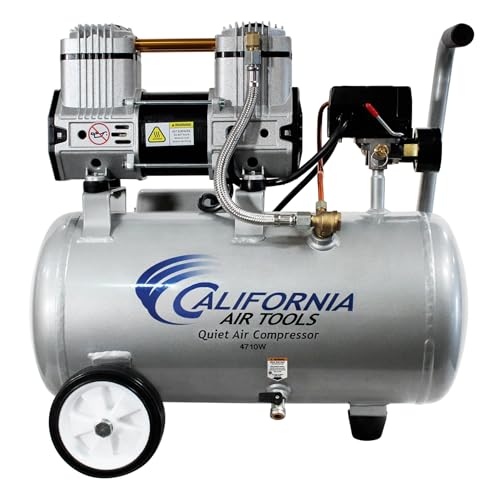
California Air Tools CAT-4710W 4.7-Gal Compressor
|
8.3/10 | Buy |
| Best Value |
 ACTECMAX 12V Universal Electric AC Compressor
|
8.0/10 | Buy |
California Air Tools CAT-4710W 4.7-Gal Compressor
Built for garage workshops and DIY tasks, this mobile unit features an oil-free dual-piston pump that fills its 4.7-gallon steel tank in 78 seconds. Its low 7.5-amp motor draw ensures smooth startups on standard household circuits without tripping breakers.
Pros
- Fast 78-second tank fill time from empty
- Low 7.5-amp draw prevents tripped breakers
- Low-maintenance oil-free pump operation
- Wheels and pull handle ease transport at 35 pounds
Cons
- Delivers only 2.2 CFM at 90 PSI for demanding tools
- Steel tank construction is heavier than aluminum alternatives
ACTECMAX 12V Universal Electric AC Compressor
The ACTECMAX 12V Universal Electric AC Compressor provides 20cc/r displacement for R134a automotive cooling systems, featuring a separable controller with 3-gear adjustment and pre-filled POE 68 oil. It suits automotive fabricators, camper van builders, and mechanics seeking an independent 12V electric air conditioning solution.
Pros
- Electric 12V operation eliminates the need for belt-driven engine accessory brackets
- Separable controller offers adaptable placement options in tight automotive engine bays
- Factory-filled with 120 ml of POE 68 oil ready for R134a refrigerant configurations
- Three-gear speed control allows stepped management of cooling performance
Cons
- Requires careful oil compatibility checks and potential system flushing if existing lines contain PAG oil
- Straight fittings may require adapter elbows depending on vehicle firewall and engine compartment clearances
- Demands a dedicated, heavy-gauge 12V power supply setup capable of handling electric compressor draw
Understanding Air Compressor Wattage and Electrical Demands
Air compressors convert electrical energy into pressurized pneumatic force through mechanical pistons, vanes, or scrolls. The electrical wattage consumed during this process is rarely static, varying from zero head pressure at initial startup to maximum cut-out pressure. Understanding how volts, amps, and mechanical resistance interact allows you to operate your setup reliably across household outlets, generator sets, and mobile vehicle power configurations.
Calculating Electrical Wattage with Volts and Amps
Electric power in any workshop circuit is calculated by multiplying operating voltage by the current drawn in amperes. A standard 120-volt household receptacle running a machine that draws 8 continuous amps produces 960 running watts of energy consumption. If that same mechanical load runs on a dedicated 240-volt single-phase line, drawing 8 amps requires 1,920 continuous watts of electrical power. Checking the electrical data placard attached directly to the motor housing provides the certified running current needed for this math.
Motor efficiency and power factor also play a quiet but significant role in true wattage calculations. Electric induction motors are not perfectly efficient machines, losing a small percentage of energy to heat and electromagnetic resistance. A compressor motor rated with an 85 percent power factor draws more apparent power from an alternating current source than a simple resistive load like a space heater. Calculating wattage by multiplying standard nameplate voltage by running amperage gives you a safe, conservative baseline for any circuit evaluation.
Direct-current configurations operate on the exact same fundamental electrical formula. A 12-volt automotive compressor pulling 30 amps of continuous current consumes roughly 360 watts of electrical power from a vehicle charging system. Knowing these figures lets you determine whether a given auxiliary circuit, auxiliary battery bank, or alternator can sustain prolonged pumping cycles without draining stored reserves.
Running Watts Versus Startup Inrush Surge
The distinction between continuous running wattage and startup surge wattage is the single most common source of electrical confusion for compressor owners. Running watts represent the steady electricity needed to spin the motor once the pump reaches its standard operating RPM. Startup surge, often termed inrush current or locked-rotor amperage, is the violent initial spike needed to overcome stationary mechanical inertia and build magnetic fields inside the motor coils. This surge routinely reaches two to four times the normal operating wattage for a fraction of a second.
Single-phase electric motors utilize dedicated start capacitors to provide the phase shift necessary for initial rotational torque. As the motor accelerates from a dead stop against mechanical pump friction, current draw hits its absolute peak. If the air tank already holds significant pressure, that startup spike lasts longer because the pistons push directly against trapped air resistance. Once the centrifugal switch clicks open and disengages the start circuit, power consumption settles back into its steady running wattage range.
Failing to account for starting surge causes immediate problems when operating on sensitive electrical systems. While a thermal circuit breaker in a home electrical panel can absorb a brief transient surge without tripping, electronic inverters and small generators cannot. An inverter lacking sufficient surge headroom will enter protective shutdown mode before the compressor pump even completes its first rotational cycle.
Wattage Differences Across Compressor Categories
Compressor size, pump displacement, and intended application dictate where an individual unit falls on the wattage spectrum. Small 12-volt tire inflators and compact auxiliary compressors generally operate between 120 and 360 watts. These small direct-current units rely on high amperage at low voltage, making them ideal for intermittent emergency tire top-offs rather than heavy pneumatic work. Their compact electric motors generate limited CFM output, requiring patience during inflation tasks.
Portable consumer units, including popular pancake, hot dog, and small twin-stack designs, typically draw between 800 and 1,500 running watts. These machines usually feature 0.75 to 1.5 horsepower motors designed to stay within the limits of standard 15-amp residential branch circuits. Their startup surge often peaks between 2,500 and 3,500 watts, which explains why thin extension cords or shared garage circuits quickly trigger breaker trips.
Stationary workshop air compressors with large vertical tanks operate in an entirely different electrical tier. Single-stage and two-stage workshop units with true 3 to 5 horsepower motors require 3,000 to 5,000 continuous running watts. Units of this scale demand dedicated 240-volt electrical circuits drawing 15 to 30 amps, eliminating interference with standard household lighting and appliance lines.
Matching the machine category to your available power supply avoids costly installation surprises. A large cast-iron stationary pump delivers exceptional CFM output for rotary sanders and spray guns, but it cannot run on portable jobsite cords or standard outlets. Evaluating your available electrical infrastructure before selecting a tank size prevents equipment mismatches.
Sizing Portable Generators and Inverters Correctly
Running pneumatic equipment in remote locations requires careful matching between compressor electrical draw and generator output ratings. Generators list two separate capacity numbers on their frames: running rated watts and peak surge watts. When pairing a generator with an electric air compressor, the generator surge capacity must comfortably exceed the locked-rotor startup spike of the compressor motor.
A portable compressor with a 1,000-watt running draw and a 3,000-watt starting spike will quickly stall a generator rated for only 2,000 starting watts. As the compressor motor attempts to start, the undersized generator engine bogs down, dropping both output voltage and frequency. This voltage drop prolongs the starting cycle, keeping the compressor in its high-amperage locked-rotor state until the generator circuit breaker pops or thermal protection activates.
Pure sine wave inverters demand an even stricter margin of safety when powering electric compressor motors. Modified sine wave units often cause electric induction motors to run hotter and pull higher current than standard utility power. Providing at least 25 to 30 percent extra surge headroom above the compressor peak starting wattage ensures smooth motor starts under cold weather and high tank pressure conditions.
Household Branch Circuits and Breaker Limitations
Standard residential garages and workshops are typically wired with 120-volt circuits protected by 15-amp or 20-amp circuit breakers. A standard 15-amp circuit provides a theoretical maximum capacity of 1,800 watts before tripping. National electrical safety standards recommend keeping continuous electrical loads under 80 percent of maximum circuit capacity, establishing a continuous working threshold of 1,440 watts on a 15-amp breaker.
Many universal-motor compressors approach that 80 percent threshold during regular pumping cycles. If that same branch circuit powers overhead shop lights, a radio, or a refrigerator, the compressor startup surge will immediately push cumulative amperage past the breaker trip curve. Tripping issues occur most frequently when the compressor restarts mid-job, cycling back on after line pressure drops to the cut-in threshold while other tools are active.
Upgrading garage outlets to dedicated 20-amp branch circuits wired with 12-gauge copper conductors solves most nuisance breaker trips. A 20-amp circuit supports up to 2,400 peak watts, with a continuous 80 percent limit of 1,920 watts. This extra headroom easily accommodates the brief inrush current of portable 1.0 to 1.5 horsepower workshop compressors without flickering lights or interrupting other tasks.
Continuous Running Horsepower Versus Peak Marketing Ratings
Consumer air compressor marketing has a long history of displaying inflated horsepower numbers that confuse electrical planning. Decades ago, manufacturers frequently advertised peak or surge horsepower ratings derived from brief locked-rotor laboratory conditions rather than continuous working output. A label claiming five peak horsepower on a standard 120-volt, 15-amp wall plug is physically impossible under standard electrical laws.
One mechanical horsepower equals approximately 746 watts of electrical energy under ideal conditions. Accounting for standard motor efficiency losses of roughly 15 to 20 percent, delivering one true continuous mechanical horsepower requires approximately 900 to 1,000 electrical watts from the wall. A genuine two-horsepower electric motor requires roughly 1,800 to 2,000 running watts, which pushes a standard 15-amp household circuit to its absolute limits.
Relying on motor nameplate amperage rather than consumer box horsepower ratings prevents serious sizing errors. If a machine claims three horsepower but lists a running current draw of only 9 amps at 120 volts, the true continuous output is closer to 1.0 running horsepower. Designing your electrical supply around actual nameplate current ensures reliable power delivery regardless of marketing phrasing.
Evaluating Low-Amp Workshop Units and Direct-Current Compressors
Modern engineering approaches demonstrate that high CFM output does not always require punishing electrical draw. The California Air Tools CAT-4710W 1.0 HP Quiet compressor provides a clear example of efficient electrical design. Operating on standard 110-volt, 60 Hz household power, its dual-piston oil-free pump draws only 7.5 running amps, which calculates to roughly 825 running watts. This modest current demand leaves ample headroom on standard 15-amp circuits while still delivering 2.20 CFM at 90 PSI and filling its 4.7-gallon tank in just 78 seconds.
Low-RPM dual-piston designs pull significantly less starting current than traditional high-speed universal motors. Running at lower rotational speeds reduces mechanical friction and thermal buildup, allowing the motor to start smoothly without excessive inrush spikes. The inclusion of factory thermal overload protection provides an additional safety buffer, guarding the motor windings against damage if supply voltage dips below acceptable operating levels.
Specialized mobile applications utilize direct-current architecture rather than alternating household current. The ACTECMAX Universal AC Electric Compressor 20cc/r represents this category, operating on a 12-volt vehicle system with a separable 3-gear controller. Designed for mobile automotive cooling and air systems running R134a refrigerant, this 20cc displacement pump relies entirely on direct current power. Systems of this type eliminate inverter losses entirely, drawing power straight from vehicle electrical circuits and pre-charged POE 68 lubrication loops.
Practical Methods to Reduce Starting Resistance and Voltage Drop
Several mechanical and electrical factors can artificially inflate compressor wattage requirements during regular use. Using undersized extension cords is the most widespread cause of electrical failure on jobsites. A thin 16-gauge extension cord running 50 feet creates substantial electrical resistance, causing supply voltage to drop dramatically before reaching the motor terminals. When voltage drops, the motor must pull increased amperage to maintain mechanical torque, resulting in overheated wiring and tripped breakers.
The safest approach is plugging the compressor directly into a dedicated wall outlet and using longer air hoses to reach your work area. Compressed air travels through 50 or 100 feet of quality rubber hose with minimal friction loss, whereas electricity suffers immediate voltage drop across long wire runs. If an extension cord is unavoidable, using a heavy-duty 12-gauge or 10-gauge cord keeps electrical resistance within safe operating parameters.
The mechanical unloader valve plays an equally critical role in managing startup wattage spikes. When the pressure switch shuts the motor off at cut-out pressure, the unloader valve vents trapped head pressure between the pump cylinders and the tank check valve with a brief hiss. If this valve sticks or malfunctions, the motor is forced to restart against full tank pressure, doubling its inrush wattage and stalling the pump. Verifying that your unloader valve vents cleanly after each cycle ensures low-resistance motor starts.
Verifying Safe Power Supply for Long-Term Operation
Operating an air compressor safely requires confirming that your power source matches the continuous mechanical demands of your projects. Intermittent tools like finish nailers allow the pump to rest between cycles, keeping operating temperatures low and electrical draw predictable. High-consumption tools like orbital sanders, die grinders, or paint sprayers force the pump to run near continuous duty cycles, sustaining peak operating wattage for prolonged stretches.
Checking the electrical data placard, maintaining clean intake filters, and draining tank condensation daily keeps the entire pneumatic system operating efficiently. Whether calculating wattage to size an off-grid generator, configuring a mobile vehicle setup, or setting up a dedicated garage workshop, matching actual wattage demands to your circuit capacity ensures reliable performance and protects your valuable equipment for years to come.
About the author
Kenny Koehler is a power-tool specialist with more than a decade of hands-on evaluation experience and a science-based approach to product testing. His expertise in repeatable testing, tool performance, impact wrenches, and professional equipment brings a practical, data-focused perspective to compressor and pneumatic-tool comparisons.