
Is It Okay to Leave Air in an Air Compressor: Practical Storage and Safety Guide for 2026
Learn if is it okay to leave air in an air compressor during October 2026, and see how internal tank condensation impacts receiver steel, pressure switches, and valve seals.
 By Tony Carrick
Updated October 7, 2026
By Tony Carrick
Updated October 7, 2026

Every compression cycle pulls ambient atmospheric humidity into the receiver tank, where cool metal surfaces rapidly convert airborne vapor into liquid water droplets. Many workshop owners finish their projects and wonder whether is it okay to leave air in an air compressor overnight or between weekend DIY tasks. While modern receiver cylinders are engineered to handle substantial pneumatic pressure, trapped pressurized air constantly forces accumulated moisture against internal tank walls and delicate valve seats. Understanding how internal condensation behaves helps prevent mechanical failures, premature component corrosion, and gradual tank wall thinning.
The practical answer depends on storage duration, environmental humidity, and specific tank construction materials. Storing pressurized air for a brief lunch break causes negligible harm, but leaving air in a steel receiver tank for days or weeks invites structural rust and seal degradation. Even when utilizing modern oil-free dual-piston units with specialized coatings or corrosion-resistant aluminum reservoirs, regular moisture management remains essential. Purging the receiver tank through bottom drain valves ensures dependable pneumatic tool performance, protects line regulators, and maintains a safe workspace.
| Award | Product | ACR Score About ACR ScoreThe ACR Score is our own rating from 0 to 10, based on performance, design and build, ease of use, and value. It reflects independent research and is never influenced by manufacturers, retailers, or affiliate commissions. Learn more › | |
|---|---|---|---|
| Best Overall |
California Air Tools 2010A 2-Gallon Compressor
|
9.1/10 | Buy |
| Best Value |
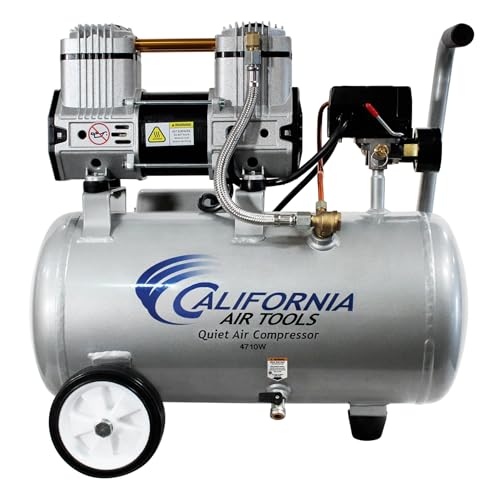 California Air Tools CAT-4710W 4.7-Gal Compressor
|
8.3/10 | Buy |
California Air Tools 2010A 2-Gallon Compressor
Operating at just 60 decibels, this compact unit delivers reliable airflow with minimal noise disruption. Its rust-free aluminum tank and oil-free dual-piston pump make it well suited for indoor trim work and noise-sensitive spaces.
Pros
- Exceptionally quiet operation at only 60 decibels
- Lightweight rust-free aluminum tank design
- Low-maintenance oil-free dual-piston system
- Quick 14-second recovery time between cycles
Cons
- Modest 2-gallon tank limits continuous heavy tool use
- 120 PSI maximum pressure is below heavy-duty standards
- Air output is insufficient for sustained high-demand air tools
California Air Tools CAT-4710W 4.7-Gal Compressor
Built for garage workshops and DIY tasks, this mobile unit features an oil-free dual-piston pump that fills its 4.7-gallon steel tank in 78 seconds. Its low 7.5-amp motor draw ensures smooth startups on standard household circuits without tripping breakers.
Pros
- Fast 78-second tank fill time from empty
- Low 7.5-amp draw prevents tripped breakers
- Low-maintenance oil-free pump operation
- Wheels and pull handle ease transport at 35 pounds
Cons
- Delivers only 2.2 CFM at 90 PSI for demanding tools
- Steel tank construction is heavier than aluminum alternatives
The Mechanical and Safety Realities of Storing Pressurized Air
Leaving compressed air sitting inside a pneumatic storage tank remains one of the most common habits among workshop enthusiasts and jobsite contractors. While modern equipment is engineered to withstand substantial pressure, leaving air in an air compressor over extended periods creates hidden maintenance problems. Compressed air itself does not spoil, but the moisture trapped alongside it begins attacking internal components the moment the motor shuts off. Understanding what happens inside the tank during storage clarifies why a regular depressurization habit protects your investment.
Why Storing Pressurized Air Over Long Periods Is Harmful
The primary hazard of leaving air stored in a receiver tank is not the mechanical pressure itself, but the liquid condensation that settles at the tank bottom. When atmospheric air is compressed into a confined space, water vapor condenses into liquid form and collects at the lowest point of the cylinder. Storing pressurized air keeps this acidic moisture in direct contact with metal walls under continuous load. Over weeks and months, this standing liquid corrodes steel tanks from the inside out, weakening the structure where it cannot be visually inspected.
Continuous static pressure also places constant mechanical tension on internal seals, valve gaskets, and pressure switch diaphragms. Mechanical components perform best when they cycle between operational load and relaxed rest states. Leaving 120 PSI or more stored against the tank check valve and regulator seals can cause premature elastomeric fatigue. Over time, this constant static stress leads to slow micro-leaks, meaning your compressor may bleed pressure while standing idle in the garage.
The Thermodynamic Process of Tank Moisture Accumulation
Understanding tank condensation requires a basic look at pneumatic physics and thermodynamic behavior. Ambient air always contains humidity, and when an electric motor drives dual pistons to compress that air, the air temperature rises rapidly. Warm compressed air holds moisture while under high velocity, but as it enters the receiver tank, the metal cylinder acts as a large heat exchanger. The air cools down against the tank surface, crossing the dew point and dropping liquid water directly onto the tank floor.
A standard compressor running in humid weather can generate several ounces of liquid water during a single hour of operation. Because water is essentially non-compressible, standing water gradually reduces the usable internal volume of your storage reservoir. In a compact 2-gallon or 4.7-gallon tank, even a cup of standing moisture significantly reduces the volume of air available before the pressure switch triggers a recovery cycle. This dynamic causes the pump to cycle more frequently, generating extra heat and compounding the condensation cycle.
Internal Tank Corrosion and Structural Safety Risks
Internal corrosion represents the most dangerous long-term consequence of neglecting tank draining. Standard steel receiver tanks are painted and powder-coated on the exterior, but the raw interior steel is exposed directly to corrosive water and atmospheric contaminants. Rust eats away at the bottom seam and lower belly of the tank, where gravity causes moisture to pool. Because this deterioration occurs internally, a tank can look pristine on the outside while its steel walls are thinning dangerously beneath the surface.
When internal corrosion progresses unchecked, the metal eventually fails under operating pressure. In minor cases, the tank develops a pinhole leak that hisses continuously and prevents the unit from reaching its factory cut-out threshold. In severe situations, structural metal fatigue can lead to catastrophic tank rupture, creating a severe explosion hazard from rapid pressure release. Regulatory safety standards and manufacturer guidelines emphasize complete moisture evacuation specifically to prevent this hidden structural degradation.
How Trapped Pressure Affects Valves, Regulators, and Seals
Pressurized air left inside the tank does not stay isolated from the surrounding manifold assembly. Static pressure presses continuously against the one-way check valve installed at the pump discharge port, testing the rubber flapper or Teflon disc. If moisture vapor reaches these upper fittings, mineral deposits and rust particles can lodge in the valve seat. A fouled check valve allows air to backflow into the pump head, which can cause the compressor to hum and stall when attempting to restart.
Downstream air regulators and quick-connect couplers also suffer when moisture-laden air sits under pressure. Stagnant moisture can corrode the internal brass springs, deteriorate neoprene regulator diaphragms, and freeze up mechanical pressure dials. When you eventually hook up an air tool, this sitting moisture gets blown directly down the air hose into your pneumatic equipment. Brad nailers, paint sprayers, and impact wrenches experience internal rust, stripped o-rings, and sluggish performance when hit with wet air.
Tank Material Differences: Aluminum Versus Steel Receivers
The specific material of your air receiver plays a significant role in how vulnerable the unit is to sitting moisture. For instance, the California Air Tools 2010A features a 2.0-gallon aluminum tank specifically designed to be rust-free. Aluminum naturally resists water oxidation, eliminating the hazard of internal wall flaking and rusted pinholes. For craftsmen operating in humid workshops or individuals who occasionally forget to drain the system, an aluminum tank provides superior structural resistance to moisture damage.
By contrast, models like the California Air Tools CAT-4710W utilize a 4.7-gallon steel tank to provide greater air storage capacity. While steel offers rugged structural durability and economical capacity, it demands diligent moisture purging to prevent internal rust formation. Even though aluminum tanks avoid metal rust, leaving pressurized air inside them still subjects the brass drain valve, check valve, and pressure switch to static hydraulic stress. Regardless of whether your tank is aluminum or steel, depressurizing the receiver remains the recommended practice.
Storage Durations: Short Work Breaks Versus Extended Storage
A practical distinction exists between leaving air in the compressor during a workday versus storing it for days or weeks. Leaving the tank pressurized for two or three hours while you eat lunch or run to the hardware store is completely standard practice. Air compressors are engineered to maintain pressure during active work intervals without suffering structural degradation. As long as the unit remains on a level surface and the unloader valve functions correctly, brief static holding causes no measurable harm.
The threshold of risk begins when the compressor sits pressurized overnight, over the weekend, or across months of non-use. Extended storage gives standing water ample time to initiate galvanic corrosion and chemically react with raw steel walls. Furthermore, temperature swings in unheated garages cause ambient air to expand and contract, drawing additional moisture through loose fittings. If you finish your project for the day, switching off the power and venting the tank takes less than a minute and prevents lingering damage.
Step-by-Step Procedure for Safely Depressurizing the Tank
Depressurizing an air compressor requires a controlled sequence to prevent sudden air blasts or valve damage. First, switch the power toggle to the off position and disconnect the electrical power cord from the wall outlet. Next, turn the regulated pressure knob down or use an attached blow gun to bleed the line pressure safely below 20 PSI. Releasing the bulk of the air through a regulated tool prevents high-pressure moisture from spraying violently across the shop floor when opening the bottom valve.
Once the line pressure drops to a low level, locate the tank drain valve at the lowest point of the receiver belly. Place a shallow pan or rag beneath the valve to catch expelled water, oil residue, and condensation. Slowly open the drain valve, allowing the remaining air to force the pooled moisture out of the tank cylinder. Keep the valve open until air ceases hissing and only dry air escapes, then leave the valve cracked slightly open if storing the machine in a dry workshop.
Drain Valve Mechanics: Petcocks Versus Quarter-Turn Ball Valves
The mechanical design of your tank drain valve directly impacts how convenient daily draining feels. Many budget compressors come equipped with threaded needle petcocks that require tedious twisting with fingers or pliers. These small brass valves often corrode, seize up with road grit, or strip their threads after repeated use in dirty jobsite conditions. When a petcock becomes difficult to twist, users tend to skip regular draining, allowing gallons of condensation to pool silently inside the tank.
Upgrading to or choosing a compressor with a quarter-turn brass ball valve makes the depressurization routine effortless. A quarter-turn lever valve opens completely with a single thumb flick, providing a wide orifice that allows rapid moisture discharge without clogging. Because the internal ball mechanism resists mineral buildup, it maintains a clean pneumatic seal for hundreds of cycles. Checking the condition of your drain valve ensures you can purge condensation quickly without scraping your knuckles on the tank frame.
Impact on Oil-Free Dual Piston Pump Longevity
Modern ultra-quiet compressors, such as the California Air Tools models, rely on dual-piston oil-free pump mechanisms designed for low maintenance. These units utilize Teflon-coated piston rings and precision cylinders operating at a low 1680 RPM to produce clean air without crankcase oil. However, when pressurized air sits in the receiver, moisture vapor can migrate toward the reed valves and cylinder heads if the check valve fails to seat cleanly. Moisture settling on intake and exhaust reed valves causes surface pitting and reduces pump volumetric efficiency.
When reed valves become fouled or corroded from trapped moisture, the compressor struggles to reach full cut-out pressure. The pump might run for extended periods, extending the recovery time from the cut-in threshold of 90 PSI up to the cut-out limit of 120 PSI. This excessive running duration generates unwanted heat, stressing the dual-piston Teflon sleeves and reducing the overall life cycle of the pump. Keeping the receiver dry safeguards these precision pump internals from unnecessary thermal and moisture wear.
Best Practices for Workshop Pneumatic Storage and Maintenance
Establishing a disciplined maintenance routine ensures your compressor remains reliable, quiet, and structurally safe for years of service. At the end of every work session, turn off the electrical switch, depressurize the system, and fully drain accumulated condensation. If you operate in cold climates, draining the tank prevents pooled water from freezing, expanding, and cracking the lower tank weld seams. Storing the compressor with the drain valve slightly open allows residual humidity to evaporate rather than stagnating inside the cylinder.
Periodic inspections of the ASME safety relief valve and pressure switch further guarantee safe operation. Pull the metal ring on the safety relief valve occasionally while the tank holds mild pressure to verify the internal spring moves freely. Clean or replace the intake air filters regularly to ensure the dual-piston pump receives clean, unrestricted airflow during each compression stroke. Taking small, consistent steps to purge air and manage moisture keeps your pneumatic power equipment running at peak performance whenever duty calls.
About the author
Tony Carrick is an experienced product researcher and writer specializing in tools, home improvement, automotive maintenance, and consumer equipment. With extensive experience reviewing tools and tackling hands-on renovation projects, he brings a buyer-focused perspective to compressor performance, usability, and overall value.