
Best Gas Driven Piston Air Compressor of 2026 for Heavy-Duty Jobsites
Power off-grid air tools using the best gas driven piston air compressor guide for October 2026, featuring high CFM ratings and durable cast-iron pumps.
 By Tony Carrick
Updated October 7, 2026
By Tony Carrick
Updated October 7, 2026

High-Output Pneumatic Delivery for Remote Workspaces
Long extension cords running to distant electrical outlets frequently choke electric motors, causing severe voltage drops and pneumatic tool stalls right when you need steady torque. Framing crews, mobile service mechanics, and remote fence builders cannot afford to pause work while an underpowered pump struggles through endless tank recovery cycles. Investing in the best gas driven piston air compressor solves these remote jobsite bottlenecks by pairing a self-contained small engine with a heavy-duty pump that delivers continuous volume anywhere. Models featuring durable cast-iron cylinders and high CFM delivery at 90 PSI supply the sustained pneumatic muscle required for framing nailers, high-torque impact wrenches, and paint sprayers without hunting for a wall receptacle.
Careful evaluation of engine displacement, ASME-certified tank capacity, and pump cooling designs reveals significant differences between compact pontoon units and 30-gallon truck-mounted workhorses. Units engineered with oil-lubricated cast-iron pumps and large finned flywheels manage operating heat far better during extended duty cycles than lightweight consumer hardware. Dual quick-connect couplers, accessible quarter-turn tank drain valves, and low-oil shutdown sensors keep daily maintenance straightforward while protecting your investment on tough jobsites. Selecting the right setup comes down to balancing raw airflow demands against truck bed payload capacity and jobsite portability.
| Award | Product | ACR Score About ACR ScoreThe ACR Score is our own rating from 0 to 10, based on performance, design and build, ease of use, and value. It reflects independent research and is never influenced by manufacturers, retailers, or affiliate commissions. Learn more › | |
|---|---|---|---|
| Best Overall |
XtremepowerUS 13.0HP Horizontal Air Compressor
|
9.2/10 | Buy |
| Best Premium |
 AEOLUS A 30-Gallon Gas Air Compressor
|
9.2/10 | Buy |
| Best Budget |
 Albott 6.5HP 8-Gallon Gas Air Compressor
|
9.1/10 | Buy |
| Best Value |
 VEVOR 9-Gallon 6.5HP Gas Air Compressor
|
8.9/10 | Buy |
 Klutch 4-Gallon 6.5 HP Pontoon Air Compressor
|
8.6/10 | Buy | |
 VEVOR 13.2-Gallon 7HP Gas Air Compressor
|
8.6/10 | Buy | |
 Albott 13HP Gas Air Compressor
|
8.6/10 | Buy | |
 VEVOR 15HP Gas-Powered Air Compressor
|
8.6/10 | Buy |
AEOLUS A 30-Gallon Gas Air Compressor
Built for service trucks and remote jobsites, this 3-in-1 AEOLUS A gas compressor combines a 13 HP engine with a 30-gallon ASME tank to deliver 17 CFM at up to 181 PSI. It provides heavy-duty pneumatic airflow alongside auxiliary 220V power generation for field mechanics, farm operations, and machinery maintenance.
Pros
- High 17 CFM airflow output and 181 PSI pressure support demanding continuous and high-draw pneumatic tools
- Electric-start 13 HP 420cc gas engine allows completely cord-free operation on remote outdoor jobsites
- Integrated 3-in-1 utility provides auxiliary 220V power for field welding and emergency lighting
- ASME-certified 30-gallon tank paired with a heavy-duty two-stage cast-iron pump ensures long-term commercial reliability
Cons
- Substantial 697-pound operating weight requires mechanical lifting equipment and permanent vehicle mounting
- Gasoline engine exhaust and combustion sound make it strictly unsuitable for indoor workshops or residential spaces
- Requires routine engine maintenance including fuel stabilization, spark plug service, and dual crankcase oil changes
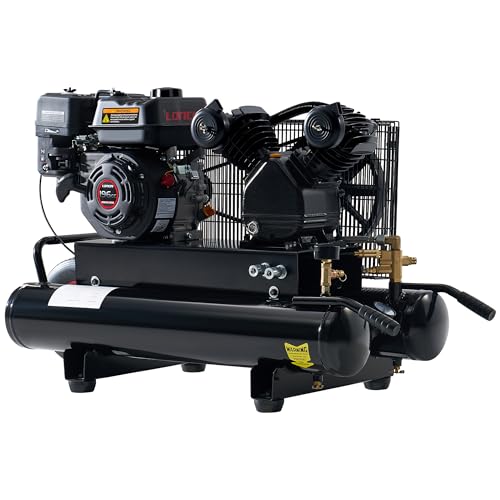
Albott 6.5HP 8-Gallon Gas Air Compressor
Built for off-grid job sites, this gas-powered unit delivers reliable pneumatic power with a 6.5 HP engine and a two-cylinder cast iron pump. Dual air outlets let two operators run tools simultaneously without depending on electrical hookups.
Pros
- Rugged cast iron pump and frame construction
- Dual air outlets support two simultaneous tools
- Gas-powered design eliminates need for electrical outlets
- Automatic safety valve ensures steady pressure management
Cons
- Very heavy at 166 pounds
- Modest 115 PSI maximum working pressure
- Substantial footprint requires ample vehicle cargo space
VEVOR 9-Gallon 6.5HP Gas Air Compressor
Built for remote jobsites without electrical access, this gas-driven unit supplies a dependable 9 CFM output from its 6.5HP engine. Dual outlets let two operators work simultaneously, though managing its 145-pound frame demands notable physical effort.
Pros
- High 9 CFM output drives demanding air tools
- Dual outlets support two operators at once
- Independent gas power works anywhere outdoors
- Fast 105-second tank fill time
Cons
- Heavy weight exceeds 145 pounds
- Maximum pressure capped at 115 PSI
- Produces gas exhaust requiring strict outdoor use
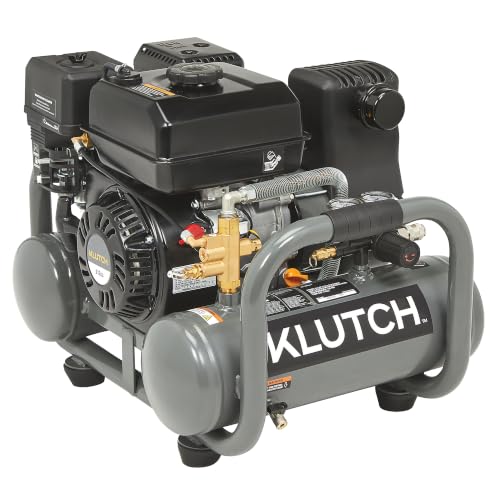
Klutch 4-Gallon 6.5 HP Pontoon Air Compressor
Built for remote jobsites without electrical power, this gas-powered compressor combines a 212cc engine with a 155 max PSI pontoon tank. It provides capable airflow for pneumatic tools, though its 88.2-pound frame requires substantial lifting effort.
Pros
- Runs without electrical outlets via 212cc gas engine
- High 155 max PSI operating pressure
- Provides 5 CFM at 90 PSI for pneumatic tools
- Sturdy 4-gallon pontoon tank structure
Cons
- Heavy 88.2-pound weight reduces portability
- Modest 4-gallon capacity limits continuous air reserves
VEVOR 13.2-Gallon 7HP Gas Air Compressor
Built for job sites lacking electrical hookups, this gas-powered VEVOR unit pairs a 7HP engine with dual outlets to run two pneumatic tools simultaneously. The 9 CFM delivery rate at 115 PSI ensures fast recovery times for outdoor construction and workshop tasks.
Pros
- Dual outlets operate two pneumatic tools at once
- Strong 9 CFM airflow provides rapid air delivery
- Automatic low-oil shutoff prevents pump damage
- Sturdy cast iron cylinders and frame construction
Cons
- Heavy unit weighing over 131 pounds
- Maximum pressure limited to 115 PSI
- Gas-powered design requires regular engine maintenance
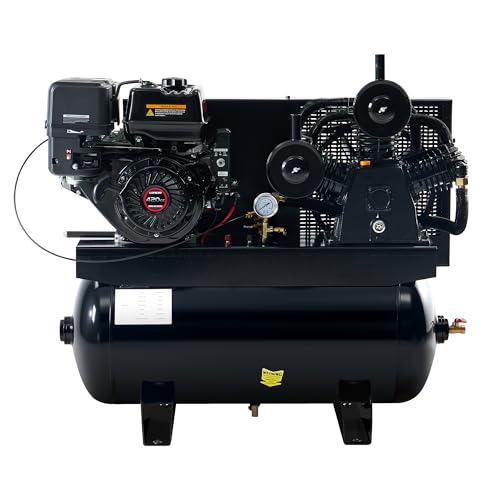
Albott 13HP Gas Air Compressor
The Albott 13HP Gas Air Compressor combines a 30-gallon ASME-certified tank with a 3-cylinder cast iron pump delivering 18 CFM at 90 PSI and up to 180 PSI maximum pressure. It is designed for service truck operators, mobile mechanics, and remote jobsite crews needing high-volume pneumatic airflow without electrical grid access.
Pros
- Delivers a listed 18 CFM at 90 PSI to easily operate high-demand pneumatic tools like heavy impact wrenches and spray guns off the grid
- Rugged 3-cylinder cast iron pump and frame reduce deformation and wear under demanding work conditions
- Substantial 30-gallon ASME-certified horizontal tank provides a reliable air buffer and reduces engine cycle frequency
- Total independence from 120V electrical outlets, eliminating blown household breakers and extension cord voltage drops
Cons
- Substantial dry weight of 344 pounds requires mechanical lifting equipment or permanent truck bed mounting rather than hand carrying
- Internal combustion engine produces exhaust fumes and high sound levels, restricting operation strictly to well-ventilated outdoor areas
- Requires dual routine maintenance schedules for both the gas engine and the oil-lubricated 3-cylinder compressor pump
VEVOR 15HP Gas-Powered Air Compressor
Delivering an impressive 33 CFM at 115 PSI, this 15HP gas-driven VEVOR compressor features a 30-gallon horizontal tank and cast-iron pump for demanding off-grid jobsites. It is an ideal pneumatic solution for framing crews, mobile mechanics, and commercial workshops needing high-volume airflow without electrical hookups.
Pros
- High airflow delivery of 33 CFM at 115 PSI easily runs demanding commercial pneumatic tools.
- Gas-powered 15HP engine operates completely independently without requiring 120V or 240V electrical connections.
- Rugged cast-iron pump cylinders and automatic low-oil shut-off ensure dependable mechanical protection.
- Generous 30-gallon horizontal air reservoir features dual outlets for simultaneous multi-tool operation.
Cons
- Substantial dry weight of 271 pounds requires ramps, a liftgate, or multiple people to transport into a truck bed.
- Maximum operating pressure is capped at 115 PSI, which is lower than multi-stage 150 to 175 PSI systems.
- Gasoline engine requires strictly outdoor, well-ventilated operation along with routine engine oil and fuel maintenance.
Frequently Asked Questions
How much CFM at 90 PSI does a gas-powered air compressor need for heavy pneumatic tools?
Most heavy pneumatic tools require between 5 and 15 CFM at 90 PSI to operate continuously without pressure drops. Finish nailers and small inflators need less than 3 CFM, but high-demand tools like 1-inch impact wrenches, pneumatic sanders, and HVLP sprayers demand continuous airflow. Selecting a unit with at least 9 to 18 CFM ensures you can run heavy tools or multiple operators simultaneously from a single best gas driven piston air compressor setup.
What is the main benefit of a cast-iron pump over aluminum on a jobsite compressor?
Solid cast-iron pumps provide superior thermal dissipation and wear resistance during long duty cycles. Piston sleeves and cylinders made of cast iron maintain strict tolerances under intense friction, which reduces cylinder bore distortion and oil breakdown. This robust construction significantly extends pump life compared to lightweight aluminum alternatives, making it ideal for dusty jobsite conditions.
Can a 30-gallon gas compressor be mounted directly onto a service truck bed?
Yes, 30-gallon horizontal gas compressors are specifically engineered with heavy-duty baseplates for truck bed and utility trailer mounting. Units like the XtremepowerUS 13.0HP Horizontal Air Compressor feature vibration-dampening mounting pads and weather-resistant configurations designed for mobile service mechanics. Securing the tank properly and ensuring adequate engine ventilation prevents heat buildup during remote roadside repairs.
How often should you drain moisture from a gas compressor air tank?
You should drain condensation from the air tank at the end of every working day. Compressing outdoor ambient air generates significant internal tank moisture, especially in humid working environments. Opening the bottom drain valve releases trapped water, which prevents internal tank corrosion and stops moisture from traveling down your air hoses into valuable pneumatic tools.
What engine maintenance is required for a gas driven piston compressor?
Regular engine upkeep involves checking the engine oil level before every startup and replacing air filters periodically. Most gas engines feature low-oil shutdown sensors that prevent ignition when oil drops below safe operating levels. Inspecting drive belts for proper tension, checking the pump oil sight glass, and keeping cooling fins free of jobsite debris ensure reliable starting and long-term durability.
What is the difference between single-stage and two-stage piston compressor pumps?
Two-stage pumps compress air in two distinct steps to achieve higher pressures up to 175 or 181 PSI, whereas single-stage pumps typically top out around 115 to 135 PSI. The two-stage design uses an intercooler between cylinders to lower air temperatures, resulting in denser air output and higher volumetric efficiency. For demanding industrial applications and high-pressure tire inflation, a two-stage best gas driven piston air compressor provides superior air reserves.
About the author
Tony Carrick is an experienced product researcher and writer specializing in tools, home improvement, automotive maintenance, and consumer equipment. With extensive experience reviewing tools and tackling hands-on renovation projects, he brings a buyer-focused perspective to compressor performance, usability, and overall value.