
What Is the Best 2 Stage Air Compressor: Practical Guide for 2026
Find what is the best 2 stage air compressor for continuous air tools, automotive shops, and high-pressure garage demands in November 2026.
 By Bob Beacham
Updated October 8, 2026

Continuous pneumatic tools such as rotary sanders, paint guns, and high-torque impact wrenches quickly drain standard portable tanks, causing severe line pressure drops and frustrating workflow interruptions. In a demanding workshop environment, finding what is the best 2 stage air compressor comes down to understanding how dual-stage compression maintains high air volume up to 175 PSI without overheating the pump. Unlike entry-level single-stage machines that compress air in one stroke, two-stage systems cool the air between compression cycles to deliver superior volumetric efficiency and continuous duty performance. Choosing an appropriate configuration requires evaluating tank capacity, electrical hookups, and true continuous airflow ratings from reliable air compressor manufacturers.
Professional automotive service bays and metal fabrication shops depend on heavy cast-iron pumps designed for continuous operation under heavy mechanical loads. A properly sized stationary two-stage system prevents the rapid pressure loss that ruins automotive spray finishes or stalls heavy impact equipment. Evaluating these power units means checking electrical inrush requirements, true running horsepower ratings, and tank recovery speed under active pneumatic demand. Understanding the mechanical differences between single-stage displacement and genuine two-stage compression helps buyers select reliable equipment built for demanding daily productivity.
| Award | Product | ACR Score About ACR ScoreThe ACR Score is our own rating from 0 to 10, based on performance, design and build, ease of use, and value. It reflects independent research and is never influenced by manufacturers, retailers, or affiliate commissions. Learn more › | |
|---|---|---|---|
| Best Overall |
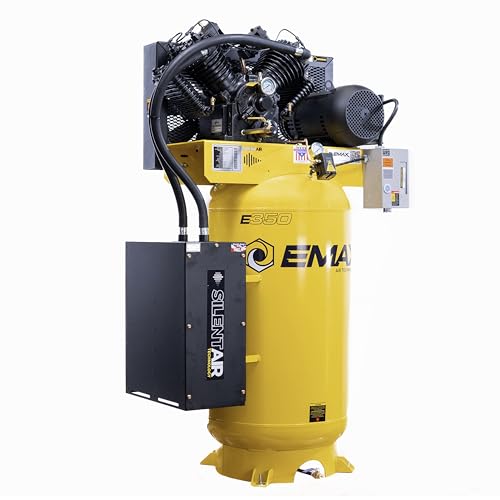
EMAX 80-Gallon Stationary Air Compressor
|
9.2/10 | Buy |
| Best Value |
 Campbell Hausfeld 60-Gallon Air Compressor |
8.9/10 | Buy |
 Campbell Hausfeld 80-Gallon Stationary Air |
8.8/10 | Buy | |
| Best Budget |
 Baococo 8 Gallon Portable Air Compressor |
8.6/10 | Buy |
 NorthStar 2-Stage 24.4 CFM Compressor Pump |
8.6/10 | Buy | |
| Best Premium |
 Ingersoll Rand 2340L5-V 5 HP Air Compressor |
8.3/10 | Buy |
 Ingersoll Rand 2475N7.5 7.5 HP 80-Gallon Two-Stage |
8.1/10 | Buy | |
 InSyoForeverEC 175 PSI 21 CFM Compressor Pump |
8.0/10 | Buy | |
 2HP Cast Iron Air Compressor Pump Universal |
8.0/10 | Buy | |
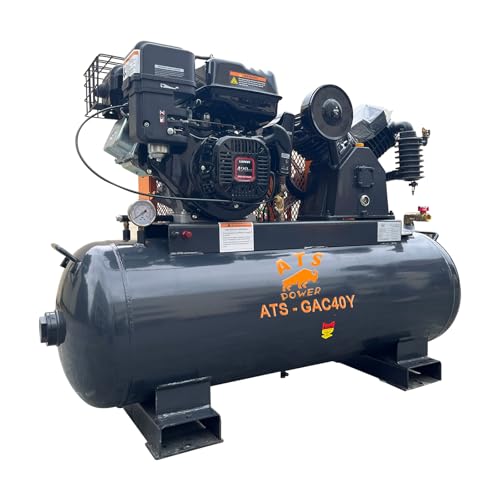 Generic 40-Gallon 15HP Gas Air Compressor |
8.0/10 | Buy |
EMAX 80-Gallon Stationary Air Compressor
The EMAX 80-Gallon E350 stationary air compressor delivers 31 CFM using a 7.5 HP single-phase, two-stage pump paired with Silent Air technology that lowers sound by up to 50 percent. It is built for commercial workshops and auto garages needing high-volume air without overwhelming noise.
Pros
- Delivers a robust 31 CFM airflow to handle high-demand pneumatic equipment without stalling
- Silent Air technology lowers operating noise by up to 50 percent for a much quieter shop floor
- Pressure lubrication ensures dependable oil distribution across critical pump components
- Four-stage low-profile air filtration helps protect internal pump hardware from workshop dust
Cons
- Weighing 956 pounds, this massive stationary unit requires heavy equipment and dedicated space for delivery and placement
- The 7.5 HP single-phase motor requires dedicated electrical wiring suited for heavy workshop machinery
- Stationary design offers zero portability and must be anchored permanently in one work area
Campbell Hausfeld 60-Gallon Air Compressor
Built for demanding garage and workshop tasks, this stationary compressor combines a 3.7 HP motor with a two-stage cast-iron pump reaching 175 PSI. It provides steady airflow to support high-demand air tools like sprayers, grinders, and sanders.
Pros
- High 175 PSI maximum output pressure
- Durable cast-iron pump rated for longevity
- Large 60-gallon capacity supports sustained pneumatic tool use
- Vertical tank design saves workshop floor space
Cons
- Requires a dedicated 230V to 240V electrical connection
- Heavy 255-pound stationary build is difficult to move
Campbell Hausfeld 80-Gallon Stationary Air
Engineered for automotive repair shops and serious home garages, this stationary Campbell Hausfeld unit combines an 80-gallon ASME tank with a 5 HP motor delivering 16.0 CFM at 90 PSI. Its oil-lubricated cast-iron pump runs at a low 950 RPM, making it a dependable choice for continuous paint spraying, sanding, and air tool operation.
Pros
- Substantial 16.0 CFM delivery at 90 PSI easily powers continuous pneumatic tools like sanders and paint sprayers
- Heavy-duty cast-iron two-cylinder pump runs at a low 950 RPM for smoother operation and reduced thermal stress
- ASME-certified 80-gallon vertical tank maximizes air storage while minimizing workshop floor footprint
- Single-phase 208-230V motor includes overload protection and eliminates the need for an external magnetic starter
Cons
- Stationary footprint and substantial 460-pound weight require permanent shop placement and mechanical assistance during unloading
- Requires dedicated 208-230V single-phase electrical wiring and cannot run on standard 120V household outlets
- Maximum operating pressure caps at 140 PSI, which is lower than some two-stage compressors that reach 175 PSI
Baococo 8 Gallon Portable Air Compressor
The Baococo 8-gallon portable air compressor pairs a 2HP electric motor with a 150 PSI receiver tank, delivering 2.8 SCFM at 90 PSI. It provides a solid, accessible air source for garage DIYers tackling tire inflation, car detailing, and pneumatic finish nailing.
Pros
- Useful 8-gallon tank capacity cushions air demand better than smaller pancake style compressors
- 150 PSI peak tank pressure accommodates common automotive tire inflators and pneumatic nailers
- Standard 120V 60Hz power compatibility allows easy plug-and-play use in residential garages
- Sufficient airflow rating of 2.8 SCFM at 90 PSI for light woodworking, trim carpentry, and cleaning tasks
Cons
- Continuous high-CFM pneumatic tools like rotary sanders and heavy-duty 1/2-inch impact wrenches will quickly deplete tank reserves
- Contradictory product listing notes an oil-free tank in the title while mentioning regular oil checks in the description, requiring users to inspect pump details before first start
- Does not include an air hose, quick-connect fittings, or downstream regulator accessories in the box
NorthStar 2-Stage 24.4 CFM Compressor Pump
Built with full cast iron construction and Swedish steel valves, this NorthStar two-stage pump delivers 24.4 CFM at 90 PSI for demanding pneumatic setups. Its low-RPM operation and V-style cylinder layout prioritize cooling and mechanical durability during heavy use.
Pros
- High airflow rating of 24.4 CFM at 90 PSI
- Heavy-duty FC35 cast iron construction
- Durable Swedish steel floating valve design
- V-style cylinders promote effective heat dissipation
- Low-RPM operation minimizes wear and running temperatures
Cons
- Heavy 135-pound weight complicates mounting and handling
- Substantial 21-inch cubic dimensions require ample space
Ingersoll Rand 2340L5-V 5 HP Air Compressor
Built for demanding workshop environments, this two-stage compressor provides continuous duty operation through an all-cast-iron design. Its 60-gallon vertical configuration helps conserve valuable floor space while reliably sustaining high-pressure air applications.
Pros
- Durable all-cast-iron construction
- Rated for 100% continuous duty
- Vertical tank configuration saves floor space
- Individually cast cylinders ease maintenance
Cons
- Extremely heavy at 430 pounds
- Requires dedicated 230-volt single-phase power
- Tall 69-inch profile requires significant overhead clearance
Ingersoll Rand 2475N7.5 7.5 HP 80-Gallon Two-Stage
The Ingersoll Rand 2475N7.5 is an industrial-grade 7.5 HP two-stage stationary air compressor pairing an 80-gallon ASME receiver tank with a rugged cast-iron pump rated for 100% continuous duty at up to 175 psig. It provides dependable, high-capacity air storage for professional auto mechanics, commercial garages, and demanding fabrication shops.
Pros
- Durable solid cast-iron two-stage pump engineered for over 15,000 hours of heavy-duty shop service
- True 100% continuous duty rating supports non-stop production in multi-bay automotive and fabrication environments
- Spacious 80-gallon ASME-certified vertical receiver tank stores ample air volume at up to 175 psig
- Extended 2,000-hour oil service intervals when utilizing All Season Select synthetic lubricant
- Individual cylinder casting and one-piece connecting rod simplify preventative maintenance and component access
Cons
- Substantial 611-pound dry weight requires dedicated floor anchoring, mechanical lifting gear for positioning, and a permanent shop footprint
- Demands high-power dedicated electrical service and professional stationary hardwiring rather than standard outlet convenience
- Extended two-year pump warranty coverage requires the separate purchase of the official lubricant start-up kit
InSyoForeverEC 175 PSI 21 CFM Compressor Pump
Built for heavy-duty pneumatic setups, this cast-iron twin-cylinder pump delivers 21 CFM at up to 175 PSI. Its V-type dual-stage design maximizes cooling efficiency, making it a solid replacement head for industrial workshops running a 5.5 horsepower motor.
Pros
- Heavy-duty cast iron build handles continuous operation
- High 21 CFM output at 175 PSI pressure
- V-style twin cylinder design provides effective cooling
- Durable high-temperature steel valves ensure reliable airflow
Cons
- Requires a powerful 5.5 HP motor to operate
- Motor pulley sizing must be matched to motor RPM
- Heavy cast iron construction makes mounting demanding
2HP Cast Iron Air Compressor Pump Universal
This 2-horsepower cast iron twin-cylinder replacement pump produces up to 5.5 SCFM at 90 PSI for receiver tanks up to 40 gallons. It offers a solid, direct-fit solution for workshop owners and garage DIYers looking to rebuild select Campbell Hausfeld, Husky, or Kobalt compressors.
Pros
- Durable cast iron cylinder block paired with an aluminum head for effective heat dissipation
- Pre-mounted 10-inch flywheel and included air filter reduce initial rebuild assembly time
- Built-in oil sight glass allows fast visual checks without pulling a dipstick
- Direct bolt pattern replacement for Campbell Hausfeld VT4823 and equivalent 2-horsepower units
Cons
- Mounting footprint, pulley alignment, and port threads must be measured and verified prior to purchase
- Single-stage 5.5 SCFM delivery at 90 PSI is best suited for light-to-moderate air demands rather than continuous industrial tools
- Does not include discharge copper tubing, crankcase oil, or motor-to-pump drive belts
Generic 40-Gallon 15HP Gas Air Compressor
Built for demanding pneumatic tools like sandblasters and impact wrenches, this two-stage compressor pairs a 420cc RATO gas engine with a 40-gallon ASME tank. It delivers 24 CFM at up to 175 psi, providing reliable air delivery for off-grid job sites and busy workshops.
Pros
- High 24 CFM output powers demanding pneumatic tools
- Electric and recoil start provide flexible operation
- Durable ASME-certified steel pressure tank
- Oil-free pump minimizes routine maintenance tasks
- Integrated low-oil shutdown protects the engine
Cons
- Very heavy unit at 360 pounds
- Gas engine requires outdoor or well-ventilated placement
- Large footprint demands significant floor space
Sizing and Selecting a Two-Stage Air Compressor for Demanding Workflows
Determining what is the best 2 stage air compressor requires balancing sustained airflow volume against the specific pressure and duty requirements of your shop. Single-stage compressors often struggle when tasked with continuous air consumption, as their single-piston strokes generate excessive heat when pushing beyond 100 PSI. A true two-stage machine divides the compression workload between a large low-pressure cylinder and a smaller high-pressure cylinder. This dual-piston architecture provides consistent air delivery up to 175 PSI, ensuring high-demand tools receive stable pressure without overworking the electric motor.
How Two-Stage Compression Operates Under Continuous Mechanical Load
The mechanical efficiency of a two-stage air compressor stems directly from its two-step compression process. Ambient air enters the larger primary cylinder through the intake filter, where it undergoes initial compression to approximately 40 to 90 PSI. Because compressing air rapidly creates substantial thermal energy, this warm air is not pumped directly into the storage receiver. Instead, the air exits the first cylinder through an intercooler, which is a finned copper or aluminum tube positioned in the blast of the flywheel cooling fan.
Cooling the compressed air between stages increases its air density before it enters the smaller secondary cylinder. The second-stage piston then compresses this pre-cooled air to its final cut-out threshold, typically set at 175 PSI. By lowering the air temperature prior to final compression, the pump avoids excessive thermal degradation of the lubricating oil and reduces carbon buildup on internal valve plates. This thermal management ensures higher volumetric efficiency, allowing the pump to deliver more cubic feet per minute per horsepower than a comparable single-stage design.
Single-stage compressors must handle the entire pressure rise in a single stroke, which generates high localized heat and limits maximum operating pressure to roughly 135 to 150 PSI. Two-stage systems easily surpass this threshold, providing a much higher storage reserve in the tank. Storing compressed air at 175 PSI rather than 125 PSI significantly expands the usable volume of air held within the same physical tank footprint. For busy shops running multi-operator air lines, this added storage buffer translates directly to smoother operation and fewer tool pressure drops.
Calculating Tool Air Demand Versus Delivered CFM Ratings
Pneumatic equipment falls into two main operational categories: intermittent-demand tools and continuous-consumption tools. Fastening tools like framing nailers, brad nailers, and pneumatic staplers consume small bursts of air, requiring only a fraction of a cubic foot per shot. In contrast, tools like dual-action rotary sanders, media blasters, pneumatic grinders, and HVLP paint sprayers demand a constant stream of compressed air. A commercial sander can easily consume 10 to 15 CFM continuously, which will quickly exhaust an undersized compressor and cause line pressure to plummet.
When selecting a two-stage unit, buyers must evaluate delivered CFM measured specifically at 90 PSI rather than displacement ratings or zero-PSI free-air measurements. Matching your tools to a machine that provides at least 25 to 30 percent more CFM than your highest-consuming tool ensures the motor cycles off occasionally. Heavy commercial workshops operating multiple lines simultaneously often consult guides on high-demand commercial shop air compressors to ensure their central pump can supply continuous volume across busy service bays. Relying solely on large tank capacity to compensate for insufficient pump CFM is a common mistake that leads to motor overheating.
Duty cycle ratings also define how long a compressor pump can run without sustaining thermal damage. Many entry-level consumer compressors carry a 50 percent duty cycle rating, meaning they should rest for as long as they run during any given hour. Heavy-duty cast-iron two-stage compressors, such as the Ingersoll Rand Type 30 series, are engineered for up to 100 percent continuous-duty operation. A full-duty rating ensures that when an automotive body tech performs extended sanding or paint spraying, the pump runs safely without tripping internal thermal overload switches.
Electrical Supply Requirements and Motor Performance Metrics
A dependable two-stage compressor requires a substantial electrical foundation to handle high motor loads. Most stationary two-stage machines feature motors rated between 3.7 and 7.5 running horsepower, necessitating a dedicated 208-230V or 240V single-phase electrical supply. Running horsepower reflects the actual mechanical output the motor can sustain indefinitely under full load without exceeding its design temperature. Buyers should be cautious of inflated peak horsepower marketing figures, which only represent momentary surge power during startup and do not reflect continuous work capacity.
Electric motors draw a significant surge of inrush current when starting against head pressure, often reaching three to five times their normal running amperage. A 5 HP motor typically draws around 20 to 24 running amps at 230V, which requires a dedicated 30-amp to 40-amp branch circuit protected by an appropriate breaker. Larger 7.5 HP stationary compressors usually require a 50-amp dedicated circuit and may demand a magnetic motor starter. A magnetic starter utilizes heavy-duty contactors and thermal overload relays to shield the motor windings from damaging voltage drops and excessive startup heat.
Voltage drop caused by undersized wiring or long electrical runs presents a severe hazard to high-power induction motors. If the line voltage sags below acceptable thresholds during startup, the motor may hum loudly, fail to achieve rated RPM, and trip the breaker. Stationary shop compressors must always be hardwired or connected via short, properly gauged cables directly to the electrical distribution panel. To reach distant work areas without introducing electrical hazards, run extended pneumatic hoses or install rigid workshop air piping rather than using portable electrical extension cords.
Pump Metallurgy, Cooling Architecture, and Bearing Longevity
The materials used in pump construction directly determine the long-term reliability and noise characteristics of a two-stage air compressor. Heavy solid cast-iron cylinders provide superior thermal stability and structural rigidity compared to lightweight aluminum cylinders with thin pressed-in sleeves. Cast iron naturally absorbs mechanical vibration, dampens resonance, and withstands continuous heat cycling without warping or losing cylinder roundness. Manufacturers such as NorthStar utilize high-grade FC35 cast iron in their pump heads and cylinders to ensure tight mechanical tolerances over years of rigorous operation.
Cylinder geometry and cooling airflow play critical roles in keeping internal operating temperatures manageable. V-style cylinder configurations position the two cylinders apart, exposing a broader surface area of cast-iron cooling fins directly to the flywheel air stream. A deep-finned intercooler bridge connects the low-pressure and high-pressure stages, allowing heat to dissipate rapidly into the ambient air. Furthermore, high-quality two-stage pumps are configured with large drive pulleys that spin the pump at a relaxed 800 to 1,000 RPM, keeping operating friction and mechanical noise dramatically lower than high-speed 3,400 RPM pumps.
Lubrication design separates standard consumer compressors from true industrial machinery. Most two-stage pumps employ splash lubrication, where dippers on the connecting rods throw oil droplets across the cylinder walls, wrist pins, and main bearings. Advanced stationary designs, including select EMAX models, incorporate pressurized lubrication systems that actively pump filtered oil directly to critical friction points. Utilizing full-synthetic, non-detergent compressor oil extends service intervals and prevents valve varnish, keeping Swedish steel or disc reed valves sealing tightly across thousands of hours of operation.
Stationary Tank Capacity, Footprint, and Air Delivery Plumbing
Receiver tank volume directly influences how frequently the compressor cycles on and off during heavy pneumatic tasks. Stationary vertical tanks holding 60 or 80 gallons are the standard choice for professional garages and manufacturing shops. An 80-gallon tank provides a massive pressurized air reserve, giving high-consumption tools plenty of buffer before the pressure switch triggers the motor to cut in. The vertical orientation is particularly advantageous for space-conscious workshops, providing high air storage while occupying a compact footprint of roughly two square feet of floor space.
Connecting a high-output two-stage compressor to standard small-bore air hoses can create a severe bottleneck that starves tools of air. To deliver full volume, the main discharge line from the tank should use a 1/2-inch or 3/4-inch outlet port rather than a restrictive 1/4-inch fitting. Installing a rigid distribution manifold using copper, aluminum, or specialized compressed-air piping maintains line pressure across long distances. Incorporating a closed-loop piping layout allows air to flow from two directions to each drop point, minimizing dynamic pressure loss when multiple operators trigger tools simultaneously.
Because compressing air wrings atmospheric humidity out like a sponge, managing moisture buildup within the storage tank and air lines is vital. Storing air at 175 PSI forces a significant portion of water vapor to condense out inside the receiver tank before the air reaches downstream tools. Installing water-separating drop legs, particulate filters, and coalescing oil filters immediately downstream of the tank protects delicate pneumatic sanders and paint equipment from fluid contamination. Always install flexible vibration-isolation hose between the compressor tank discharge and rigid wall plumbing to prevent mechanical vibration from cracking pipe joints.
Mobile and Field Applications with Gas-Powered Two-Stage Systems
Not all high-pressure compressed air applications take place inside a wired workshop with access to dedicated 240V power. Mobile service mechanics, heavy equipment repair technicians, and remote jobsite crews frequently operate in environments where electric utility lines are nonexistent. In these situations, mobile operators rely on truck-mounted gasoline engine air compressors featuring two-stage pumps driven by commercial-grade small engines. These rugged portable units allow field mechanics to operate 3/4-inch impact wrenches and tire beads on heavy agricultural and construction machinery.
A gas-driven two-stage compressor typically pairs a 10 to 15 horsepower four-stroke engine with a horizontal ASME receiver tank holding 30 to 40 gallons. Because gas engines cannot rapidly cycle on and off like electric motors without draining batteries and causing wear, they utilize specialized head-unloader valves. When tank pressure reaches the 175 PSI cut-out threshold, the unloader valve holds the pump intake valves open, allowing the pump to spin freely without compressing air while the engine throttles down to idle speed. When tank pressure drops to the cut-in point, the engine accelerates, the unloader closes, and compression resumes seamlessly.
Operating a gas-powered compressor requires careful attention to mounting, ventilation, and weather exposure. These units must always be operated in well-ventilated outdoor areas or secured to open truck beds to prevent dangerous carbon monoxide accumulation. Operators should securely bolt the compressor frame to structural mounting points with heavy rubber vibration isolators to prevent metal fatigue. Cold-weather starting requires utilizing the engine choke properly and verifying that low-oil shutdown switches remain functional on uneven jobsite terrain.
Routine Maintenance Routines to Prevent Premature Component Wear
Consistent preventative maintenance directly governs how many years of trouble-free operation a two-stage air compressor will deliver. The single most crucial daily task is opening the tank drain valve at the bottom of the receiver after every workday. As moisture condenses inside the tank during cooling, water accumulates in the lower basin, creating an ideal environment for internal rust and corrosion. Upgrading the factory needle petcock to an accessible quarter-turn brass ball valve makes daily draining fast, effortless, and far more likely to be performed consistently.
Air filtration maintenance is equally essential to prevent airborne dust, grit, and overspray from scouring the precision-honed cast-iron cylinder walls. A clogged intake filter restricts intake airflow, reducing volumetric efficiency and forcing the pump to run longer to fill the receiver. In dirty woodworking or metal grinding environments, inspect paper or foam intake filter elements monthly and replace them whenever dust accumulation is visible. Clean intake air prevents abrasive particulate matter from contaminating the crankcase oil and chewing up delicate reed valves.
Monitoring crankcase oil level through the built-in sight glass ensures internal bearings, wrist pins, and connecting rods remain properly bathed in lubricant. Change the initial factory oil after the designated break-in period, typically between 50 and 100 operating hours, to flush out any metallic wear particles. After break-in, schedule synthetic compressor oil changes every 500 to 1,000 hours, or at least annually for lower-hour shops. Periodically check the drive belt tension, ensuring the belt deflects approximately 1/2 inch under moderate thumb pressure, and verify that the pulley sheaves remain in precise alignment.
Essential Verification Checks Before Putting a Two-Stage Unit into Service
Before subjecting a brand-new two-stage compressor to full mechanical load, performing a proper initial break-in procedure is essential. Ensure the crankcase is filled to the center of the sight glass with manufacturer-specified non-detergent break-in or synthetic oil. Open the tank drain valve completely so the pump cannot build pressure inside the receiver tank. Start the electric motor and allow the pump to run completely unloaded with the drain open for 20 to 30 minutes, allowing oil to circulate thoroughly and seating the piston rings against the cylinder walls.
Once the initial run-in cycle concludes, close the tank drain valve and allow the compressor to pump up to its factory cut-out threshold. Closely observe the tank pressure gauge to ensure the automated pressure switch cuts off power smoothly around 175 PSI. Immediately after the motor shuts off, listen for a brief, sharp hiss of air from the unloader valve beneath the pressure switch. This momentary hiss confirms that the unloader line has successfully depressurized the pump head, ensuring the motor will not have to start against trapped head pressure during its next cycle.
Finally, test the emergency ASME safety relief valve by gently pulling the manual release ring while the tank holds moderate pressure, verifying that the valve vents freely and reseats tightly. Apply a soap-and-water solution to all threaded pipe joints, check valves, and pressure switch connections to inspect for telltale bubbling that signals air leaks. Regularly verifying that the in-tank check valve prevents air from leaking backward into the unloader tube keeps the compressor starting smoothly without stressing electrical components or draining stored air reserves.
Selecting what is the best 2 stage air compressor ultimately depends on matching continuous CFM delivery and electrical branch capacity to your shop demands. Investing in a solid cast-iron two-stage pump with an intercooled V-cylinder design provides the high operating pressures, cooler running temperatures, and sustained duty cycles required for heavy automotive and industrial pneumatic tools. By prioritizing verified CFM at 90 PSI, robust electrical wiring, and consistent moisture drainage, you ensure your compressed air system delivers dependable power across years of productive workshop use.
About the author
Bob Beacham is an experienced tools and workshop writer with deep knowledge of power equipment, mechanical systems, and practical DIY applications. His coverage of air compressors, welding equipment, saws, and workshop tools helps translate technical specifications into useful guidance for homeowners and serious DIYers.