
What Is a Good Air Compressor to Buy: Practical Selection Guide for 2026
Learn what is a good air compressor to buy for your garage or jobsite in November 2026, matching CFM output, tank capacity, and tool requirements.
 By Glenda Taylor
Updated October 8, 2026

Selecting the right pneumatic setup often starts with balancing storage volume against the continuous airflow demanded by your equipment. Many DIYers and garage mechanics struggle with sluggish pneumatic nailers or stalling rotary tools simply because their pump cannot maintain steady pressure under sustained workloads. Understanding what is a good air compressor to buy requires looking beyond raw peak horsepower numbers and focusing on actual delivered airflow at specific operating pressures. Evaluating your specific tool requirements with a practical air compressor sizing guide helps prevent common setup mistakes before purchasing equipment.
Operating environments also dictate whether an oil-free pancake unit, a dual-power portable inflator, or a quiet horizontal workshop tank makes the most sense. Home basements and shared residential garages often demand low decibel ratings to avoid noise fatigue, whereas mobile jobsites require durable roll cages and lightweight portability. Thermal overload protection, reliable pressure switch calibration, and accessible tank drain valves represent critical build features that protect your investment over time. Taking a measured approach to continuous airflow, electrical power demands, and overall tank capacity ensures your chosen compressor delivers consistent pneumatic power for years to come.
| Award | Product | ACR Score About ACR ScoreThe ACR Score is our own rating from 0 to 10, based on performance, design and build, ease of use, and value. It reflects independent research and is never influenced by manufacturers, retailers, or affiliate commissions. Learn more › | |
|---|---|---|---|
| Best Overall |
CRAFTSMAN 2-Gallon Portable Air Compressor
|
9.1/10 | Buy |
| Best Budget |
 JASTIND Industrial Air Blow Gun Kit |
8.8/10 | Buy |
 SARDVISA 13-Piece Air Blow Gun and Nozzle |
8.8/10 | Buy | |
 OlarHike Portable Tire Inflator Air Compressor |
8.8/10 | Buy | |
 AstroAI AIRUN H 12V DC Portable Air Compressor |
8.4/10 | Buy | |
| Best Value |
 OlarHike 12000mAh Cordless Tire Inflator |
8.3/10 | Buy |
| Best Premium |
 Metabo HPT EC914S 6-Gallon 200 PSI Pancake Air |
8.3/10 | Buy |
 AstroAI Portable Tire Inflator Air Compressor |
8.1/10 | Buy | |
 CRAFTSMAN Dual Power Tire Inflator |
8.1/10 | Buy | |
 Stark USA 10-Gallon Horizontal Air Compressor |
8.1/10 | Buy |
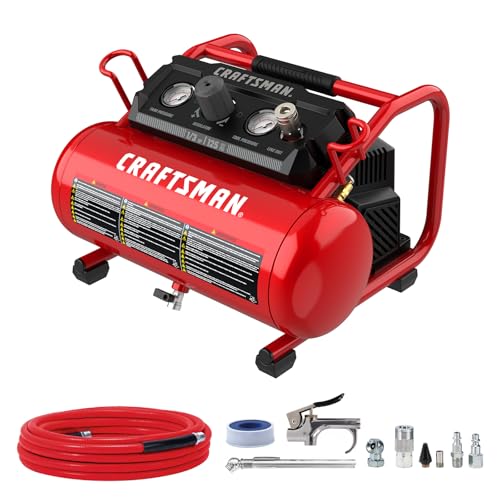
CRAFTSMAN 2-Gallon Portable Air Compressor
This CRAFTSMAN 2-gallon portable compressor package pairs a max 125 PSI oil-free pump with a versatile 10-piece pneumatic accessory kit using standard 1/4-inch NPT fittings. It is a practical, lightweight solution for DIYers and homeowners tackling tire inflation, air dusting, and light fastening.
Pros
- Complete out-of-the-box pneumatic package with air hose, blow gun, tire chuck, and 1/4-inch NPT quick-connect hardware
- Lightweight 19-pound carry weight makes moving between the garage, driveway, and workbench effortless
- Oil-free pump eliminates crankcase oil checks and prevents oil aerosol contamination in downstream air lines
- Dual quick couplings allow quick hookups without needing additional brass splitters
Cons
- Small 2-gallon receiver tank and 1/3 HP motor are limited to light-duty pneumatic tasks rather than continuous air-hungry tools
- The included starter air hose and accessories are entry-level components that high-volume shops may eventually want to upgrade
- Fittings utilize standard 1/4-inch auto profile plugs which require matching couplers if your shop uses alternate pneumatic profiles
JASTIND Industrial Air Blow Gun Kit
The JASTIND Industrial Air Blow Gun delivers powerful workshop blow-off performance with a durable chromed zinc alloy body, an adjustable brass airflow nozzle, and two protective-tipped extensions. It is an affordable, metal-built pneumatic accessory ideal for DIYers, mechanics, and woodworkers needing versatile cleanup reach.
Pros
- Solid all-metal zinc alloy and copper construction resists cracking compared to plastic blow guns
- Adjustable brass nozzle provides convenient airflow throttling right at the tool tip
- Protective rubber tips on extension wands help prevent scratching delicate finishes and sensitive components
- Integrated top hook makes bench and wall storage simple and accessible
Cons
- Does not state OSHA safety relief bypass compliance, so line pressure should be regulated safely before use
- All-metal zinc alloy body can transfer cold to the hand during extended continuous blowing sessions
- Specific quick coupler interchange style is not detailed in specifications, requiring fit verification for some shop air lines
SARDVISA 13-Piece Air Blow Gun and Nozzle
The SARDVISA 13-Piece Air Blow Gun Set delivers multi-purpose workshop cleanup and light inflation capability with an all-metal chrome-plated body and standard 1/4-inch NPT connection. It is an affordable, versatile starter kit for garage DIYers, hobbyists, and woodworkers needing flexible nozzle options at the workbench.
Pros
- All-metal chrome-plated body offers dependable durability compared to cheap molded plastic alternatives
- Comprehensive 13-piece accessory bundle covers machinery cleaning, crevice blowing, and small inflation tasks
- PVC-coated thumb lever provides comfortable control during repetitive workbench blow-offs
- Supplied Teflon tape and thread adapters make immediate out-of-the-box setup straightforward
Cons
- Lacks OSHA-compliant side-relief bypass venting, requiring users to manually regulate compressor line pressure for safety
- Alloy nozzle extensions and thread converters require careful hand alignment to avoid cross-threading
- Thumb-lever actuation can cause hand fatigue during prolonged, continuous blowing compared to full-handle pistol grips
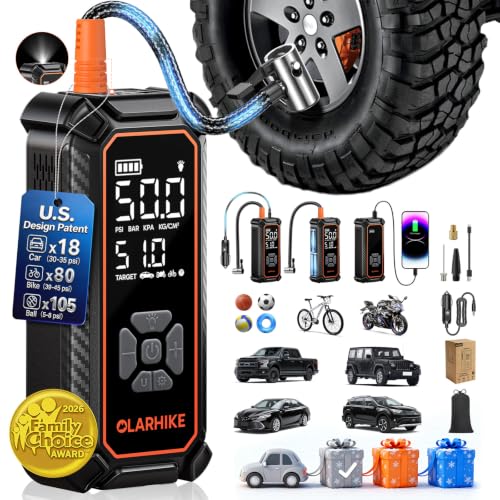
OlarHike Portable Tire Inflator Air Compressor
The OlarHike Portable Tire Inflator combines dual-power versatility via a 12V DC vehicle plug or built-in rechargeable battery with an automatic shut-off digital display. It provides dependable roadside tire top-offs and inflation for passenger cars, crossovers, motorcycles, and bicycles.
Pros
- Dual-power design allows cordless field operation or continuous power through any standard vehicle 12V DC port
- Automatic shut-off technology stops the motor precisely at preset pressure to prevent over-inflation
- Integrated 6000mAh battery reserve doubles as an emergency phone charger and includes an LED work light
- Pocket-sized footprint weighs well under two pounds for convenient transport in center consoles or backpacks
Cons
- Maximum vehicle pressure rating of 51 PSI is not suitable for heavy-duty commercial trucks, RVs, or high-pressure trailer tires
- Compact tankless inflator mechanism cannot power workshop pneumatic tools such as nail guns or air ratchets
- Recharging requires a standard 5V 2A or 5V 3A adapter and is not compatible with high-wattage fast chargers
AstroAI AIRUN H 12V DC Portable Air Compressor
The AstroAI AIRUN H is a compact 12V DC tire inflator delivering up to 35 L/min airflow with automatic shut-off and digital pressure presets. It is an ideal portable emergency compressor for drivers, commuters, and garage hobbyists seeking fast tire top-offs.
Pros
- Automatic shut-off stops pumping reliably once target PSI is reached
- High-airflow 120W motor provides rapid top-offs for daily driver tires
- Long 9.84-foot power cord reaches all passenger vehicle wheels with ease
- Bright built-in LED flashlight and backlit display assist during night repairs
- Lightweight 2.2-pound form factor stores neatly in glove boxes and trunks
Cons
- Requires a 12V DC vehicle outlet and does not include a 120V AC household plug
- Mandates a 10-minute cool-down interval after 15 minutes of continuous operation
- Not intended for high-volume inflatables like large pool floats or air mattresses
OlarHike 12000mAh Cordless Tire Inflator
The OlarHike Heavy Duty Tire Inflator is a compact 3.2-pound mobile air compressor featuring a twin-cylinder motor, integrated 12,000mAh battery, and 12V DC vehicle adapter. It provides rapid roadside inflation with auto-shutoff convenience, making it a dependable emergency tool for drivers, mechanics, and off-roaders.
Pros
- Twin-cylinder pump configuration delivers faster inflation times than typical single-piston mini inflators
- True dual-power flexibility prevents downtime by running via battery or vehicle 12V DC outlet
- Compact, lightweight 3.2-pound body offers exceptional portability without eating up cargo space
- 45W USB-C Power Delivery port provides practical utility beyond tire maintenance
- Auto-stop feature eliminates pressure guessing and prevents dangerous over-inflation
Cons
- Tankless mobile design is strictly intended for inflation and cannot operate continuous-draw pneumatic air tools
- Extended continuous runtime on large truck or RV tires will cause heat buildup that requires brief cool-down intervals
- Does not include a standard 120V AC household wall plug for direct residential outlet use
Metabo HPT EC914S 6-Gallon 200 PSI Pancake Air
The Metabo HPT EC914S delivers an impressive 200 PSI maximum pressure and 4 CFM at 90 PSI from a 6-gallon tank, giving trim carpenters and remodelers the air volume needed to drive multiple nailers simultaneously. At roughly 41 pounds, it successfully combines high-pressure air storage with practical job-site portability.
Pros
- High 200 PSI tank ceiling stores substantially more usable air than conventional 150 PSI pancake models
- Generous 4 CFM at 90 PSI airflow rating supports multi-tool operation and reduces nailer drive hesitation
- Manageable 41-pound carry weight offers better portability than heavier twin-stack compressor configurations
- Engineered by Metabo HPT to support both lightweight trim nailers and larger framing or roofing guns
Cons
- At 41 pounds, it is noticeably heavier to carry than minimalist 1-to-3 gallon trim-only compressors
- Tank volume and CFM output remain inadequate for continuous high-demand air tools like HVLP sprayers or sanders
- Ships as a bare-tool compressor without included air hoses, pneumatic fittings, or nail guns
AstroAI Portable Tire Inflator Air Compressor
The AstroAI Dual Power Tire Inflator combines a 12V DC vehicle plug and 120V AC household cord, delivering up to 150 PSI for car tires and a 350 L/min high-volume mode for rafts and mattresses. It is a dependable, compact choice for garage mechanics, road-trippers, and homeowners wanting versatile inflation without needing a bulky air tank.
Pros
- Dual 12V DC and 120V AC power cords offer genuine versatility for garage benches, driveways, and roadside emergencies
- Two dedicated inflation modes handle high-pressure tires up to 150 PSI as well as high-volume camping gear at 350 L/min
- Digital auto-shutoff stops pumping once target pressure is reached, preventing accidental over-inflation
- Integrated cord and air hose storage compartments maintain a clean, compact footprint in vehicle trunks
- Dual metal motor build provides reliable output with up to 15 minutes of continuous run time per cycle
Cons
- Not designed to support heavy-duty commercial truck tires or high-volume commercial vehicle applications
- Requires a mandatory 10-minute cooling rest after 15 minutes of continuous high-pressure pumping
- Tankless electric inflator design cannot drive pneumatic air tools such as brad nailers or impact wrenches
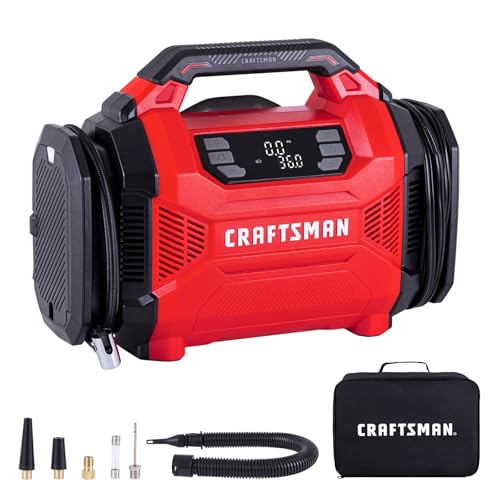
CRAFTSMAN Dual Power Tire Inflator
The CRAFTSMAN Dual Power Tire Inflator delivers versatile high-pressure air delivery up to 150 PSI using either a 120V AC home outlet or a 12V DC vehicle plug. Featuring digital auto shut-off presets and an integrated LED work light, it is an essential portable air solution for DIYers, garage mechanics, and road commuters.
Pros
- Dual 120V AC and 12V DC power inputs offer exceptional flexibility for both driveway maintenance and unexpected roadside flats
- Accurate digital pressure gauge with automatic shut-off prevents over-pressurizing vehicle and bicycle tires
- Capable of reaching 150 PSI, making it suitable for high-pressure road bike tires as well as passenger car tires
- Built-in LED work light enhances nighttime safety and visibility when working alongside highway traffic
- Complete package includes dedicated air hose, multiple nozzle adapters, spare fuse, and a zippered storage bag
Cons
- Tankless direct-drive mechanism is engineered for tire inflation and cannot power pneumatic air tools such as nailers or impact wrenches
- Takes longer to fill large volume leisure items like oversized air mattresses or rafts compared to dedicated high-volume blowers
- Lacks an onboard cordless tool battery dock, requiring access to an active 120V wall outlet or 12V vehicle socket
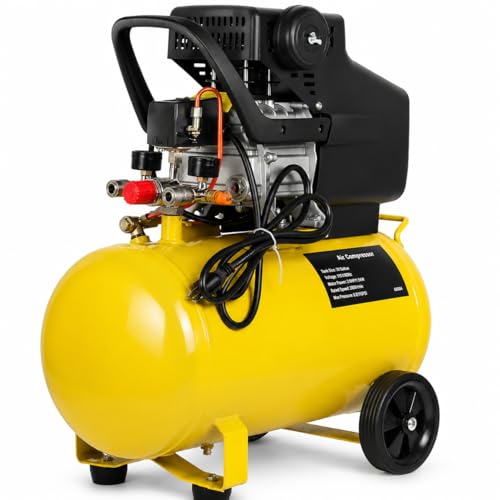
Stark USA 10-Gallon Horizontal Air Compressor
Equipped with a 10-gallon structural steel horizontal tank and an ultra-quiet 62 dB motor rating, the Stark USA air compressor delivers a listed 8.37 CFM up to 125 PSI. It provides a generous air reserve and dual quick-connect versatility for home garage mechanics, woodworkers, and DIY hobbyists.
Pros
- Subdued 62 dB noise rating dramatically reduces acoustic fatigue compared to traditional jobsite compressors
- Ten-gallon tank capacity provides a steady reserve to buffer air pressure during intermittent tool operation
- Factory-installed dual quick-connect couplers support multi-tool setups right out of the box
- Heavy-duty welded structural steel tank ensures rugged workshop durability
Cons
- At 61.05 pounds, moving the compressor requires substantial physical effort
- Maximum pressure is limited to 125 PSI, which is lower than the 150 to 175 PSI thresholds found on high-pressure jobsite units
- Manufacturer specifications do not provide dedicated SCFM delivery breakdowns specifically measured at 40 PSI or 90 PSI
Defining What Makes an Air Compressor Worth Buying
Finding the right air compressor requires identifying the specific pneumatic tasks you plan to tackle around your home, garage, or jobsite. Compressors range widely from palm-sized emergency tire inflators to multi-gallon workshop units driving heavy impact wrenches. Choosing the right machine means evaluating continuous airflow, electrical power limitations, storage tank size, and noise output. When these specifications align with your pneumatic tools, you avoid frustrating pressure drops and pump overheating.
Matching Tool Air Consumption to Delivered CFM
Air delivery volume represents the single most critical performance metric for any pneumatic system. Measured in cubic feet per minute at ninety pounds per square inch, this rating tells you how much usable air volume the pump produces under realistic working pressure. Fastener tools like brad nailers require only small bursts of air and operate smoothly on lower output ratings. Continuous-demand tools like orbital sanders, die grinders, and paint sprayers consume air constantly and require substantial sustained airflow to prevent stalling.
Many buyers make the mistake of focusing strictly on tank pressure rather than continuous pump delivery. A compressor with high shut-off pressure can quickly run out of breath if its displacement rate cannot replenish the air consumed by the attached tool. For detailed guidance on matching equipment volume demands, our article on understanding CFM delivery ratings explains how standard measurements translate to real tool performance. Checking your tool manufacturer ratings before purchasing ensures the pump supplies at least twenty to thirty percent more volume than your highest-draw tool requires.
Intermittent tools like framing nailers or staplers give the compressor pump brief recovery pauses between actuations. This operating rhythm allows compact portable units to keep up with moderate construction tasks without falling below operational thresholds. Continuous-draw tools allow no recovery pauses during operation, forcing the pump to run non-stop. If your pump output falls short of continuous tool consumption, regulated line pressure plummets rapidly and halts your work.
Storage Tank Capacity and Usable Pressure Buffers
Air tank volume acts as an energy buffer between the mechanical pump and your pneumatic tool. Small two-gallon tanks offer rapid initial pressurization and lightweight portability for quick mobile punch-list jobs. Larger reservoirs, such as six-gallon pancake units or ten-gallon horizontal tanks, store significant pressurized air reserves that smooth out cyclical tool demands. A larger reservoir allows you to run medium-draw tools for longer intervals before the electric motor kicks in to recharge the vessel.
Operating pressure limits also dictate how much air volume a storage vessel actually holds. Compressors engineered to reach higher maximum limits, such as two hundred pounds per square inch, store roughly twenty-five percent more usable air volume than standard one hundred fifty pound systems of identical tank size. This higher storage pressure acts as an effective force multiplier for compact tanks. The extra stored air delays cut-in cycles and allows framing crews to drive fasteners consistently flush without waiting on pump recovery.
Tank orientation affects workshop floor footprint and overall transport stability during movement. Horizontal tanks provide a lower center of gravity that resists tipping inside moving truck beds or busy garage bays. Pancake designs keep weight distributed evenly around the base, creating a very stable platform for elevated staging or rough jobsite subfloors. Selecting the appropriate tank size balance prevents unnecessary physical bulk while preserving enough stored volume for uninterrupted pneumatic tasks.
Pump Mechanism Longevity and Maintenance Demands
Pneumatic pumps split into two distinct engineering categories: oil-free and oil-lubricated assemblies. Oil-free designs use self-lubricating piston rings, typically made from synthetic fluoropolymer materials, operating inside specialized cylinder sleeves. These oil-free systems eliminate regular fluid checks, operate cleanly on uneven surfaces, and prevent oil mist from contaminating spray finishing work or sensitive trim. Modern oil-free dual-piston designs deliver impressive service lives while requiring virtually zero scheduled mechanical maintenance.
Oil-lubricated cast-iron pumps cater to continuous duty cycles and commercial shop demands where thermal management is paramount. The lubricating oil bath dissipates internal friction heat and seals the compression rings against cylinder walls. To keep these pumps running smoothly, operators must follow strict compressor pump oil requirements and inspect fluid levels through an integrated sight glass. Neglecting oil maintenance in splash-lubricated compressors leads to premature valve reed failure and internal cylinder scoring.
Duty cycle ratings indicate the percentage of operating time a pump can run safely within a ten-minute cycle. Most consumer-grade oil-free compressors feature a fifty percent duty cycle, meaning the motor should rest for five minutes for every five minutes of active pumping. Exceeding rated duty cycles generates extreme cylinder head heat that degrades piston seals and triggers internal thermal overload protectors. Matching pump design to expected run time protects the motor from early retirement.
Electrical Demands and Circuit Breaker Compatibility
Starting an electric air compressor draws a significant initial surge of current that can easily challenge residential branch circuits. Standard consumer workshop compressors run on standard one hundred twenty volt alternating current lines, pulling between ten and fifteen running amperes. However, startup inrush amperage can momentarily spike much higher as the motor overcomes internal tank head pressure. Plugging an air compressor into a shared fifteen-ampere garage circuit that already powers lighting or power tools frequently trips the circuit breaker.
Motor power marketing can also confuse buyers who encounter exaggerated peak horsepower claims on retail packaging. Peak surge ratings measure instantaneous, momentary power output that a motor cannot sustain during continuous operation. True continuous running horsepower provides the only accurate baseline for evaluating pump capacity and actual electrical draw. A properly rated one-third horsepower or one horsepower induction motor draws manageable current while delivering reliable mechanical displacement under full operating pressure.
Dual-power portable inflators offer an entirely different electrical approach for motorists and mobile DIYers. These hybrid units run on both twelve-volt direct current automobile ports and standard one hundred twenty volt household outlets. Some advanced models also incorporate rechargeable lithium-ion battery packs for complete cordless freedom on remote roadsides. This electrical versatility ensures you can inflate tires, sports gear, and recreational equipment without depending strictly on a dedicated workshop electrical panel.
Operating Noise Levels and Workshop Environment
Compressor noise output directly impacts workshop comfort and determines whether a tool can be run indoors without ear protection. Traditional high-speed universal motors spin at over three thousand revolutions per minute, producing harsh sound levels exceeding eighty decibels. In an enclosed garage, basement, or occupied home, that loud mechanical rattle causes immediate ear fatigue and disrupts household members. Prolonged exposure to high decibel levels in confined spaces makes regular pneumatic tasks unpleasant and stressful.
Ultra-quiet compressors solve this problem by pairing low-RPM induction motors with dual-piston opposed compression pumps. Running at approximately seventeen hundred revolutions per minute, these systems cut operational noise down to sixty to sixty-five decibels. A sixty-two decibel rating sounds comparable to a normal background conversation, allowing operators to speak comfortably while the unit builds pressure. This quiet performance makes low-noise horizontal and portable tanks ideal for finish carpenters working in finished homes.
Vibration isolation plays an equally vital role in sound reduction and equipment stability on hard surfaces. Heavy-duty rubber feet and dampening motor mounts absorb mechanical harmonics before they transmit through concrete garage slabs or wooden subfloors. Without adequate vibration dampening, a vibrating compressor can walk across the shop floor and loosen internal pneumatic fittings over time. Solid rubber isolation components keep the machine firmly anchored while noticeably dampening acoustic resonance.
Portability, Form Factors, and Jobsite Durability
Transportability ranks high on the priority list for mobile contractors, residential trim carpenters, and roadside vehicle owners. Lightweight hand-carry models weighing under twenty pounds allow swift transit between truck beds, second-floor bedrooms, and outdoor workstations. Reinforced rubber handles and balanced center-of-gravity engineering prevent wrist strain during daily jobsite load-in routines. Compact designs also store neatly inside standard utility closets, under workbenches, or behind vehicle seats.
Jobsite conditions demand rugged external protection to shield delicate gauges, regulators, and copper unloader lines from accidental impacts. Tubular steel roll cages wrap around critical pump and motor components, preventing costly structural damage if material falls onto the unit. Recessed control consoles protect glass pressure gauges from shattering during transport over rough terrain. Steel horizontal tanks and pancake shells offer substantial wall thickness that easily withstands everyday bumps, scrapes, and jobsite vibration.
For larger ten-gallon shop units, integrated wheels and ergonomic pull handles transform heavy steel vessels into mobile rolling stations. Moving a fifty-pound or sixty-pound compressor without wheels quickly becomes an exhausting chore that discourages repositioning around vehicle bays. Rugged rubber transport wheels roll smoothly over extension cords, air hoses, and uneven garage thresholds. Evaluating your mobility needs ensures you select a form factor that moves easily without sacrificing necessary tank volume.
Essential Manifold Fittings and Moisture Management
A quality air compressor setup relies on durable manifold components to regulate airflow and maintain reliable connections. Dual quick-connect couplers allow multiple operators to run independent air lines simultaneously from a single storage tank. Brass quick-connect plugs and industrial air blow guns provide immediate utility for clearing dust, blowing debris, and cleaning workshop surfaces. Precision pressure regulators maintain constant line pressure to your tools, eliminating erratic nail driving depths caused by fluctuating tank pressures.
Moisture condensation naturally accumulates at the bottom of steel storage tanks as compressed atmospheric air cools down. Ambient humidity converts into liquid water inside the vessel during every compression cycle. If left unpurged, standing condensation causes severe internal rust, weakens steel tank walls, and eventually sprays corrosive water into your air tools. High-end compressors feature accessible bottom drain valves that allow quick, daily moisture purging with minimal effort.
Quarter-turn brass ball valves represent a massive operational improvement over stiff, recessed needle petcocks. Threaded thumb petcocks often stick, collect grit, and tear up fingers, which tempts busy operators to skip daily tank draining altogether. A smooth quarter-turn ball valve opens cleanly with a light flick of the wrist, flushing accumulated water and grit in seconds. Establishing a disciplined daily draining routine preserves tank structural integrity and guarantees dry air for your pneumatic tools.
Key Selection Criteria for Common Applications
Matching your compressor purchase to your primary application ensures you invest in the right performance capabilities. Drivers focused strictly on vehicle tire maintenance, bike tires, and sports equipment benefit most from compact digital tire inflators. These dedicated inflators feature automatic shut-off sensors, backlit digital screens, and emergency work lights that eliminate manual pressure guesswork. Their lightweight footprint and hybrid power options make them ideal glovebox emergency tools for every vehicle owner.
Finish carpenters, woodworkers, and general home DIYers typically find their ideal balance in a two-gallon to six-gallon portable compressor. Units in this category deliver enough airflow to fire trim guns, staple upholstery, blow away sawdust, and inflate light truck tires. When choosing within this range, look for low-noise operating ratings and oil-free pump mechanisms that require zero fluid upkeep. A compact pancake or hot-dog compressor provides decades of reliable home service without occupying valuable garage floor space.
Automotive enthusiasts, metal fabricators, and production framing crews require the sustained output of eight-gallon or ten-gallon horizontal systems. These robust units supply over eight cubic feet per minute at operating pressure, supporting impact wrenches, ratchets, and multiple framing guns. Choosing a model with ultra-quiet dual-piston technology ensures you can work comfortably inside residential spaces without disturbing neighbors. Aligning your workload with the right balance of volume, pressure, and noise level ensures your pneumatic equipment performs flawlessly on every project.
About the author
Glenda Taylor has extensive experience in residential construction, remodeling, home improvement, and tool use. Her practical approach to equipment evaluation focuses on usability, performance, safety, and value—helping DIYers and workshop users make better-informed decisions about compressors and related tools.