
One Stage vs Two Stage Air Compressor of 2026 For Workshop Demands
Air starvation stops shop projects fast. Compare one stage vs two stage air compressor models for CFM output and duty cycle durability in October 2026.
 By Tony Carrick
Updated October 8, 2026
By Tony Carrick
Updated October 8, 2026

Air tool starvation during continuous sanding or impact wrench operation ruins productivity across automotive bays and home workshops. You pull the trigger, watch your line pressure plunge below 90 PSI, and wait endlessly while an undersized pump catches up. Selecting the right setup comes down to the battle of a one stage vs two stage air compressor for your specific workflow. Single-stage units compress ambient air directly into the storage receiver in a single piston stroke, making them great for moderate pneumatic demands. Two-stage pumps push air through a high-pressure secondary cylinder with an intercooler, generating upwards of 175 max PSI for demanding continuous machinery.
Based on product specifications and user feedback, pump recovery times and duty cycle ratings dictate how smoothly your pneumatic tools run. If you frequently inspect workshop compressor brand matchups, matching tank size and airflow delivery to your tools prevents burned-out motors. A single-stage machine often satisfies everyday finish nailing, tire inflation, and light wrenching on standard 120V circuits. Heavy industrial operations and automotive paint spraying demand the sustained CFM output and heat dissipation found in stationary dual-stage cast-iron pumps. Examining electrical draw, maximum pressure limits, and tank drainage helps secure reliable air power without tripping circuit breakers.
| Award | Product | ACR Score About ACR ScoreThe ACR Score is our own rating from 0 to 10, based on performance, design and build, ease of use, and value. It reflects independent research and is never influenced by manufacturers, retailers, or affiliate commissions. Learn more › | |
|---|---|---|---|
| Best Overall |
DEWALT 60-Gallon Vertical Electric Stationary Air
|
9.2/10 | Buy |
| Best Budget |
 Campbell Hausfeld 60-Gallon 2-Stage Air
|
8.9/10 | Buy |
| Best Value |
 Campbell Hausfeld 80-Gallon Air Compressor, 5 HP
|
8.8/10 | Buy |
 NorthStar Air Compressor Pump, 175 Max. PSI
|
8.6/10 | Buy | |
 Klutch 20-Gallon Air Compressor, 2 HP, 120V
|
8.4/10 | Buy | |
 DEWALT 27-Gallon Vertical Portable Air Compressor
|
8.4/10 | Buy | |
| Best Premium |
 Ingersoll Rand 2340N5-V 5 HP Two-Stage Air
|
8.4/10 | Buy |
 Ingersoll Rand 2340L5-V 5 HP Type 30 Two-Stage Air
|
8.3/10 | Buy | |
 Ingersoll Rand 2475N7.5 7.5 HP Two-Stage Air
|
8.1/10 | Buy | |
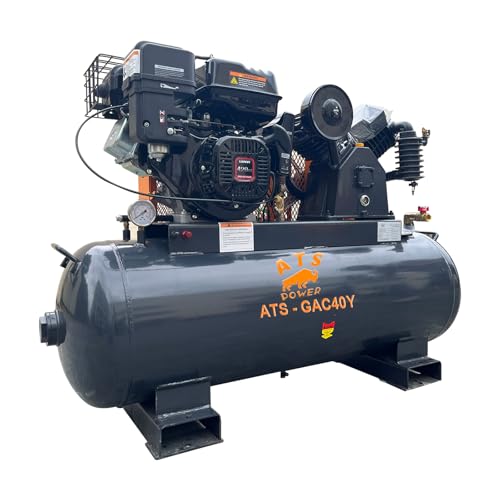 40 Gallon Air Compressor
|
8.0/10 | Buy |
Frequently Asked Questions
What is the main mechanical difference between single-stage and two-stage air compressors?
Two-stage compressors utilize two distinct cylinders to compress air in sequential steps, whereas single-stage models compress air directly in one stroke. The first cylinder in a dual-stage pump condenses air before sending it through a cooling tube into a smaller high-pressure cylinder. This dual action achieves up to 175 PSI maximum pressure, while single-stage units generally top out between 125 and 150 PSI.
Can a single-stage compressor run continuous air tools like sanders and paint sprayers?
No, single-stage compressors typically struggle with continuous high-demand tools because their CFM delivery and duty cycles cannot keep up with prolonged air consumption. Tools like rotary sanders or HVLP spray guns draw high volume, quickly draining small tanks and overheating single-stage pumps. Upgrading to a two-stage air compressor or comparing portable units in small workshop compressor evaluations helps ensure continuous airflow without stalling.
Which compressor design provides better energy efficiency and cooling?
Two-stage compressors offer superior cooling and mechanical efficiency during extended run sessions. Compressing air in two separate steps allows intercoolers to dissipate heat between stages, keeping the pump cooler and protecting internal valves. Slower pump RPM in heavy cast-iron two-stage units also reduces thermal wear compared to fast-spinning single-stage pumps.
Do two-stage air compressors require dedicated 230V electrical circuits?
Yes, virtually all stationary two-stage compressors require a dedicated 208V to 230V single-phase electrical supply due to their high-horsepower motors. Heavy-duty 3.7 HP to 7.5 HP electric motors draw significant amperage that standard 120V household outlets cannot safely supply. Users needing off-grid or remote portability often turn to truck-bed gas air compressor units instead of running heavy electrical conduit.
How does operating pressure differ between single-stage and two-stage units in 2026?
Single-stage units typically max out around 135 to 150 PSI, whereas two-stage units reliably reach 175 PSI. That higher pressure ceiling lets a two-stage tank store significantly more usable air volume within the same physical footprint. High-pressure storage gives impact wrenches and pneumatic gear extra headroom before the pump must cycle back on.
About the author
Tony Carrick is an experienced product researcher and writer specializing in tools, home improvement, automotive maintenance, and consumer equipment. With extensive experience reviewing tools and tackling hands-on renovation projects, he brings a buyer-focused perspective to compressor performance, usability, and overall value.