
Is an Air Compressor the Same as a Tire Inflator: Practical Guide for 2026
Answering whether is an air compressor the same as a tire inflator for October 2026: compare airflow volume, air tank storage, pressure ratings, and pneumatic equipment options.
 By Kenny Koehler
Updated October 8, 2026
By Kenny Koehler
Updated October 8, 2026
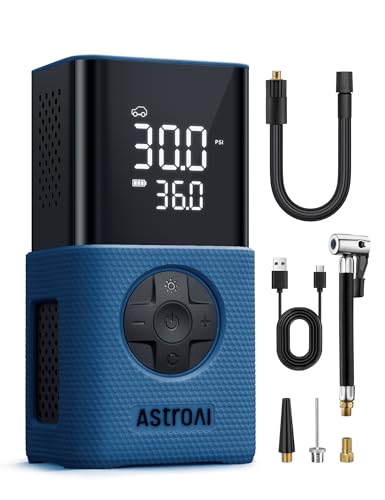
Maintaining proper pneumatic tire pressure is vital for vehicle safety, fuel efficiency, and tread longevity, yet many drivers find themselves confused when shopping for inflation equipment. You might encounter compact handheld devices designed for roadside emergencies right alongside heavy workshop tanks built for pneumatic air tools. This naturally raises the question: is an air compressor the same as a tire inflator? While every tire inflator relies on mechanical air compression to push atmospheric air into a rubber tire, the engineering, airflow capacity, and practical applications of these two devices differ significantly. Understanding these distinctions helps prevent equipment damage and ensures you select the correct pneumatic power source for your garage or vehicle trunk.
A dedicated tire inflator operates as a compact, tankless device optimized to deliver high pressure at relatively low airflow volume. In contrast, standard workshop air compressors store pressurized air inside an ASME-certified receiver tank to drive heavy pneumatic tools such as impact wrenches, nailers, and paint sprayers. While reading our gas and electric air compressor comparison provides insight into larger stationary systems, selecting portable gear requires knowing your immediate inflation and mechanical needs. Whether you need a glovebox emergency unit or a garage workhorse that can fill truck tires and run pneumatic ratchets, understanding air compressor airflow delivery and duty cycle ratings will save both time and frustration.
| Award | Product | ACR Score About ACR ScoreThe ACR Score is our own rating from 0 to 10, based on performance, design and build, ease of use, and value. It reflects independent research and is never influenced by manufacturers, retailers, or affiliate commissions. Learn more › | |
|---|---|---|---|
| Best Overall |
AstroAI L7S Tire Inflator Portable Air Compressor
|
8.9/10 | Buy |
| Best Value |
 AstroAI Tire Inflator Portable Air Compressor
|
8.9/10 | Buy |
 160 PSI Tire Inflator Portable Air Compressor
|
8.9/10 | Buy | |
| Best Budget |
 Tire Inflator Portable Air Compressor
|
8.8/10 | Buy |
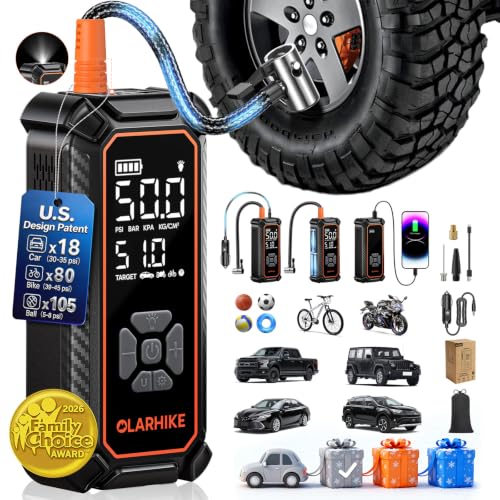 OlarHike Tire Inflator Portable Air
|
8.8/10 | Buy | |
 Digital Air Compressor for Car Auto Pump
|
8.6/10 | Buy | |
 AstroAI AIRUN H Tire Inflator Portable Air
|
8.4/10 | Buy | |
| Best Premium |
 KeenPower Tire Inflator Portable Air Compressor
|
8.4/10 | Buy |
 OlarHike 12000mAh Heavy Duty Tire Inflator
|
8.3/10 | Buy | |
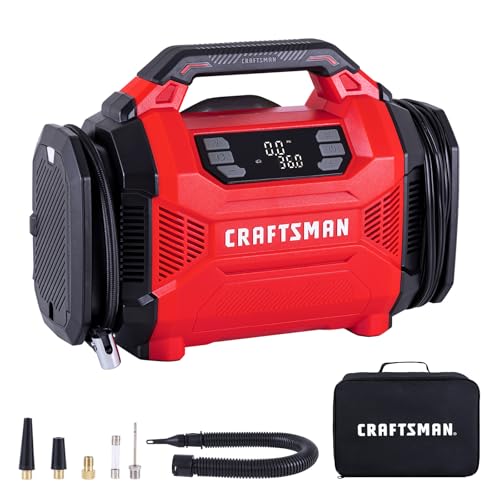 CRAFTSMAN Dual Power Tire Inflator with
|
8.1/10 | Buy |
Understanding the Technical Differences Between Air Compressors and Tire Inflators
To determine if is an air compressor the same as a tire inflator, you have to look past the surface similarities of their internal pumping mechanisms. At the basic level of physics, both tools draw ambient air from the surrounding atmosphere, compress it with a reciprocating piston, and push it out at higher pressure. However, calling a tire inflator an air compressor is like calling a subcompact commuter car a commercial transport truck. Both provide motorized travel, but their internal engineering, airflow volume, and practical capabilities serve completely different mechanical workloads.
Core Mechanical Distinctions and Compression Principles
The primary engineering distinction between a dedicated tire inflator and a traditional air compressor centers on the presence of an air storage tank. A standard workshop compressor uses an electric motor or gas engine to drive a pump that forces air into an ASME-rated steel pressure vessel. Once that receiver tank reaches its cut-out threshold, the motor shuts down, leaving stored potential energy ready for immediate discharge. You tap into that pressurized air reservoir through a regulated manifold, allowing instantaneous airflow on demand.
A portable tire inflator operates as a tankless direct-displacement machine. It contains no storage vessel to accumulate pressurized air before delivery. Instead, every stroke of its miniature piston pushes compressed air directly through the delivery hose into the tire valve. Because there is no storage buffer, the pump must run continuously from the moment you initiate inflation until the tire reaches your target pressure.
This absence of an air tank keeps tire inflators lightweight and portable, often weighing between one and three pounds. Conversely, a workshop compressor with a pancake or twin-stack tank weighs anywhere from twenty to over one hundred pounds. That extra mass comes from the heavy steel receiver vessel, mechanical pressure switch, check valves, and cast-iron or aluminum motor components required for shop duty.
Air Volume Versus Pressure: Deciphering CFM and PSI
Many consumers mistakenly believe that high pressure ratings make a tool powerful enough for heavy pneumatic tasks. Packaging on compact inflators frequently advertises maximum pressures of 150 PSI or 160 PSI, which matches or exceeds the rating of many six-gallon workshop compressors. However, pressure, measured in pounds per square inch, only represents the force exerted by the air. It does not measure the actual volume of air the machine can deliver over time.
The true measure of pneumatic work capability is airflow volume, quantified in cubic feet per minute, or CFM. Traditional workshop compressors deliver anywhere from 2.0 to 5.0 CFM at 90 PSI for portable models, and upwards of 15 CFM for stationary units. In contrast, portable tire inflators generate a fraction of that volume, typically between 0.5 and 1.2 CFM. If you consult our air compressor CFM sizing guide, you will see that running continuous air tools requires sustained airflow that tankless pumps cannot produce.
A tire requires relatively low airflow delivered over several minutes because its internal volume is sealed and static. You are gradually packing air molecules into a closed rubber chamber until the gauge reads thirty-two or thirty-six PSI. A pneumatic impact wrench or rotary sander, on the other hand, dumps large volumes of air into the atmosphere every second it operates. Without an air storage tank and high CFM output, a tankless inflator would stall a pneumatic tool instantly.
Duty Cycle Limitations and Thermal Management
Duty cycle defines the percentage of time a compressor can safely operate within a given period without overheating or causing mechanical wear. Workshop air compressors feature robust thermal management systems, including aluminum cooling fins, large cooling fans, and often oil-lubricated crankcases that dissipate friction heat effectively. Many garage compressors carry duty cycle ratings of fifty to seventy percent, while commercial two-stage pumps can operate at continuous duty cycles.
Tire inflators use miniature motors spinning at high revolutions inside tight plastic housings. These compact mechanisms generate extreme heat very quickly because they lack large external cooling fins and oil reservoirs. Most portable inflator manufacturers specify a strict operating cycle, such as running for no more than ten to fifteen minutes before requiring a mandatory ten-minute cooling period.
Exceeding this thermal threshold can melt piston rings, degrade valve seals, or trigger internal thermal overload cut-off switches. While modern models incorporate temperature sensors to shut the motor down automatically when heat spikes, relying on safety shut-offs repeatedly shortens pump life. A workshop compressor avoids this issue by using its tank buffer to give the motor regular rest intervals between cycles.
Power Delivery Systems: 12V DC, Lithium Batteries, and AC Power
The electrical architectures of tire inflators and workshop air compressors reflect their intended operating environments. Tire inflators prioritize mobility and roadside preparedness. Most units utilize twelve-volt direct-current power adapters that plug directly into a vehicle cigarette lighter socket, drawing roughly ten to fifteen amps from the car battery.
Modern tire inflators frequently feature hybrid dual-power configurations or integrated lithium-ion battery packs. Brands such as AstroAI, Ipflin, and OlarHike offer units with internal multi-cell batteries alongside twelve-volt corded backup lines. Some options, such as models from KeenPower, even incorporate twenty-one-volt removable battery platforms. These cordless designs allow drivers to top off four tires in a remote parking lot without dragging cords across the pavement.
Workshop air compressors, by comparison, demand substantial alternating-current electricity from 120-volt household outlets or dedicated 240-volt shop circuits. An electric shop compressor draws significant running current, often ten to fifteen amps at 120 volts, and creates massive starting inrush amperage that can easily trip a standard residential breaker. You cannot operate a standard shop compressor from your vehicle auxiliary port without a heavy power inverter that would quickly drain an automotive battery.
Pressure Regulation, Auto Shut-Off, and Control Interfaces
The control systems on modern tire inflators are designed for automated, hands-off operation on vehicle tires. Most digital inflators feature backlit LCD screens that display real-time pressure alongside target pressure. Users can select preset modes for cars, motorcycles, bicycles, or sports balls, or set an exact value in PSI, Bar, or kPa. Once the tire reaches that preset pressure, an internal sensor signals the microcontroller to shut the motor down automatically, preventing over-inflation.
Workshop compressors rely on a completely different pneumatic control mechanism centered on an electromechanical pressure switch. The pressure switch monitors receiver tank pressure, turning the motor on at a preset cut-in pressure and cutting power at a preset cut-out pressure. The operator does not control the motor directly during tool use; the pressure switch manages tank replenishment automatically.
To control tool pressure on a workshop compressor, the operator adjusts an analog pressure regulator knob connected to an output gauge. This regulator throttles tank pressure down to the working pressure needed for the attached tool, such as 90 PSI for an impact wrench. A workshop compressor does not automatically shut off when a tire reaches 35 PSI; you must manually monitor tire pressure using a separate handheld gauge or an inline inflation chuck.
Noise Generation and Operating Sound Levels
Noise production is an important factor when comparing pneumatic equipment in residential garages and driveways. Standard portable air compressors are notorious for loud noise, frequently registering between 78 and 85 decibels. This harsh sound stems from high-RPM universal motors and open pumps that echo aggressively off concrete garage floors. Exploring our air compressor noise level comparison demonstrates how pump speed and dual-piston architecture influence acoustic comfort.
Portable tire inflators produce a distinct, high-pitched mechanical buzzing sound due to their compact, high-speed direct-drive pistons. While their sound levels can reach 70 to 80 decibels at close range, the total acoustic energy is generally less intrusive than the violent thumping of a large reciprocating workshop pump. Many compact inflators now incorporate silicone exterior sleeves, dampening feet, and hollow handles that absorb mechanical vibration during roadside use.
If indoor noise is your primary concern, modern ultra-quiet workshop compressors utilize low-RPM induction motors running at approximately 1,750 RPM to keep sound levels around 60 to 65 decibels. These quiet dual-piston shop units are much quieter than both standard workshop compressors and buzzing high-speed tire inflators. However, their physical bulk and reliance on wall outlets make them impractical for trunk storage or emergency roadside tire repairs.
Moisture Control, Tank Maintenance, and Condensation Risks
Atmospheric air carries water vapor, and compressing air concentrates that humidity into liquid moisture. In a workshop air compressor, hot air cools rapidly as it enters the steel receiver tank, causing moisture to condense on internal walls. This water pools at the bottom of the tank, creating a serious risk of internal rust and corrosion if neglected. Responsible compressor ownership requires opening a tank drain valve after every use to blow out accumulated moisture and relieve stored pressure safely.
Tire inflators avoid this internal condensation hazard entirely because they do not have a receiver tank where compressed air can sit and cool. The air passes directly from the compression chamber through a short rubber hose into the tire. While some moisture still enters the tire carcass along with the compressed air, the inflator itself stores no liquid water and requires zero tank maintenance.
This difference has major implications for long-term maintenance and tool longevity. Workshop compressors require regular check valve inspections, air filter cleanings, and frequent draining via quarter-turn brass ball valves or threaded needle petcocks. An oil-free portable tire inflator requires virtually no routine mechanical service beyond keeping the air intake clear and recharging its internal lithium battery pack periodically to prevent cell degradation.
Pneumatic Tool Compatibility and Real-World Limitations
Understanding tool compatibility is where the distinction between these two devices becomes absolute. A tire inflator cannot operate pneumatic air tools. You cannot connect an air ratchet, die grinder, dual-action sander, or framing nailer to a portable tire inflator. The tankless design lacks the high-flow quick-connect couplers, line regulator, and cubic-foot air reservoir necessary to cycle a pneumatic piston or spin an air turbine.
A workshop air compressor can easily perform tire inflation tasks alongside heavy mechanical work. By fitting a standard 1/4-inch quick-connect coupler with a pneumatic tire chuck and pressure gauge, any garage compressor becomes a fast and powerful tire inflator. In fact, a six-gallon garage compressor will inflate a passenger car tire from flat to full in a fraction of the time required by a miniature 12V inflator because it dumps stored volume instantly.
The only operational limitation when using a workshop compressor for tires is the need for manual vigilance. Because a shop compressor delivers air at high volume and pressure, it can over-inflate a small bicycle or wheelbarrow tire in seconds if you do not monitor the gauge closely. In contrast, the automatic shut-off feature on modern digital tire inflators provides a safeguard against over-inflation that beginner DIYers appreciate.
Choosing the Right Equipment for Roadside Emergencies Versus Workshop Tasks
Selecting between an air compressor and a tire inflator comes down to where and how you plan to use the equipment. If your sole objective is maintaining proper tire pressure on personal vehicles, bicycles, lawn mowers, and sports gear, a dedicated tire inflator is the smarter, more practical investment. Its compact size lets you store it under a car seat, in a trunk organizer, or inside a motorcycle saddlebag, guaranteeing you have inflation capability wherever you travel.
Dual-power inflators that accept both 12V vehicle sockets and household 120V AC plugs, or models equipped with rechargeable lithium batteries, offer outstanding everyday convenience for home driveways and roadside flats alike. These units also eliminate the hassle of untangling long rubber hoses, dragging heavy metal tanks across the garage, or worrying about tripped electrical breakers.
If you plan to run pneumatic air tools, tackle auto restoration projects, install trim molding with finish nailers, or blow dust out of workshop machinery, a true air compressor with a storage tank is indispensable. While an air compressor can handle all the inflation chores that a portable tire inflator does, a tire inflator can never substitute for a workshop air compressor. Knowing these operational boundaries ensures you invest in the right pneumatic equipment for your specific garage and travel needs.
About the author
Kenny Koehler is a power-tool specialist with more than a decade of hands-on evaluation experience and a science-based approach to product testing. His expertise in repeatable testing, tool performance, impact wrenches, and professional equipment brings a practical, data-focused perspective to compressor and pneumatic-tool comparisons.