
How to Fix Rusted Air Compressor Tank: Safe Options
How to fix rusted air compressor tank starts with assessing corrosion safely. Compare repair parts and replacement options for November 2026.
 By Kenny Koehler
Updated November 10, 2026


Moisture left inside a steel air tank can gradually cause corrosion, and visible rust raises a more serious question than whether a fitting can be replaced: has the pressure vessel itself been weakened? For how to fix rusted air compressor tank, the key distinction is between surface rust on an external fitting and corrosion in the tank wall or around a weld. Replacing a drain valve, gauge, or manifold may address a leaking accessory, but it does not restore the strength of a corroded pressure vessel.
Start with the tank manufacturer’s instructions and any inspection or retirement guidance printed on the equipment. If rust is deep, spreading, blistered, pitted, or associated with a leak from the tank body, stop using the compressor and arrange a qualified assessment or replace the tank or complete unit. The product options below include tank fittings, portable-tank assemblies, and compressors, not a certified structural tank-repair system. For roadside inflation needs, an overview of portable tire compressors can help distinguish a tire inflator from equipment intended to store compressed air.
Before touching a fitting, disconnect the power source, let hot components cool, and follow the manufacturer’s procedure to depressurize the tank completely. Never drill, weld, braze, grind, or apply a patch to a pressurized air tank, and do not treat sealant as a safe repair for a compromised pressure vessel. Use suitable eye protection, and hearing protection when operating air equipment. If the tank’s condition is uncertain, keep it out of service until a qualified service provider has evaluated it.
| Award | Product | ACR Score About ACR ScoreThe ACR Score is our own rating from 0 to 10, based on performance, design and build, ease of use, and value. It reflects independent research and is never influenced by manufacturers, retailers, or affiliate commissions. Learn more › | |
|---|---|---|---|
| Best Overall |
SUNROAD Air Tank Repair Kit with 4-Ft Hose
|
9.2/10 | Buy |
| Best Premium |
 AIRMAN ResQ Pro+ Tire Repair Kit |
9.2/10 | Buy |
| Best Budget |
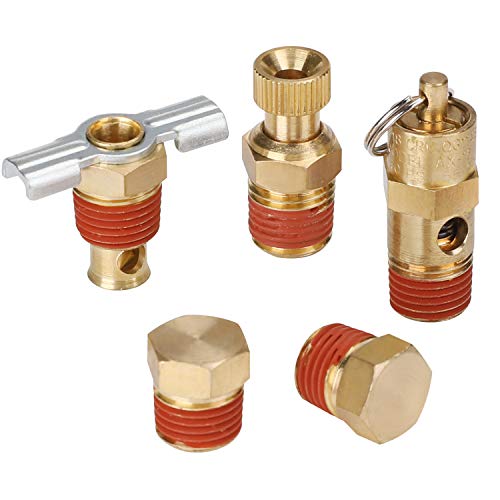 Hromee 5-Piece 1/4-Inch Drain Valve Kit |
8.9/10 | Buy |
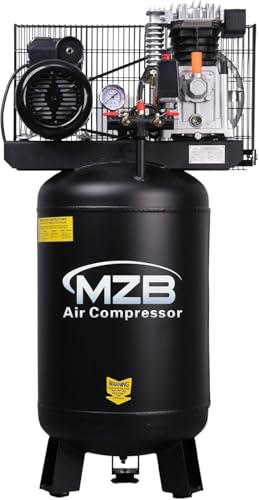 MZB 18.5-Gallon Upright Air Compressor |
8.8/10 | Buy | |
| Best Value |
 SUNROAD 2-Pack Air Tank Repair Kit |
8.6/10 | Buy |
 Hromee Air Tank Manifold Replacement with Fill |
8.4/10 | Buy | |
 GODESON Air Tank Repair Kit with Gauge |
8.4/10 | Buy | |
 CTD5812/2 Brass In-Tank Air Compressor Check Valve |
8.1/10 | Buy | |
 EVIL ENERGY 2-Gallon 12V Air Compressor Kit |
7.8/10 | Buy |
SUNROAD Air Tank Repair Kit with 4-Ft Hose
Designed for refurbishing portable air tanks, this all-in-one assembly combines a solid brass manifold, an easy-to-read 200 PSI gauge, and a flexible four-foot hose. It offers a practical fix for garage mechanics and DIYers needing to replace leaky or worn tank components.
Pros
- Includes manifold, gauge, hose, and thread seal tape
- Easy-to-read 2-inch dual-unit dial gauge
- Corrosion-resistant solid brass connections ensure reliable sealing
- Flexible PVC hose rated up to 300 PSI
Cons
- Short four-foot hose restricts working radius
- Requires 1/2-inch MNPT port or additional adapters
AIRMAN ResQ Pro+ Tire Repair Kit
Drivers seeking a trunk-friendly alternative to a bulky spare wheel can rely on this kit for quick emergency puncture fixes. Powered by a 12V socket, it pairs a water-washable 450ml sealant with a built-in air compressor to seal up to 6mm punctures without dismounting the tire.
Pros
- Repairs 6mm punctures without wheel removal
- Water-washable sealant rinses out cleanly
- Integrated LED light aids nighttime safety
- Lightweight 3.5-pound footprint saves trunk space
Cons
- Cannot repair punctures larger than 6mm
- Requires a working 12V vehicle port for operation
Hromee 5-Piece 1/4-Inch Drain Valve Kit
This brass fitting assortment provides essential replacement valves and plugs for routine compressor tank maintenance. It pairs winged and knurled drain petcocks with a 140 PSI safety relief valve for dependable pneumatic management.
Pros
- Solid brass body provides corrosion and heat resistance
- Two petcock styles offer flexible moisture draining options
- Integrated safety valve handles up to 55 SCFM flow
- Stainless steel relief components resist rust over time
Cons
- Requires separate thread sealant for proper sealing
- Safety valve maximum pressure is capped at 140 PSI
- Winged drain handle has a 12-pound torque limit
MZB 18.5-Gallon Upright Air Compressor
Built with an upright steel tank, this MZB unit delivers up to 115 PSI for spray painting, carpentry, and automotive projects. Its oil-free 110V motor eliminates fluid upkeep while keeping workshop operation quiet and efficient.
Pros
- Zero-maintenance oil-free motor design
- Upright steel tank saves floor space
- Operates quietly during high-demand cycles
- Versatile for diverse pneumatic applications
Cons
- 115 PSI ceiling is modest for this tank volume
- Large 18.5-gallon steel tank limits true portability
SUNROAD 2-Pack Air Tank Repair Kit
Designed for refurbishing portable carry tanks, this two-pack kit supplies a complete brass manifold, dual-unit pressure gauge, and four-foot hose assembly. It offers an all-in-one fix for worn tank fittings without needing to source hardware separately.
Pros
- Durable brass manifold with manual bypass valve
- Clear dual-unit gauge reads up to 200 PSI
- Corrosion-resistant brass connections seal reliably
- Includes thread seal tape and tire chuck
- Comes as a practical two-set repair bundle
Cons
- PVC hose material is stiffer than rubber
- Four-foot hose length limits overall reach
- Requires tanks compatible with 1/2-inch MNPT ports
Hromee Air Tank Manifold Replacement with Fill
The Hromee Air Tank Manifold is a heavy-duty brass replacement assembly engineered to restore portable air carry tanks with a durable aluminum shut-off knob, Schrader fill valve, and 125-150 PSI safety bypass. It offers an easy, dependable rebuild solution for DIYers and mobile mechanics fixing leaking portable air bubbles.
Pros
- Durable solid brass body and stainless steel spring resist internal moisture corrosion
- Machined aluminum shut-off knob provides far greater longevity than fragile plastic turn valves
- Integrated 125-150 PSI safety relief valve includes a manual pull ring for pressure venting
- Standardized port threads allow straightforward installation of gauges, hoses, and quick-connect couplers
Cons
- Inlet thread is fixed at 1/2-inch MNPT, requiring step-down bushings for tanks with alternative port sizes
- Pop-off safety valve threshold of 125-150 PSI makes it unsuitable for high-pressure systems rated over 150 PSI
- Requires proper thread sealant or quality PTFE tape during installation to prevent hairline air leaks
GODESON Air Tank Repair Kit with Gauge
This GODESON repair kit provides the core components required to service or rebuild a portable compressed air tank. It pairs a brass manifold featuring a 1/2-inch NPT port with an integrated 2-inch pressure gauge and a 4-foot delivery hose.
Pros
- All-in-one replacement for manifold, gauge, and hose
- Sturdy brass manifold construction
- Standard NPT fittings match common tank ports
- Integrated gauge enables straightforward pressure monitoring
Cons
- Four-foot hose offers limited working reach
- Only compatible with tanks accepting 1/2-inch NPT threads
CTD5812/2 Brass In-Tank Air Compressor Check Valve
The CTD5812/2 in-tank check valve provides dependable backflow prevention for air compressor receiver tanks, featuring solid brass construction, a 1/2-inch MNPT tank connection, and a 5/8-inch compression inlet. It is an ideal replacement part for DIY homeowners and garage mechanics seeking to fix pressure leaks and restore smooth compressor restart cycles.
Pros
- Heavy-duty brass construction resists thermal fatigue and moisture corrosion
- Standard thread sizing fits many common workshop and portable air compressor tanks
- Integrated 1/8-inch unloader port allows simple connection to standard pressure switches
- Machined wrench flats provide straightforward installation with standard 7/8-inch hand tools
- Cost-effective repair solution for eliminating continuous tank air leaks
Cons
- Requires careful verification of existing discharge line and tank thread dimensions before installation
- Does not include replacement compression ferrules, nuts, or thread sealant tape
- Over-tightening brass threads into cast iron or steel tanks can cause damage if torqued improperly
EVIL ENERGY 2-Gallon 12V Air Compressor Kit
Built for onboard air horns, suspension systems, and tire inflation, this compact 12V kit pairs a reinforced steel tank with a 150 PSI compressor. Its six connection ports offer solid versatility for custom vehicle air systems.
Pros
- Six ports allow versatile multi-accessory routing
- Compact footprint fits neatly in vehicle spaces
- Includes essential installation hardware and drain valve
- Reinforced steel construction resists structural wear
Cons
- Requires regular weekly tank draining
- Manufacturer recommends professional installation
- Intended solely for fixed vehicle installations
Deciding Whether Rust Is Repairable
Rust on a removable accessory is different from rust in the pressure boundary. A corroded drain cock, leaking hose connection, damaged gauge, or worn manifold may be replaceable if the tank itself remains sound and the replacement part matches the specified connections and pressure requirements. Rust on the tank shell, near a seam, or around a welded attachment can indicate loss of material that cannot be judged reliably from a quick visual check. A coating or patch may hide the area without proving that the tank can safely contain pressure.
Do not use a general-purpose filler, epoxy, tape, or clamp as a structural repair. Compressed air stores energy, and a failed vessel can release it suddenly. A tank with a leak through its body, a bulge, a cracked weld, or significant pitting should be treated as unsafe unless a qualified professional determines otherwise under applicable requirements. If there is any doubt about corrosion depth or location, do not recharge the tank to “see if it holds.”
Separate accessory problems from tank-wall damage
A leak at a threaded port may come from a fitting, damaged threads, or a seal, while bubbling or escaping air directly through the tank wall points to a vessel problem. A pressure gauge that behaves erratically does not by itself prove that the tank is rusted, and a faulty drain valve may leak without indicating that the shell has failed. However, diagnosing a fitting does not certify the tank. If rust surrounds the port or the threads appear compromised, stop rather than forcing a replacement into weakened metal.
Inspect only after the compressor is off, isolated from power, cool, and fully depressurized according to its manual. Look for the location and extent of visible corrosion, leaks, deformation, and damage to the tank’s seams or attachments, but do not scrape aggressively or remove metal to estimate wall thickness. A flashlight can help with a visual check; it cannot establish the remaining pressure-vessel strength. If the inspection raises concern, leave pressure out of the tank and seek qualified service.
Why Rust Develops Inside Compressor Tanks
Compressing air also brings moisture into the receiver. As the air cools, some moisture condenses and collects in the tank, where prolonged contact can contribute to internal corrosion. Humid conditions and infrequent draining can make moisture management more challenging, but the amount and rate vary with the environment and operating pattern. A tank can therefore rust internally even when its exterior looks acceptable.
Follow the compressor manufacturer’s instructions for draining condensate and handling the drain valve. The tank must be depressurized as directed before servicing or transporting the equipment; do not loosen a fitting on a pressurized vessel. If the drain is seized, clogged, or badly corroded, do not apply excessive force that could damage the tank port. Ask a qualified repair provider to address a stuck drain when the safe procedure is unclear.
Condensate draining helps manage moisture, but it cannot reverse existing corrosion or prove that a tank is sound. Do not rely on a routine drain schedule as a substitute for inspecting visible damage or following the maker’s maintenance instructions. If the drain opening releases rust flakes or the tank shows other warning signs, stop using it and have the vessel assessed. A moisture separator or dryer in the air line may help manage moisture downstream, but it does not repair or protect a tank’s compromised wall.
Replacing Leaking Valves and Portable-Tank Assemblies
Some products in this guide are intended for accessory replacement on portable carry tanks. The SUNROAD assembly includes a manifold, a pressure gauge, a hose with tire chuck, and thread-seal tape; the listed tank connection is 1/2-inch MNPT, with specified gauge and hose ports. Its product information says to verify the tank threads before ordering. These parts can address a worn or leaking assembly, but they are not a remedy for rust in the tank shell.
The Hromee manifold is listed with a 1/2-inch MNPT tank connection, a 1/4-inch FNPT hose outlet, a 1/8-inch FNPT gauge port, and a relief valve described as opening within a stated pressure range. The Hromee fitting kit includes drain-cock options, plugs, and a safety valve, while the GODESON product is identified as a tank valve kit with gauge and hose. Confirm thread type, port size, pressure rating, and the equipment maker’s requirements before selecting any part. Similar-looking threads are not proof of compatibility.
Do not replace a safety relief valve with a plug, block its outlet, or install a valve with an unsuitable rating. A relief device is a safety component, not a pressure adjustment. If the existing valve is damaged or you cannot identify its specified rating, consult the equipment manual or a qualified service provider for the correct replacement. Follow the manufacturer’s service instructions, and do not modify the compressor’s factory pressure controls.
Check the part and tank condition before ordering
Record the compressor or carry-tank model, the port location, thread designation, and the ratings printed on the original parts, if legible. Compare those details with the replacement listing and the manufacturer’s documentation rather than relying on brand names or appearance alone. The SUNROAD kits specify a 0-200 PSI gauge and a hose rated for a stated maximum working pressure, but those ratings do not increase the allowable pressure of the tank. The tank’s own marked limit and manufacturer instructions remain controlling.
Rust inside a port can make removal risky, particularly if the threads are thin or damaged. A fitting that resists normal service may be seized, cross-threaded, or attached to weakened metal. Avoid heat, impact, or improvised leverage on a pressure vessel. When a port or adjacent tank metal looks compromised, replacing the accessory alone is not a dependable solution; have the assembly evaluated before returning it to use.
For more on a connected point, our page on how to fix a hole in a air compressor tank goes into it separately.
When Replacement Is the Safer Decision
Replacement is the prudent path when corrosion affects the tank wall, seams, welds, or structural attachments, or when the vessel leaks from its body. The same applies when the tank is bulged, visibly deformed, or so corroded that its condition cannot be assessed confidently. A replacement tank must be suitable for the compressor and its operating specifications, and installation should follow the manufacturer’s instructions. If a compatible replacement cannot be confirmed, replacing the compressor may be the more practical choice.
The MAX upright compressor in the product list is described as an oil-free, 110V unit with an 18.5-gallon steel tank and a listed maximum pressure of 115 PSI. Those details can help a buyer compare a complete compressor with a portable-tank accessory kit, but they do not establish that it is a direct substitute for a particular damaged machine. Check the intended use, electrical supply, pressure requirement, and manufacturer support before purchasing. Do not select a replacement based on tank capacity alone.
For a portable system, the EVIL ENERGY listing describes a 2-gallon tank and compressor kit with six 1/4-inch NPT ports and a 150 PSI rating. It is presented for applications such as air horns, tire inflation, and suspension systems. That product description does not make the kit suitable for every compressor, air tool, or installation, nor does its pressure rating authorize using a different tank above its own limit. Confirm mounting, electrical, port, and application requirements with the manufacturer.
Replacing an air tank involves more than matching a gallon number. The replacement must be designed for the compressor’s pressure and connection arrangement, and the pressure controls and safety devices must remain appropriate to the system. A qualified technician can help determine whether the pump, switch, check valve, and fittings are suitable for a replacement receiver. If the tank is part of an integrated compressor assembly, replacing the entire unit may avoid uncertain compatibility and unsafe modifications.
Returning Equipment to Service Without Masking a Hazard
Only return equipment to service after the tank’s condition and any replacement work have been addressed under manufacturer guidance. A fitting repair should use the correct specified part and installation method; it should not involve changing the pressure switch setting or defeating a relief valve. If the service work requires steps beyond the owner’s instructions, use qualified help. Wear eye protection and keep others clear during operation.
After approved accessory service, follow the manufacturer’s procedure for checking the assembly for leaks and operating the compressor. Do not use an improvised test pressure or exceed the tank’s marked limit. Stop the compressor and isolate it if air escapes from the tank body, a joint cannot be made secure, the gauge reading is uncertain, or a safety device appears damaged. A successful short run does not prove that a corroded pressure vessel is safe.
Once equipment has been deemed serviceable, continue the manufacturer’s maintenance schedule, including condensate management and inspection of fittings and safety devices. Keep the drain accessible and avoid leaving moisture in the receiver longer than the instructions allow. A replacement drain cock or manifold may make routine care easier, but only when the part matches the tank and is installed correctly. These steps help manage future moisture; they do not guarantee that rust will never form.
What the Listed Parts Can and Cannot Fix
The products listed here serve different purposes, so the word “repair” needs context. Tank manifolds, gauges, hoses, drain cocks, and check valves address specific components or connections; the AIRMAN ResQ Pro+ is a vehicle tire repair and inflation kit, not an air-compressor tank repair product. The check valve listing describes a replacement component with specified tank and compressor-line connections, so verify the existing system’s configuration before considering it. None of these descriptions establishes a safe method for repairing corroded tank steel.
A buyer dealing with a damaged receiver should first decide whether the pressure vessel is serviceable, then identify whether the problem is limited to a replaceable accessory. If the shell is compromised, prioritize taking the tank out of service and obtaining a qualified assessment or suitable replacement. If only a fitting has failed and the vessel is confirmed sound, match the part to the documented threads and pressure requirements. That sequence keeps a small accessory problem from being confused with a potentially serious structural failure.
For a tank with visible corrosion, the safest answer is not to patch the steel or pressurize it for a trial. Isolate the equipment, depressurize it as directed, and distinguish a replaceable valve or manifold from damage to the pressure boundary. Replace or professionally assess a compromised vessel, and use accessory kits only for the specific compatible components they are designed to replace.
About the author
Kenny Koehler is a power-tool specialist with more than a decade of hands-on evaluation experience and a science-based approach to product testing. His expertise in repeatable testing, tool performance, impact wrenches, and professional equipment brings a practical, data-focused perspective to compressor and pneumatic-tool comparisons.