
How to Choose an Air Compressor Motor: A Practical Guide
How to choose an air compressor motor by matching frame, shaft, voltage, horsepower, and rotation to your compressor for November 2026.
 By Bob Beacham
Updated November 10, 2026


A replacement motor can look right on horsepower alone and still fail to match the compressor’s shaft, mounting frame, voltage, or rotation. Those details determine whether the motor can be installed and run as intended, so how to choose an air compressor motor starts with identifying the original motor and compressor requirements, not picking the largest horsepower number.
The options listed here range from small 12V onboard equipment to single-phase electric motors rated from 2HP to 7.5HP, with different frame and shaft specifications. Those are not interchangeable categories. A 56-frame motor with a keyed shaft, for example, does not automatically replace an 184T or 213T motor. Buyers should compare the equipment nameplate, compressor documentation, and replacement listing before ordering.
Electrical compatibility deserves equal attention. Several listed motors require 208-230V, while a VEVOR 2HP option is specified for 115V or 230V, and each voltage has a stated amp rating or circuit note. Follow the motor and compressor manufacturers’ wiring instructions, and have a qualified electrician assess uncertain supply or wiring requirements. For spray applications, the motor is only one part of the system; our compressor considerations for auto painting cover the broader air-supply context.
Top Products
| Award | Product | ACR Score About ACR ScoreThe ACR Score is our own rating from 0 to 10, based on performance, design and build, ease of use, and value. It reflects independent research and is never influenced by manufacturers, retailers, or affiliate commissions. Learn more › | |
|---|---|---|---|
| Best Overall |
7.5HP 230V Air Compressor Motor 23172604 23172604
|
9.1/10 | Buy |
| Best Value |
 7.5HP Air Compressor Motor Single Phase 184T |
8.9/10 | Buy |
| Best Budget |
 ZHSYMX 120 PSI 12V Air Compressor |
8.8/10 | Buy |
 VEVOR 5HP 56HZ Air Compressor Motor |
8.6/10 | Buy | |
 VEVOR 2 HP 3450 RPM Compressor Motor |
8.4/10 | Buy | |
 VEVOR 2HP Oil-Free Air Compressor Motor |
8.4/10 | Buy | |
 GCCSJ 5HP 56HZ Air Compressor Motor |
8.4/10 | Buy | |
| Best Premium |
 Baldor 5 HP 3450 RPM Compressor Motor |
8.4/10 | Buy |
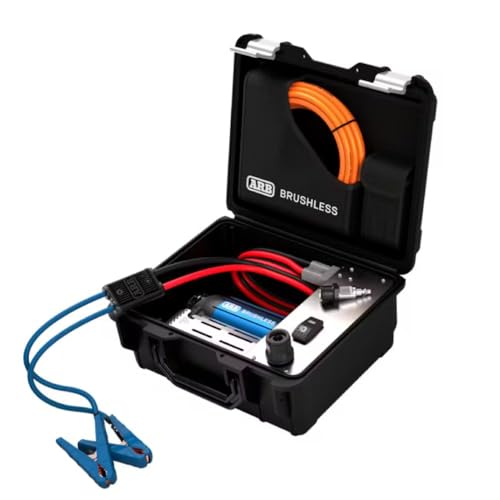 ARB CKBLP12 Brushless Portable Air Compressor |
8.3/10 | Buy | |
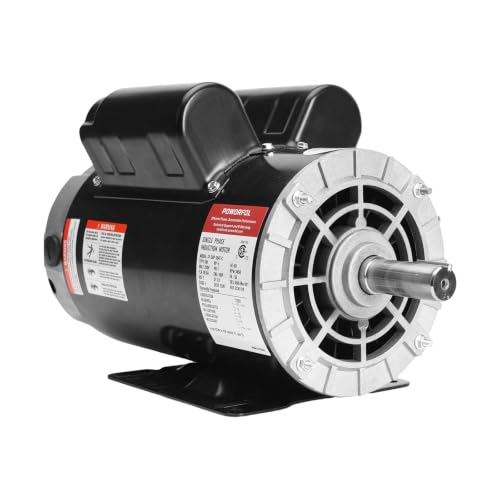 POWORFOL 5 HP 56 Frame Electric Motor |
8.1/10 | Buy |
ZHSYMX 120 PSI 12V Air Compressor
Built for onboard vehicle setups, this 12-volt compressor delivers up to 120 PSI with a 1.27 CFM flow rate for air horns, helper springs, and tire top-offs. Its sealed, permanently lubricated stainless steel cylinder ensures maintenance-free operation under harsh outdoor conditions.
Pros
- Permanently lubricated design requires zero ongoing maintenance
- Built-in thermal overload protection safeguards the 12V motor
- Durable, weather-sealed stainless steel cylinder construction
- Compact footprint fits tight vehicle underbody spaces
Cons
- Modest 1.27 CFM flow rate slows high-volume filling
- 120 PSI maximum pressure limits heavy-duty commercial applications
VEVOR 5HP 56HZ Air Compressor Motor
Built for heavy-duty shop machinery, this single-phase motor delivers 5 horsepower at 3450 RPM with reversible rotation capability. Its open drip-proof steel casing makes it well suited for clean indoor workshop installations running on 230-volt power.
Pros
- Reversible dual-rotation wiring capability
- Sturdy rolled steel casing with CSA certification
- Standard 56HZ frame with 7/8-inch shaft
- High-output 5 horsepower performance at 3450 RPM
Cons
- Requires a dedicated 60-amp circuit breaker
- Open drip-proof design is limited to dry environments
- Relatively heavy unit weighing over 40 pounds
VEVOR 2 HP 3450 RPM Compressor Motor
Built with a sturdy steel 56 frame and dual voltage support, this high-speed motor offers a dependable replacement option for workshop compressors. Its reversible rotation simplifies integration, though the open drip-proof housing demands a clean and dry operating area.
Pros
- Reversible wiring allows both clockwise and counterclockwise rotation
- Flexible dual-voltage operation on 115V or 230V lines
- Certified to CSA electrical safety standards
- Sturdy steel construction ensures efficient heat dissipation
Cons
- Open drip-proof housing requires a clean and dry area
- High circuit breaker requirement of 50 amps at 115V
- Relatively heavy unit at 23 pounds
VEVOR 2HP Oil-Free Air Compressor Motor
Delivering 5.2 CFM at 90 PSI with a 1680 RPM motor, this oil-free VEVOR pump head provides clean, low-maintenance air output for garage shops and pneumatic tools. Its cold-rolled steel build and dedicated cooling fans make it a dependable drop-in motor for woodworking, spray painting, and automotive repairs.
Pros
- Low-maintenance oil-free operation
- Generates 5.2 CFM at 90 PSI
- Sturdy steel and aluminum construction
- Effective cooling via built-in fans and heat sinks
Cons
- Heavier unit at over 36 pounds to install
- Single-stage design limits peak pressure to 145 PSI
- At 78 dB, operating volume is still noticeable indoors
GCCSJ 5HP 56HZ Air Compressor Motor
Built for heavy-duty replacements, this 5-horsepower single-phase motor delivers 3450 RPM continuous duty power inside a durable rolled-steel housing. Its open drip-proof design and integrated overload protector make it a dependable drive unit for clean, dry workshop setups.
Pros
- High 3450 RPM working speed
- Durable rolled steel construction
- Built-in motor protector for safety
- Efficient cooling radiator design
Cons
- ODP design requires strictly clean, dry environments
- Fixed counter-clockwise rotation limits versatility
- Heavy build at roughly 42 pounds
Baldor 5 HP 3450 RPM Compressor Motor
Built for demanding workshop duty, this American-made Baldor 5-horsepower motor delivers 3450 RPM with reversible rotation. Its open drip-proof construction is tailored specifically for reliable performance in clean, dry indoor setups.
Pros
- Reversible for CW and CCW rotation
- Generous 1.15 service factor rating
- Compatible with both 208V and 230V power
- Durable US manufacturing by Baldor and ABB
Cons
- ODP enclosure is restricted to dry indoor spaces
- Substantial 50-pound weight complicates solo mounting
- High amp draw requires dedicated heavy-duty wiring
ARB CKBLP12 Brushless Portable Air Compressor
Built for 4x4 tire inflation, this unit pairs a high-output brushless motor with active fan cooling for sustained trailside performance. Integrated electronic controls adjust to ambient temperature swings and protect against electrical surges without needing external relays.
Pros
- Significantly higher output than legacy brushed compressors
- Active fan cooling prevents motor overheating
- Integrated safeguards protect against voltage drops and stalls
- Elimination of external relays simplifies vehicle setup
Cons
- Heavier build at approximately 17 pounds
- Bulkier dimensions take up notable cargo space
POWORFOL 5 HP 56 Frame Electric Motor
Delivering 3450 RPM on a 230V single phase supply, this heavy-duty motor provides reversible rotation for air compressors and workshop equipment. Its solid alloy steel build ensures steady operation, though the open drip-proof design restricts it to clean, dry spaces.
Pros
- Reversible rotation enables flexible equipment installation
- Standard 56 frame simplifies compressor and tool replacements
- High 3450 RPM speed handles demanding industrial tasks
- Durable alloy steel construction provides steady operation
Cons
- Open drip-proof housing requires clean and dry environments
- Heavy 47-pound weight can make installation cumbersome
- Requires a dedicated 230V single phase power supply
How to Match an Air Compressor Motor to Its Job
How to choose an air compressor motor comes down to matching the replacement to the compressor’s mechanical interface and electrical supply, then checking whether the motor’s rated output suits the pump. A motor listing can provide useful specifications, but it cannot confirm compatibility with an unidentified compressor. Treat the original nameplate and the compressor manufacturer’s parts information as the starting point.
Start with the compressor and motor nameplates
Record the original motor’s horsepower, voltage, phase, frequency, rated speed, frame, enclosure, rotation, and full-load amperage where available. Note the compressor make and model, along with any motor part number shown in its manual or parts diagram. A replacement listing that matches one specification but conflicts with another needs further investigation rather than guesswork.
Also identify whether you are replacing an electric motor or considering a complete compressor assembly. The product data includes conventional electric motors, an oil-free pump-head product, and portable vehicle air equipment. Those items serve different purposes, despite some listings using overlapping wording such as motor or compressor.
A complete pump head is not automatically a drop-in electric motor replacement. For example, the VEVOR listing called an air compressor motor describes a 2HP oil-free pump with 5.2 CFM at 90 PSI and a maximum pressure of 145 PSI. That description presents pump performance information, not the same replacement-motor interface details listed for a standalone frame motor.
Frame and shaft dimensions determine mechanical fit
Frame designation is a critical identifier because it relates to the motor’s mounting arrangement and physical interface. The supplied options include 56 and 56HZ frames, an 184T frame, and a 213T frame. Do not assume that frame numbers are interchangeable or that similar horsepower ratings mean the mounting points line up.
Compare shaft diameter, shaft length, and shaft style with the original motor and the compressor’s pulley or coupling. The VEVOR 5HP motor is listed with a 56HZ frame and a 7/8-inch keyed shaft, while the VEVOR 2HP motor has a 56 frame and a 5/8-inch keyed shaft. The Cuilvu 7.5HP listing specifies an 184T frame, a 1-1/8-inch shaft diameter, and a 2-3/4-inch shaft length.
Those differences matter because a pulley needs to match the shaft and sit in the proper alignment with the pump. A mismatch can prevent assembly or create mechanical strain. Confirm the keyway dimensions and the compressor maker’s approved pulley arrangement where that information is available; do not rely on a product photo or a general claim that a frame is common.
The APFAITH replacement is listed as a 213T-frame, 7.5HP motor compatible with specified Ingersoll Rand single-phase compressors and reference part numbers 23172604 and 45465101. That is useful evidence only when those details match the compressor being repaired. The listing itself advises buyers to confirm compatibility with their model, so treat the part references as a cross-check rather than universal fitment.
Match voltage, phase, and available circuit capacity
Read the motor’s rated voltage and phase before considering installation. The supplied standalone replacements are single-phase AC motors, but their voltage requirements differ. The Baldor 5HP listing specifies 208-230V, while the VEVOR 2HP motor is listed for 115V or 230V operation.
Amperage varies with the motor and supply voltage. The Baldor listing states 21.5A at 230V and 23.5A at 208V; the VEVOR 5HP listing specifies 25A at 230V. The VEVOR 2HP listing gives 20A at 115V and 10A at 230V, and the Cuilvu 7.5HP listing gives 33.4A at 208V and 29.6A at 230V.
Use the exact motor nameplate and manufacturer instructions to assess the electrical supply, protective devices, and wiring. Do not assume that a household receptacle or existing breaker is suitable just because the motor is single-phase. Motor starting current can differ from the listed operating amperage, and the supplied listings do not provide starting inrush figures for these motors.
The VEVOR listings include customer-supplied circuit-breaker notes, including 60.0A for the 5HP model and 50A at 115V or 25A at 230V for the 2HP motor. These are product-specific listing instructions, not a substitute for confirming code-compliant circuit protection for the actual installation. Have a qualified electrician resolve conflicts between the motor documentation, compressor requirements, and the existing circuit.
Horsepower and speed must suit the compressor pump
Choose horsepower based on the compressor manufacturer’s specification for the pump, not on a desire for extra power. The product information spans 2HP, 5HP, and 7.5HP motors, but that range does not mean a larger motor is a safe upgrade for a pump designed around a smaller one. The pump, drive components, wiring, and protection must all be appropriate for the selected motor.
Several standalone choices are listed at 3450 RPM, including the Baldor 5HP, GCCSJ 5HP, and Cuilvu 7.5HP motors. Speed is not a cosmetic detail: the motor drives the pump through a pulley or other specified arrangement, and changing motor speed or pulley ratio can change pump speed. Use the compressor maker’s specified motor and pulley setup instead of improvising a ratio.
Marketing labels can also blur the difference between motor horsepower and pump output. Focus on the stated motor rating and the compressor maker’s requirements; do not interpret horsepower alone as a measure of delivered air. The listings do not supply a standardized airflow figure for each standalone replacement motor, so they cannot establish that a motor will provide a particular CFM at a particular pressure.
If the goal is to power tools rather than repair a compressor, compare the complete compressor’s delivered air specifications with the tool requirements. A motor by itself does not establish the system’s CFM, tank capacity, pressure switch settings, or recovery behavior. Our guide to engine-driven compressor configurations may help readers weighing a different power-source setup, but it does not replace motor-to-pump compatibility checks.
Rotation, enclosure, and operating environment
Rotation direction must agree with the compressor’s design and the manufacturer’s wiring instructions. Several listed motors are reversible for clockwise or counterclockwise operation, including the Baldor and VEVOR standalone motors. The VEVOR models specify a factory setting of counterclockwise, while the GCCSJ listing specifies counterclockwise rotation.
Reversible does not mean that wiring can be changed casually. Follow the motor’s approved wiring diagram and the compressor documentation, and disconnect power before any qualified person services the equipment. Incorrect rotation may affect the driven equipment, so verify the specified direction before returning a repaired compressor to service.
Enclosure style affects where a motor is intended to operate. The Cuilvu, Baldor, VEVOR 5HP, and GCCSJ listings identify open drip-proof enclosures and recommend relatively clean, dry environments. That specification is a reason to consider the installation location and exposure, not a claim that an ODP motor is protected against dust, water, or harsh outdoor conditions.
The ARB brushless portable air compressor is a separate category from the standalone AC replacement motors. Its product description highlights vehicle-oriented onboard use, electronic speed control, and voltage and overload protection. It should not be treated as a substitute for a belt-driven shop compressor motor simply because the listing discusses a brushless motor.
Use model-specific evidence before ordering
Build a compatibility checklist from the compressor model, original part number, frame, shaft dimensions, voltage, phase, rated speed, rotation, and enclosure. Compare every item against the proposed replacement listing and the compressor documentation. A clear match across those details is more useful than a broad statement that a motor fits many air compressors.
Some listings provide more identifying details than others. The Cuilvu motor lists frame, enclosure, shaft dimensions, voltage, amperage, speed, and reversible rotation. The POWORFOL 5HP listing specifies a 56 frame, 7/8-inch keyed shaft, 2.25-inch shaft length, 230V single-phase supply, and 20A draw, while the Baldor listing gives its own 56HZ frame and electrical details.
Compare those specifications against the actual old motor rather than selecting by brand familiarity. A 5HP motor from one listing is not necessarily interchangeable with another 5HP motor if frame or shaft differs. If the old nameplate is unreadable, use the compressor model and manufacturer parts documentation to identify the required replacement before buying.
Price and availability can change, but a lower-cost motor is not a useful value if its electrical or mechanical interface does not match. A premium brand does not establish compatibility either. The right decision is the motor that matches documented requirements and can be installed and protected according to the manufacturer’s instructions.
Safe replacement and return-to-service checks
Motor replacement involves both electrical power and stored compressed air. Disconnect the equipment from its power source and depressurize the tank completely before servicing or transport, following the compressor manual. Use suitable eye protection, and do not remove guards or alter pressure controls as a workaround for a mismatch.
Installation should follow the motor and compressor manufacturers’ instructions, including mounting, pulley alignment, wiring, grounding, and any specified belt tension. The available product data does not provide universal torque values or a one-size-fits-all wiring method. If the required connection or protection is unclear, stop and consult a qualified electrician or compressor service provider rather than guessing.
After service, verify that guards and covers are restored, the motor turns in the required direction, and the compressor cycles as its manufacturer specifies. Watch for unusual noise, vibration, overheating, or an electrical protective device opening, and stop operation if something appears wrong. Do not increase pressure switch cut-out settings or bypass thermal protection to force the compressor to run.
A motor replacement does not resolve every compressor fault. A pump, belt, pressure switch, check valve, or wiring problem can also contribute to poor operation, and replacing a motor without diagnosis may leave the original issue untouched. Check the compressor documentation for troubleshooting guidance and seek service when the cause or safe repair path is uncertain.
The practical choice is the motor whose frame, shaft, electrical rating, speed, and rotation match the compressor’s documented requirements. Confirm those details before ordering, and treat listed compatibility as model-specific evidence rather than a universal promise. That process helps prevent a costly mismatch and keeps electrical and mechanical decisions tied to the equipment’s actual design.
About the author
Bob Beacham is an experienced tools and workshop writer with deep knowledge of power equipment, mechanical systems, and practical DIY applications. His coverage of air compressors, welding equipment, saws, and workshop tools helps translate technical specifications into useful guidance for homeowners and serious DIYers.