
How Do Air Compressors Work: A Practical Guide for 2026
Learn how do air compressors work, from atmospheric intake to CFM delivery and storage tanks, to run pneumatic tools reliably in October 2026.
 By Bob Beacham
Updated October 8, 2026
By Bob Beacham
Updated October 8, 2026
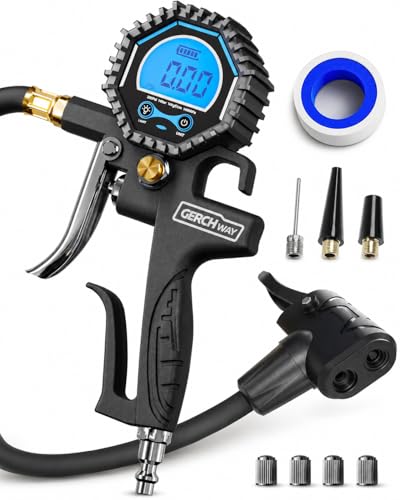
Pneumatic power remains one of the most reliable forms of mechanical energy in modern workshops, construction sites, and automotive garages. Whether you are driving framing fasteners into dense lumber, spraying lacquer finishes, or inflating truck tires on the roadside, understanding how do air compressors work helps you diagnose performance drops and select equipment that matches your actual tool demands. At its core, an air compressor does not create energy from nothing; instead, it converts electrical or mechanical power into potential energy by mechanically capturing ambient atmospheric air, reducing its volume, and storing it under pressure inside a steel or aluminum receiver tank.
When you pull the trigger on an impact wrench or nail gun, that trapped pressure instantly releases, expanding rapidly to drive mechanical pistons or spin internal turbines. Choosing the right setup requires balancing essential performance metrics like delivered CFM at 90 PSI, maximum operating pressure, pump lubrication style, and motor recovery speed. If a pump cannot produce pressurized air as fast as your continuous-draw pneumatic tools consume it, line pressure drops rapidly and work stalls. Knowing the mechanical stages of the compression cycle prevents common headaches like motor overheating, tripped circuit breakers, and moisture-damaged air tools.
| Award | Product | ACR Score About ACR ScoreThe ACR Score is our own rating from 0 to 10, based on performance, design and build, ease of use, and value. It reflects independent research and is never influenced by manufacturers, retailers, or affiliate commissions. Learn more › | |
|---|---|---|---|
| Best Overall |
Presta Valve Adaptor, Tire Pressure Gauge
|
9.2/10 | Buy |
| Best Value |
 DEWALT Tire Inflator, Portable Air Compressor
|
9.1/10 | Buy |
| Best Budget |
 GSPSCN Digital Tire Inflator 12V Heavy Duty Metal
|
8.8/10 | Buy |
 Metabo HPT Pancake Air Compressor
|
8.6/10 | Buy | |
| Best Premium |
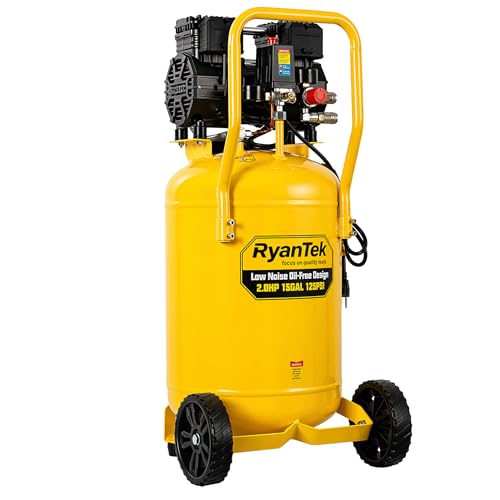 RyanTek 15-Gallon Air Compressor, 2HP, Quiet 66dB
|
8.6/10 | Buy |
 DEWALT Air Compressor for Trim, 200-PSI Max
|
8.4/10 | Buy | |
 Cordless Air Compressor for DEWALT 20V MAX Battery
|
8.3/10 | Buy | |
 LIVOWALNY Tire Inflator Air Compressor Compatible
|
8.1/10 | Buy | |
 OlarHike Tire Inflator Portable Air Compressor
|
8.1/10 | Buy | |
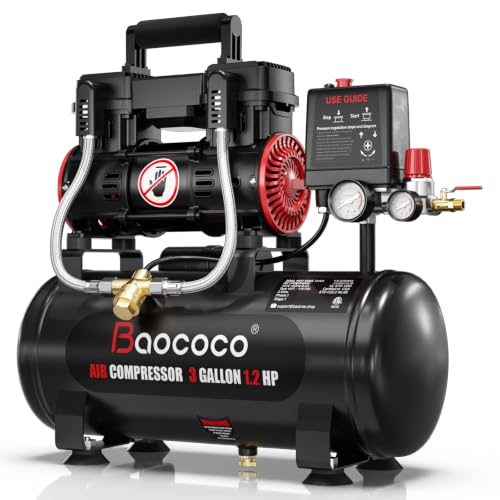 3Gallon Ultra Quiet Air Compressor with Two Quick
|
7.8/10 | Buy |
The Mechanical and Physical Principles of Air Compression
Air compressors operate on a straightforward physical principle: forcing a given volume of atmospheric air into a smaller space increases its pressure proportionally. An electric motor or gas engine drives a mechanical pump to draw in ambient air, compress it, and transfer it into a storage tank or directly to a pneumatic tool. Understanding each stage of this compression cycle helps operators maximize tool performance, prevent mechanical wear, and maintain reliable workshop equipment.
From Atmosphere to Stored Energy: The Basic Compression Cycle
Every compression cycle begins when ambient air enters the compressor intake port at standard atmospheric pressure, roughly 14.7 PSI at sea level. The air passes through an intake filter that traps abrasive dust, metal shavings, and workshop debris before they can enter the cylinder. As the mechanical pumping element expands the internal chamber, it creates a localized vacuum that pulls filtered air past the intake valve into the cylinder.
The compression stroke begins immediately as the mechanical assembly moves in the opposite direction to reduce the volume of the trapped air chamber. According to Boyle’s law, decreasing the volume of an enclosed gas forces molecules closer together, producing a sharp rise in both pressure and temperature. When cylinder pressure exceeds downstream line resistance, the exhaust valve flexes open to discharge hot, dense air into the receiver tank. This continuous cycle creates a steady supply of pressurized air ready for demanding workshop applications.
Pump Mechanics: How Reciprocating Pistons Displace Air
Most portable and workshop compressors use reciprocating piston pumps to generate working air pressure. A rotating crankshaft powered by an electric motor drives a connecting rod that moves a piston up and down inside a machined cylinder bore. During the downward intake stroke, atmospheric pressure pushes open a thin, flexible spring-steel reed valve located on the valve plate, filling the cylinder chamber with air.
As the piston reverses direction and moves upward, rising internal pressure forces the intake reed valve shut against its seat. The trapped air compresses until it forces open the discharge reed valve on the opposite side of the valve plate. Dual-cylinder units like the GSPSCN portable inflator and the RyanTek 15-gallon compressor operate twin pistons in tandem to produce higher airflow and smoother displacement with reduced vibration.
Single-Stage Versus Two-Stage Compression Architecture
Air compressors are divided into single-stage and two-stage designs based on how many compression steps occur before air reaches the receiver tank. In a single-stage pump, ambient air is compressed directly to final working pressure in a single stroke. Compact pancake compressors like the Metabo HPT EC711S and portable trim models like the DEWALT DWFP55130 use single-stage pumps that reliably deliver pressures up to 165 or 200 PSI for nailing and general inflation.
Two-stage air compressors divide the compression process between two distinctly sized cylinders connected by an intercooler tube. The larger low-pressure cylinder compresses ambient air to an intermediate pressure, exhausting it into finned tubing where ambient air cools the charge. The smaller high-pressure cylinder then compresses this cooled air a second time to reach 175 PSI or higher, resulting in cooler running temperatures and greater volumetric efficiency under continuous industrial workloads.
Oil-Free Versus Oil-Lubricated Pumps: Friction and Heat Dissipation
Continuous air compression generates intense friction and heat, requiring dedicated engineering to keep internal components from seizing. Oil-free air compressors use self-lubricating materials, such as heat-resistant polytetrafluoroethylene piston rings and composite cylinder sleeves, to eliminate the need for crankcase oil. Units like the RyanTek 15-gallon and the Baococo 3-gallon model deliver clean, oil-mist-free air ideal for paint spraying and finish carpentry while starting reliably in sub-freezing temperatures.
Traditional oil-lubricated compressors utilize a splash lubrication system where a connecting rod dipper distributes non-detergent compressor oil across bearings, wrist pins, and cylinder walls. The circulating oil dampens mechanical noise and dissipates operational heat effectively, allowing oil-lubricated pumps to sustain demanding commercial duty cycles. However, these compressors require regular oil level checks, scheduled fluid changes, and upright storage to prevent crankcase oil leaks during transport.
The Critical Role of the Check Valve and Unloader Valve
A compressor cannot function safely or restart under load without the coordinated actions of the check valve and unloader valve. The tank check valve is a one-way brass fitting installed directly at the inlet port of the storage reservoir. As pressurized air exits the pump, it pushes open an internal spring-loaded poppet, but as soon as the motor stops, tank pressure forces the poppet shut to trap air inside the vessel.
The unloader valve works in tandem with the check valve, connecting the pump exhaust line to the pressure switch mechanism. When the motor hits its cut-off threshold and powers down, the pressure switch actuates the unloader valve to release trapped air between the cylinder head and the check valve. This distinct hiss exhausts residual head pressure, ensuring the electric motor restarts freely without fighting heavy mechanical resistance on its next cycle.
Pressure Switches and the Automatic Cycling System
The electro-mechanical pressure switch monitors reservoir pressure to automate motor operation. An internal diaphragm detects tank pressure against an adjustable spring mechanism, switching power off once cut-out pressure is reached, such as 125 PSI on the RyanTek or 165 PSI on the Metabo HPT. As connected pneumatic tools consume air and tank pressure drops to the pre-set cut-in threshold, the diaphragm relaxes and closes internal electrical contacts to restart the motor.
Digital portable inflators replace mechanical diaphragms with electronic pressure sensors and microprocessors. Compact units like the DEWALT 12V inflator, the LIVOWALNY cordless model, and the OlarHike tire pump allow operators to set a target pressure on a digital screen. The onboard controller monitors real-time tire pressure and automatically shuts off power once the desired pressure is achieved, preventing over-inflation and eliminating manual monitoring.
The Receiver Tank: Storing Potential Energy and Buffering Pulsations
While compact tire inflators push air directly into tires, workshop compressors rely on welded steel receiver tanks to store pressurized potential energy. The receiver tank acts as an air battery, enabling tools to draw high airflow rates that exceed the pump’s continuous output capacity. Reservoirs on models like the Metabo HPT 6-gallon pancake or the RyanTek 15-gallon vertical compressor also dampen reciprocating pressure pulses, supplying steady downstream airflow.
Receiver tanks also cool discharged air and separate moisture from the primary airflow stream. When hot, compressed air exits the pump and enters the spacious steel vessel, it expands slightly and cools against the tank walls, causing water vapor to condense out of suspension. Every certified tank includes an ASME safety relief valve designed to open automatically if a faulty pressure switch fails to cut motor power before safe tank limits are exceeded.
Regulation and Airflow: Delivering Usable CFM and PSI to Tools
Air stored inside a compressor tank is usually pressurized well above the safe operating limits of standard pneumatic tools. While tanks store air at 120 to 200 PSI, most nailers, spray guns, and impact wrenches require 70 to 90 PSI to function correctly. An adjustable pressure regulator restricts downstream air delivery to the desired working level, while dual manifold gauges let operators monitor both raw tank pressure and regulated tool pressure simultaneously.
Pneumatic performance depends on understanding the difference between pressure and volume. Pressure measured in PSI represents the mechanical force of the air, while volume measured in CFM or SCFM indicates the flow rate available for continuous operation. Fasteners and nailers consume small bursts of air that work well on compact tanks, whereas continuous tools like sanders and paint sprayers demand substantial CFM delivery that quickly empties small reservoirs. Checking tool CFM ratings before purchasing equipment prevents frustrating air starvation.
Moisture Management: Why Compressors Make Water and How to Drain It
Compressing atmospheric air always produces liquid water due to the natural humidity present in ambient air. When a compressor draws in several cubic feet of humid air and compresses it into a small volume, relative humidity inside the vessel rapidly surpasses saturation levels. As the hot compressed air cools against the steel tank walls, water vapor condenses into liquid that pools at the bottom of the tank, where it can cause internal corrosion if left unaddressed.
Removing this accumulated condensation requires regular draining through the valve fitted at the lowest point of the tank. Quality compressors include accessible quarter-turn brass ball valves that simplify daily maintenance, while basic models feature threaded needle valves that require manual turning. Draining the tank after every work session expels moisture, prevents internal rust, and stops water from traveling down air hoses to damage pneumatic tools or ruin spray finishes.
Electrical Demand and Startup Dynamics: Managing Motor Inrush Current
Electric compressor motors demand substantial electrical power during startup, briefly pulling three to five times their normal running amperage to overcome mechanical inertia. This sudden spike, known as inrush current, can trip standard 15-amp household breakers if the circuit is shared or if the unloader valve fails to release trapped head pressure. The DEWALT DWFP55130 compressor incorporates a low 12-amp draw motor specifically engineered to reduce breaker tripping during challenging jobsite startups.
Voltage drop caused by long or light-gauge extension cords can also starve the electric motor of power and cause overheating. Rather than running a long power cord that increases electrical resistance, manufacturers recommend plugging the compressor directly into a wall receptacle and using a longer 3/8-inch air hose to reach the project. Cordless options like the Fogera 1-gallon battery-powered compressor eliminate electrical circuit constraints entirely by operating on standard tool battery packs.
Matching Compressor Output to Pneumatic Workloads
Operating pneumatic tools successfully requires matching the tool’s volume requirements with the compressor’s rated CFM delivery at 90 PSI. A reliable guideline is choosing a compressor that delivers roughly 1.25 to 1.5 times the continuous CFM demand of your most demanding tool. The Metabo HPT EC711S provides 2.8 CFM at 90 PSI, which easily supports multiple trim nailers, but high-draw tools like rotary sanders require much larger displacement pumps to avoid continuous stalling.
Duty cycle ratings also dictate how long a pump can run without risking thermal damage. Many consumer oil-free compressors carry a 50 percent duty cycle rating, meaning the motor should rest half the time to dissipate heat safely. Larger units like the RyanTek 15-gallon compressor deliver 4.5 CFM at 90 PSI with a larger tank buffer to handle longer tool cycles, ensuring reliable air power across automotive repair, carpentry, and general maintenance. Matching pump output to tool draw keeps equipment operating within safe thermal limits.
About the author
Bob Beacham is an experienced tools and workshop writer with deep knowledge of power equipment, mechanical systems, and practical DIY applications. His coverage of air compressors, welding equipment, saws, and workshop tools helps translate technical specifications into useful guidance for homeowners and serious DIYers.