
Can Am Spyder Air Compressor of 2026: Top Picks
Equip your ride with a reliable Can Am Spyder Air Compressor for suspension tuning and tire pressure maintenance in November 2026.
 By Tony Carrick
Updated October 28, 2026


Three-wheeled roadsters present a distinct pneumatic challenge because their handling stability relies heavily on balanced tire pressures and finely tuned rear suspension bags. A minor pressure variance across the front tires can cause noticeable steering drift or trigger vehicle stability assist systems prematurely. Investing in a dedicated can am spyder air compressor gives riders the ability to dial in specific suspension stiffness for two-up touring while ensuring front and rear tires remain at factory recommendations. Many long-distance riders choose between permanent onboard air systems and portable inflators, similar to how contractors rely on versatile cordless portable air compressors for mobile pneumatic power.
Whether you ride a Can-Am Spyder RT with adjustable rear pneumatic shocks or an F3 stripped down for solo cruising, proper inflation equipment prevents roadside headaches and sluggish handling. Factory air suspensions often require incremental pressure changes between twenty and ninety PSI to accommodate luggage and passenger weight. Portable 12-volt inflators, compact rechargeable pocket units, and quiet garage compressors each address distinct aspects of powersports maintenance. Matching air volume output, battery draw limits, and pressure gauge accuracy to your specific touring habits ensures you remain prepared for unexpected slow leaks or rapid payload adjustments.
| Award | Product | ACR Score About ACR ScoreThe ACR Score is our own rating from 0 to 10, based on performance, design and build, ease of use, and value. It reflects independent research and is never influenced by manufacturers, retailers, or affiliate commissions. Learn more › | |
|---|---|---|---|
| Best Overall |
Stealth SAQ-1234 2-Gallon Air Compressor
|
9.2/10 | Buy |
| Best Premium |
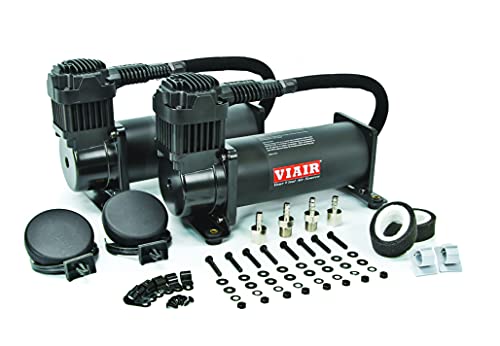 VIAIR 444C Dual 200 PSI Air Compressor |
8.6/10 | Buy |
| Best Budget |
 Airmoto 120 PSI Portable Tire Inflator |
8.3/10 | Buy |
| Best Value |
 WOLFBOX HyperFlow60D 12V Air Compressor |
8.3/10 | Buy |
Stealth SAQ-1234 2-Gallon Air Compressor
Operating at under 60 decibels, this compact unit provides exceptionally quiet performance for garage DIY tasks, brad nailing, and tire inflation. Its oil-free motor reaches up to 125 PSI while keeping routine maintenance to a minimum.
Pros
- Quiet operation suitable for indoor workspaces
- Maintenance-free oil-free pump design
- Durable steel tank with rubber vibration dampening
- Reliable pressure recovery for intermittent nailing
Cons
- Relatively heavy to carry at nearly 42 pounds
- Small two-gallon tank limits continuous tool use
- Modest 1.8 CFM flow rate at 90 PSI
VIAIR 444C Dual 200 PSI Air Compressor
Built for high-demand air suspension and onboard tanks, this dual-compressor system delivers rapid fills up to 200 PSI. An IP67 dust and water resistance rating makes it well suited for harsh underbody automotive environments.
Pros
- High 200 PSI maximum operating pressure
- Rugged IP67 dust and water resistance
- Fast fill rates via combined 3.53 CFM output
- Thermal overload protection prevents motor damage
- Complete mounting hardware and spare filters included
Cons
- Duty cycle drops to 50 percent at 200 PSI
- Heavy combined weight at 21.6 pounds
- Dual-unit footprint requires significant mounting space
Airmoto 120 PSI Portable Tire Inflator
Weighing just 1.2 pounds, this compact cordless compressor delivers up to 120 PSI with automatic shutoff for routine top-offs on cars, bikes, and sports gear. Its pocket-sized form factor stores neatly in a glove box, serving as a convenient roadside backup.
Pros
- Extremely compact and lightweight design
- Auto shut-off prevents accidental over-inflation
- Clear digital LCD display with real-time pressure reading
- Integrated LED light aids night roadside repairs
- Internal hose storage keeps accessories organized
Cons
- Not suitable for heavy-load tires or large inflatables
- Cold temperatures and large tires drain battery quickly
- Requires frequent recharging before heavy usage
WOLFBOX HyperFlow60D 12V Air Compressor
Built for off-roaders and overland rigs, this dual-cylinder inflator delivers 5.1 CFM of airflow alongside an impressive 60-minute continuous runtime. Its digital LED gauge and automatic shut-off simplify airing up large 4x4 and trailer tires without constant monitoring.
Pros
- High 5.1 CFM airflow enables fast inflation
- Generous 60-minute runtime handles multiple large tires
- Automatic shut-off prevents accidental over-inflation
- Long 25.4-foot air hose reaches full-size rigs
- Universal 1/4-inch NPT connector fits standard tools
Cons
- Heavier build at 18.1 pounds to transport
- Bulky dimensions take up notable cargo space
Technical Guide to Selecting and Running a Can-Am Spyder Air Compressor
Operating a three-wheeled touring machine requires precise attention to air delivery equipment because both vehicle suspension dynamics and directional steering depend on pneumatic stability. Unlike standard passenger vehicles with substantial tire volumes and forgiving tolerances, three-wheelers operate on low tire pressures and small air bladders that respond dramatically to slight pressure shifts. Selecting the right inflation system involves understanding the mechanical differences between continuous onboard air, high-volume trail inflators, pocket battery units, and stationary garage air compressors.
Pneumatic Suspension and Low-Pressure Tire Dynamics
The rear suspension on touring models like the Can-Am Spyder RT incorporates an air spring bladder working alongside a conventional coil-over damper. This pneumatic bladder allows riders to alter rear ride height and preload firmness to accommodate varying weights from luggage, trailers, or a passenger. Operating this rear bag at insufficient pressure causes the chassis to bottom out on harsh bumps, while over-pressurizing it creates a harsh, skittish ride that compromises rear tire traction. Typical suspension adjustments require fine increments between 20 and 90 PSI, demanding an air source with responsive control and an accurate gauge.
Tire pressure regulation on a three-wheeler introduces an entirely different mechanical challenge compared to the rear suspension air shock. The two front tires generally run at low operating pressures between 15 and 20 PSI, where a variance of merely two PSI between the left and right sides creates immediate steering pull. Furthermore, uneven front inflation can cause the electronic stability system to intervene unexpectedly during aggressive cornering. A reliable inflation tool must offer sensitive low-pressure resolution to prevent accidental over-inflation when adjusting front tires.
Balancing both suspension bladders and low-pressure tires requires an inflator capable of broad pressure modulation. Suspension bladders contain minimal air volume, meaning a high-output compressor can easily over-pressurize the bladder in a split second if operated carelessly. Conversely, vehicle tires hold significantly more cubic volume, requiring steady airflow so the pump motor does not overheat while bringing a low tire up to specification. Navigating these contrasting demands requires careful selection of pump displacement, pressure cut-off mechanisms, and hose connections.
Hardwired Onboard Air Systems for Touring Convenience
Riders who frequently tour long distances often favor permanent onboard 12-volt air systems integrated directly into the vehicle chassis. Systems such as the VIAIR 444C Dual Air Compressor deliver commercial-grade performance with continuous duty ratings and up to 200 PSI maximum working pressure. Dual compressor setups provide a combined airflow rate of 3.53 CFM, which can rapidly pressurize dedicated air storage tanks or supply direct line pressure to suspension bags. Permanent installations eliminate the hassle of unpacking portable gear at roadside stops, allowing immediate air adjustments via onboard switches.
Durability remains a paramount concern for chassis-mounted equipment exposed to rain, road debris, and temperature extremes. The VIAIR 444C platform features an IP67 rating against dust and water intrusion, ensuring internal motor components remain protected during wet-weather touring. Units of this caliber incorporate stainless steel braided leader hoses paired with integrated 1/4-inch NPT check valves to prevent air backflow from the suspension reservoir into the pump head. Mounting brackets and remote air filter assemblies further protect the pump intake from inhaling road grit kicked up by the rear drive belt.
Plumbing an onboard compressor into a powersports frame demands high-quality pneumatic tubing, brass fittings, and secure line management. When setting up custom air distribution manifolds or replacing aged lines, following best practices for replacing pneumatic air hoses helps riders prevent pressure drops and road-vibration leaks. Securing air lines along the vehicle frame with rubber-insulated P-clamps isolates tubing from hot exhaust headers and moving swingarm components. A properly plumbed onboard setup maintains line integrity across thousands of highway miles without sudden pressure loss.
Electrical Demand and Charging System Compatibility
Integrating any heavy electrical accessory onto a motorcycle or trike requires strict adherence to charging system limits. Powersports stators and alternators have limited surplus output compared to standard automotive alternators, typically offering only a few hundred watts of spare capacity beyond standard lighting and fuel injection needs. High-output air compressors draw considerable current, especially when starting under residual head pressure. Attempting to power a multi-cylinder pump through standard 12-volt auxiliary ports or cigarette lighter sockets will quickly blow factory accessory fuses.
Heavy-duty inflators generally require direct connection to the vehicle battery using heavy-gauge wire, an inline fuse, and an automotive relay. The engine must remain running during high-draw compressor cycles to ensure the charging system supports the load and prevents deep-cycling the starting battery. If the battery voltage drops significantly while the pump is running, electric motor efficiency plummets and internal winding temperatures rise rapidly. Installing a dedicated master switch also prevents accidental compressor activation while the vehicle is parked with the ignition turned off.
Thermal overload protection provides an essential safety net when running compact 12-volt electric motors in enclosed vehicle compartments. High ambient heat around the engine bay combined with compression heat can trigger internal thermal protectors if duty cycles are exceeded. High-end compressors automatically shut off before motor windings suffer permanent insulation breakdown, resetting only after cooling down. Riders should always allow sufficient cooling intervals between multiple tire fills to prolong the service life of internal Teflon piston seals and reed valves.
Portable High-Output 12V Compressors for Group Touring
Riders who travel in groups or prefer to keep their storage compartments modular often opt for high-capacity portable pumps. The WOLFBOX HyperFlow60D 12V Portable Air Compressor exemplifies this class, featuring dual 60-millimeter cylinders driven by a 1080-watt motor. Delivering up to 5.1 CFM at 40 PSI, this style of pump moves significant air volume, making it capable of seating beads or rapidly inflating multiple tires in succession. Dual cooling fans built into the motor housing facilitate continuous runtimes of up to 60 minutes, preventing heat-related shutdowns during extended operations.
Portability offers distinct advantages for owners who maintain multiple vehicles or participate in group riding rallies. Heavy-duty portable units connect directly to battery terminals via heavy spring-loaded alligator clips, avoiding the current limitations of internal vehicle wiring harnesses. Standard 1/4-inch NPT quick-connect fittings allow seamless pairing with extended coiled air hoses, easily reaching the rear tire or an accompanying trailer without moving the compressor. A rugged carry bag protects the unit when stowed inside a saddlebag or rear top trunk between stops.
Smart digital interfaces on modern portable inflators significantly simplify tire management during travel. Integrated LED displays provide real-time pressure feedback, while automatic shut-off functionality prevents over-inflating delicate powersports tires. Advanced systems briefly pause air delivery for a second or two during inflation cycles to equalize line pressure and obtain an accurate tire reading. This automated precision removes guesswork, ensuring both front wheels achieve identical pressure readings for predictable steering response on winding roads.
Pocket Rechargeable Inflators for Roadside Emergencies
For daily commuting and minimal packing scenarios, cordless pocket inflators provide exceptional convenience without requiring any wiring. Devices like the Airmoto Tire Inflator Portable Air Compressor operate on internal lithium-ion batteries, eliminating tangled power cords entirely. With a rated maximum output of 120 PSI and a compact profile that fits easily into a glove box, these tools excel at routine tire top-offs and emergency roadside adjustments. An internal 2000 mAh rechargeable battery delivers sufficient energy to correct several low tires on a single charge.
Rechargeable inflators rely on user-friendly digital displays that switch seamlessly between PSI, BAR, and kPa pressure units. Riders simply screw the flexible hose onto the tire Schrader valve, select the target pressure using adjustment buttons, and initiate the inflation cycle. The pump automatically stops running once the pre-set pressure is reached, protecting low-volume air shocks and small tires from dangerous over-pressurization. An integrated LED work light adds vital visibility when checking pressures beside an unlit highway shoulder at night.
Despite their unmatched compactness, cordless handheld units have clear mechanical boundaries that users must respect. The small cylinder diameter and modest battery capacity make them unsuited for seating tire beads or filling large-volume vehicle tires from completely flat. Cold ambient weather can temporarily reduce lithium-ion battery discharge efficiency, necessitating regular USB-C charging intervals before long road trips. Keeping a pocket inflator fully charged ensures immediate readiness whenever cold morning temperatures drop front tire pressures below safe thresholds.
Quiet Workshop Compressors for Home Garage Maintenance
While portable 12-volt tools handle roadside contingencies, serious pre-ride inspections and tire replacements are best managed with a stationary garage compressor. The Stealth Air Compressor 2 Gallon model provides an ideal balance of quiet operation and steady pneumatic output for home workshops. Driven by a 3/4 horsepower motor operating at less than 60 decibels, this electric compressor allows owners to service vehicles in enclosed garages without disturbing family members. Its oil-free dual-piston pump delivers clean, dry air free of aerosolized lubricant mist.
A dedicated two-gallon steel storage tank acts as an essential buffer, supplying instantaneous airflow that compact 12-volt pumps cannot match. Delivering 2.8 CFM at 40 PSI and 1.8 CFM at 90 PSI with a peak pressure of 125 PSI, a garage compressor easily seats tight tire beads onto rim shoulders. The stored air volume also powers light pneumatic tools such as blow guns for cleaning belt drives, air ratchets for body panel fasteners, and paint sprayers for touch-up work. Fast recovery times ensure you spend minimal time waiting for the tank to rebuild pressure between tasks.
Oil-free dual-piston designs require virtually zero mechanical upkeep beyond routine tank moisture drainage and periodic intake filter cleaning. Built-in thermal protection switches and ASME-style safety relief valves safeguard the motor and tank from dangerous pressure buildup. Rubber-isolated feet and reinforced carry handles make it easy to shift the compressor between the motorcycle bay and other workbench areas. Investing in a quiet garage air source creates a comfortable working environment for meticulous maintenance tasks.
Air Volume Delivery, Maximum Pressure, and Fittings
Evaluating compressor specifications requires understanding how cubic feet per minute and maximum operating pressure interact during practical use. High maximum pressure ratings, such as the 200 PSI capacity found on the VIAIR 444C, provide massive pressure headroom for heavy suspension loads and rapid tank recovery. However, high pressure without adequate flow volume results in sluggish tire inflation times when dealing with high-volume automotive-sized rubber. Balancing peak pressure ratings against CFM delivery at 40 and 90 PSI ensures the compressor handles both delicate air bags and bulky tires efficiently.
Coupler standards and connection hardware directly impact how easily an air compressor adapts to different tasks on the vehicle. Most heavy-duty mobile and garage compressors utilize standard 1/4-inch NPT quick-connect couplers, allowing swift attachment of various chucks and extension whips. Powersports wheels often feature recessed valve stems positioned between tight brake rotors and wheel spokes, making bulky screw-on chucks difficult to attach securely. Utilizing flexible 90-degree brass chuck adapters or clip-on thumb-lock nozzles prevents air loss and hand fatigue during pressure adjustments.
Thread sealing and check valve integrity represent critical failure points in any pneumatic system exposed to road vibration. Using high-grade Teflon thread paste or heavy-duty PTFE tape on all NPT joints prevents frustrating micro-leaks that slowly drain storage tanks. Inline check valves must seal instantly when the compressor cycles off to prevent backpressure from stressing pump heads during subsequent starts. Periodic inspection of quick-connect O-rings and leader hose crimps ensures the system maintains airtight reliability across rough pavement and extended journeys.
Moisture Drainage and Pneumatic Component Longevity
Whenever air is compressed, ambient water vapor condenses into liquid moisture inside storage tanks and downstream air lines. If allowed to accumulate, this trapped water causes internal corrosion in steel tanks and introduces moisture into delicate pneumatic valves. In suspension systems, moisture inside air bags can cause rubber rot or freeze in cold weather, jamming height control solenoids. Establishing a strict drainage routine protects pneumatic hardware from premature moisture damage and maintains clean airflow throughout the system.
Garage storage tanks require regular moisture purging through underside petcocks or ball valves after every major operating session. When factory drain fittings become stiff, corroded, or leak air around the threads, reviewing a tank drain valve replacement guide helps owners install smooth quarter-turn brass ball valves. Upgrading to an easily accessible ball valve encourages frequent tank draining, extending the working life of the steel vessel. Onboard vehicle systems benefit from inline desiccant dryers or automated water traps installed along the main feed line.
Proper storage habits also safeguard portable 12-volt and cordless inflators against environmental moisture degradation. Never store portable pumps loosely inside damp saddlebags where condensation can seep into digital gauge housings or electric motor brushes. Storing tools inside breathable padded cases with moisture-absorbing silica packets keeps electronic displays and internal mechanical seals in peak working condition. Taking these simple preventative steps guarantees your air equipment will operate dependably whenever unexpected pressure losses arise on the open road.
Equipping your garage and vehicle with capable air compression equipment transforms routine maintenance and roadside emergencies from frustrating obstacles into simple, controlled procedures. Whether you opt for a hardwired onboard dual compressor, a high-output portable 12-volt pump, a pocket-sized rechargeable inflator, or an ultra-quiet garage electric unit, matching tool capabilities to your specific riding style ensures optimal handling and suspension compliance. Regular pressure verification, proper electrical circuit protection, and diligent moisture management keep your three-wheeler performing smoothly across thousands of memorable miles.
About the author
Tony Carrick is an experienced product researcher and writer specializing in tools, home improvement, automotive maintenance, and consumer equipment. With extensive experience reviewing tools and tackling hands-on renovation projects, he brings a buyer-focused perspective to compressor performance, usability, and overall value.