
How to Remove Air Compressor Pulley: Safe Guide
How to remove air compressor pulley safely, identify the hub attachment, and avoid shaft damage. Practical guidance for November 2026.
 By Clint DeBoer
Updated November 10, 2026


A belt-driven compressor can stop working properly when its pulley is damaged, loose, or no longer aligned with the belt. Before planning how to remove air compressor pulley, identify whether you are dealing with the pump flywheel or the motor pulley; they sit on different shafts and may use different retaining hardware. The right removal method depends on the compressor design, so the owner’s manual or parts diagram should guide the job rather than assumptions based on another machine.
Stored air, unexpected motor startup, and force applied to a shaft can turn a small repair into a serious hazard or an expensive parts replacement. Isolate the power, fully depressurize the tank, and use a puller suited to the pulley instead of striking it. If the shaft, key, bearing, or retaining method is unclear, stop and get service guidance. For broader equipment context, see our stationary compressor workshop guide and our medium compressor overview.
| Award | Product | ACR Score About ACR ScoreThe ACR Score is our own rating from 0 to 10, based on performance, design and build, ease of use, and value. It reflects independent research and is never influenced by manufacturers, retailers, or affiliate commissions. Learn more › | |
|---|---|---|---|
| Best Overall |
ZHONG AN 1/4-Inch NPT Air Filter Pressure
|
9.2/10 | Buy |
| Best Budget |
 Tnuocke 2-Pack 1/2-Inch 20mm Thread Air Compressor |
9.1/10 | Buy |
| Best Premium |
 Sumsoctober 265 Type Compressor Pulley Set |
8.1/10 | Buy |
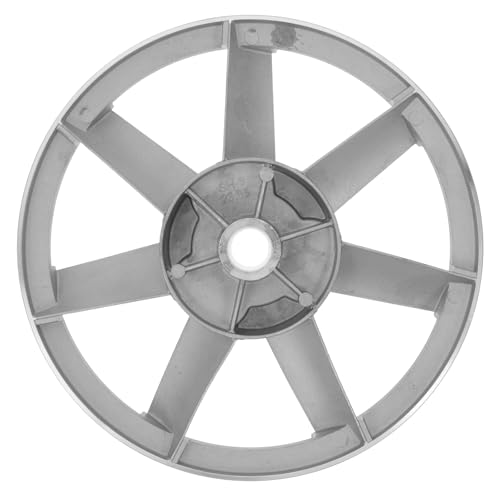 Veemoon Air Compressor Belt Pulley Compressor |
8.0/10 | Buy | |
| Best Value |
 ZHONG AN 1/4" Air Filter Regulator Lubricator |
7.8/10 | Buy |
ZHONG AN 1/4-Inch NPT Air Filter Pressure
The ZHONG AN 1/4-Inch NPT Air Filter Pressure Regulator combines pneumatic line regulation and moisture separation into a compact, lightweight unit with an integrated dial gauge. Featuring a push-pull locking adjustment knob and a manual drain valve, it provides a practical setup for DIY hobbyists and home woodworkers seeking cleaner air for finish nailers and pneumatic tools.
Pros
- Combines air filtration, moisture trapping, and pressure regulation in one affordable unit
- Top locking adjustment knob prevents accidental pressure changes during tool operation
- Integrated pressure gauge simplifies dialed-in tool adjustments for finish carpentry and inflation
- Bottom drain valve enables fast purging of trapped line condensation
Cons
- 1/4-inch NPT sizing may restrict high-volume airflow on continuous-demand pneumatic tools
- Small moisture collection bowl requires frequent manual draining during extended humid-weather run sessions
- Lightweight body construction requires careful alignment and thread sealing to prevent port leaks
Tnuocke 2-Pack 1/2-Inch 20mm Thread Air Compressor
The Tnuocke 1/2-inch (20mm) intake filter silencer 2-pack combines a coated metal housing with intake filtration to muffle pump suction roar and keep shop dust out of the cylinder head. It is a practical, budget-friendly replacement for garage DIYers and shop owners refreshing worn or plastic intake filters on compressors and blowers.
Pros
- Sturdy coated metal casing resists heat and workshop impacts better than standard plastic housings
- Noticeable dampening of harsh pump intake suction roar in enclosed garages and workshops
- Convenient 2-pack provides an economical replacement for twin-cylinder pumps or backup stock
- Straightforward 1/2-inch thread installation requires minimal setup time
Cons
- Thread pitch is listed generically as 1/2-inch (20mm), which may require thread verification or an adapter on certain NPT vs metric ports
- Specific micron filtration rating and internal filter media replacement intervals are not documented by the manufacturer
- Compact canister size may restrict intake flow on oversized high-CFM industrial compressor pumps
Sumsoctober 265 Type Compressor Pulley Set
Designed for air compressor maintenance, this replacement set includes a matching flywheel and motor pulley for A-type triangular belts. Its machined metal build and 13mm slot ensure secure power transmission for compatible compressor setups.
Pros
- Includes both flywheel and motor pulley components
- Machined metal build offers solid wear resistance
- 13mm slot width helps minimize belt drift
- Maintains stable alignment during heavy operation cycles
Cons
- Requires manual verification of shaft and keyway sizing
- Compatible only with standard A-type triangular belts
- Fixed 265mm flywheel dimension limits equipment compatibility
ZHONG AN 1/4" Air Filter Regulator Lubricator
Designed for pneumatic systems, this compact unit pairs an air filter and regulator with a lubricator cup to clean, regulate, and oil incoming air. It offers a practical all-in-one solution for workshops seeking to protect their 1/4-inch air tools from moisture and wear.
Pros
- Removes moisture and small particulates from air lines
- Atomizing lubricator helps extend tool service life
- Pull-up knob locks pressure securely in place
- Lightweight design simplifies mounting and upkeep
Cons
- Limited to 1/4-inch NPT air line setups
- Requires ongoing monitoring of lubricator oil levels
Removing a Belt-Driven Compressor Pulley Without Guesswork
The goal is to release the pulley from its shaft without bending the wheel, damaging the keyway, or loading the motor or pump bearings with uncontrolled force. Start by identifying the exact pulley and its retention method, then remove belt tension and any retainers the service information specifies. A compatible pulley puller should apply even, controlled force; the correct puller arrangement depends on the pulley’s hub and shaft access.
Identify which pulley and shaft you are servicing
A belt-driven compressor commonly has a large flywheel on the pump and a smaller pulley on the motor, but their location and construction vary by machine. Confirm which part needs removal before loosening anything, and use the parts diagram, model label, or service manual to identify its retaining screw, nut, key, or other hardware. Do not assume a visible fastener is the only restraint; dirt, corrosion, a key, or a hub design can make a pulley seem fixed even after one retainer is removed.
Record the pulley’s orientation and the belt’s position before disassembly. A phone photo can help preserve the relationship between the pulley, shaft, key, and nearby guard, though it cannot replace manufacturer instructions. Also note any washers, spacers, or keyed components as they come off, since their order may affect alignment during reassembly.
The supplied pulley products illustrate why identification matters. Sumsoctober lists a flywheel and motor-pulley set, with multiple flywheel size options and different stated apertures, while Veemoon lists a belt pulley with specified overall dimensions. Those descriptions do not establish compatibility with every compressor or disclose the fitment of your particular machine. Measure the existing part and shaft features, then check the compressor documentation before ordering a replacement.
Make the compressor safe to service
Switch the compressor off, disconnect it from its power source, and prevent accidental reconnection while you work. If it is hardwired or you cannot confidently isolate its supply, have a qualified person handle that step. Do not rely on the pressure switch being off as electrical isolation, and do not reach past a belt guard while the machine is connected.
Release the air from the tank until its pressure gauge indicates zero, following the compressor manufacturer’s instructions. A compressor can retain pressure even after its motor stops, and a connected air line may also contain stored air. Keep the manufacturer’s safety relief device intact; never defeat, remove, or adjust it to make servicing easier.
Wear eye protection, secure loose clothing and hair, and keep hands clear of pinch points. Let hot components cool before handling them. If the unit is gas-powered, cordless, or otherwise uses a power source other than a standard plug, follow its specific shutdown and isolation directions rather than applying an electric-compressor assumption.
Tank depressurization is not a substitute for isolating electrical energy, and disconnecting power does not automatically remove stored air. Both hazards need attention before pulley work begins. If the tank pressure will not fall, the power cannot be safely isolated, or the guard is damaged in a way that exposes moving parts, pause the repair and seek qualified service.
Remove the belt and inspect the retaining hardware
Use the manufacturer’s belt-tension procedure to loosen or release the belt. Some compressor layouts provide a motor-adjustment arrangement; others require a different method, so do not pry the belt against a pulley rim or force it past an obstruction. Once the belt is free, move it clear of the work area and inspect the pulley for cracks, a damaged groove, or signs of rubbing.
Clean enough dirt and residue from the hub to see the fasteners and shaft end. Follow the service documentation to remove the appropriate set screw, nut, washer, or retainer, using the correct tool and direction. Keep the removed hardware organized, and avoid rounding a fastener by using an ill-fitting tool or applying force before confirming how it is retained.
If a key is visible, note its position and condition. A key transfers rotation between a shaft and pulley; it is not a reason to lever against the shaft or pry at the pulley edge. The key may remain in a slot after the wheel comes off, and it can be easy to lose if it is not accounted for.
Corrosion or a tight shaft fit can resist movement, but resistance alone does not tell you which method is safe. Check the manual for an approved puller or removal procedure. Avoid open flame, uncontrolled heating, and improvised impact methods, which can damage nearby components or create hazards around an air system.
Use a suitable puller rather than hammering the pulley
A puller is generally the controlled approach for a pulley that is designed to come off its shaft under axial force. Choose a tool that fits the hub securely and bears on the shaft end as intended by the puller manufacturer. Keep the puller centered, protect the shaft end if the tool instructions call for a suitable adapter, and apply force gradually while watching for movement or misalignment.
Do not strike the pulley with a hammer or use a pry bar against the compressor housing. A blow can transmit force into bearings, distort the pulley, damage a shaft, or crack nearby parts. Likewise, do not tighten a puller that is slipping or crooked; stop, reset it, and confirm that its arms are engaging a sound part of the hub rather than a thin rim or belt groove.
If the wheel does not move with a correctly positioned tool and reasonable controlled effort, stop rather than escalating force. Recheck for a hidden retainer, a key or spacer, or a model-specific removal requirement. A seized or damaged assembly may need a technician with the right fixtures, especially if the shaft begins to turn, the hub starts to deform, or the puller cannot sit squarely.
As the pulley releases, support it so it cannot drop onto the shaft, wiring, pump, or floor. Remove the key and any loose spacers only when accessible without prying against the shaft. Keep parts together and inspect the exposed shaft and keyway for burrs, cracks, severe corrosion, or other damage before deciding whether reassembly is appropriate.
Check shaft condition and replacement compatibility
Examine the shaft for scoring, a damaged keyway, or visible deformation, and inspect the old pulley for a worn groove, crack, or distorted hub. If the pulley was loose, investigate the retaining hardware and key rather than simply tightening it without checking. A damaged shaft or bearing concern changes the job from a simple pulley swap to a repair that may require service-level disassembly.
Before buying a replacement, compare the shaft diameter, bore, keyway dimensions, hub arrangement, pulley diameter, belt profile, and belt alignment against the existing parts and the compressor’s specifications. Product descriptions may provide some measurements, but not necessarily every dimension needed to verify fit. The Sumsoctober listing specifically asks buyers to check their own size information, and its stated options should not be treated as universal compressor standards.
Also distinguish between a pump flywheel and a motor pulley. Their diameters and belt grooves affect the drive arrangement, and substituting one based only on appearance can alter alignment or operating behavior. If the original part number is available, use it as a starting point and confirm any alternative with the compressor manufacturer or a knowledgeable parts supplier.
The product listings here include both pulley components and accessories that serve different purposes. The ZHONG AN filter-regulator products are air-treatment components, while the Tnuocke intake silencers are described as threaded accessories; neither is a pulley-removal tool. Keeping those product roles separate helps prevent a search result for compressor parts from being mistaken for a part that solves a shaft or belt-drive problem.
Reinstall, align, and verify before returning to service
Reinstall only after confirming the shaft and replacement pulley are serviceable and compatible. Follow the compressor documentation for key placement, retainers, fastening, and belt tension; do not guess at a torque value or substitute hardware. Keep the pulley aligned with the mating pulley and make sure the belt follows its intended path without rubbing the guard or other components.
Before reconnecting power, turn the drive by hand only if the manufacturer’s service procedure permits it and the equipment is fully isolated. Check for binding, obvious wobble, belt interference, and loose tools or hardware. Reinstall all guards and covers before operating the compressor; a belt drive must not be run exposed for a quick observation.
Restore the machine according to its manual and observe the first operating cycle from a safe position, with suitable eye and hearing protection. Listen for unusual rubbing or vibration and watch for belt tracking problems without reaching toward moving parts. If the pulley wobbles, the belt walks, the motor struggles, or a new noise appears, shut the compressor down, isolate power, and depressurize it before inspection.
Do not use pulley removal as an occasion to alter factory pressure-switch settings, bypass protective devices, or operate without the guard. For air-tool applications, the compressor’s air delivery and the tool’s demand still determine whether the system is suitable; a pulley replacement alone does not establish airflow capacity. Our portable compressor guide for air tools covers the broader question of matching compressor choices to pneumatic work.
Know when the repair needs professional service
Get qualified help if the pulley is seized, the shaft is visibly damaged, a bearing feels rough, or the assembly requires removing electrical or pump components beyond the manufacturer’s routine service instructions. The same applies if the correct puller cannot engage safely, the retainer is damaged, or you cannot confirm the replacement dimensions. More force is not a substitute for knowing how the assembly is designed.
Stop immediately if the compressor unexpectedly starts, pressure remains in the tank, wiring is exposed, or a guard cannot be restored. Do not bypass a safety device or continue operation to see whether a questionable repair settles in. A pulley that is correctly identified, removed with controlled force, and reinstalled with verified alignment is the practical goal; if any of those checks cannot be met, service support is the safer next step.
About the author
Clint DeBoer is an experienced tool-industry specialist with decades of involvement in technical media, hands-on product evaluation, and testing methodology. His focus on performance, practical usability, and data-driven comparisons makes his expertise highly relevant to professional air compressors, pneumatic tools, and workshop equipment.