
How to Put a Nozzle on an Air Compressor
How to put a nozzle on an air compressor starts with matching the fitting, then making a secure connection. Get practical steps for November 2026.
 By Clint DeBoer
Updated November 10, 2026


A nozzle connection can seem straightforward until the threads do not match, the quick-connect will not seat, or air escapes as soon as the compressor starts. To learn how to put a nozzle on an air compressor, first identify the connection on the air line and the inlet on the nozzle or blow gun. A secure match matters for controlled airflow and helps avoid wasting air through a loose fitting.
This guide explains how to connect common compressor nozzles, how to check compatibility, and what to do if the fittings differ. The products listed below include blow guns, interchangeable tips, tire chucks, and fittings, so the correct steps depend on which kind of accessory you have. For a broader look at blow-gun styles and their uses, see our air blow gun guide.
| Award | Product | ACR Score About ACR ScoreThe ACR Score is our own rating from 0 to 10, based on performance, design and build, ease of use, and value. It reflects independent research and is never influenced by manufacturers, retailers, or affiliate commissions. Learn more › | |
|---|---|---|---|
| Best Overall |
LUMITECO Brass Locking Tire Air Chuck 2-Pack
|
8.9/10 | Buy |
| Best Budget |
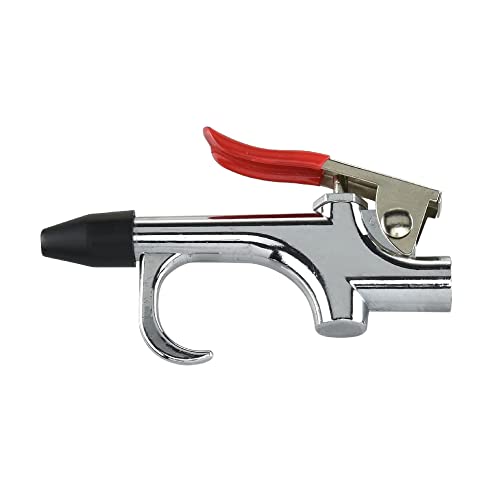 Neiko 31112 Air Blow Gun with 5 Nozzles |
8.8/10 | Buy |
| Best Premium |
 SARDVISA 13-Piece Air Blow Gun and Nozzle |
8.8/10 | Buy |
 JASTIND Industrial Air Blow Gun with Extension |
8.6/10 | Buy | |
 LUMITECO 8V1 Locking Tire Air Chuck |
8.6/10 | Buy | |
| Best Value |
 WYNNsky 7-Piece Air Blow Gun Accessory Kit |
8.4/10 | Buy |
 SARDVISA 20-Piece Air Compressor Tool Kit |
8.1/10 | Buy | |
 Hromee 4-Piece Rubber Blow Gun Tip Set |
8.1/10 | Buy | |
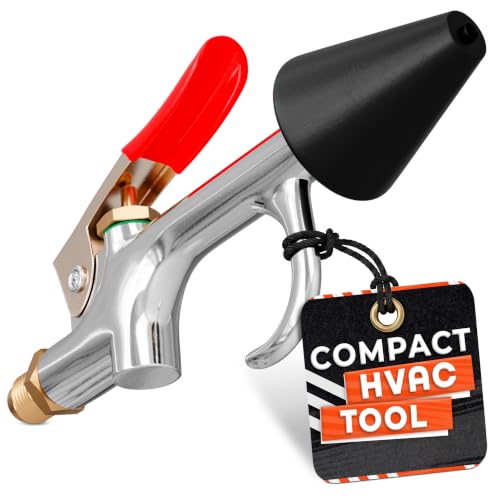 ERRINGEN Stainless Steel Air Blow Gun |
8.0/10 | Buy | |
 VIKROM 1/4-Inch SAE Flare Air Blow Gun |
8.0/10 | Buy |
LUMITECO Brass Locking Tire Air Chuck 2-Pack
This adapter converts standard twist-on inflator hoses into secure lock-on chucks, allowing hands-free tire inflation without air loss. Built from solid brass and rated to 250 PSI, it offers a sturdy upgrade for vehicle and bicycle maintenance.
Pros
- Durable solid brass construction resists corrosion
- Locking clip allows hands-free inflation
- High endurance rating up to 250 PSI
- Eliminates air leakage during hose connection
Cons
- Limited to Schrader valves only
- Requires a compatible threaded hose end to attach
Neiko 31112 Air Blow Gun with 5 Nozzles
Built with chrome-plated steel and a compact five-inch body, the Neiko 31112 delivers targeted clearing power for workshop dust and cramped crevices. Its assortment of five interchangeable tips makes it a versatile pneumatic accessory for home garages and routine equipment maintenance.
Pros
- Versatile kit with five interchangeable nozzle attachments
- Durable chrome-plated steel resists rust and wear
- PVC-coated thumb trigger allows precise airflow control
- Compact, lightweight design fits comfortably in hand
Cons
- Maximum operating pressure is capped at 90 PSI
- Thumb trigger can cause fatigue during extended continuous use
SARDVISA 13-Piece Air Blow Gun and Nozzle
The SARDVISA 13-Piece Air Blow Gun Set delivers multi-purpose workshop cleanup and light inflation capability with an all-metal chrome-plated body and standard 1/4-inch NPT connection. It is an affordable, versatile starter kit for garage DIYers, hobbyists, and woodworkers needing flexible nozzle options at the workbench.
Pros
- All-metal chrome-plated body offers dependable durability compared to cheap molded plastic alternatives
- Comprehensive 13-piece accessory bundle covers machinery cleaning, crevice blowing, and small inflation tasks
- PVC-coated thumb lever provides comfortable control during repetitive workbench blow-offs
- Supplied Teflon tape and thread adapters make immediate out-of-the-box setup straightforward
Cons
- Lacks OSHA-compliant side-relief bypass venting, requiring users to manually regulate compressor line pressure for safety
- Alloy nozzle extensions and thread converters require careful hand alignment to avoid cross-threading
- Thumb-lever actuation can cause hand fatigue during prolonged, continuous blowing compared to full-handle pistol grips
JASTIND Industrial Air Blow Gun with Extension
Built with an all-metal body and an extended steel nozzle, this pneumatic tool focuses on reaching narrow gaps without scratching delicate surfaces. Its standard 1/4-inch NPT coupler and ergonomic handle deliver controlled airflow for workshop cleanups and automotive maintenance.
Pros
- Durable all-metal body resists corrosion and wear
- Protective rubber tip prevents surface scratching
- Extended nozzle reaches deep and narrow crevices
- Ergonomic handle allows precise airflow regulation
Cons
- Includes only a single nozzle extension
- Long profile can be cumbersome in confined spaces
LUMITECO 8V1 Locking Tire Air Chuck
Drivers and cyclists can convert tedious screw-on inflators into instant lock-on connections with this solid brass adapter. Its one-handed speed clip fastens securely to standard Schrader valves for leak-resistant inflation on cars, bikes, and motorcycles.
Pros
- Heavy-duty solid brass build
- Quick one-handed clip attachment
- Secure, leak-resistant connection on Schrader valves
- Converts screw-on hoses to lock-on style
Cons
- Open-flow design releases air freely when unattached
- Incompatible with Presta bicycle valves
- Includes only a single adapter pack
WYNNsky 7-Piece Air Blow Gun Accessory Kit
Equipped with five interchangeable nozzles and an extension tube, this pneumatic kit handles detailed cleaning and inflation around workshops and garages. The trigger-operated air gun includes a soft rubber tip that safeguards finished surfaces while clearing dust from narrow gaps.
Pros
- Versatile nozzle set handles varied inflation and cleaning needs
- Soft rubber tip prevents scratching delicate surfaces
- Extended tube reaches recessed spaces easily
- Extremely lightweight construction reduces hand fatigue
Cons
- Maximum working pressure capped at 90 PSI
- Not suited for high-pressure industrial compressor setups
SARDVISA 20-Piece Air Compressor Tool Kit
This 20-piece air compressor accessory set from SARDVISA bundles standard 1/4-inch NPT fittings, an air blow gun, tire chucks, and pre-applied thread sealant for basic garage maintenance. It serves as an accessible starter kit for DIY homeowners and hobbyists setting up everyday pneumatic lines.
Pros
- Wide selection of essential air line fittings, adapters, and inflation attachments in one package
- Standard 1/4-inch NPT threading fits standard U.S. home shop air tools and compressors
- Pre-applied thread sealant and included PTFE tape assist with leak-free installation
- Solid brass ball air chuck provides dependable durability at the valve stem connection
- Lightweight total set weight of approximately 1.21 pounds stores easily in portable toolboxes
Cons
- Light-duty chrome-plated hardware is best suited for home hobbyists rather than heavy commercial fabrication shops
- Manufacturer does not specify maximum working PSI or continuous CFM flow ratings
- Air blow gun and nozzles do not have documented OSHA safety pressure-relief certifications
Hromee 4-Piece Rubber Blow Gun Tip Set
Designed to protect delicate surfaces from scratches during cleanup, this attachment kit includes three rubber nozzles and a dedicated high-flow adapter. The combination of brass threads and an aluminum adapter offers broad compatibility across standard air blow guns.
Pros
- Rubber nozzles protect sensitive surfaces from damage
- Solid brass fittings ensure tight connections
- Three nozzle sizes provide versatile airflow options
- Aluminum adapter expands compatibility with high-flow guns
Cons
- Rubber tips naturally wear faster than metal nozzles
- Requires blow guns matching 1/8-inch or 1/2-20 threads
- Air blow gun is not included
ERRINGEN Stainless Steel Air Blow Gun
Tailored for HVAC maintenance and workshop cleanups, this compact nozzle directs focused airflow for coil cleaning and drain line blow-outs. An ergonomic thumb lever and integrated pressure regulator provide precise control, though connecting to standard NPT setups requires a separate adapter.
Pros
- Durable corrosion-resistant stainless steel body
- Integrated pressure control for versatile airflow output
- Ergonomic thumb lever facilitates single-handed operation
- Compact shape reaches tight mechanical spaces easily
Cons
- Requires a separate adapter for standard 1/4-inch NPT hoses
- Specialized 1/4-inch SAE flare inlet limits universal compatibility
VIKROM 1/4-Inch SAE Flare Air Blow Gun
Designed for tight clearance and HVAC maintenance, this compact VIKROM blow gun pairs a slender nozzle with responsive thumb lever control. It utilizes a dedicated 1/4-inch SAE flare connection, making it ideal for refrigeration service but reliant on an adapter for standard shop lines.
Pros
- One-handed thumb lever for easy air control
- Slim profile reaches tight crevices and vents
- Durable stainless steel construction
- Compact size stores easily on tool carts
Cons
- Incompatible with standard NPT hoses without an adapter
- Required NPT adapter is not included
How to Connect an Air Compressor Nozzle
Most nozzle installations involve one of two connections: a threaded fitting or a quick-connect plug and coupler. The right approach depends on the nozzle’s inlet, the hose-end fitting, and whether the accessory is a blow gun or a tire chuck. Do not force parts together simply because they look close in size.
Identify the nozzle and hose connection
Start by identifying what you mean by “nozzle.” A blow gun is a hand tool that directs air for cleaning, while its nozzle may be a removable tip screwed into the gun body. A tire chuck attaches to a tire valve, and the fitting at its other end connects to the hose or inflator. Those parts do different jobs, so confirm which connection you are assembling before choosing an adapter.
Look at the fitting already on the air hose. A quick coupler has a sleeve that retracts to accept a matching plug; a threaded end has visible internal or external threads. Then inspect the accessory inlet or supplied plug for markings and the product instructions. The terms 1/4-inch NPT and 1/4-inch SAE flare do not describe interchangeable threads, even when the nominal size sounds similar.
That distinction matters for the VIKROM and ERRINGEN blow guns in the supplied product information: each is listed with a 1/4-inch SAE flare inlet, identified as 7/16-20 UNF, and the listing says a 1/4-inch NPT hose needs an adapter that is not included. By contrast, several other listed blow-gun kits describe a 1/4-inch NPT thread or a standard 1/4-inch NPT quick plug. Check the exact item’s inlet rather than assuming all compressor accessories share one fitting.
Prepare the compressor and parts safely
Before handling a hose fitting or changing a nozzle, switch off the compressor and follow its manual’s instructions for isolating the air supply. Disconnecting the hose from a pressurized line can release air suddenly, so do not loosen a threaded connection while it is under pressure. If the task requires servicing a pressurized system, follow the equipment maker’s instructions and depressurize the tank completely before servicing fittings.
Set out the accessory, any included plug or adapter, and the hose coupler. Check threads for visible damage or debris, and confirm that the pieces are intended to connect. Use suitable eye protection when working with pneumatic equipment, and keep the nozzle pointed away from people, skin, and loose debris. The compressor manual and accessory instructions take priority if their connection or safety directions differ from general guidance.
Some kits include thread converters and Teflon tape, while others provide a ready-to-connect plug or no adapter at all. Use sealant only on a threaded joint when the fitting instructions call for it; it does not belong on a quick-connect plug or on a tire valve. Keep tape away from the first thread opening so loose material does not enter the air path. Do not add sealant to a connection whose maker specifies another sealing method.
Attach a removable tip to a blow gun
If you are installing a tip on the front of a blow gun, first check whether the tip is threaded and whether its thread matches the gun. Choose the tip for the task: the NEIKO and WYNNsky kits list multiple interchangeable attachments, including a soft rubber tip, a metal tip, an inflating needle, and extension tubes. A rubber tip can help reduce the chance of marking a surface, but it does not make every surface or use safe.
With the air supply isolated, align the selected tip with the gun’s outlet and start the threads by hand. Turn it gently until it is seated according to the product instructions; if it resists, stop and recheck the thread and alignment rather than forcing it. Tighten only as directed by the manufacturer, since the supplied information does not specify a universal torque value.
Some blow guns use a separate extension tube or a rubber-ended attachment, while others have a fixed nozzle. A kit that includes several tips does not mean every attachment suits every blow gun. The Hromee set, for example, lists rubber tips with 1/8-inch NPT fittings and a separate adapter for compatible high-flow blow guns; verify the gun’s outlet before trying to install one. Do not treat an adapter as proof that the resulting setup is appropriate for every task.
Connect the blow gun or accessory to the air hose
A blow gun with a threaded inlet may connect to a matching threaded hose fitting, or it may need a quick-connect plug installed first. If the accessory came with a compatible plug, follow its instructions to attach that plug to the gun. For a threaded joint, confirm that the thread types match before assembling. A mismatched NPT and SAE flare fitting may fail to seal even if it can be started by hand.
For a quick-connect, pull back the coupler sleeve, insert the matching plug fully, and release the sleeve so it returns to its normal position. Follow the coupler maker’s instructions, as coupler designs can vary. Do not pull on the hose to test the connection if the maker advises another check. If the plug will not seat smoothly, stop and verify the plug and coupler profiles instead of hammering or forcing them together.
The 13-piece SARDVISA set describes a blow gun with a female 1/4-inch NPT thread and a standard male 1/4-inch quick plug, giving two connection routes when the matching parts are used. Other kits list a standard quick-connect coupling. Those descriptions can help narrow down what is included, but they do not establish compatibility with every hose, coupler, or compressor manifold. Check the specifications on the exact parts you own.
If you need background on the kind of hand tool that sits between the hose and an air nozzle, our portable pancake compressor guide discusses an air-compressor use case where a blow gun may be one accessory among several. Tool choice does not change the need to match the fittings. It is still the plug, coupler, or threaded inlet that determines how the accessory attaches.
Fit a tire chuck without confusing it with a blow nozzle
A tire chuck connects to a tire’s valve stem, not to the front outlet of a blow gun. Its hose-side inlet may have a different thread or attachment style from a blow-gun nozzle, so inspect both ends of the chuck. The LUMITECO locking chuck products are described as adapters that screw onto a tire inflator hose and clip onto a Schrader valve. That is a tire-inflation connection, not a general-purpose cleaning tip.
For a locking chuck, follow the product instructions for attaching the hose end, then position the chuck on a compatible valve stem and secure its locking mechanism as directed. The supplied data lists Schrader valves for the LUMITECO products, so do not assume that they connect to every valve type. Keep hands and face away from the valve opening while connecting or disconnecting, and follow the compressor and tire equipment makers’ pressure guidance.
The SARDVISA kit includes a tire chuck, a tire gauge, and other fittings, but each item has its own function. A gauge measures pressure; a chuck makes the air connection; and a blow gun directs air for cleaning or other intended uses. Avoid assembling unrelated parts simply because their fittings appear similar. Use the component that the manufacturer identifies for the job.
Check the connection before using air
Once the parts are assembled, reconnect and operate the system only as described in the compressor manual. Keep the outlet pointed in a safe direction and use the pressure limits specified for the accessory and compressor. Listen for escaping air at the fitting, but do not put a hand over a pressurized nozzle to search for a leak. If air escapes, shut the system down and isolate it before examining the connection.
A leak at a threaded joint may indicate the wrong thread type, cross-threading, a damaged fitting, or an unsuitable sealing method. A leak at a quick-connect may mean the plug is not fully seated, the parts do not match, or a component needs attention. Do not keep operating a connection that will not seal. Replace damaged parts or consult the manufacturer when the cause is unclear.
For a removable tip that leaks at the blow-gun outlet, stop and check whether the tip is the correct part and whether it has been installed as directed. A loose attachment can shift during use, while a forced or damaged thread may not seal correctly. Never compensate for a poor fit by exceeding the accessory’s pressure rating or altering the compressor’s safety controls. Consult the product documentation for pressure limits and operating instructions.
Common connection errors and practical fixes
One common mistake is matching parts by nominal diameter alone. A fitting described as 1/4 inch may have an NPT thread, a different thread form, or a quick-connect profile; its label and intended mating part matter. Another is trying to screw a quick-connect plug into a coupler, or pushing threaded parts together without the required adapter. Pause when parts do not engage smoothly and check the product specifications.
Cross-threading can begin when a fitting is tilted or forced during installation. Start threaded parts carefully by hand where the design permits, and stop if they bind immediately. Do not use extra force to make an uncertain connection seem tight. A damaged fitting can create an air leak or make later removal difficult, so replace it or seek manufacturer guidance rather than improvising.
Another error is placing tape on a quick-connect or applying it to an interface that does not use tapered pipe threads. Tape cannot correct a mismatch between NPT and SAE flare connections, and excess material may enter the air passage. Follow the instructions for each fitting and use only the sealant method specified for that joint. If the instructions are unavailable, contact the supplier rather than guessing.
Some listings describe their products as suitable for common compressor connections, but a product description is not a substitute for checking the actual hose and tool. This is especially relevant for the SAE flare blow guns, which explicitly call out an adapter requirement for a 1/4-inch NPT hose. Match each end of the connection separately: hose to adapter, adapter to tool, and any removable nozzle to the blow gun. That simple check prevents the most avoidable fitting errors.
Choose an attachment that matches the task
The products in this guide cover several different jobs, so compare their contents rather than treating every listing as the same kind of nozzle. The NEIKO kit includes five tips, while the WYNNsky kit lists five popular attachments and an extension pipe. The SARDVISA kits include multiple air-line fittings and accessories, and the Hromee set focuses on rubber tips and an adapter. Those differences can matter if you want a single tip, a longer reach, or several attachments for different tasks.
A longer extension may help reach a confined spot, but it does not remove the need to use compressed air safely or follow the tool instructions. A rubber-ended tip may be suitable when surface contact is a concern, but check that the attachment is designed for the specific gun and task. A ball-inflation needle is intended for inflating compatible sports balls, not for general cleaning. Selecting the right attachment helps keep the setup purposeful and reduces the temptation to improvise.
Buyers should also distinguish a complete tool kit from a replacement nozzle set. A blow-gun kit may include a gun, plug, and several tips, while a tip set may require an existing compatible gun. A tire chuck adapter serves tire inflation and may not include the hose-end fitting you need. Read the listed contents and inlet details before purchasing, especially if your current line already has a specific coupler.
Finish with a safe, compatible setup
After the connection checks out, use the accessory only for its intended application and within the manufacturer’s pressure limits. Wear suitable eye protection, and use hearing protection when the equipment or work environment calls for it. Do not direct compressed air at a person or use a blow gun to clean skin or clothing. Keep the work area clear of loose debris that could be propelled by the airflow.
If the nozzle still will not attach, the useful next step is identification, not more force: determine whether the problem is at the nozzle-to-gun joint, gun-to-hose connection, or hose-to-compressor coupler. Compare the fitting type and thread information on both mating parts, then obtain the specific adapter recommended by their manufacturers. A correctly matched connection should assemble as intended without forcing it, and any leak or uncertain pressure rating is a reason to stop and check the instructions before continuing.
About the author
Clint DeBoer is an experienced tool-industry specialist with decades of involvement in technical media, hands-on product evaluation, and testing methodology. His focus on performance, practical usability, and data-driven comparisons makes his expertise highly relevant to professional air compressors, pneumatic tools, and workshop equipment.