
How to Pump a Tire With an Air Compressor
How to pump a tire with an air compressor safely: check the tire’s required PSI, use a compatible inflator, and avoid overinflation in November 2026.
 By Bob Beacham
Updated November 10, 2026


A tire that looks low can be frustrating, especially when you’re preparing for a drive or trying to keep a bike ready to ride. Learning how to pump a tire with an air compressor starts with checking the pressure the tire actually needs, then matching the compressor and connection to the valve. The maximum PSI printed on an inflator is not the target pressure for your tire.
Small portable inflators can be convenient for topping up car, motorcycle, and bicycle tires, but their controls and power sources differ. Some models use a vehicle’s 12V outlet, while others can run on a rechargeable battery or a wired connection. If you’re comparing portable setups, our portable AC/DC compressor overview offers additional context, and the portable compressor guide for air tools covers a different kind of air-demand decision.
Top Products
| Award | Product | ACR Score About ACR ScoreThe ACR Score is our own rating from 0 to 10, based on performance, design and build, ease of use, and value. It reflects independent research and is never influenced by manufacturers, retailers, or affiliate commissions. Learn more › | |
|---|---|---|---|
| Best Overall |
ECBELLTX 150 PSI Cordless Tire Inflator
|
9.2/10 | Buy |
| Best Premium |
 Viair EVC75P 100 PSI Digital Tire Inflator |
9.2/10 | Buy |
| Best Budget |
 Self-Sealing 1/4" NPT to Schrader Valve Adapter |
8.3/10 | Buy |
 Tire Inflator Portable Air Compressor with LED |
8.3/10 | Buy | |
 Wealrit 30 Pcs Presta Valve Adapters,Multicolor |
8.1/10 | Buy | |
 SKÖG Self-Sealing 1/4" NPT to Schrader Valve |
8.1/10 | Buy | |
| Best Value |
 Electric Mini Bike Air Pump with Presta Valve |
8.1/10 | Buy |
 150PSI Cordless Tire Inflator Portable Electric |
8.0/10 | Buy | |
 Doorii 8000A Jump Starter with Air Compressor |
7.8/10 | Buy | |
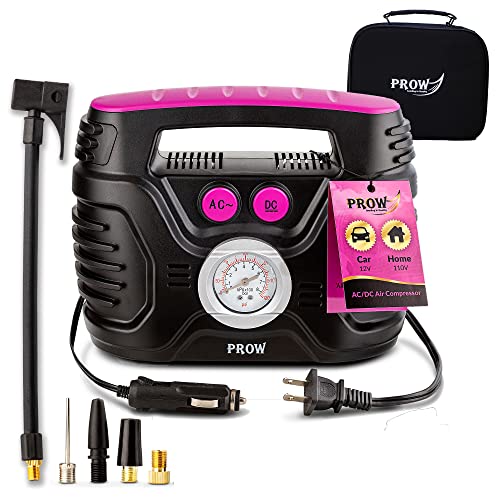 PROW 12V/110V Portable Analog Tire Inflator |
7.8/10 | Buy |
ECBELLTX 150 PSI Cordless Tire Inflator
Delivering up to 150 PSI, this dual-powered inflator operates on an internal 9,000 mAh battery or a standard 12V vehicle socket. Five preset inflation profiles and an automatic shut-off feature make it a versatile emergency tool for drivers and cyclists.
Pros
- Supports both battery and 12V wired operation
- Automatic shut-off prevents over-inflation
- Built-in LED light aids nighttime use
- Compact build with included carrying bag
Cons
- Full battery recharge takes around three hours
- Air hose length is limited to 39 centimeters
Viair EVC75P 100 PSI Digital Tire Inflator
Designed for compact roadside storage, the Viair EVC75P delivers reliable tire top-offs using a 12-volt vehicle plug and automatic pressure shut-off. Its digital gauge and 1.13 CFM flow rate make it a practical emergency pump for cars and SUVs.
Pros
- Automatic shut-off stops at the preset pressure
- Quick 1.13 CFM output tops off tires swiftly
- Clear digital gauge provides straightforward readouts
- Integrated LED work light assists in dark environments
Cons
- Short three-foot air hose limits placement options
- Requires a 12-volt vehicle socket with engine running
- Full duty cycle rated only up to 50 PSI
PROW 12V/110V Portable Analog Tire Inflator
Operating on both 12V DC car plugs and 110V home outlets, this compact inflator uses a simple analog gauge to handle basic car tires and sports gear. It reaches 35 PSI in under five minutes, making it a handy companion for road trips and garage maintenance.
Pros
- Dual AC and DC power options for versatile use
- Straightforward analog gauge is simple to read
- Inflates car tires to 35 PSI in five minutes
- Includes compact carry case and multiple valve attachments
- Covered by a three-year warranty with phone support
Cons
- Not designed for large truck tires or heavy inflatables
- Requires manual shutoff when target pressure is reached
- Needs a 10-minute cooldown after 20 minutes of running
How to Inflate a Tire Accurately and Safely
Inflating a tire correctly means reaching the vehicle or tire maker’s recommended cold pressure, not the tire’s maximum-pressure limit. Use a reliable pressure reading, connect the correct valve fitting, and add air in short intervals if the inflator doesn’t have an automatic stop. Recheck pressure after inflation because a compressor’s display and a separate gauge may not agree exactly.
Find the correct target pressure first
For a car or truck, check the vehicle’s tire-pressure label, commonly found on the driver-side door area, or consult the owner’s manual. The recommended cold pressure is generally the figure to use for routine inflation, while the number molded into a tire’s sidewall identifies a tire limit rather than the everyday target. If the vehicle placard and tire information appear inconsistent, confirm the correct specification with the vehicle manufacturer or a qualified tire shop.
Bicycle tires require a different approach because recommended pressure depends on the tire and bicycle setup. Use the pressure range printed on the tire or specified by its maker, and don’t assume every road tire needs the same pressure. The LISIXLIUYI Electric Mini Bike Air Pump lists bicycle modes and Presta and Schrader support, but its supplied information cautions that it is intended for bicycles rather than as a professional car-tire pump.
Check pressure when the tire is cold when possible. Driving heats tires and can raise the reading, so adjusting a warm tire to a cold-pressure target can lead to an incorrect result after it cools. If a tire is visibly damaged, has a bulge, or repeatedly loses pressure, inflation alone won’t address the underlying problem; arrange an inspection instead.
Prepare the compressor and valve connection
Park safely on a stable surface and keep the compressor’s hose clear of hot or moving vehicle parts. Read the inflator instructions before connecting power, and use only the power source specified for that model. A 12V car inflator, a rechargeable cordless pump, and a shop compressor with a tire chuck are different setups, so don’t assume their switches, fittings, or operating limits are interchangeable.
Remove the valve cap and identify the valve type. Many vehicle tires use Schrader valves, while many bicycles use Presta valves, which need their tip loosened before air can enter. If a bicycle pump or compressor chuck doesn’t match a Presta valve, a compatible adapter can bridge the connection; the Wealrit adapter set is described as converting Presta to Schrader.
Attach the hose firmly enough to seal without forcing or cross-threading it. A leaking connection can make the displayed pressure unreliable and waste time. If the chuck or adapter does not seat correctly, stop and verify that the fitting is intended for that hose and valve rather than trying to force a connection.
Keep the compressor upright and on a stable surface if its instructions call for that position. Avoid covering ventilation openings, and don’t handle a hot hose or pump immediately after extended operation. Use eye protection when working around pressurized air, and follow the product manual for operating time, cooling breaks, and safe storage.
Set pressure and add air in controlled steps
If the inflator offers a preset shutoff, set the target pressure before starting and verify the selected units. PSI, bar, kPa, and kg/cm² are different pressure units, so a unit mismatch can produce a severely incorrect setting. The VIAIR Digital EVC75P product information describes setting a desired pressure and automatic shutoff, while several cordless inflators also list preset modes.
Start the pump according to its instructions and watch the pressure as the tire fills. If there’s no automatic shutoff, stop periodically and check with the inflator gauge or a separate tire gauge. Add air gradually near the target rather than letting an unattended compressor run, since small differences in timing can move the pressure past the desired reading.
Some inflators require a target higher than the tire’s current pressure before their automatic program will start. The 150 PSI cordless inflator listing specifically gives that instruction, so check the manual for the unit in hand instead of applying a rule from another model. A maximum pressure rating describes a device limit; it does not mean that a tire should be inflated to that pressure.
When the target is reached, stop the compressor and disconnect the hose as instructed. A brief hiss as a chuck comes off can occur because air is escaping from the hose connection, but a continuing leak from the tire valve deserves attention. Replace the valve cap, then check the pressure again with the hose removed to confirm the final reading.
Account for different inflator designs
The products listed here include compact battery-powered pumps, 12V inflators, adapters, and a jump starter with an integrated inflator. These options aren’t all substitutes for a workshop air compressor or for each other. A cordless unit can avoid a power cord at the tire, while a 12V model may depend on a vehicle outlet; compare the stated power options, hose, display, and included adapters before choosing.
The VIAIR Digital EVC75P lists a digital gauge, preset shutoff, a 12V plug, a press-on chuck, and a stated 100 PSI maximum working pressure. The product information also describes a 3-foot hose and a 10-foot power cord, which may help a buyer judge whether its reach suits their vehicle. Its listing specifies a 100% duty cycle at 50 PSI, but that figure should not be treated as a promise that every operating condition allows unlimited use; follow the manual’s limits.
The ECBELLTX cordless inflator lists a rechargeable battery and wired 12V operation, with a digital display and automatic shutoff. The POLEDY model also lists battery and car-outlet power options, several pressure units, and an LED light. Those features may suit roadside top-ups, but check the instructions for charging, runtime, cooling, and the intended tire size rather than relying on a maximum PSI figure alone.
The Doorii product combines a jump starter and inflator, so it may appeal to someone wanting multiple roadside functions in one device. Its listing describes preset inflation modes, a display, and a 150 PSI maximum. Buyers should still review the manual for operating sequence and restrictions, and should not assume the listed maximum says how quickly every tire will inflate.
Adapters solve connection problems, not pressure-control problems. The SKÖG 1/4-inch NPT-to-Schrader adapter is described as an open pass-through connector, not a valve that stores air or replaces a tire valve core. Confirm the fitting’s purpose before use; a hose connector should not be mistaken for a pressure regulator, tire gauge, or shutoff valve.
Read pressure displays with care
A built-in gauge is convenient, but it’s useful to know what it measures and when the reading is taken. Some digital inflators show pressure while connected, and others may display a preset value or a live reading depending on the mode. Consult the instructions to distinguish those figures before deciding that the tire has reached its target.
If readings differ between the inflator and a separate gauge, check that both are set to the same unit and that each fitting seals properly. Repeat the measurement with the compressor stopped and the chuck removed, using a suitable tire-pressure gauge. Don’t add air simply to chase a small disagreement without checking the gauge instructions and the tire’s cold-pressure target.
Automatic shutoff reduces the need to time inflation manually, but it doesn’t remove the need to set the correct target. Verify the displayed unit, preset value, and valve connection each time, especially if the pump remembers a previous setting. A retained custom pressure can be wrong for the next tire even if it was appropriate for the last one.
For a tire that is far below its normal pressure, inspect it before inflating and avoid driving on it until its condition is understood. A pump can restore air, but it cannot repair a puncture, damaged sidewall, or leaking valve. If the tire loses air again soon after inflation, have the cause checked rather than repeatedly topping it up as a substitute for repair.
Common connection and inflation problems
If air escapes around the chuck, remove it and reconnect it squarely. Confirm that the adapter, if used, matches the valve and hose, and inspect the connector for visible damage. Don’t overtighten a threaded fitting or continue if the connection is unstable; use a compatible part and follow its installation directions.
If the inflator runs but pressure barely changes, check that the hose is actually open to the tire and that a Presta valve tip has been loosened where required. Confirm that the device is in the correct mode and that the battery is charged or the specified power source is connected. If the pump becomes unusually hot, stops, or behaves differently from the manual’s description, turn it off and let it cool as directed.
A pump that stops early may have reached its preset, encountered a power or temperature limit, or registered pressure incorrectly because the connection leaks. Check the setting and units first, then reseat the hose and compare the tire reading with a separate gauge. Don’t keep restarting a malfunctioning unit without checking its operating limits and troubleshooting guidance.
For product-specific selection, tire size and intended use matter more than a headline maximum-pressure number. The PROW inflator listing describes both 12V and 110V power and an analog gauge, while its supplied information says it is not suitable for large truck tires. The POLEDY listing likewise cautions that its compact pump is intended for bicycles, despite describing multiple modes, so read each model’s stated limitations carefully.
Finish with a pressure and condition check
After disconnecting the inflator, take a final pressure reading and compare it with the correct specification. Refit the cap and inspect the valve area for an ongoing leak. For a car, check the other tires as well, since a single low tire may be part of a broader pressure-maintenance issue.
Portable inflators can be useful for routine top-ups, but they’re not all designed for the same workload. A bike-oriented pump may be a sensible carry option for bicycle tires and balls while being a poor match for repeated car-tire inflation. A combination jump starter may add roadside functions, while a corded 12V inflator trades battery independence for access to vehicle power.
Store the pump, hose, adapters, and power cable as instructed, and keep the manual available for mode settings and cooling restrictions. Recharge battery-powered units as recommended so they’re ready when needed. For a tire that won’t hold pressure or shows visible damage, the right next step is inspection and repair, not continued inflation.
The practical sequence is simple: confirm the tire’s specified pressure, use a compatible and secure connection, set the correct unit and target, then verify the result with the compressor stopped. Follow the inflator’s power and operating instructions, and treat recurring pressure loss as a tire problem to diagnose rather than a reason to keep adding air.
About the author
Bob Beacham is an experienced tools and workshop writer with deep knowledge of power equipment, mechanical systems, and practical DIY applications. His coverage of air compressors, welding equipment, saws, and workshop tools helps translate technical specifications into useful guidance for homeowners and serious DIYers.