
How to Fix a Hole in an Air Compressor Tank?
A hole in a compressor tank can signal dangerous corrosion. Learn why patching is unsafe, what to inspect, and when replacement is necessary for November 2026.
 By Clint DeBoer
Updated November 10, 2026


A tank leak can look like a small repair, but a hole in a pressurized air receiver is a serious warning, not a routine fitting problem. If you’re researching how to fix a hole in a air compressor tank, the safest answer is not to patch, weld, braze, or seal the tank. The damage may point to internal corrosion that has weakened more metal than the visible opening suggests.
Start by distinguishing a tank-wall failure from a leaking drain valve, threaded fitting, hose, or manifold connection. Those external parts may be replaceable, but a perforation or crack in the pressure vessel calls for taking the compressor out of service and arranging a suitable replacement. Buyers comparing complete units can review our portable tank compressor overview for context on tank-equipped options. Any inspection or service should follow the compressor maker’s instructions, with the tank fully depressurized before work.
Product Shortcode
| Award | Product | ACR Score About ACR ScoreThe ACR Score is our own rating from 0 to 10, based on performance, design and build, ease of use, and value. It reflects independent research and is never influenced by manufacturers, retailers, or affiliate commissions. Learn more › | |
|---|---|---|---|
| Best Overall |
Joywayus 4PCS Brass 1/4" NPT Air Compressor Tank
|
9.1/10 | Buy |
| Best Value |
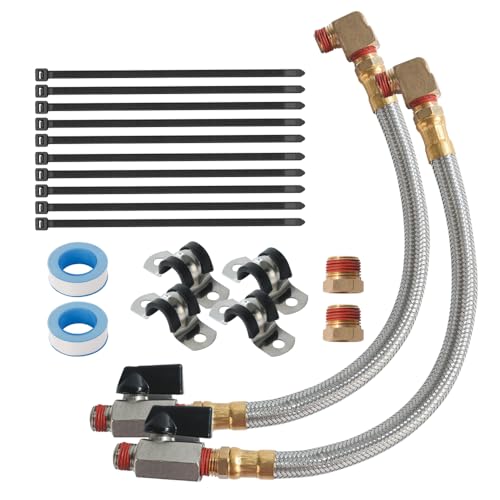 SUNROAD 2-Pack Extended Air Compressor Tank Drain |
9.1/10 | Buy |
| Best Budget |
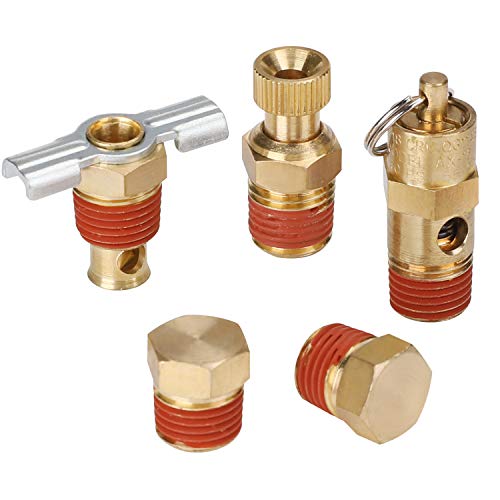 Hromee 5-Piece 1/4-Inch Drain Valve Kit |
8.9/10 | Buy |
| Best Premium |
 GODESON Air Tank Repair Kit with Gauge |
8.4/10 | Buy |
 CTD5812/2 Brass In-Tank Air Compressor Check Valve |
8.1/10 | Buy | |
 QWORK 10-Inch Tank Drain Valve Kit |
7.8/10 | Buy |
SUNROAD 2-Pack Extended Air Compressor Tank Drain
The SUNROAD 2-Pack Extended Tank Drain Valve Kit relocates awkward tank drain ports using a 10-inch braided steel hose rated to 175 PSI and a smooth quarter-turn brass ball valve rated to 300 PSI. It provides DIYers, garage mechanics, and woodworkers with a clean, ergonomic way to purge tank condensation and help protect air receiver vessels from internal rust.
Pros
- Eliminates having to reach or crawl beneath bulky air tanks to turn stiff factory drain screws
- Rugged 10-inch braided steel hose handles up to 175 PSI working pressure and 200 degrees Fahrenheit
- Smooth quarter-turn chrome-plated brass ball valve provides reliable shutoff without leaking air
- Supplied with 3/8-inch adapter bushings, thread seal tape, and vibration-damping mounting clamps
Cons
- Hose working pressure is capped at 175 PSI, making it unsuitable for high-pressure industrial systems operating above that threshold
- Initial installation into tight bottom bungs on low-clearance tanks may require tipping the compressor
- Thread connections require careful wrapping with the included Teflon tape to ensure an airtight seal
Hromee 5-Piece 1/4-Inch Drain Valve Kit
This brass fitting assortment provides essential replacement valves and plugs for routine compressor tank maintenance. It pairs winged and knurled drain petcocks with a 140 PSI safety relief valve for dependable pneumatic management.
Pros
- Solid brass body provides corrosion and heat resistance
- Two petcock styles offer flexible moisture draining options
- Integrated safety valve handles up to 55 SCFM flow
- Stainless steel relief components resist rust over time
Cons
- Requires separate thread sealant for proper sealing
- Safety valve maximum pressure is capped at 140 PSI
- Winged drain handle has a 12-pound torque limit
GODESON Air Tank Repair Kit with Gauge
This GODESON repair kit provides the core components required to service or rebuild a portable compressed air tank. It pairs a brass manifold featuring a 1/2-inch NPT port with an integrated 2-inch pressure gauge and a 4-foot delivery hose.
Pros
- All-in-one replacement for manifold, gauge, and hose
- Sturdy brass manifold construction
- Standard NPT fittings match common tank ports
- Integrated gauge enables straightforward pressure monitoring
Cons
- Four-foot hose offers limited working reach
- Only compatible with tanks accepting 1/2-inch NPT threads
CTD5812/2 Brass In-Tank Air Compressor Check Valve
The CTD5812/2 in-tank check valve provides dependable backflow prevention for air compressor receiver tanks, featuring solid brass construction, a 1/2-inch MNPT tank connection, and a 5/8-inch compression inlet. It is an ideal replacement part for DIY homeowners and garage mechanics seeking to fix pressure leaks and restore smooth compressor restart cycles.
Pros
- Heavy-duty brass construction resists thermal fatigue and moisture corrosion
- Standard thread sizing fits many common workshop and portable air compressor tanks
- Integrated 1/8-inch unloader port allows simple connection to standard pressure switches
- Machined wrench flats provide straightforward installation with standard 7/8-inch hand tools
- Cost-effective repair solution for eliminating continuous tank air leaks
Cons
- Requires careful verification of existing discharge line and tank thread dimensions before installation
- Does not include replacement compression ferrules, nuts, or thread sealant tape
- Over-tightening brass threads into cast iron or steel tanks can cause damage if torqued improperly
QWORK 10-Inch Tank Drain Valve Kit
This braided steel extension kit simplifies tank draining by relocating hard-to-reach compressor valves. Rated up to 175 PSI and packaged with an adapter, it offers a reliable setup for standard workshop compressors.
Pros
- Corrosion-resistant braided steel construction
- Pre-applied sealant speeds up installation
- Includes adapter for 3/8-inch ports
- Handles up to 175 PSI reliably
Cons
- Fixed 10-inch length restricts mounting flexibility
- Not rated for high-pressure industrial systems
Why a Hole in a Compressor Tank Is Not a Patch Job
A compressor receiver stores air under pressure, so damage to its wall is a pressure-vessel safety issue. A hole, crack, bulge, or deep area of rust can mean the steel has lost strength beyond what can be judged from the surface. A patch might cover the opening without restoring the vessel’s original structural integrity.
That is why a sealant, epoxy, clamp, weld, braze, or solder repair is not a safe fix for a perforated tank. Heat can change the metal and damage nearby components, while a surface patch cannot establish how much corrosion remains inside. Even if the leak appears to stop, the tank’s safe pressure capacity is unknown.
Do not run the compressor to see whether a patch holds, and do not raise the pressure to test a repair. Avoid using a damaged receiver for air tools, tire inflation, painting, or any other task. A pressure vessel that fails can release stored energy suddenly, creating a serious injury risk.
Separate tank-wall damage from a leaking fitting
Air escaping at the drain cock, a threaded port, a gauge, or a hose connection may come from a worn seal, loose connection, damaged thread, or failed accessory. Those parts are distinct from the tank shell, although their ports still need the correct replacement component and pressure rating. A leak that appears to come from the tank bottom can be difficult to locate because water, rust, and air may travel along the exterior.
Look for the origin without pressurizing the unit. If the tank is already pressurized, do not touch, tighten, remove, or probe a suspected fitting while pressure remains. Follow the compressor manual’s shutdown and depressurization instructions before inspecting external fittings, and stop if the leak comes from the tank wall or the source is uncertain.
Recognize evidence that the receiver is compromised
Warning signs include a visible perforation, a crack, a blistered or bulging area, heavy flaking rust, or a leak emerging from the tank shell rather than a removable fitting. Rust-colored water discharged during draining can also indicate corrosion, though it does not by itself reveal how much metal remains. A leak that worsens over time deserves immediate attention.
Do not scrape, grind, sand, or drill the damaged area to measure its depth. Those actions can remove material from an already weakened pressure boundary. Photographing the exterior from a safe distance and recording the compressor make, model, and serial information can help a repair provider identify the correct next step without putting the tank back into operation.
What to Do Once You Suspect a Tank Hole
Stop operation and keep people clear
Switch the compressor off and prevent further use. If the tank is leaking while pressurized, keep clear of the suspected damage and do not attempt to plug it or move the unit. Do not handle a damaged receiver as though it were an ordinary empty container; trapped air can remain even after the motor stops.
Use the manufacturer’s shutdown and pressure-release instructions only if they can be followed without approaching or manipulating the damaged area. If the tank is visibly bulging, badly corroded, or leaking from its wall, keep others away and contact the manufacturer or a qualified service provider for safe handling advice. Do not transport a pressurized damaged tank.
Never loosen a drain cock, gauge, plug, or fitting to release pressure from a tank that may be compromised. A fitting can eject or discharge air and debris unexpectedly. If you cannot safely establish that the receiver is fully depressurized, do not begin service or dismantling; get qualified assistance.
Confirm the leak source only after safe depressurization
Once the compressor has been shut down and the manufacturer’s procedure confirms the tank is fully depressurized, inspect the outside without cutting into or altering the vessel. Check whether the suspected leak is at a removable valve or fitting, rather than at a welded seam or tank wall. A qualified service provider can help identify a source that is hidden by rust or difficult to see.
The supplied product options illustrate why identifying the component matters. Drain-cock kits from Joywayus and Hromee are described as replacement fittings for damaged or leaking drain cocks, while the SUNROAD and QWORK kits include extended drain hoses and related adapters. Those products address compatible drain hardware, not a hole in the tank shell, and their listed thread sizes do not establish compatibility with every compressor.
A gauge or drain-valve leak also does not automatically mean the tank is safe to reuse. Inspect threads and ports only in line with the compressor maker’s guidance, and replace parts only with components specified for the unit. If corrosion surrounds the port or the leak source cannot be confidently separated from tank-wall damage, leave the compressor out of service until it is assessed.
Why Welding, Epoxy, and Tank Sealers Are Unsafe Shortcuts
A visible opening does not show the full corrosion pattern
Moisture collects inside an air receiver as the compressor runs, and the bottom of the tank is a common place for water and corrosion products to accumulate. A pinhole may be the first visible sign of broader thinning. The metal around it can be weakened even when the outside looks intact.
A coating or filler only covers a surface. It does not reveal the remaining wall thickness, restore lost steel, or verify that the receiver can safely handle its rated pressure. The same concern applies to a repair performed by someone with welding experience: skill with welding does not make an undocumented pressure-vessel repair a safe or approved repair.
Drilling the hole larger, adding a screw or plug, or installing a clamp introduces additional risks. These actions can remove more material, create stress concentrations, or compromise the tank further. Do not treat a temporary seal as a basis for running the compressor while waiting for a replacement.
Pressure testing is not a do-it-yourself confirmation
Repressurizing a patched tank to check for leaks does not prove the receiver is structurally sound. A test that appears successful cannot certify the remaining metal or establish a safe working pressure. Do not exceed the compressor’s specified maximum pressure or use compressed air to test a damaged tank.
Pressure-vessel inspection and repair decisions depend on the tank’s construction, condition, applicable requirements, and manufacturer guidance. A qualified service provider or the compressor manufacturer can advise whether a particular receiver is eligible for an approved repair. For a perforated or significantly corroded shell, the practical outcome is usually to retire the tank or replace the compressor assembly, subject to that guidance.
Never bypass a pressure switch, safety relief valve, thermal protection, or other factory safety device in an effort to keep a damaged compressor running. Those controls do not make a compromised tank safe, and disabling them can add another failure hazard. A compressor that cannot be used safely should remain out of service.
Repair the Accessory or Replace the Tank?
Replaceable drain hardware has a different role
If the confirmed leak comes from a drain cock rather than the receiver wall, a compatible replacement valve may resolve that specific fault. The Joywayus kit includes 1/4-inch NPT brass drain cocks and plugs; the Hromee kit includes drain fittings and a listed safety valve. SUNROAD’s assembly includes a flexible drain hose, valve, adapter, and related fittings, while QWORK’s package lists an extended hose and adapter.
These descriptions are not proof that a part matches a given compressor. Check the original fitting type, thread, port, pressure requirements, and manufacturer service information before ordering. Do not force mismatched threads, use a plug to conceal a tank-wall leak, or substitute a drain component for a pressure safety device.
The GODESON kit is described as a manifold and gauge assembly, and the listed CTD5812/2 component is an in-tank check valve with specified connection sizes. Neither product description supports using these parts to repair a perforated tank. A check valve, manifold, gauge, drain valve, and tank shell perform different jobs, so identify the failed component before purchasing anything.
Tank replacement requires more than matching gallons
A replacement receiver must be suitable for the compressor and its operating conditions, not simply similar in appearance or capacity. Verify the manufacturer’s approved part information, connection locations, mounting method, pressure rating, and compatibility with the compressor assembly. The supplied product data does not provide a replacement tank specification for any particular compressor model.
Some compressors use a tank integrated with the frame, manifold, or other components, while others may have a serviceable receiver. Do not assume a generic tank can be installed safely because its stated pressure rating appears adequate. A service provider or manufacturer can determine whether an approved replacement receiver exists and whether the rest of the compressor is suitable to retain.
For a small portable compressor, replacing the complete unit may be more practical than sourcing and fitting an approved tank. For a larger workshop system, a qualified service provider can compare the cost and availability of an approved receiver with replacement of the compressor. Avoid making that decision on price alone; a safe, documented match matters more than preserving the old pump or fittings.
Preventing Future Tank Corrosion
After each use, drain accumulated moisture according to the compressor manual, provided the tank and drain hardware are in safe condition. Water left inside can contribute to corrosion, and a difficult-to-reach valve may discourage regular draining. Follow the specified procedure, wear suitable eye protection, and keep clear of the air and water discharge.
Drain valves need to be usable and correctly maintained, but changing the valve does not undo existing corrosion. The extended drain-hose assemblies in the product list are intended to make the drain point more accessible on compatible equipment. Confirm dimensions and connections before fitting one, and depressurize the tank completely before servicing or replacing any component.
Moisture management downstream can also matter for tools and finishes, but a dryer cannot repair a corroded receiver. Our compressed-air dryer comparison explains how dryer types address moisture in delivered air, a separate issue from removing water from the tank itself. Keep tank drainage and air-line drying as distinct maintenance tasks.
Inspect the exterior periodically for rust, damaged fittings, and changes around seams or mounting points. Do not use a pressure washer, abrasive tool, or coating to hide a suspect area before it has been assessed. If the tank develops a leak, bulge, crack, or significant corrosion, stop using it rather than waiting for the next routine maintenance interval.
Make the Safe Next Decision
A leaking removable valve may call for a compatible part, but a hole or crack in the receiver wall is not a do-it-yourself patch project. Keep a suspect tank out of service, avoid pressurizing or modifying it, and seek manufacturer or qualified service guidance about retirement or an approved replacement. The key check is the leak’s source: repair the accessory only when the pressure vessel itself is confirmed sound.
About the author
Clint DeBoer is an experienced tool-industry specialist with decades of involvement in technical media, hands-on product evaluation, and testing methodology. His focus on performance, practical usability, and data-driven comparisons makes his expertise highly relevant to professional air compressors, pneumatic tools, and workshop equipment.