
How to Charge Air Compressor: A Practical Guide
How to charge air compressor safely, from powering a tire inflator to filling a shop tank, with practical checks for November 2026.
 By Kenny Koehler
Updated November 10, 2026


A compressor that won’t power up or build pressure can turn a quick tire check into a frustrating delay. The phrase how to charge air compressor can mean two different things: recharging a battery-powered inflator or powering a compressor so its tank fills with compressed air. The right steps depend on the machine, and confusing electrical charging with tank pressurization can lead to poor results or unsafe handling.
This guide explains how to identify the power source, operate a portable tire inflator, and understand what happens when a shop compressor charges its tank. The supplied product options include cordless, 12V vehicle-powered, and AC/DC tire inflators, so their charging methods aren’t interchangeable. If you’re comparing a portable unit with a tool-focused compressor, our pancake compressor and nailer guide covers a different kind of compressed-air setup.
| Award | Product | ACR Score About ACR ScoreThe ACR Score is our own rating from 0 to 10, based on performance, design and build, ease of use, and value. It reflects independent research and is never influenced by manufacturers, retailers, or affiliate commissions. Learn more › | |
|---|---|---|---|
| Best Overall |
HVAC Troubleshooting for the First-Call Fix
|
9.2/10 | Buy |
| Best Budget |
 CARSUN 150 PSI AC/DC Portable Tire Inflator |
9.2/10 | Buy |
| Best Premium |
 Auto Joe 24V-AJC-MAX Cordless Air Inflator |
9.1/10 | Buy |
 DEWALT Cordless Tire Inflator Portable Air |
9.1/10 | Buy | |
 PEVALON 150 PSI Cordless Tire Inflator |
8.9/10 | Buy | |
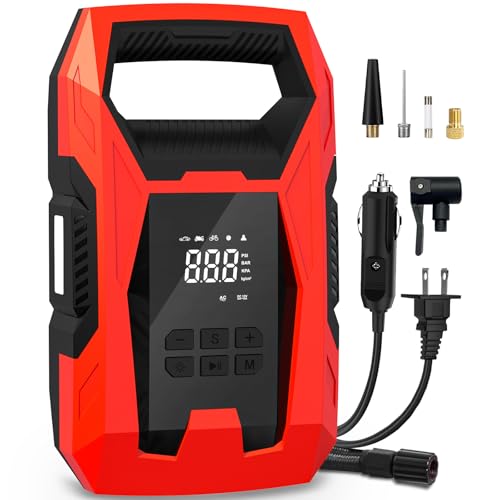 CARSUN AC/DC Portable Tire Inflator |
8.8/10 | Buy | |
| Best Value |
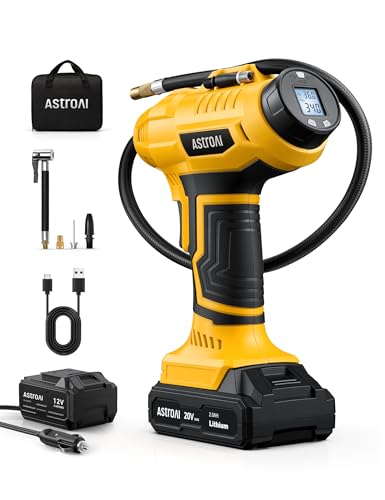 AstroAI Cordless Tire Inflator 160 PSI |
8.8/10 | Buy |
 VIAIR 88P 12V Portable Air Compressor |
8.4/10 | Buy | |
 AIRSURE 150 PSI Portable Tire Inflator |
8.3/10 | Buy | |
 CARSUN Dual Power AC/DC Portable Tire Inflator |
8.3/10 | Buy |
HVAC Troubleshooting for the First-Call Fix
This compact paperback field guide provides technicians and shop specialists with systematic diagnostic walkthroughs covering airflow, electrical circuits, and compressor troubleshooting. Measuring 7 x 10 inches at just under one pound, it offers practical diagnostic value for mobile technicians and service professionals aiming to solve compressor and system issues quickly.
Pros
- Portable 7 x 10-inch paperback format easily fits into technician tool bags and vehicle glove compartments
- Lightweight 0.81-pound build adds negligible bulk during service calls and mechanical room inspections
- Dedicated diagnostic focus on real-world airflow, electrical circuits, refrigerant behavior, and compressor troubleshooting
- Physical printed format provides dependable reference access in basements and areas with zero cellular reception
Cons
- Paperback binding and standard paper pages require careful handling around equipment oil, moisture, and rain
- Functions as an instructional and diagnostic reference rather than a physical repair tool or hardware component
- Requires foundational understanding of basic electrical circuits and refrigeration principles to maximize practical value
CARSUN 150 PSI AC/DC Portable Tire Inflator
Equipped for both garage outlets and vehicle lighter sockets, the CARSUN AC/DC inflator delivers quick inflation up to 150 PSI with preset auto shutoff. It is an adaptable solution for standard car tires and sporting gear, though it cannot service heavy trucks or paddleboards.
Pros
- Versatile dual 110V AC and 12V DC power inputs
- Automatic shutoff prevents accidental over-inflation
- Clear backlit digital gauge with four pressure units
- Built-in LED work light for dark conditions
- Includes adapters for bicycles and sports balls
Cons
- Not compatible with truck or tractor tires
- Incompatible with SUP paddleboards
- Requires 10 minutes of cooling after 15 minutes of use
Auto Joe 24V-AJC-MAX Cordless Air Inflator
Delivering up to 120 PSI with automatic shut-off, this compact 24-volt cordless compressor handles vehicle tires and sports gear with ease. Its lightweight handheld form factor and included nozzle assortment make roadside top-offs especially convenient.
Pros
- Automatic shut-off prevents over-inflation
- Lightweight build weighs just 2.5 pounds
- Versatile nozzle kit fits tires, bikes, and balls
- Cordless 24V operation eliminates tangled power cords
Cons
- Modest 1.3Ah battery capacity limits extended runtime
- Short 15-inch hose can restrict valve reach
- Continuous working pressure is rated at 40 PSI
DEWALT Cordless Tire Inflator Portable Air
This compact DEWALT portable tire inflator delivers up to 150 PSI with smart auto shut-off, powered by an internal rechargeable battery or an included 10-foot 12V car plug. It provides an efficient, pocket-sized solution for vehicle owners, cyclists, and DIYers wanting rapid roadside top-offs without hauling a bulky tank compressor.
Pros
- True cordless freedom with an internal rechargeable battery plus a 10-foot 12V DC vehicle plug backup
- Accurate digital pressure gauge with 5 smart presets and automatic shut-off to eliminate overinflation
- Ultra-compact handheld design weighing just 0.63 kg for easy storage in glove boxes or saddlebags
- Integrated LED work light and emergency USB power bank functionality for travel safety
- Generous accessory bundle backed by a 3-year limited warranty
Cons
- Engineered exclusively for high-pressure inflation rather than operating pneumatic air tools or nailers
- Does not include a 120V AC residential wall outlet power adapter
- Compact tankless pump requires periodic cooling breaks during heavy multi-tire inflation runs
PEVALON 150 PSI Cordless Tire Inflator
Compact enough to stash in a glove box, this portable compressor handles roadside top-offs using either its internal 6000mAh battery or a 12V car socket. It is an ideal travel backup for drivers and cyclists seeking automatic shut-off pressure control and emergency device charging.
Pros
- Dual-power support runs on battery or vehicle cord
- Auto shut-off prevents accidental over-inflation
- Extremely compact and lightweight at 1.1 pounds
- Doubles as a backup USB phone charger
- Multi-mode LED light assists with nighttime emergencies
Cons
- Takes up to 6 minutes for routine tire top-offs
- 90W motor is limited to small-scale inflatables
CARSUN AC/DC Portable Tire Inflator
Equipped with dual power inputs for 110V household outlets and 12V car sockets, this portable compressor delivers up to 150 PSI with auto-shutoff presets. It is a practical solution for drivers, cyclists, and households needing dependable inflation for standard vehicle tires and sports gear.
Pros
- Dual 110V AC and 12V DC power compatibility
- Automatic shutoff with memory preset function
- Clear backlit screen visible in direct sunlight
- Integrated LED light for nighttime emergencies
- Includes multiple adapters and dedicated carrying bag
Cons
- Not compatible with truck, tractor, or SUP board tires
- Requires 10-minute cooldown after 15 minutes of use
AstroAI Cordless Tire Inflator 160 PSI
The AstroAI Cordless Tire Inflator is a compact 160 PSI handheld air compressor featuring dual power via a 20V rechargeable battery and a 12V DC car adapter. Delivering digital auto shut-off and up to 20 minutes of continuous runtime, it is an ideal emergency tool for garage mechanics, commuters, and road-trippers.
Pros
- Dual-power versatility allows cordless battery operation at home or 12V DC vehicle plug-in on the road
- Reaches up to 160 PSI with automatic shut-off to prevent accidental tire over-pressurization
- Compact 2.54-pound footprint provides effortless trunk or glove-box storage for emergency readiness
- Backlit digital LCD screen provides clear readouts in PSI, BAR, and KPA units
- Integrated front LED light illuminates tire valve stems during dark roadside emergencies
Cons
- Includes a USB-C charging cable but requires an external USB power block to recharge the battery
- Designed specifically for tire and sports inflation rather than driving pneumatic workshop air tools
- Continuous runtime is limited to 20 minutes before requiring a cool-down pause
VIAIR 88P 12V Portable Air Compressor
Designed for passenger cars and light trucks with tires up to 33 inches, the VIAIR 88P delivers dependable 120 PSI output directly from a vehicle battery. Its generous 26-foot total reach, built-in gauge, and integrated work light make it a practical emergency companion for road trips and camping.
Pros
- Solid 1.47 CFM flow rate provides brisk inflation
- Generous 26-foot reach easily accesses all four tires
- Built-in LED work light aids dark roadside repairs
- Compact body weighs under five pounds for convenient storage
Cons
- Requires direct battery connection instead of standard 12V outlet
- Limited to a 25-minute duty cycle before cooling
- Not designed for tires larger than 33 inches
AIRSURE 150 PSI Portable Tire Inflator
Measuring just over five inches tall, this compact inflator delivers up to 150 PSI with automatic shut-off and multiple preset modes. It also functions as a travel emergency tool, offering an integrated LED work light and a USB charging port for phones.
Pros
- Compact pocket-sized dimensions for easy storage
- Doubles as a backup USB power bank
- Clear digital display with four pressure units
- Built-in LED light aids nighttime use
- Auto shut-off prevents accidental over-inflation
Cons
- Requires short bursts when inflating smaller items
- Pressure reading has a tolerance of 1 PSI
- Sensor may occasionally need manual zero resets
CARSUN Dual Power AC/DC Portable Tire Inflator
The CARSUN Dual Power Tire Inflator delivers up to 150 PSI of high-pressure air running from either a 110V household outlet or a 12V vehicle socket. With digital pressure presets, automatic shutoff, and a lightweight 2.1-pound frame, it is an ideal maintenance pump for passenger vehicles, bicycles, and household inflatables.
Pros
- Versatile dual-voltage operation works seamlessly in the home garage or on the road without requiring an external converter
- Accurate auto-shutoff mechanism protects tires from accidental over-pressurization during routine top-offs
- Compact 2.1-pound build packs away easily in car trunks, under vehicle seats, or on garage shelving
- Clear digital display allows fast switching across four standard pressure measurement units
Cons
- Requires a mandatory 10-minute cooldown period after every 15 minutes of continuous operation
- Manufacturer explicitly states it does not support heavy truck tires, tractor tires, or stand-up paddleboards (SUP)
- Tankless inflator design cannot run standard workshop pneumatic air tools like brad nailers or paint sprayers
How to Power and Pressurize an Air Compressor
Start by identifying whether the machine has a rechargeable battery, a vehicle power cord, a wall plug, or a storage tank. A portable tire inflator compresses air on demand and may run from a battery or an external power source; a conventional shop compressor fills a tank after its motor starts. Neither type is “charged” by adding air through its hose. Follow the unit’s manual for its power source, pressure limits, and operating sequence.
Tell battery charging apart from tank charging
A cordless inflator’s battery stores electrical energy, while a compressor tank stores pressurized air. Charging the battery means connecting the approved charging equipment to the battery or unit as directed by the manufacturer. Charging a tank means supplying electrical or engine power so the compressor pump draws in air and raises tank pressure. Keeping those two meanings separate makes it easier to choose the right instructions and avoid connecting an air hose to an electrical charging port.
Product descriptions here show several power arrangements. The Auto Joe listing identifies a 24V battery and a charger, while the AstroAI listing describes a rechargeable 20V battery and a USB-C cord but says a charger isn’t included. The DEWALT listing describes an internal rechargeable battery, USB charging, and a 12V vehicle plug; the CARSUN models are listed for 110V or 120V wall power and 12V vehicle power. These are model-specific details, not a universal charging standard.
Recharge a cordless tire inflator using its specified input
Check the model label and manual before connecting a charging cable. Confirm which charging adapter or cable the manufacturer specifies, and whether the battery can be charged while installed in the inflator. Use the supplied or explicitly approved equipment; a cable that fits physically doesn’t prove that its output is suitable. Place the inflator on a dry, stable surface and keep the charging connection away from water and heat.
Connect the specified charger, then look for the indicator or display behavior described in the manual. Don’t assume every unit uses the same light pattern, charging time, or battery-removal method. Disconnect it as instructed once charging is complete, and store the cable so its plug and insulation aren’t damaged. If the battery, cable, or connector looks swollen, cracked, unusually hot, or damaged, stop and consult the manufacturer rather than trying another adapter.
A dual-power inflator may let you use a vehicle socket instead of relying on a charged internal battery, but that doesn’t necessarily recharge the battery. For example, the PEVALON listing describes a built-in battery and a 12V DC cord for continued inflation when the battery runs low. Treat that as an operating-power option unless its manual specifically says it charges the battery. This distinction matters when preparing for a trip: powering the pump from a car outlet and restoring the battery’s charge are different tasks.
Prepare a tire inflator before adding air
Park safely, set the vehicle according to its manual, and check the recommended tire pressure from the vehicle’s information label rather than relying on the tire’s maximum sidewall figure. Make sure the inflator’s power option matches the product: a 12V plug needs a compatible vehicle socket, while an AC/DC model may also use its specified household outlet. Keep the hose clear of hot, moving, or sharp parts, and connect the appropriate chuck or adapter securely to the valve.
If the inflator offers a preset and automatic shutoff, enter the target pressure using the controls described in its manual. The supplied CARSUN descriptions list pressure presets, several display units, and automatic shutoff; other listed models also describe target-pressure shutoff. Check the display units before starting, since PSI, bar, kPa, and kg/cm² are not interchangeable numbers. Stay nearby while the pump runs and verify the tire pressure with a suitable gauge if the reading seems inconsistent.
Portable inflators aren’t automatically suitable for every tire or inflatable. The CARSUN product information specifically excludes truck and tractor tires and stand-up paddleboards, while the VIAIR 88P listing describes use for vehicle tires up to 33 inches and gives a 120 PSI maximum working pressure. Those distinctions illustrate why the product’s stated limits matter more than a general maximum PSI number. Don’t exceed the unit’s pressure rating or use an attachment that isn’t intended for the item being inflated.
Run the pump within its stated operating limits
Small portable inflators may need cooling breaks during extended use. The supplied CARSUN information calls for at least 10 minutes of cooling after every 15 minutes of operation, and the VIAIR listing gives a 25-minute duty cycle at 30 PSI. Follow the exact instructions for the model in hand, because these limits differ. A high maximum pressure rating does not mean a pump is designed to run continuously or inflate every size of tire.
Stop if the unit shuts down, becomes unusually hot, or makes an unfamiliar sound, and consult its troubleshooting instructions before restarting. Don’t keep cycling a hot pump in an attempt to finish faster. The AIRSURE description advises inflating small items slowly in short bursts and checking pressure near the preset value. That guidance is specific to its listed product, but it also points to a broader practical issue: small-volume items can respond quickly to added air, so monitor pressure rather than relying on an unattended run.
Power a shop compressor so its tank can fill
A tank-style electric compressor doesn’t need a battery charge unless its design includes one. Its motor runs the pump, which draws in air and stores it in the tank until the compressor’s controls stop the motor. Place the machine on a stable surface, check that the tank and fittings show no visible damage, and connect it only to the voltage and outlet specified on its nameplate and in its manual. The supplied portable inflator listings don’t provide general shop-compressor tank capacities, so don’t assume their instructions apply to a stationary workshop unit.
Before switching on a shop compressor, inspect its power cord and plug, confirm the control is in the position described by the manufacturer, and check that the pressure regulator and hose connections are appropriate for the intended task. Don’t use a damaged cord, remove a grounding pin, or improvise electrical connections. If the breaker trips or the motor struggles to start, stop and check the manufacturer’s troubleshooting guidance and the circuit requirements. Avoid repeatedly resetting a breaker without understanding why it tripped.
Once powered, let the compressor fill the tank and watch its gauges without touching hot or moving parts. The tank gauge and any regulated outlet gauge can show different pressures, because a regulator controls downstream working pressure while the tank stores air. A compressor that runs but does not build pressure, cycles unusually, or leaks steadily may need service rather than more time to “charge.” Don’t adjust factory pressure-switch settings or defeat a safety device to force the tank to a higher pressure.
Connect tools only after checking air demand
Filling a tank doesn’t prove that a compressor can sustain a particular air tool. The pump’s delivered airflow at the required pressure, commonly expressed as CFM at a stated PSI, must be compared with the tool’s air consumption and duty pattern. The product data supplied for these tire inflators doesn’t provide CFM at 90 PSI, tank size, or a shop-tool air-delivery rating. So these models should be considered for the listed inflation uses, not assumed to power continuous sanders, paint sprayers, or other high-draw pneumatic tools.
Intermittent inflation or short bursts of air differ from continuous tool use. A tool that draws air steadily can use the stored tank reserve faster than a small pump replaces it, leading to falling pressure and frequent motor operation. If you’re evaluating a larger garage unit, compare the tool’s air requirement with the compressor’s rated delivery at the working pressure, and consider the manufacturer’s duty-cycle limits. Our medium compressor sizing guide offers related context for matching a compressor to workshop jobs.
For vehicle tire work, a compact inflator’s portability and power source may matter more than tank capacity, since many tire inflators don’t use a storage tank at all. For pneumatic tools, a larger tank can provide an air buffer, but it cannot substitute for adequate pump output during sustained demand. Buyers should also check hose reach, adapters, display units, auto-shutoff controls, and the stated cooling interval. Those details are more useful than treating a headline PSI rating as a complete measure of capability.
Recognize charging and pressurization problems
If a cordless inflator won’t power on, check whether its battery needs charging and whether the specified cable and adapter are connected as directed. A battery indicator that appears full doesn’t rule out a damaged connector or a unit fault, so use the manual’s troubleshooting steps. If a 12V-powered model won’t start, verify that the vehicle outlet is functioning and that the plug is seated properly, without altering the vehicle’s wiring. Stop if a fuse repeatedly blows or a cable heats up, and seek manufacturer guidance.
If a tank compressor runs without gaining pressure, first shut it down and look for obvious hose or fitting leaks from a safe position. Listen for abnormal continuous air loss, but don’t put fingers near a suspected leak or loosen a pressurized fitting. Persistent failure to build pressure can involve a leak or a mechanical fault that needs qualified diagnosis. Depressurize the tank completely before servicing or transporting the compressor, and follow the manual’s instructions for doing so.
Water can collect inside a tank as air cools, so shop-compressor owners should follow the manufacturer’s tank-draining schedule and procedure. Drain only as directed, keep your face and hands away from the discharge path, and make sure the tank is fully depressurized before service work. Check the manual for safe operation of the pressure relief device; never block, remove, or alter it. Wear suitable eye and hearing protection around operating air equipment, since the supplied product information doesn’t establish noise ratings for all the listed units.
The simplest reliable approach is to match the instruction to the device: charge a cordless battery with its specified equipment, use the listed power source for an inflator, or power a tank compressor and let its pump fill the tank within its rated limits. Verify the pressure with the correct units and target, respect cooling or duty-cycle guidance, and stop when a machine shows signs of damage or abnormal operation. For larger vehicle tires, check the compressor’s stated tire-size suitability before purchase or use, as discussed in our large-tire compressor guide.
About the author
Kenny Koehler is a power-tool specialist with more than a decade of hands-on evaluation experience and a science-based approach to product testing. His expertise in repeatable testing, tool performance, impact wrenches, and professional equipment brings a practical, data-focused perspective to compressor and pneumatic-tool comparisons.