
How to Fill a Bike Tire With Air Compressor: Steps & Safety
How to fill a bike tire with air compressor safely, from identifying the valve to checking pressure. Practical guidance for November 2026.
 By Kenny Koehler
Updated November 8, 2026

A compressor can add air to a bicycle tire quickly, but a high-volume air supply can also raise tire pressure faster than expected. The right connection and a pressure gauge help keep inflation controlled, especially with narrow road tires and Presta valves.
If you’re learning how to fill a bike tire with air compressor, first identify the valve type and the pressure range printed on the tire sidewall. Schrader valves connect directly to many tire inflator chucks, while Presta valves generally need a compatible chuck or an adapter. Choose a compressor setup that lets you add air in short, controlled amounts and check pressure as you go.
Small accessories can make the connection much easier. A Presta adapter such as the guide to changing an air compressor nozzle is useful context when you need to match a fitting to a valve. The products below include adapters, inflator gauges, and cordless pumps, so you can compare approaches rather than assume every compressor has a bicycle-ready chuck.
| Award | Product | ACR Score About ACR ScoreThe ACR Score is our own rating from 0 to 10, based on performance, design and build, ease of use, and value. It reflects independent research and is never influenced by manufacturers, retailers, or affiliate commissions. Learn more › | |
|---|---|---|---|
| Best Overall |
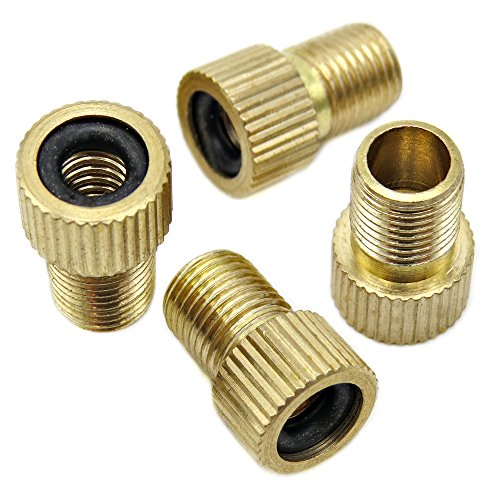
Bike Bits Brass Presta Valve Adapter (4-Pack)
|
9.2/10 | Buy |
| Best Budget |
 LUMITECO 11-Inch Swivel Tire Inflator Hose |
9.1/10 | Buy |
| Best Premium |
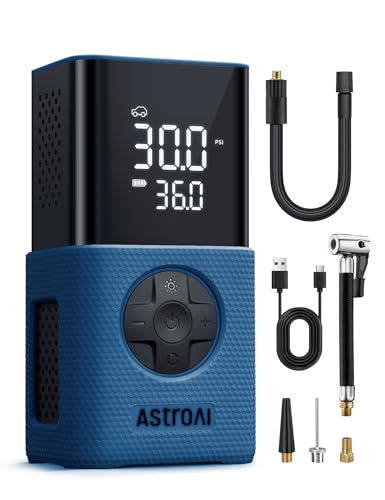 AstroAI L7S 150 PSI Cordless Tire Inflator |
8.9/10 | Buy |
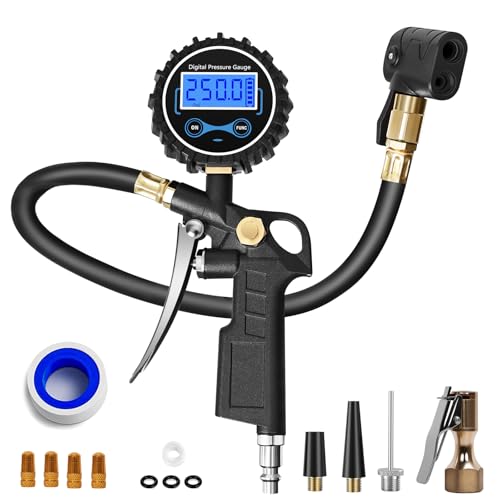 AmazStove Presta & Schrader Digital Tire Gauge |
8.9/10 | Buy | |
 CycloSpirit Digital Bike Tire Inflator Gauge |
8.9/10 | Buy | |
 LUMITECO Dual Head Locking Air Chuck |
8.8/10 | Buy | |
| Best Value |
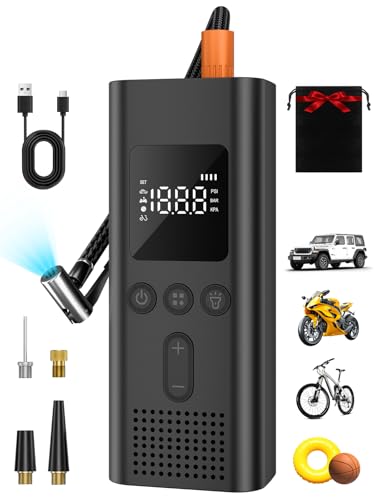 AIRSURE 150 PSI Cordless Tire Inflator |
8.8/10 | Buy |
 Spurtar 10-120 PSI Tire Inflator Gauge |
8.0/10 | Buy | |
 Tire Inflator Portable Air Compressor |
7.8/10 | Buy |
Bike Bits Brass Presta Valve Adapter (4-Pack)
Riders can easily convert standard Presta stems for gas station air hoses or auto compressors with this durable brass four-pack. Each piece installs by hand without tools and is rated up to 120 psi for road and gravel tires.
Pros
- Solid brass construction resists corrosion and thread damage
- Allows inflation using standard Schrader gas station hoses
- Handles tire pressures up to 120 psi reliably
- Installs quickly by hand without requiring any tools
Cons
- Not compatible with Dunlop or Schrader-only valve tubes
- Must be unscrewed to open the internal lock nut
LUMITECO 11-Inch Swivel Tire Inflator Hose
This braided extension hose upgrades portable inflators with a 360-degree swivel lock-on chuck and a protective heat sleeve. It provides a secure, leak-free connection for bicycles, cars, and motorcycles with awkward valve angles.
Pros
- Swivel chuck rotates 360 degrees for awkward valve angles
- Rubber sleeve protects hands from hot compressor fittings
- Converts twist-on connections into quick thumb-press lock-on chucks
- Comes with Presta adapter and extra conversion nuts
Cons
- Short 11-inch length provides limited extra reach
- Open-flow chuck requires active pump connection to prevent deflation
AstroAI L7S 150 PSI Cordless Tire Inflator
Weighing barely a pound, the AstroAI L7S delivers portable inflation up to 150 PSI alongside a shock-absorbing silicone sleeve and power bank utility. Five smart presets and automatic shut-off make it a practical roadside companion for passenger cars, bicycles, and sports gear.
Pros
- Pocketable design weighing just 1.01 pounds
- Protective silicone sleeve dampens vibration and drops
- Hands-free operation with automatic shut-off
- Built-in power bank charges mobile devices
- Clear digital display with five smart presets
Cons
- Incompatible with heavy-duty truck and RV tires
- Not suitable for off-road vehicle tires or trailers
AmazStove Presta & Schrader Digital Tire Gauge
Equipped for both Presta and Schrader valves, this digital tool handles pressure checks, inflation, and deflation up to 250 PSI. A 20-inch hose and backlit LED display make it especially convenient for cyclists and drivers connecting to a home air compressor.
Pros
- Accurate within 1% across 3 to 250 PSI
- Works seamlessly with both Presta and Schrader valves
- Measures pressure standalone without compressor connection
- Extended 20-inch hose provides excellent reach
- Clear digital display with low-light LED illumination
Cons
- Requires a separate air compressor to inflate tires
- Larger and heavier than standard pocket bike gauges
CycloSpirit Digital Bike Tire Inflator Gauge
Designed for workshop setups, this inflator connects directly to an air compressor to seat tubeless tires and top off pressure across both Presta and Schrader valves. Its digital readout measures up to 200 PSI, complemented by a progressive lever and pressure-relief button for exact air regulation.
Pros
- Directly fits Presta and Schrader valves without adapters
- Clear 0.1 PSI digital increments up to 200 PSI
- Built-in release valve allows quick pressure adjustments
- Includes standard 1/4-inch NPT coupler and flexible hose
Cons
- Requires a dedicated air compressor to operate
- Accuracy tolerance is limited to plus or minus 2 PSI
LUMITECO Dual Head Locking Air Chuck
Equipped with dual Presta and Schrader ports, this versatile air chuck connects directly to 1/4-inch NPT lines or portable tire inflators. An integrated bleeder valve allows instant pressure release, making it well suited for cycling and automotive maintenance.
Pros
- Compatible with Presta and Schrader valves
- Built-in pressure release button for rapid deflation
- Versatile 1/4-inch F-NPT and inflator threads
- Internal washers prevent air leakage during use
Cons
- Inverted locking clamp can be counterintuitive initially
- Dual-head format is bulkier than dedicated single chucks
AIRSURE 150 PSI Cordless Tire Inflator
Weighing under a pound, this compact cordless compressor inflates tires and gear up to 150 PSI with automatic shut-off to prevent overfilling. It serves as a convenient emergency tool for cyclists, commuters, and weekend drivers.
Pros
- Delivers inflation up to 150 PSI
- Auto shut-off prevents accidental over-inflation
- Highly compact and lightweight at under 0.9 pounds
- Integrated LED flashlight aids roadside nighttime visibility
- Four preset modes support bicycles, cars, and sports equipment
Cons
- Requires periodic recharging between multiple tire inflations
- Compact handheld design is not intended for heavy truck tires
Spurtar 10-120 PSI Tire Inflator Gauge
Equipped with an extended dual-head chuck and chrome-plated iron stem, this bayonet-style inflator gauge handles pressures up to 120 PSI. It provides a durable, all-in-one inflation and pressure-checking solution for standard passenger vehicles and dual-wheel trucks.
Pros
- Reaches difficult inner valves on dually tires easily
- Durable chrome-plated steel stem resists wear
- Comes with extra valve cores and repair tools
- Calibrated to 2 percent accuracy standards
Cons
- Two-pound scale increments limit fine-tuning precision
- 120 PSI maximum range excludes higher-pressure commercial tires
- Requires connection to a separate air compressor
Using an Air Compressor for Bicycle Tires
For most bicycle tires, a controlled connection matters more than a compressor’s maximum pressure rating. Start by checking the tire’s sidewall for its stated pressure range, then match the inflator and valve connection before admitting air. Use short bursts and recheck pressure frequently, since a compressor can deliver air more quickly than a hand pump.
Identify the valve before connecting the air line
Schrader valves have a spring-loaded center pin and are common on many utility and children’s bikes. Presta valves are narrower and have a small threaded lock nut at the tip; loosen that nut before inflation, then press it briefly to confirm the valve is open. Some bicycles use other valve types, so do not force an air chuck or adapter onto a stem that does not match.
Look closely at the rim and valve stem rather than guessing from the bike’s style. A Schrader inflator head usually attaches directly to a Schrader valve, but a Presta stem needs a Presta-compatible chuck or a suitable converter. The Bike Bits Brass Presta Valve Adapter screws onto a standard Presta valve and converts the connection for Schrader-style equipment; its listed pressure rating is 120 PSI, which is an adapter limit, not a target pressure for a bicycle tire.
Check whether the adapter or chuck seals properly before opening the compressor flow. A loose connection can leak, and forcing a threaded fitting can damage delicate valve threads. If you are not sure whether an accessory attaches to the valve or to the compressor hose, check its product instructions and connection details first.
Prepare the compressor and pressure target
Read the tire sidewall before inflation and use a pressure within the tire maker’s stated range. The correct choice within that range depends on the tire, rider, load, and riding conditions; the sidewall is a boundary, not a universal recommendation for every bike. If the bicycle or tire manufacturer specifies a different procedure, follow that guidance.
Use a compressor regulator and a tire inflator gauge when available. A pressure gauge built into an inflator lets you monitor the tire as you add air, while a separate gauge can verify the result afterward. The product listings include gauge-equipped attachments with different stated ranges and display features, but their listed accuracy and pressure range belong to each individual product, not to every compressor setup.
Before connecting, check that the hose, chuck, and fittings are intended for the compressor and pressure involved. Set the regulator conservatively, following the compressor and inflator instructions, and keep the compressor’s output from exceeding the limits of the tire, valve, hose, or accessory. Wear eye protection around pressurized air equipment, and do not point an open hose or chuck toward yourself or anyone nearby.
Inflate in short bursts and keep checking
Secure the bicycle so the wheel cannot shift while you work. Attach the chuck squarely to the valve, then use a brief air burst rather than holding the trigger continuously. Pause, read the gauge, and repeat in small increments until the tire reaches the pressure you selected within its stated range.
This gradual approach is especially useful with a small-volume bicycle tire because compressed air can enter quickly. A rapid fill can overshoot the target before you have time to respond, and an inaccurate or poorly seated gauge can add uncertainty. If the pressure reading jumps unexpectedly or air escapes around the chuck, stop the flow, reseat the connection, and check the gauge before continuing.
Do not rely on the compressor tank gauge as a tire pressure reading. The tank gauge reports pressure stored in the compressor, while a tire inflator gauge measures pressure at the tire connection. A regulator controls outlet pressure, but it does not replace a gauge that can read the tire itself.
When the tire reaches the chosen pressure, release the chuck carefully and recheck the valve area for a hiss. A small amount of air may escape as a chuck comes off, so take a final reading after disconnecting. Tighten a Presta lock nut finger-tight after inflation, but do not overtighten it or treat it as the tire’s sealing mechanism.
Choose an attachment that suits the valve
A simple adapter is a compact option if you already own a compressor and only need to make a Presta valve compatible with a Schrader-style chuck. The Bike Bits Brass Presta Valve Adapter is sold as a four-pack and is described as a hand-threaded brass fitting for standard Presta valves. It does not provide a pressure gauge, so pair it with a separate tire gauge and inflate cautiously.
A hose adapter can make positioning easier when the compressor hose or inflator body is awkward near the wheel. The LUMITECO Tire Inflator Hose Adapter is listed with a swivel chuck, an 11-inch hose, a Presta adapter, and converting nuts. Its description identifies Schrader connections and compatibility accessories, so check the included fittings and instructions to confirm the configuration you need for your bicycle valve.
For a more integrated compressor attachment, the Presta Valve Air Chuck, Digital Bike Tire Inflator is listed with Presta and Schrader compatibility, a digital gauge, a pressure range of 2 to 200 PSI, and an included quick-connect coupler. The Digital Bike Tire Pressure Gauge is another listed option with an integrated gauge, rotating chuck, and 1/4-inch NPT compressor connection. Those specifications can help narrow the choice, but a gauge’s advertised range does not mean the tire should be inflated to the top of that range.
A cordless tire inflator is a different approach if you do not want to connect a shop compressor and air hose. The AstroAI L7S, AIRSURE, and Evekas inflators are listed as portable, battery-powered options with bicycle modes or bicycle accessories and digital pressure features. Their listed maximum pressures are not bicycle tire targets; follow the tire sidewall and the inflator instructions, and use the displayed pressure as a guide rather than assuming the preset mode automatically selects the right pressure for your tire.
Pressure control, gauge readings, and common errors
Gauge design affects how easy it is to avoid overinflation. The CycloSpirit inflator listing describes a digital reading in 0.1 PSI increments, a stated accuracy of plus or minus 2 PSI, a pressure-release feature, and compatibility with Presta and Schrader valves. The AmazStove gauge listing states a 3 to 250 PSI range and claims accuracy within 1 percent; treat these as manufacturer-provided specifications, not independent test results.
The Spurtar 10-120 PSI Tire Pressure Gauge is listed with a dual-head chuck and readings in 2 PSI increments. That increment size may be less convenient when you want to make a small adjustment near a chosen pressure. Consider the gauge’s scale, stated accuracy, valve connection, and ease of reading before deciding whether it suits your tire and routine.
One common error is leaving a Presta lock nut closed and then assuming the compressor or adapter is faulty because air will not enter. Another is using a Schrader-only chuck on a Presta stem without an adapter. A third is setting a compressor regulator high and holding the inflator open, which can push a small tire beyond its intended range before the gauge is checked.
Do not diagnose a leaking tire by repeatedly adding air without checking the valve and tire. Listen for escaping air around the valve, inspect the tire for visible damage, and stop if the stem is bent, loose at the rim, or otherwise damaged. A compressor cannot repair a puncture or a defective tube, and continued inflation is not a substitute for fixing the underlying leak.
Compressor choice and bicycle use
For occasional bicycle inflation, a large stationary compressor is not automatically more useful than a small compressor or a dedicated inflator. The key needs are a compatible valve connection, a usable pressure gauge, controlled airflow, and a regulator or trigger that lets you stop promptly. The products here include both compressor accessories and cordless inflators, so compare the complete setup rather than judging by a maximum PSI number alone.
A shop compressor can serve other household tasks, while a cordless inflator is easier to carry to a trailhead or keep with a bicycle. The portable models listed include preset modes and auto shutoff features, but you should verify the selected pressure and compatibility instructions before relying on a preset. A shop attachment may be a better fit when a compressor and hose are already available, provided the gauge and valve adapter are appropriate.
Air delivery ratings such as CFM describe how much air a compressor can supply over time, but bicycle tires generally need brief top-ups rather than the sustained flow demanded by many pneumatic tools. For this task, controllability and a reliable tire-side pressure reading matter more than selecting equipment for high continuous air demand. If comparing compressor accessories for other shop work as well, this air compressor pressure safety guidance is relevant to handling regulated pressure and stored air responsibly.
Do not assume an adapter’s pressure rating establishes the safe pressure for a tire. The tire, tube, rim, valve, gauge, and inflator each have their own limits, and the applicable instructions should be followed. If any component’s rating is unclear, pause and confirm it before connecting pressurized air.
Disconnect, check the result, and store the gear
After inflation, take a final pressure reading with the chuck removed and confirm the valve is closed or secured as appropriate for its type. If the reading is outside the tire’s stated range, adjust cautiously with a suitable gauge and pressure-release control. A chuck that leaks while attached or a gauge that gives inconsistent readings should be checked before the setup is used again.
Remove a threaded Presta adapter after use if its instructions call for removal, and keep small fittings where they will not be lost. Inspect the hose and chuck for damage, worn seals, or debris that could interfere with a sound connection. Follow the compressor maker’s instructions for shutdown and storage, and depressurize equipment before servicing or transporting it when the manual requires that step.
For a reliable result, match the valve before connecting, use the tire’s own pressure range, and add air in short bursts while watching a tire-side gauge. Those habits make a shop compressor practical for bicycle inflation without treating its stored pressure or maximum PSI as the target. If your equipment cannot connect securely or give a readable pressure measurement, choose a compatible inflator or adapter before proceeding.
About the author
Kenny Koehler is a power-tool specialist with more than a decade of hands-on evaluation experience and a science-based approach to product testing. His expertise in repeatable testing, tool performance, impact wrenches, and professional equipment brings a practical, data-focused perspective to compressor and pneumatic-tool comparisons.