
How to Blow up Air Mattress With Air Compressor
How to blow up air mattress with air compressor safely, using a low-pressure inflator and the right nozzle, with guidance for November 2026.
 By Glenda Taylor
Updated November 10, 2026
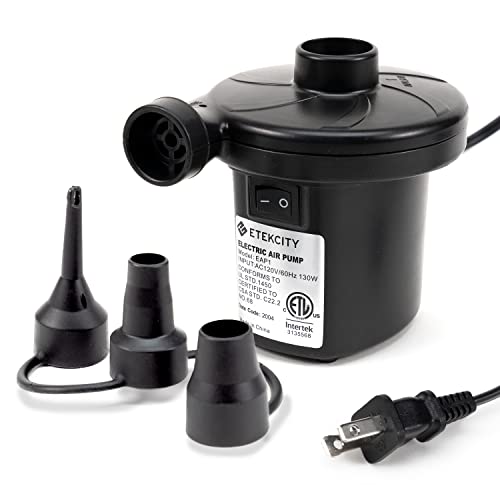

A mattress valve needs a steady volume of low-pressure air, not the high pressure used to power many pneumatic tools. That distinction matters when you search for how to blow up air mattress with air compressor: a shop compressor may be capable of delivering far more pressure than an inflatable mattress is designed to handle. The listed Etekcity pump is an electric inflator for household inflatables, and its specifications include a 0.55 PSI rating and three nozzle sizes.
For an ordinary air mattress, a purpose-made low-pressure pump is generally the more appropriate option than connecting a high-pressure compressor directly to the valve. Check the mattress instructions first, because valve designs and inflation limits vary. The Etekcity description says the pump is intended for air mattresses and other inflatables, while warning against high-pressure products such as tires and basketballs. If you are sorting out how compressor attachments work, our guide to changing an air compressor nozzle offers related attachment context.
Top Products
| Award | Product | ACR Score About ACR ScoreThe ACR Score is our own rating from 0 to 10, based on performance, design and build, ease of use, and value. It reflects independent research and is never influenced by manufacturers, retailers, or affiliate commissions. Learn more › | |
|---|---|---|---|
| Best Overall |
Etekcity 130W Electric Air Pump
|
8.1/10 | Buy |
Etekcity 130W Electric Air Pump
Designed for low-pressure items like airbeds and pool toys, this compact 130W pump handles both inflation and deflation with minimal bulk. An internal metal impeller helps muffle motor sound for quieter indoor setup.
Pros
- Lightweight design weighing just over one pound
- Supports both inflation and rapid deflation
- Internal metal impeller lowers operational noise
- Comes with three locking nozzle sizes
Cons
- Not designed for high-pressure items like tires
- Requires a tethered 110-120V AC wall outlet
Using a Low-Pressure Inflator for an Air Mattress
Air mattresses are designed to hold air at relatively low pressure, so the goal is to fill the mattress gradually without forcing excess pressure into its seams. A typical workshop compressor stores compressed air in a tank and may deliver pressure far beyond what a mattress valve needs. That makes a direct connection risky unless the mattress maker explicitly approves that equipment and setup. A household electric inflator built for mattresses is a simpler match because its intended use is stated by its manufacturer.
Why a shop compressor is not automatically the right tool
Air compressors are commonly selected by pressure and air delivery for tools such as nailers, impact wrenches, or spray equipment. Those measures do not by themselves make a compressor suitable for an inflatable bed. A regulator can reduce outlet pressure, but a user still needs to know the mattress maker’s acceptable pressure and whether the connection can control airflow safely. Without those instructions, a standard high-pressure compressor setup is not a prudent substitute for a low-pressure mattress pump.
Excessive pressure can strain mattress seams, the valve, or internal construction, even if the mattress initially appears to inflate normally. A large compressor tank can also supply air quickly, leaving little time to react if pressure rises too far. Do not rely on a compressor’s tank pressure gauge as a mattress pressure gauge, because the gauge may not measure the low pressure inside the bed accurately. Use the inflation method and limits supplied with the mattress.
The Etekcity product information lists a rated pressure of 0.55 PSI, equivalent to 3,800 Pa, and identifies air mattresses among its intended uses. This is a low-pressure electric inflator, not a conventional workshop compressor for pneumatic tools. Its listed power is 130 watts, but that figure should not be interpreted as a compressor horsepower or CFM rating. The provided data does not specify an inflation time, so allow the mattress to fill at its own pace rather than expecting a particular duration.
Match the nozzle to the mattress valve
The Etekcity pump comes with three interlocking nozzle sizes: small at 0.28 inch, medium at 0.68 inch, and large at 0.71 inch. Check the mattress valve opening and choose the nozzle that seats securely without forcing it. A nozzle that is too small may leak air around the connection, while one that is too large may not enter or seal correctly. Do not push hard against a valve to make an incompatible tip fit.
Attach the selected tip to the pump outlet and confirm that it is locked in place according to the product instructions. The description says the nozzles are designed to stay secured and reduce air loss at the connection. That feature helps keep the setup stable, but it does not establish that every mattress valve will accept one of the included tips. If none fits properly, use the mattress maker’s adapter or a pump specifically designed for that valve rather than improvising a tight or pressurized connection.
Inflate in a controlled sequence
Place the mattress on a clear, level surface and open its inflation valve as directed by its manufacturer. Keep sharp objects, hot surfaces, and debris away from the bed, and make sure the pump can sit securely while operating. Connect the nozzle without twisting or bending the valve stem. If the mattress has separate chambers, identify the correct valve before starting.
Plug the Etekcity model into a suitable AC outlet, since the supplied description identifies it as a 110-120 volt pump with a 1.6-meter, or 5.3-foot, cord. Keep the cord and pump positioned so they cannot be pulled into the mattress or become a tripping hazard. Switch on the pump and observe the mattress as it expands. Stop when it reaches the firmness specified by the mattress maker, and do not leave the pump operating unattended.
Disconnect the pump when the bed is adequately inflated, then remove the nozzle carefully and close the valve as instructed. Some mattresses are intended to feel slightly yielding rather than drum-tight, so firmness alone is not a reason to keep adding air. If the bed is overfilled, follow the mattress instructions for releasing air instead of pressing the pump into a deflate mode unless that use is supported. The Etekcity listing identifies an inflate and deflate function, but mattress-specific instructions should still guide the process.
Check the mattress instructions and valve behavior
Mattress makers may specify a recommended fill level, valve operation, or compatible pump type. Those directions take priority over general advice because mattresses use different materials, chambers, and valve assemblies. If the manual gives a pressure limit, use only equipment that can operate within that limit and that provides an appropriate way to control pressure. If the instructions prohibit compressor use, do not try to work around that warning with an adapter.
Watch for air escaping around the nozzle, a valve that shifts under airflow, or a mattress surface that becomes unusually taut. Stop the pump if any of these signs appear, then inspect the connection and review the product instructions. A hiss after the pump is removed may indicate that the valve is not closed or sealed correctly. Avoid forcing the valve or applying a clamp that could damage it.
Inflation can also be affected by the mattress’s initial condition. A new or fully deflated mattress may need more air than one that has only softened slightly, while temperature and material flexibility can affect how it feels. These observations do not replace the manufacturer’s recommended fill level. Use a consistent, cautious approach rather than trying to achieve a particular firmness by adding air indefinitely.
What the Etekcity pump offers, and what it does not
The product details emphasize portability, three nozzle sizes, an AC cord, and use with air mattresses, pool floats, inflatable furniture, and similar products. Its compact listed dimensions are 4.7 by 3.7 by 4.5 inches. Those characteristics may make it convenient to store with household inflatables. The description also identifies a deflate function, which can help remove air when packing an inflatable away.
There are clear limits. The manufacturer specifically warns not to use this pump for high-pressure items such as tires, basketballs, rafts, or yoga balls. Do not treat it as a tire inflator or as a replacement for a tank-style air compressor that runs pneumatic tools. Its listed 0.55 PSI rating and intended-use notes are the relevant details for considering an air mattress, not the product’s general label as an electric air pump.
The description mentions a sound-insulation design, but does not provide a decibel measurement. It is therefore not possible to compare its operating noise numerically with a quiet workshop compressor or another inflator from the supplied information. Likewise, the listing does not provide a mattress inflation time, airflow in CFM, or a duty-cycle rating. Avoid making a purchase decision based on those unlisted performance figures.
Buyers comparing different powered inflators should focus on the details that match their actual mattress: the valve adapter, low-pressure suitability, power source, and whether the device can also deflate. For more context on how portable air equipment differs by purpose, see our overview of portable compressor options. A portable compressor designed around vehicle or jobsite needs is not necessarily appropriate for a soft inflatable, so its intended application still matters.
Common setup problems and sensible fixes
If air barely enters the mattress, check whether the nozzle is aligned and whether the valve is fully open as directed. A poor seal can allow air to escape instead of entering the bed. Turn off and unplug the pump before changing the nozzle or repositioning the connection. Select another supplied tip only if it fits naturally and does not strain the valve.
If the mattress does not hold air after inflation, the problem may be at the mattress valve, a seam, or another part of the bed rather than the pump. Close the valve according to the mattress instructions and listen for escaping air. Avoid using household adhesives or sealants unless the mattress maker recommends them, because an unsuitable product can damage the material. Consult the mattress warranty or manufacturer if a leak persists.
If the pump stops or behaves unexpectedly, switch it off and check the outlet and product instructions before using it again. Do not open the pump housing or alter its electrical components. Keep it away from water and use it only in the manner specified by its manufacturer. For electrical concerns, discontinue use and contact the product maker or a qualified service provider.
Why a tire inflator or tool compressor may be a poor substitute
A tire inflator is built for a different pressure task, and a workshop compressor is generally selected to store and deliver compressed air for tools. Neither label confirms that the equipment can safely inflate a mattress. A pressure regulator does not automatically make an unsuitable compressor appropriate, especially when the low-pressure range and mattress requirements are not stated. Verify both the mattress guidance and the equipment specifications before connecting anything.
Do not use a blow gun, tire chuck, or improvised fitting to send unregulated air into a mattress. Such accessories may be intended for other pressure levels and can make it difficult to control the flow. Avoid adapting a shop compressor merely because a nozzle appears to fit. A proper low-pressure pump and a correctly matched valve connection reduce unnecessary uncertainty.
The Etekcity pump is a more relevant match based on its stated air-mattress use and low listed pressure, but the mattress instructions remain decisive. Its supplied data does not establish compatibility with every mattress, so inspect the valve and follow the bed maker’s guidance. If a mattress requires a special adapter or prohibits electric pumps, use the specified alternative. Matching the application matters more than choosing equipment with the largest pressure rating.
Care after inflation and storage
After inflating, close the valve fully and check that the bed remains stable before anyone lies down. Recheck firmness later if the mattress is new or has been stored for a long time, but add air only in line with its instructions. Gradual softening does not necessarily mean the pump has failed, since temperature and material behavior can influence perceived firmness. Persistent air loss calls for inspection of the mattress, not repeated overinflation.
Before storing the electric pump, unplug it and let it cool if it has become warm during use. Remove the nozzle without pulling on the cord, and keep the nozzles together so the suitable size is easy to find next time. Store the pump and mattress dry, away from sharp objects and conditions restricted by their respective manuals. Follow the manufacturer’s care instructions rather than washing or immersing the electric pump.
The practical answer is straightforward: use a low-pressure inflator intended for air mattresses, select a nozzle that seats properly, and stop at the mattress maker’s recommended firmness. The Etekcity model’s listed mattress use, 0.55 PSI rating, and three nozzle sizes make it a relevant option to consider, while its stated exclusions rule out high-pressure jobs. Do not connect an ordinary tool compressor directly to a mattress unless the mattress manufacturer explicitly approves the setup and pressure control.
About the author
Glenda Taylor has extensive experience in residential construction, remodeling, home improvement, and tool use. Her practical approach to equipment evaluation focuses on usability, performance, safety, and value—helping DIYers and workshop users make better-informed decisions about compressors and related tools.