
How to Bypass Air Compressor Pressure Switch: Guide
How to bypass air compressor pressure switch searches often signal a fault. Learn safer diagnosis and replacement options for November 2026.
 By Tony Carrick
Updated November 10, 2026
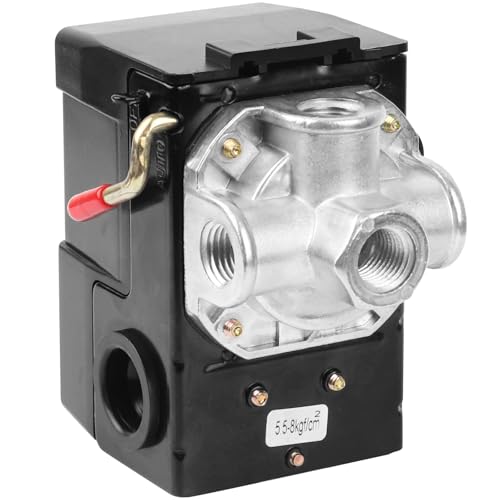

A compressor that will not start, stop, or build pressure can make a pressure switch look like the obstacle, but bypassing this control can remove an important layer of protection. The safer response to how to bypass air compressor pressure switch is to identify the fault, isolate power, and repair or replace the switch rather than run the compressor with its automatic pressure control defeated. A switch is not just an on-off convenience: it responds to tank pressure and controls when the motor runs.
This guide explains what the switch does, which symptoms may point to it, and what checks can be made without defeating the control. The products below are replacement pressure switches with different pressure ranges, port arrangements, and listed electrical ratings, so matching the existing setup matters more than choosing by appearance. For broader garage equipment context, see our home mechanic compressor overview.
A replacement is not automatically suitable just because its threads seem to match. Verify the compressor manufacturer’s specified cut-in and cut-out pressures, voltage and current requirements, manifold layout, and unloader connection before selecting a part. If electrical connections or pressure-control settings are unclear, stop and have a qualified service professional inspect the compressor.
Top Products
| Award | Product | ACR Score About ACR ScoreThe ACR Score is our own rating from 0 to 10, based on performance, design and build, ease of use, and value. It reflects independent research and is never influenced by manufacturers, retailers, or affiliate commissions. Learn more › | |
|---|---|---|---|
| Best Overall |
LF10-4H Pressure Switch, 95-125 Psi 20 Amp
|
9.1/10 | Buy |
| Best Budget |
 Air Pressure Switch 120 -150 PSI 1/8"-27 NPT DC |
8.6/10 | Buy |
 cnaodun 90-125 PSI Air Compressor Switch |
7.8/10 | Buy | |
| Best Value |
 Air Compressor Pressure Switch 90-125 PSI |
7.8/10 | Buy |
 MEANLIN MEASURE 110 to 150 PSI Pressure Switch |
7.8/10 | Buy | |
| Best Premium |
 I.E.E LF10A 26A 4-Port Pressure Switch |
7.8/10 | Buy |
 LifeImpree 034-0184 Air Compressor Pressure Switch |
7.8/10 | Buy | |
 Square D 9013FHG12J52M1X 95-125 PSI Switch |
7.8/10 | Buy |
cnaodun 90-125 PSI Air Compressor Switch
Designed for residential and workshop setups, this cnaodun switch regulates compressor pressure between 90 and 125 PSI at up to 26A. Its built-in handle simplifies mounting accessories, while heavy-duty silver contacts support reliable electrical conductivity.
Pros
- Silver contacts improve electrical longevity
- Convenient handle assists with component installation
- Durable aluminum alloy and plastic construction
- Handles high electrical loads up to 26A
Cons
- Single-port layout limits multiple direct connections
- Fixed pressure rating lacks flexible adjustability
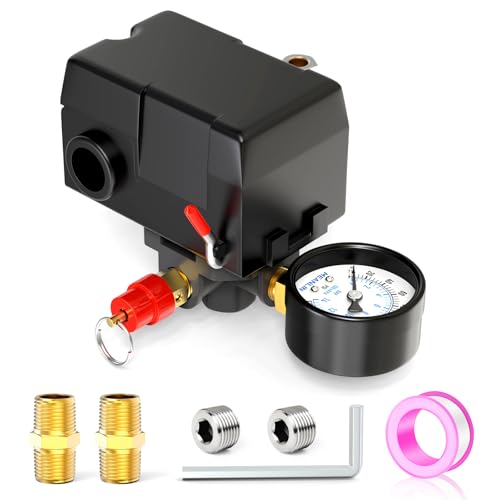
MEANLIN MEASURE 110 to 150 PSI Pressure Switch
Designed for automatic cycling between 110 and 150 PSI, this 4-way replacement valve kit comes complete with safety fittings, pipe plugs, and sealing tape. It provides workshop owners a comprehensive drop-in assembly for restoring 1/4-inch air compressor systems.
Pros
- Includes complete installation hardware and safety relief valve
- Supports wide 110V to 240V electrical systems
- Durable aluminum alloy internal valve construction
- Convenient manual red knob for quick shutoff
Cons
- Preset 110 to 150 PSI cycle lacks adjustability
- Plastic switch casing is vulnerable to heavy impacts
- Restricted exclusively to standard 1/4-inch port connections
I.E.E LF10A 26A 4-Port Pressure Switch
Built for heavy-duty shop setups, this switch assembly supports up to 26 amps across single or three-phase air compressor systems. It includes an integrated 0-200 PSI gauge and pop-off safety valve for a complete manifold replacement.
Pros
- Heavy-duty 26-amp rating suits demanding motor setups
- Comes with matched pressure gauge and relief valve
- Four-port design offers versatile accessory connections
- UL Listed and CSA certified for electrical safety
Cons
- NEMA 1 enclosure is restricted to indoor environments
- Factory set strictly for 145-175 PSI compressor cycles
LifeImpree 034-0184 Air Compressor Pressure Switch
The LifeImpree 034-0184 pressure switch is a direct replacement control assembly featuring factory 125-155 PSI settings, a 4-port 1/4-inch NPT manifold, and a 90-degree quick-connect unloader. It is an ideal drop-in repair for garage DIYers, shop owners, and equipment technicians restoring dependable tank pressure cycling.
Pros
- Pre-calibrated 125 cut-in and 155 cut-out PSI settings save calibration time during installation
- Versatile 4-port 1/4-inch NPT manifold layout accommodates gauges, relief valves, and tank plumbing
- Includes an integrated 90-degree 1/4-inch quick-connect unloader valve for motor restart relief
- Built-in Auto/Off switch allows rapid manual shutdown without unplugging the compressor unit
Cons
- Fixed 125-155 PSI factory calibration is not suitable for single-stage compressors rated for 100-125 PSI maximum pressure
- Requires matching 1/4-inch OD unloader tubing; copper compression-style unloader lines will require an adapter
- Electrical motor horsepower and amp limits should be verified against your compressor motor before wiring
Square D 9013FHG12J52M1X 95-125 PSI Switch
Designed for air compressor systems, the Square D 9013FHG12J52M1X maintains operating levels between 95 and 125 psi. It incorporates an unloader valve and a dedicated on-off lever for reliable compressor cycling and manual control.
Pros
- Factory-calibrated 95 to 125 psi operation
- Built-in unloader valve prevents hard compressor starts
- Dedicated on-off lever allows easy manual shutdown
- Compact and lightweight footprint
Cons
- Single-port design limits direct accessory mounting
- Specific pressure range requires adjustment for custom PSI needs
Diagnosing a Faulty Air Compressor Pressure Switch Safely
A pressure switch should not be bypassed to make a compressor run. It is part of the system that starts the motor as tank pressure falls and stops it when the set pressure is reached; defeating that function can allow pressure to rise beyond the compressor’s intended operating range. The exact consequences depend on the compressor design, but operating without the specified control is not a safe repair.
What the pressure switch controls
The switch monitors pressure through its connection to the tank or manifold and opens or closes electrical contacts at its designed thresholds. The lower threshold is generally called cut-in, and the upper threshold is called cut-out. Those values are model-specific, so do not infer them from the shape of the switch or copy a setting from another compressor.
Some pressure switch assemblies also include an on-off lever, a pressure relief valve, or a small unloader connection. The unloader helps release pressure from the pump discharge line after the motor stops, which supports restarting under the intended conditions. A replacement with the wrong port arrangement or unloader connection may not function correctly even if the pressure range looks close.
A pressure switch does not replace the compressor’s safety relief device. Never plug, remove, or bypass a relief valve, and do not adjust the compressor to run above its manufacturer-specified limits. If the compressor continues to build pressure after it should stop, switch off and disconnect power if this can be done safely, keep clear of the equipment, and seek qualified service.
Symptoms that can resemble switch failure
A compressor that does not start may have a power supply issue, a tripped overload, a motor problem, a loose connection, or a pressure switch fault. A unit that runs without stopping may have a leak, a pump problem, or a switch that is not opening at the specified cut-out point. These symptoms narrow the investigation, but they do not prove the switch is defective.
Listen for where air escapes and note when it happens, but do not touch energized wiring or loosen a pressurized fitting. A brief release at the unloader after shutdown may be part of normal operation on a design that uses one; continuing air loss, repeated restarting, or failure to stop requires attention. Consult the compressor’s manual for the expected behavior of its particular switch and unloader arrangement.
A pressure gauge that appears stuck or inconsistent can also confuse diagnosis. Compare the indication with the compressor’s normal operating pattern and inspect only external components that can be checked safely without opening an energized assembly. If the gauge, switch, or tank connection is damaged, corroded, or leaking, stop using the compressor until the defect is addressed.
Start with power isolation and pressure safety
Before any service, follow the compressor manual’s shutdown and isolation procedure. Disconnect the power source, prevent accidental reconnection, and depressurize the tank completely before servicing fittings or removing a switch. A compressor may retain pressure even when its motor is off, and stored air can drive loose parts or fittings if a connection is opened.
Do not rely on the pressure switch’s off position as electrical isolation. A switch can fail, contacts can remain energized, and some installations may have wiring arrangements that are not obvious from the outside. If you cannot positively isolate the supply or confirm the equipment is safe to service, leave the cover closed and arrange qualified assistance.
Wear suitable eye protection when working around air equipment and follow the manufacturer’s safety instructions. Keep hands away from moving parts, hot pump components, and electrical terminals. Do not test a relief valve by improvising a method or restrain it to stop a leak; use the manufacturer’s instructions or have a service professional check it.
External checks before condemning the switch
With the machine shut down and isolated, inspect the visible switch housing, wiring entry, pressure line, and manifold for obvious damage, contamination, or loose external fittings. Do not remove the electrical cover unless you are qualified to work on the equipment and the power has been safely isolated. Cracked housings, burnt marks, melted insulation, or a strong electrical odor are reasons to stop and seek service.
Check the tank gauge and look for audible leaks at accessible hose connections while the compressor is operating only if the unit can be used normally and safely. Do not put your face or hands near a suspected leak, and never use a flame to find escaping air. A leak elsewhere can make the pump run longer and create the impression that the switch has failed to stop it.
Consider whether the compressor is being asked to run continuously. A tool with sustained air demand can keep a small compressor cycling or running for extended periods, while an intermittent tool may draw air in short bursts. The listed products here do not provide compressor CFM ratings, so they cannot be used to establish whether a particular compressor has enough air delivery for a given tool.
If the motor hums, trips a breaker, or stops under load, do not treat a switch bypass as a diagnostic shortcut. The cause may be electrical or mechanical, and forcing the motor to run can worsen damage. Use the manual’s troubleshooting steps and confirm the supply requirements from the compressor nameplate; get qualified help for internal wiring or motor checks.
Choosing a replacement by its operating details
Replacement selection starts with the compressor’s required cut-in and cut-out pressures, not with a general preference for a higher pressure range. The listed options include examples with nominal ranges of 90-125 PSI, 95-125 PSI, 110-150 PSI, 120-150 PSI, 125-155 PSI, and 145-175 PSI. Those figures describe the individual products, not a recommendation to change the factory settings of a compressor.
Use the exact compressor model and the original part information to confirm compatibility. Product 1, the LF10-4H Pressure Switch, 95-125 Psi 20 Amp, is described with a four-port 1/4-inch NPT female connection and a compression unloader valve connection. Product 3, Air Compressor Pressure Switch, is listed as a single-port design with a G1/4 thread and a 90-125 PSI range, illustrating why port count and thread details deserve careful comparison.
Other listings differ in ways that may matter for the existing assembly. The MEANLIN MEASURE Air Compressor Pressure Switch is described as a four-way replacement with a gauge and safety relief valve included, while the Square D Pumptrol Pressure switch for compressed is listed as a one-port 95-125 PSI model with an unloader and on-off lever. Confirm whether the compressor requires the supplied accessories, whether its existing components are retained, and whether the connection layout matches.
Electrical ratings also need direct comparison with the compressor’s specifications. The listings include switches with different stated current ratings, and one product description mentions multiple supply types, but that does not establish compatibility with every compressor or wiring arrangement. Do not choose a switch based only on a higher amp number, and never alter wiring to make an incompatible part work.
Check whether the original switch uses a particular unloader tube or quick-connect fitting. The LifeImpree 034-0184 listing, for example, identifies a four-port 1/4-inch NPT manifold and a 90-degree quick-connect unloader type, with a stated pressure range of 125-155 PSI. That description is useful for comparison, but the compressor manual or part reference remains the authority for the required configuration.
Thread descriptions can be easy to misread. NPT and G-thread designations are not interchangeable assumptions, and a fitting that starts to thread does not prove the connection is correct or safe. If thread type, port function, pressure range, or electrical rating is uncertain, do not force the installation; confirm the details with the compressor maker or a qualified repair provider.
Why defeating the switch is not a useful repair
Bypassing a control may appear to answer whether the motor or pump can run, but it creates a condition in which the compressor no longer stops through its intended automatic pressure control. That is not a safe way to prove the switch is bad, and it can expose the tank and connected components to pressure beyond their intended operating conditions. A short test can still have serious consequences.
It can also hide the actual fault. If the problem is a leaking tank connection, failed check valve, damaged unloader line, weak motor, or inadequate power supply, defeating the switch does not correct that cause. The compressor may continue operating while pressure behavior becomes harder to interpret.
Do not bridge terminals, hold contacts closed, or run the compressor with the switch cover removed. Avoid instructions or videos that present these actions as a normal repair method. For diagnosis requiring electrical measurements, contact a qualified service professional who can work from the equipment’s wiring diagram and safety information.
When replacement or professional service makes sense
A replacement may be appropriate when the switch is confirmed defective and the correct part information is available. Evidence such as damaged contacts, a cracked housing, or failure to respond at the specified pressure should be evaluated by someone qualified to inspect the control. Product descriptions alone cannot establish that a particular replacement is right for an unidentified compressor.
Professional service is the prudent choice when the compressor’s wiring differs from the diagram, the switch has burned or melted, the motor repeatedly trips protection, or the tank pressure behavior is abnormal. It is also sensible when the original pressure settings cannot be confirmed. A technician can assess the switch together with the unloader, check valve, pressure gauge, motor, and relief device rather than replacing parts by guesswork.
Stop operation if the compressor fails to shut off, the pressure gauge moves beyond the manufacturer’s stated range, the safety relief device vents unexpectedly, or a tank or fitting appears damaged. Keep people clear and follow the manual’s shutdown guidance. Do not attempt to lower risk by changing a relief valve, blocking a vent, or raising a cut-out setting.
Final checks after an approved repair
After a qualified repair or correctly specified replacement, the compressor should be checked against its manufacturer’s operating instructions. The switch should start and stop the motor at the specified cut-in and cut-out thresholds, and the unloader should behave as designed for that model. Any leak, unusual electrical noise, repeated overload trip, or failure to stop calls for shutdown and further inspection.
Do not assume a new switch has the right factory settings merely because its label shows a familiar range. Verify the part number, port arrangement, unloader connection, pressure values, and electrical rating before it is installed or energized. Follow the compressor maker’s method for checking operation, and do not adjust settings beyond its stated limits.
For a compressor that also serves pneumatic tools, safe pressure control is only one part of reliable operation. Match the compressor’s documented air delivery to the tool’s requirements, use the intended regulator settings, and follow the tool and compressor manuals. Readers comparing equipment for air-tool work can also consult our portable compressor options for pneumatic tools.
The practical answer is not to bypass the pressure switch. Identify the compressor’s specified control, isolate power and fully depressurize before any service, then use a verified compatible replacement or qualified repair. If the cause or safe procedure is uncertain, leave the compressor off until it has been inspected.
About the author
Tony Carrick is an experienced product researcher and writer specializing in tools, home improvement, automotive maintenance, and consumer equipment. With extensive experience reviewing tools and tackling hands-on renovation projects, he brings a buyer-focused perspective to compressor performance, usability, and overall value.