
What to Look for in a Portable Tire Inflator: Practical Guide for 2026
Learn what to look for in a portable tire inflator for October 2026, covering airflow rates, power configurations, duty cycles, and auto shut-off precision.
 By Tony Carrick
Updated October 8, 2026
By Tony Carrick
Updated October 8, 2026

A sudden dashboard tire pressure monitoring system warning during an early morning temperature drop can disrupt any daily commute. Seasonal weather swings routinely strip one to two pounds of air pressure for every ten-degree drop in outside temperatures, leaving vehicle owners searching for convenient air sources away from broken gas station pumps. Understanding what to look for in a portable tire inflator ensures you pick a dependable device capable of handling routine garage top-offs as well as sudden roadside punctures. When drivers examine their emergency equipment, evaluating whether portable tire inflators really work under real-world vehicle loads helps separate capable compact compressors from fragile novelty gadgets.
Modern mobile inflators must balance compact packaging with sufficient airflow delivery to service passenger vehicles, crossovers, and household sports gear efficiently. Reliable units combine direct-drive metal motor assemblies, accurate digital pressure transducers, and automatic shut-off circuits that protect vehicle tires from dangerous over-inflation. Selecting the right design also means weighing power supply options, such as twelve-volt vehicle auxiliary plugs against cordless rechargeable battery packs. By focusing on verified operational limits rather than inflated marketing figures, drivers can secure dependable inflation gear that performs reliably during stressful roadside emergencies.
| Award | Product | ACR Score About ACR ScoreThe ACR Score is our own rating from 0 to 10, based on performance, design and build, ease of use, and value. It reflects independent research and is never influenced by manufacturers, retailers, or affiliate commissions. Learn more › | |
|---|---|---|---|
| Best Overall |
CRAFTSMAN Portable 12V Tire Inflator with
|
9.2/10 | Buy |
| Best Premium |
 AstroAI Tire Inflator Portable Air Compressor
|
8.9/10 | Buy |
 160 PSI Tire Inflator Portable Air Compressor
|
8.9/10 | Buy | |
| Best Budget |
 Tire Inflator Portable Air Compressor
|
8.8/10 | Buy |
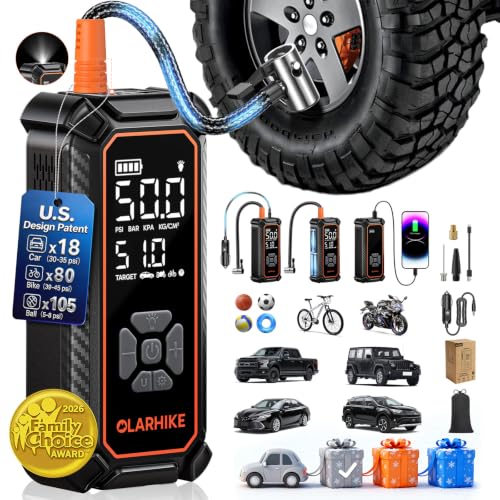 OlarHike Tire Inflator Portable Air
|
8.8/10 | Buy | |
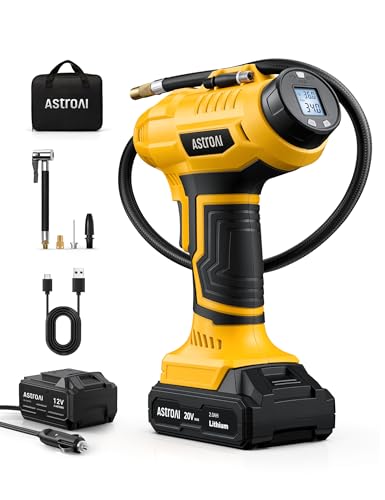 AstroAI Cordless Tire Inflator Portable Air
|
8.8/10 | Buy | |
 150 PSI Tire Inflator Portable Air Compressor
|
8.6/10 | Buy | |
 Digital Air Compressor for Car Auto Pump
|
8.6/10 | Buy | |
| Best Value |
 AstroAI AIRUN H Tire Inflator Portable Air
|
8.4/10 | Buy |
 CARSUN AC/DC Tire Inflator Portable Air
|
8.3/10 | Buy |
Essential Technical Criteria and Engineering Details for Portable Tire Inflators
Selecting an effective mobile air compressor requires evaluating mechanical components, electrical demands, and pneumatic performance under demanding conditions. Drivers frequently discover the limitations of substandard equipment only when stranded on a dark highway shoulder with a rapidly deflating tire. A reliable portable inflator must deliver consistent airflow while protecting your vehicle electrical circuit from damaging current surges.
Beyond basic air delivery, practical usability depends on how seamlessly the compressor integrates into your routine vehicle maintenance. Modern compact compressors feature calibrated digital transducers, multi-source power configurations, and smart cut-off switches designed to prevent tire structural damage. Examining these specific engineering attributes ensures your chosen tire pump delivers dependable service across changing seasons and unexpected roadside emergencies.
Power Supply Architecture: Corded 12V DC, Cordless Batteries, and Dual-Voltage Versatility
The primary power configuration dictates where, when, and how long a portable tire inflator can operate effectively. Traditional twelve-volt direct current plug-in compressors draw power directly from your vehicle auxiliary cigarette lighter socket. These corded models provide virtually unlimited operating endurance without worrying about battery degradation, provided the vehicle engine remains idling during inflation. Idling the engine maintains a stable twelve-volt supply and prevents the compressor motor from drawing down the vehicle starter battery.
Cordless battery-powered inflators offer unparalleled mobility around the vehicle without tangled power cables snagging on tires or doors. Units equipped with high-capacity lithium-ion battery packs, such as integrated configurations ranging from six thousand to ninety-six hundred milliamp-hours, allow rapid top-offs in remote parking lots. However, standalone lithium packs can lose charge when stored in freezing trunks over extended winter months. Because sub-zero ambient temperatures reduce available battery capacity, keeping a cordless unit charged requires regular quarterly checks.
Dual-power inflators resolve these operational trade-offs by combining rechargeable batteries or household alternating current plugs with backup twelve-volt car cords. Models produced by manufacturers like AstroAI and Ipflin offer dual-source flexibility, allowing users to plug into a vehicle accessory port whenever internal cells run low. Dual twelve-volt and one-hundred-ten-volt alternating current compressors provide extra utility for home garages by plugging straight into standard wall receptacles. This dual-input capability makes household fleet maintenance convenient without requiring drivers to start up their vehicles in enclosed spaces.
Airflow Volume, Maximum Pressure Ratings, and Real Inflation Speeds
Manufacturer packaging often advertises maximum pressure ratings reaching one hundred fifty or one hundred sixty pounds per square inch. While these high peak numbers demonstrate structural cylinder strength, they provide little insight into how quickly a pump moves air into a high-volume passenger tire. Most passenger vehicle tires operate between thirty and thirty-five pounds per square inch, where airflow volume matters far more than extreme peak pressure. Airflow delivery, measured in liters per minute, determines how long you must wait beside active highway traffic.
Direct-drive motors outputting thirty to thirty-five liters per minute can inflate a standard 195/65 R15 sedan tire from thirty to thirty-six pounds per square inch in roughly fifty seconds to one minute. Raising that same tire from zero to thirty-six pounds per square inch generally requires four to five minutes of steady pumping. Larger sport utility vehicle tires with greater air displacement, such as 235/65 R17 profiles, require significantly more air mass and demand proportionally longer runtime. Matching compressor throughput to your actual tire volume prevents frustrating roadside delays and reduces thermal strain on internal pump components.
High-pressure capability remains valuable for multi-sport users who maintain high-pressure road bicycle tires or specialized motorcycle wheels. Compact inflators can easily reach seventy to one hundred pounds per square inch on bicycle tires because the total air volume is minimal. Conversely, attempting to inflate oversized light truck tires with an ultra-compact pump can overtax small motors. Understanding the physical volume of your vehicle tires ensures you select a compressor with appropriate volumetric displacement.
Continuous Duty Cycle, Thermal Dissipation, and Motor Protection
Small reciprocating piston compressors generate substantial friction and heat inside the cylinder head during active operation. The duty cycle rating represents the maximum continuous running time an inflator can sustain before requiring a mandatory cool-down period. Many consumer-grade portable inflators feature a recommended operational limit of ten to fifteen minutes of continuous inflation followed by ten minutes of resting rest. Exceeding these thermal operational thresholds can scorch internal piston rings and degrade motor windings.
Quality inflators incorporate engineered thermal management features to dissipate intense mechanical heat safely. Compressors built with all-metal cylinders and zinc-alloy motor gears resist thermal expansion far better than units utilizing composite plastic internals. Advanced models also feature ergonomic hollow carry handles and integrated cooling vents that promote airflow around the motor housing. Smart internal temperature sensors in modern designs automatically cut electrical power if internal heat crosses safe thresholds, preventing permanent motor burnout.
Operating an inflator in extreme ambient weather introduces additional thermal considerations. Freezing winter conditions force electric motors to draw higher starting currents through stiff internal lubricants, while sweltering summer pavement accelerates heat accumulation. Giving the compressor brief cooling pauses between servicing multiple low tires preserves internal lubrication and prolongs the service life of internal rubber seals. Practicing patient duty cycle management ensures your roadside emergency tool remains dependable over years of vehicle ownership.
Digital Gauge Precision, Unit Selection, and Auto Shut-Off Behavior
Accurate tire pressure monitoring is essential for vehicle handling, braking distances, and optimal fuel economy. Modern portable inflators rely on backlit digital liquid crystal displays that show real-time line pressure alongside target preset values. High-precision pressure sensors allow drivers to toggle between pounds per square inch, bar, kilopascals, and kilograms per square centimeter with a single button press. Clear backlighting ensures vital pressure numbers remain legible under blinding afternoon sunlight or during pitch-black nighttime emergencies.
Automatic shut-off functionality eliminates guesswork by stopping the pump motor the instant internal sensors detect the target pressure setting. This safety cutoff prevents accidental tire over-pressurization, which could otherwise stress tire sidewall plies or cause erratic vehicle handling. Built-in digital memory functions on units from brands like CRAFTSMAN and CARSUN retain your last dialed target, simplifying seasonal pressure adjustments across identical tires. Drivers simply set their recommended cold inflation pressure, trigger the start button, and monitor the process safely from a standing position.
Digital pressure sensors measure line pressure, which fluctuates dynamically while the reciprocating piston pulses air through the delivery hose. Because active airflow creates temporary backpressure, the running gauge reading may sit slightly higher than the actual static pressure inside the tire chamber. Quality inflator microprocessors compensate for this dynamic pulse to cut power accurately at the true resting pressure. Cross-checking your finished tire with a calibrated standalone dial gauge occasionally verifies that the inflator internal transducer remains within acceptable tolerances.
Valve Chuck Connections, Hose Reach, and Detachment Pressure Loss
The pneumatic interface connecting the compressor hose to the tire valve stem directly affects inflation efficiency and ease of use. Threaded brass screw-on chucks provide a secure, airtight mechanical seal that will not blow off under high backpressure. However, unthreading a brass connector from a recessed valve stem can be clumsy, occasionally releasing one to two pounds of air before detachment clears the valve core. Quick-connect thumb-lock levers attach in seconds and minimize air leakage upon removal, though worn rubber internal gaskets can slip if not seated squarely.
Physical reach across the vehicle wheelbase represents another vital specification when evaluating mobile compressors. A standard ten-foot twelve-volt power cord paired with a two-foot flexible rubber air hose provides twelve total feet of effective working reach. This distance allows drivers to access all four tire valve stems on compact and midsize sedans from a central cabin console socket. Drivers operating long-wheelbase pickup trucks or three-row sport utility vehicles should verify total cord length or opt for cordless battery models to avoid cord tension. Upgrading or inspecting durable replacement tire inflator hose lines ensures flexible rubber lines remain free from heat cracks and dry rot over time.
Multi-valve adaptability broadens utility beyond standard automotive Schrader stems to household recreation equipment. Most portable compressor kits include threaded brass Presta adapters for road and gravel bicycles, metal ball needles for sports gear, and tapered nozzles for small camping inflatables. Storing these miniature brass fittings inside dedicated compressor onboard compartments prevents loss during vehicle travel. Having the correct adapter ready transforms your roadside car tool into a versatile domestic maintenance asset.
Roadside Readiness, Emergency Kits, and Vehicle Storage Survival
A portable tire inflator serves as the cornerstone of any well-prepared vehicle emergency travel kit. Modern vehicles increasingly omit full-size spare tires to reduce curb weight and improve fuel efficiency standards. Drivers relying on modern tire repair kits without a compact spare depend heavily on a functioning compressor to reinflate tires after applying liquid sealant. A dependable inflator can limp a slowly leaking tire with a small nail puncture to a nearby repair shop, avoiding costly roadside towing fees.
Integrated emergency lighting proves invaluable during hazardous nighttime tire maintenance alongside active highway traffic lanes. Premium inflators feature multi-mode light-emitting diode flashlights mounted directly on top of the compressor housing. These lighting systems typically provide constant illumination for valve stem inspection, high-visibility hazard strobes, and international Morse code emergency distress flashing. Illuminating your immediate work area alerts passing motorists and reduces trip hazards around dark wheels and curbs.
Surviving long-term storage inside vehicle trunks requires durable construction and resilient electronic components. Vehicle cabins routinely experience extreme temperature fluctuations, swinging from sub-zero winter freezes to over one hundred thirty degrees Fahrenheit on sweltering summer afternoons. Rugged fabric carry cases protect air hoses and display screens from abrasive trunk debris and tool impacts. Keeping spare fifteen-amp glass fuses stored inside the inflator carry bag guarantees you can quickly restore power if an electrical surge interrupts roadside operation.
Operational Diagnostic Tips: Preventing Blown Fuses and Motor Stalling
Blown twelve-volt vehicle auxiliary fuses represent one of the most common user frustrations encountered with portable air compressors. Most vehicle auxiliary cigarette lighter circuits utilize ten-amp or fifteen-amp safety fuses to guard cabin wiring against overcurrent damage. Electric compressor motors draw substantial inrush current at startup, especially if the air hose is already attached to a pressurized tire valve. Starting the motor against thirty pounds of trapped backpressure forces the electric motor to pull excessive amperage, instantly blowing the vehicle accessory fuse.
Preventing startup electrical overloads requires a simple operational habit: always power on the inflator motor before locking the chuck onto the tire valve stem. Allowing the motor piston to establish mechanical momentum before encountering tire backpressure significantly reduces startup electrical spikes. Additionally, checking that the male plug fits snugly into the vehicle power socket prevents high-resistance electrical arcing that can melt plastic plug collars. If your compressor suddenly loses power without displaying an error code, inspect the replaceable fuse housed inside the knurled tip of the twelve-volt power plug.
Always reference the vehicle tire information placard affixed to the driver-side door jamb rather than the maximum pressure stamped on the tire sidewall. The tire sidewall number indicates the absolute burst safety limit for the rubber casing, not the proper inflation specification calculated by vehicle chassis engineers. Setting the auto shut-off to match door placard specifications ensures optimal tire contact patches, even tread wear, and responsive vehicle handling. Verifying cold resting pressure before daily highway travel guarantees safety and maximizes the performance of your vehicle tires.
Investing in a well-engineered portable tire inflator transforms unpredictable roadside emergencies into manageable minor delays. By prioritizing durable metal motor construction, multi-source power reliability, and accurate digital shut-off controls, drivers can maintain ideal tire pressures with confidence. Keep your emergency compressor properly organized, follow mandatory cooling intervals during sequential tire fills, and inspect pneumatic fittings periodically to enjoy trouble-free roadside peace of mind.
About the author
Tony Carrick is an experienced product researcher and writer specializing in tools, home improvement, automotive maintenance, and consumer equipment. With extensive experience reviewing tools and tackling hands-on renovation projects, he brings a buyer-focused perspective to compressor performance, usability, and overall value.