
How to Use Astroai Tire Inflator: Step-by-Step Guide for 2026
Learn how to use astroai tire inflator safely with step-by-step instructions, auto-shutoff setup, and cool-down tips for November 2026.
 By Glenda Taylor
Updated October 8, 2026


A sudden drop in ambient temperature can quickly trigger a low tire pressure warning on your vehicle dashboard. When seasonal cold weather arrives, pneumatic pressure frequently drops by roughly one pound per square inch for every ten-degree decline in temperature. Storing a compact compressor in your vehicle removes the hassle of finding operational coin-operated gas station air lines. Learning how to use astroai tire inflator allows you to restore proper cold tire pressure right in your driveway or safely manage a slow leak on a remote road shoulder.
Modern compact units combine internal digital transducers with automatic shut-off electronics to eliminate the guesswork of analog dial pointers. Many drivers rely on portable air pumps with digital pressure gauges because they provide real-time pressure feedback while preventing accidental over-inflation. Operating these portable air compressors correctly protects the internal direct-drive motor from thermal strain, preserves your vehicle battery, and ensures your tires stay safely aligned with the manufacturer inflation specifications on your driver door pillar.
Top Products
| Award | Product | ACR Score About ACR ScoreThe ACR Score is our own rating from 0 to 10, based on performance, design and build, ease of use, and value. It reflects independent research and is never influenced by manufacturers, retailers, or affiliate commissions. Learn more › | |
|---|---|---|---|
| Best Overall |
AstroAI H2 Pro Cordless Tire Inflator 150 PSI
|
9.2/10 | Buy |
| Best Premium |
 AstroAI MC3 160 PSI Tire Inflator |
9.1/10 | Buy |
| Best Value |
 AstroAI S1 12V Portable Tire Inflator |
8.9/10 | Buy |
 AstroAI Dual Power 110V/12V Tire Inflator |
8.9/10 | Buy | |
 AstroAI Cordless Tire Inflator 160 PSI |
8.8/10 | Buy | |
| Best Budget |
 AstroAI 12V DC Portable Air Compressor Tire |
8.4/10 | Buy |
 AstroAI AIRUN H 12V DC Portable Air Compressor |
8.4/10 | Buy | |
 AstroAI L7S 150 PSI Cordless Tire Inflator |
8.1/10 | Buy | |
 AstroAI Dual Head & Lock-On Air Chuck Set |
8.0/10 | Buy | |
 AstroAI 100 PSI Tire Inflator Gauge |
8.0/10 | Buy |
AstroAI H2 Pro Cordless Tire Inflator 150 PSI
The AstroAI H2 Pro is a versatile dual-power portable tire inflator delivering up to 150 PSI via an internal rechargeable lithium battery or 12V DC vehicle plug. Featuring digital auto shut-off, accurate dual pressure displays, and onboard accessory storage, it is an ideal roadside emergency and garage solution for vehicle owners and cyclists.
Pros
- Dual power supply provides cordless convenience with a 12V DC vehicle fallback for roadside emergencies.
- Automatic shut-off and dual digital display prevent overinflation and eliminate manual pressure monitoring.
- ToughUltra internal components improve mechanical durability compared to standard plastic gear assemblies.
- Integrated nozzle storage compartment keeps bicycle adapters and ball needles organized inside the unit.
Cons
- Tankless high-pressure inflator design is not compatible with pneumatic workshop air tools like nailers or impact wrenches.
- Cordless runtime is limited to approximately 18 minutes before requiring a recharge or switching to the 12V DC vehicle cord.
- Direct-drive high-pressure pump requires cool-down pauses during continuous multi-tire inflation tasks.
AstroAI MC3 160 PSI Tire Inflator
Powered by a versatile three-way system supporting battery, AC, and DC inputs, this dual-motor inflator handles high-pressure car tires and high-volume inflatables with ease. It is an ideal roadside and garage tool for owners of passenger cars, mid-sized SUVs, and outdoor recreational gear.
Pros
- Versatile AC, DC, and cordless battery power options
- Dual modes handle both tires and camping mattresses
- Automatic shut-off prevents over-inflation
- Convenient built-in storage for hoses and accessories
Cons
- Not compatible with heavy-duty truck tires
- Relatively bulky footprint compared to pocket inflators
AstroAI S1 12V Portable Tire Inflator
Weighing just 1.54 pounds, the AstroAI S1 provides dependable roadside top-offs with automatic shutoff and a backlit digital display. It serves well as a compact emergency backup for sedans, crossover SUVs, and bicycles.
Pros
- Automatic shutoff prevents accidental overinflation
- Clear digital LCD screen shows live pressure
- Lightweight and compact for easy trunk storage
- Integrated LED light aids nighttime use
Cons
- Not designed for large truck tires
- Requires cooling after 15 minutes of continuous use
- Requires an active 12V vehicle power outlet
AstroAI Dual Power 110V/12V Tire Inflator
Versatile dual-power support lets this lightweight inflator run from either a garage wall outlet or a vehicle cigarette lighter. An automatic shutoff and onboard cord storage make routine tire top-offs straightforward for any driver.
Pros
- Flexible dual AC and DC power options
- Automatic shutoff prevents over-inflation
- Compact and lightweight at 2.2 pounds
- Integrated cord and nozzle storage
Cons
- Requires a 10-minute cooldown after 15 minutes of runtime
- Must be plugged into a power source to operate
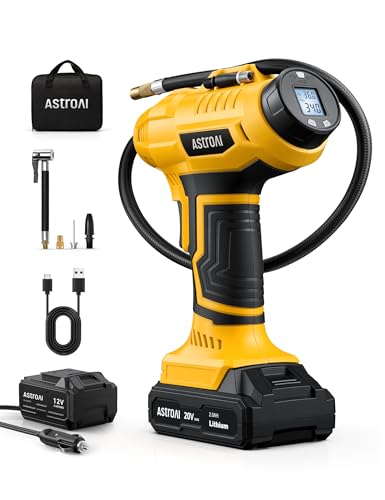
AstroAI Cordless Tire Inflator 160 PSI
The AstroAI Cordless Tire Inflator is a compact 160 PSI handheld air compressor featuring dual power via a 20V rechargeable battery and a 12V DC car adapter. Delivering digital auto shut-off and up to 20 minutes of continuous runtime, it is an ideal emergency tool for garage mechanics, commuters, and road-trippers.
Pros
- Dual-power versatility allows cordless battery operation at home or 12V DC vehicle plug-in on the road
- Reaches up to 160 PSI with automatic shut-off to prevent accidental tire over-pressurization
- Compact 2.54-pound footprint provides effortless trunk or glove-box storage for emergency readiness
- Backlit digital LCD screen provides clear readouts in PSI, BAR, and KPA units
- Integrated front LED light illuminates tire valve stems during dark roadside emergencies
Cons
- Includes a USB-C charging cable but requires an external USB power block to recharge the battery
- Designed specifically for tire and sports inflation rather than driving pneumatic workshop air tools
- Continuous runtime is limited to 20 minutes before requiring a cool-down pause
AstroAI 12V DC Portable Air Compressor Tire
The AstroAI 12V DC Portable Tire Inflator delivers a listed 25 L/min flow rate for fast roadside top-offs, featuring an auto-shutoff digital gauge and an 11.1-foot total reach. Powered strictly via 12V automotive sockets, it offers dependable emergency inflation for drivers, garage hobbyists, and compact vehicle owners.
Pros
- Quick roadside top-offs with manufacturer-rated 25 L/min pump speed
- Accurate digital display with auto-stop prevents over-pressurizing tires
- Long 11.1-foot combined cord and hose reaches all four vehicle tires
- Compact, sub-1.5-pound chassis with built-in cord and nozzle storage
- Integrated LED work light for roadside emergencies at night
Cons
- Restricted to 12V DC automotive sockets only with no direct 120V AC household plug included
- Requires a cool-down pause after 15 minutes of continuous run time
- Tankless design cannot operate pneumatic nailers, air ratchets, or automotive shop air tools
AstroAI AIRUN H 12V DC Portable Air Compressor
The AstroAI AIRUN H is a compact 12V DC tire inflator delivering up to 35 L/min airflow with automatic shut-off and digital pressure presets. It is an ideal portable emergency compressor for drivers, commuters, and garage hobbyists seeking fast tire top-offs.
Pros
- Automatic shut-off stops pumping reliably once target PSI is reached
- High-airflow 120W motor provides rapid top-offs for daily driver tires
- Long 9.84-foot power cord reaches all passenger vehicle wheels with ease
- Bright built-in LED flashlight and backlit display assist during night repairs
- Lightweight 2.2-pound form factor stores neatly in glove boxes and trunks
Cons
- Requires a 12V DC vehicle outlet and does not include a 120V AC household plug
- Mandates a 10-minute cool-down interval after 15 minutes of continuous operation
- Not intended for high-volume inflatables like large pool floats or air mattresses
AstroAI L7S 150 PSI Cordless Tire Inflator
Weighing just over a pound, the AstroAI L7S combines a 150 PSI compressor, emergency power bank, and multi-mode LED work light into a pocketable tool. It offers convenient on-the-go inflation for passenger cars, bicycles, and sports gear without taking up valuable cargo space.
Pros
- Extremely compact and lightweight at roughly one pound
- Protective silicone sleeve guards against drops and scrapes
- Preset auto shut-off prevents over-inflation
- Doubles as a backup power bank and flashlight
Cons
- Incompatible with heavy-duty trucks, RVs, and trailers
- Limited continuous battery capacity for large volume inflatables
AstroAI Dual Head & Lock-On Air Chuck Set
Equipped with an angled dual-head chuck for dual-wheel vehicles and a hands-free brass locking chuck, this AstroAI kit covers both heavy-duty trucks and standard passenger cars. Its standard 1/4-inch NPT fittings and included industrial quick plug ensure smooth integration with common air lines.
Pros
- Dual-head design easily reaches inner truck wheels
- Locking brass chuck allows hands-free inflation
- Standard 1/4-inch NPT fitting ensures broad compatibility
- Includes thread seal tape and washers out of box
Cons
- Dual-head chuck requires continuous manual pressure to seal
- Locking chuck is designed only for standard tire valves
- Long dual-head rigid wand is bulky for compact wheels
AstroAI 100 PSI Tire Inflator Gauge
Built with durable brass and stainless steel parts, this analog unit combines tire pressure measurement, inflation, and deflation in one tool. It is well suited for drivers and home mechanics who need a straightforward Schrader-compatible gauge for their garage air compressor.
Pros
- Durable brass and stainless steel internal parts
- Combines inflation, deflation, and pressure checks
- Standard 1/4-inch NPT compressor quick-connect fitting
- Accurate analog dial rated to ANSI B40.1
Cons
- Requires an external air compressor to inflate tires
- Max 100 PSI cap limits heavy commercial use
- Analog dial lacks precise digital decimal readouts
Comprehensive Guide on How to Use AstroAI Tire Inflators
Operating a portable compressor properly requires an understanding of power delivery, valve sealing, and automated pressure controls. While these compact tools are engineered for straightforward roadside use, following an exact operating sequence prevents blown vehicle fuses and protects compressor motor longevity. This detailed walkthrough covers preparation, digital configuration, active inflation monitoring, and preventive maintenance across the brand model lineups.
Identifying Your Model Power Configuration and Electrical Needs
AstroAI manufactures tire inflators across three primary power architectures, and determining your specific power supply is the initial operational step. Dedicated 12V DC plug-in units connect directly into an automotive auxiliary cigarette lighter receptacle to draw power from the vehicle electrical system. Dual-voltage models incorporate both an internal transformer for standard 110V household AC outlets and a 12V vehicle lead, allowing driveway inflation as well as travel capability. Cordless variants utilize rechargeable lithium-ion cells or detachable battery packs, offering portable convenience for roadside emergencies and bicycle path maintenance.
When operating a corded 12V direct-current model, starting your vehicle engine before powering the compressor protects the electrical system. Running the engine keeps the alternator active, providing a steady supply voltage between 13.8 and 14.4 volts rather than allowing the compressor to drain a resting car battery. Portable inflators draw substantial current during operation, with many motors pulling close to the ceiling of a standard 15-amp vehicle auxiliary circuit. Supplying consistent voltage prevents motor sluggishness and minimizes electrical stress on your vehicle interior wiring harness.
For hybrid units capable of multiple inputs, inspect the source selector switch before connecting the inflator. Connecting the wrong power lead or operating an uncharged battery pack can cause unexpected interruptions during an inflation cycle. Cordless models such as those with rechargeable lithium batteries should always show adequate charge on their integrated indicator bars before you start. Keeping a backup 12V adapter cord inside your vehicle glove compartment ensures you remain prepared even if a portable battery depletes during an extended trip.
Verifying Proper Cold Tire Target Pressure Placards
Establishing the exact target pressure requires consulting the tire specification placard located on your driver-side door jamb or B-pillar. Many drivers mistakenly read the maximum pressure stamped onto the tire rubber sidewall, which represents the safe mechanical limit of the casing rather than vehicle handling specifications. Vehicle manufacturers calculate placard pressure based on total curb weight, axle distribution, and suspension geometry to balance fuel economy with tread life. Operating tires at placard cold pressure ensures optimal road contact and prevents premature center or shoulder tread wear.
Tire inflation checks should always take place when the tires are cold, meaning the vehicle has rested for at least three hours or traveled less than one mile. Driving generates friction between the tire carcass and asphalt, elevating internal air temperatures and raising measured pressure by three to five pounds per square inch. Setting your pressure on warm tires causes under-inflation once the rubber cools down to ambient outdoor temperatures. If you must adjust pressure immediately after highway driving, add approximately three PSI above the door placard baseline, then re-check the cold pressure the following morning.
Connecting the Power Supply and Securing the Valve Stem Interface
Preparing the pneumatic connection requires a clean valve stem and a properly attached air chuck. Begin by unscrewing the plastic valve cap from the wheel stem and inspecting the external brass threads for dirt, grit, or road salt deposits. Debris inside the valve stem can damage internal rubber seals or prevent the compressor chuck from depressing the Schrader valve pin squarely. Wiping the valve tip with a dry cloth ensures a clean seal and preserves the life of the chuck internal rubber gasket.
AstroAI compressors feature either a screw-on brass connector or a quick-release thumb-lock lever chuck. When using a threaded brass collar, twist the chuck clockwise onto the valve stem until you hear a brief hiss of escaping air followed by an immediate seal. For lever-style thumb chucks, push the nozzle firmly over the valve stem and press the cam lever down until it locks parallel to the air hose. If your vehicle features dual-wheel setups or recessed rims, an aftermarket dual-head chuck or locking extension can make reaching hidden inner valve stems straightforward.
Bicycle tires and recreational sports equipment require specialized adapters included in the inflator accessory compartment. Standard automotive wheels utilize Schrader valves, whereas high-pressure road and gravel bicycles often use narrower Presta valves with threaded lock nuts. Threading a brass Presta-to-Schrader adapter onto the bicycle valve stem before attaching the compressor hose enables seamless inflation. When researching tire care options for mixed gear, dedicated electric bike tire pumps offer similar valve adaptability for high-pressure two-wheel setups.
Navigating the Digital Display and Setting Auto-Shutoff Values
Once the inflator receives power, the backlit digital liquid crystal display illuminates to show operational parameters. Digital gauges display real-time pressure readouts, removing the reading errors common to vibrating mechanical dial pointers. Most units incorporate a unit selection button that cycles through four international pressure standards, including PSI, Bar, kilopascals, and kilograms per square centimeter. Verify that the screen displays your preferred unit of measurement before adjusting pressure settings to prevent accidental over-inflation.
Setting the auto-shutoff target pressure is managed using the physical plus and minus buttons located on the control panel. Pressing either button causes the digital target value to flash on the screen, indicating that the unit is ready for your input. Adjust the readout until the target matches your vehicle door placard specification, then release the buttons and allow the display to stabilize. The internal memory module saves this preset number, so the inflator automatically knows when to stop the air delivery process.
When you attach the air hose to a pressurized tire, the screen immediately shows the current resting tire pressure. This live measurement provides an instant check on how much air the tire has lost since its previous maintenance interval. If the current pressure already matches or exceeds your target preset, the compressor motor will not engage when you toggle the power switch. The preset target must always be configured higher than the tire resting pressure for the inflation cycle to begin.
Managing the Inflation Cycle and Motor Duty Cycle Constraints
Initiating inflation requires pressing the primary power switch, which activates the internal electric motor and reciprocating piston assembly. The compressor delivers compressed air through the high-pressure rubber hose directly into the tire carcass. You will notice the digital screen reading fluctuate slightly during active pumping as line backpressure registers on the internal transducer. High-speed inflation mechanisms typically add several PSI per minute on standard passenger tires, restoring proper inflation quickly during morning driveway checks.
Continuous operation generates substantial thermal friction inside the compact metal cylinder and gear drive components. To safeguard the electric motor and internal piston seals, you must respect the manufacturer duty cycle limits. Compact portable inflators are engineered for intermittent operation, typically requiring a mandatory ten-minute cool-down rest after fifteen minutes of continuous pumping. Exceeding continuous runtime limits can cause internal thermal cut-off switches to trip or accelerate wear on powder metallurgy cylinder assemblies.
Never walk away or leave an operating portable air compressor unattended while it runs on your vehicle tires. Although the automated shut-off system is designed to halt air delivery once the target threshold is reached, active monitoring remains an essential safety practice. Listen to the pitch of the motor, as an abrupt drop in motor speed can signal severe electrical resistance or line pinching. Watching the inflation process ensures you catch any air leaks or dislodged chuck fittings before they escalate into roadside problems.
Disconnecting the Air Chuck and Verifying Static Pressure
When the digital pressure transducer detects that the target setting is met, the auto-shutoff circuit cuts electrical power to the motor. Switch off the primary power button on the inflator casing before attempting to uncouple the pneumatic hose. Disconnecting a threaded brass chuck requires a quick, deliberate counterclockwise twisting motion to minimize air loss while clearing the Schrader valve pin. If using a thumb-lock clamp, lift the release lever briskly and pull the chuck straight off the stem to prevent side-loading the brass core.
After detaching the hose, verifying final pressure using an independent reference tool provides total peace of mind. A separate mechanical dial gauge or calibrated digital tire pencil allows you to confirm that the static pressure matches placard targets without dynamic backpressure distortion. If the tire lost half a pound during chuck removal, you can quickly reconnect the line or leave it if it rests well within recommended operating margins. Always replace the valve stem dust cap immediately to protect the delicate internal Schrader valve core from moisture and road grit.
Operating Dual-Mode High-Volume and Specialty Inflatables
Certain multi-purpose inflators feature dual motor configurations designed to tackle both high-pressure tires and high-volume leisure items. High-pressure modes direct concentrated air through small-diameter reinforced hoses up to 150 or 160 PSI for car tires and bicycle tubes. Conversely, large-volume blower modes push broad volumes of low-pressure air, reaching rates up to 350 liters per minute for rafts, air mattresses, and pool floats. Using the correct mode switch prevents blowing out low-pressure inflatables or overheating high-pressure piston cylinders on broad-volume tasks.
To inflate camping gear or inflatable rafts, disconnect the high-pressure hose and attach the wide-diameter flexible blower tube to the dedicated volume port. Insert the appropriate plastic nozzle cone into the inflatable valve port, ensuring a tight mechanical friction fit. Many dual-mode models also include a secondary deflation port that pulls air out of mattresses for fast, flat packing at campsites. Switching between inflation and deflation ports simplifies packing gear into vehicle trunks without manual rolling and squeezing.
Drivers must recognize the equipment boundaries of compact portable compressors when maintaining larger recreational or commercial vehicles. These portable units handle sedans, crossovers, mid-sized sport utility vehicles, motorcycles, and light utility trailers with ease. However, they are not designed to inflate large commercial semi-truck tires or heavy-duty agricultural equipment, which demand substantial air volumes and industrial continuous-duty cycle compressors. When evaluating choices across different automotive categories, selecting a portable auto tire inflator involves matching motor displacement and airflow delivery to your vehicle curb weight and tire volume.
Battery Preservation and Roadside Storage Practices
Cordless tire inflators rely on internal lithium-ion battery cells or removable power packs that require mindful seasonal storage. Leaving lithium-ion batteries exposed inside hot vehicle cabins during summer heat waves can degrade cell longevity and reduce stored capacity. Similarly, extreme sub-zero winter temperatures temporarily reduce battery discharge capability, which can limit available runtime during cold-weather roadside emergencies. Storing your portable inflator inside a protective canvas carry bag under a passenger seat helps shield sensitive internal electronics from extreme temperature swings.
Perform routine battery level checks every three to four months to compensate for natural parasitic discharge. Recharging the battery pack via its included USB-C cable or dedicated wall charger ensures the compressor remains fully prepared for sudden roadside flats. If your cordless unit includes a secondary 12V vehicle adapter cord, keep that cable stored alongside the pump at all times. Having a corded backup ensures that an uncharged lithium pack will never leave you stranded on a remote highway shoulder.
Troubleshooting Blown Fuses, Erratic Readings, and Motor Stalls
A common issue encountered when using 12V auxiliary plug-in compressors is a blown vehicle cigarette lighter fuse. Most automotive auxiliary sockets are protected by a 15-amp fuse inside the passenger compartment fuse box. If the compressor motor fails to activate and the display stays dark, unscrew the knurled tip of the 12V male adapter plug to inspect the internal glass barrel fuse. If the tiny metal filament inside the glass tube is broken or darkened, replace it with an identical 15-amp fast-acting fuse rather than bypassing the circuit.
Motor stalling frequently occurs when starting a portable compressor against high pre-existing line backpressure. If you connect the air chuck firmly to a tire that already contains 35 PSI before switching on the power, the piston must fight instant resistance. This sudden electrical inrush current can spike motor amp draw, tripping the auxiliary circuit fuse or triggering safety cut-offs. To avoid startup backpressure spikes, turn on the compressor motor for two seconds before locking the chuck onto the valve stem, allowing momentum to carry the piston stroke.
Erratic or rapidly jumping pressure readouts usually point to an obstructed valve stem or a kinked air delivery hose. If the rubber hose is bent sharply near the inflator housing, air cannot enter the tire freely, creating false artificial pressure spikes that trigger premature auto-shutoff. Straighten the hose completely and verify that the Schrader valve pin is clean and moving freely inside the brass stem. If the digital display continues to register erratic numbers, uncouple the chuck, power-cycle the inflator, and reconnect the fitting squarely over the valve core.
Practical Takeaways for Long-Term Inflator Performance
Mastering the operation of your portable compressor transforms seasonal tire maintenance from an inconvenient chore into a rapid five-minute driveway routine. By following vehicle door placard guidelines, securing valve chucks cleanly, and respecting necessary motor cool-down intervals, you ensure dependable performance for years to come. Routine tire pressure care extends tire tread life, optimizes passenger vehicle fuel economy, and guarantees your emergency roadside equipment remains operational whenever unexpected highway punctures occur.
About the author
Glenda Taylor has extensive experience in residential construction, remodeling, home improvement, and tool use. Her practical approach to equipment evaluation focuses on usability, performance, safety, and value—helping DIYers and workshop users make better-informed decisions about compressors and related tools.