
What Is the Best Quiet Air Compressor: Practical Guide for 2026
Evaluate %what is the best quiet air compressor% for indoor shops in November 2026 by comparing noise levels, tank size, and reliable air delivery.
 By Bob Beacham
Updated October 8, 2026


Working in an enclosed garage or basement workshop with an ear-splitting air compressor quickly causes operator fatigue and disrupts everyone nearby. Traditional pneumatic setups often generate noise levels well above 80 decibels, making normal conversation impossible while the pump charges. When evaluating %what is the best quiet air compressor%, buyers need to look beyond marketing claims and examine low-RPM dual-piston pump architecture. Many modern units operate between 59 and 70 decibels, allowing you to run pneumatic nailers or inflate vehicle tires without heavy hearing protection. Selecting modern oil-free workshop compressors with sound-dampening intake mufflers provides clean airflow while keeping ambient garage noise manageable.
True workshop comfort requires balancing lower acoustic output against practical air volume and operating pressure. A whisper-quiet pump provides little benefit if it lacks the delivered cubic feet per minute to cycle finish nailers or sustain tire inflation tasks. By assessing pump displacement, continuous motor duty, and storage tank buffer capacity, you can identify equipment that protects your hearing while completing critical projects. Understanding these operational differences ensures you invest in reliable machinery tailored to your specific pneumatic tools.
| Award | Product | ACR Score About ACR ScoreThe ACR Score is our own rating from 0 to 10, based on performance, design and build, ease of use, and value. It reflects independent research and is never influenced by manufacturers, retailers, or affiliate commissions. Learn more › | |
|---|---|---|---|
| Best Overall |
Baococo 10-Gallon 2HP Quiet Air Compressor
|
9.2/10 | Buy |
| Best Value |
 Stealth SAQ-1234 2-Gallon Air Compressor |
9.2/10 | Buy |
| Best Premium |
 VEVOR 13-Gallon 2HP Quiet Air Compressor |
9.2/10 | Buy |
| Best Budget |
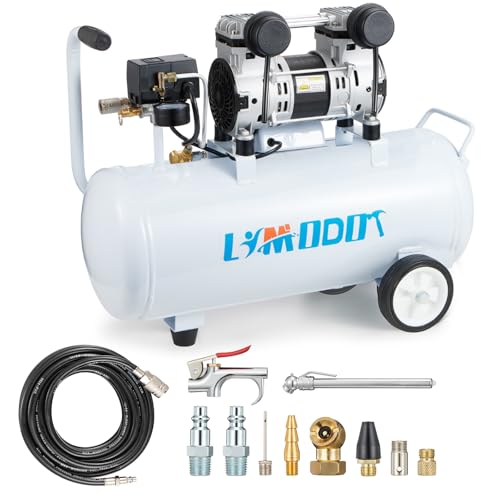 Limodot 8-Gallon Quiet Air Compressor |
9.1/10 | Buy |
 Metabo HPT EC28M Quiet Air Compressor |
9.1/10 | Buy | |
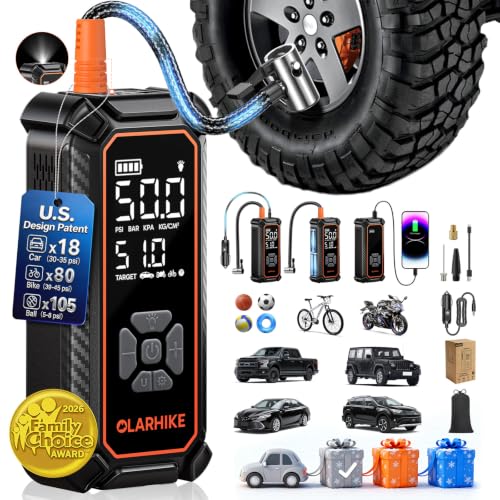 OlarHike Portable Tire Inflator Air Compressor |
8.8/10 | Buy | |
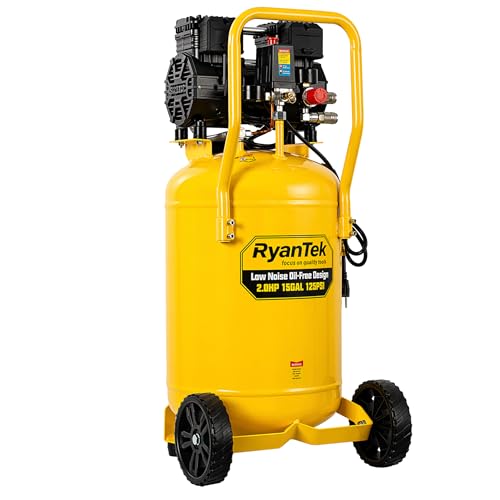 RyanTek 15-Gallon 2HP Air Compressor |
8.6/10 | Buy | |
 DEWALT DWFP55130 2.5-Gallon 200 PSI Quiet Trim Air |
8.4/10 | Buy | |
 VELPAX 2.4-Gallon Quiet Air Compressor |
8.1/10 | Buy | |
 AstroAI L7 Cordless Tire Inflator Portable Air |
8.0/10 | Buy |
Baococo 10-Gallon 2HP Quiet Air Compressor
Equipped with a 2HP copper-wound motor and a 10-gallon steel tank, this Baococo compressor runs at a modest 70 decibels. Its oil-free operation, rapid refill cycle, and wheeled base make it well suited for home garages and light workshop duties.
Pros
- Quiet 70dB operation suits indoor workspaces
- Fast 40-second tank pressure recovery
- Oil-free pump eliminates routine oil changes
- Dual couplers support multi-tool setups
- Wheels and handle provide smooth mobility
Cons
- 115 PSI maximum pressure limits heavy-duty pneumatic tools
- Ten-gallon tank requires noticeable floor storage space
Stealth SAQ-1234 2-Gallon Air Compressor
Operating at under 60 decibels, this compact unit provides exceptionally quiet performance for garage DIY tasks, brad nailing, and tire inflation. Its oil-free motor reaches up to 125 PSI while keeping routine maintenance to a minimum.
Pros
- Quiet operation suitable for indoor workspaces
- Maintenance-free oil-free pump design
- Durable steel tank with rubber vibration dampening
- Reliable pressure recovery for intermittent nailing
Cons
- Relatively heavy to carry at nearly 42 pounds
- Small two-gallon tank limits continuous tool use
- Modest 1.8 CFM flow rate at 90 PSI
VEVOR 13-Gallon 2HP Quiet Air Compressor
Delivering 4.6 SCFM at 90 PSI with a quiet 66-decibel sound profile, this 13-gallon compressor suits home garages and workshops needing steady air supply without disruptive motor noise. Its oil-free 2HP motor fills the tank in under three minutes, while large rubber wheels help maneuver its substantial 71-pound frame.
Pros
- Quiet 66-decibel noise level during operation
- Oil-free motor design eliminates routine maintenance
- Fast air buildup in under three minutes
- Sturdy 7-inch rubber wheels assist transport
Cons
- Heavy 71-pound weight makes vehicle loading difficult
- Maximum 125 PSI ceiling limits high-pressure tools
Limodot 8-Gallon Quiet Air Compressor
Limodot pairs an 8-gallon capacity with a quiet 68-decibel motor, keeping noise disruption low during indoor trim or workshop jobs. Delivering 2.8 CFM at 90 PSI alongside a quick 30-second recovery time, it provides steady airflow for DIY pneumatic tools without messy oil maintenance.
Pros
- Low 68 dB output prevents loud workshop disruption
- Fast 30-second pressure recovery keeps projects moving
- Oil-free pump eliminates messy oil changes
- Comprehensive 11-piece accessory kit included out of the box
- Integrated wheels make moving the 8-gallon tank easy
Cons
- 2.8 CFM output limits high-demand continuous tools
- Included PVC hose is stiffer than rubber alternatives
Metabo HPT EC28M Quiet Air Compressor
Operating at an ultra-quiet 59 dB, the Metabo HPT EC28M 1-gallon oil-free air compressor provides low-noise pneumatic air power in a compact 25.2-pound roll-cage frame. It is an ideal portable match for trim carpenters, punch-list contractors, and residential DIYers needing peaceful indoor fastening.
Pros
- Remarkably quiet 59 dB operation makes it well-suited for occupied residential job sites
- Lightweight 25.2-pound weight and ergonomic rubber grip make carrying up stairs straightforward
- Sturdy steel roll cage provides reliable physical protection around gauges and controls
- Oil-free pump mechanism eliminates pump lubrication maintenance and avoids messy oil leaks
- Universal quick-connect coupler simplifies tool connections across standard pneumatic lines
Cons
- Compact 1-gallon tank capacity is intended for intermittent fastening rather than continuous air tools
- Small air storage volume causes frequent motor cycling during rapid nailing sequences
- Bare-tool configuration does not include an air hose or pneumatic finish nailers
OlarHike Portable Tire Inflator Air Compressor
The OlarHike Portable Tire Inflator combines dual-power versatility via a 12V DC vehicle plug or built-in rechargeable battery with an automatic shut-off digital display. It provides dependable roadside tire top-offs and inflation for passenger cars, crossovers, motorcycles, and bicycles.
Pros
- Dual-power design allows cordless field operation or continuous power through any standard vehicle 12V DC port
- Automatic shut-off technology stops the motor precisely at preset pressure to prevent over-inflation
- Integrated 6000mAh battery reserve doubles as an emergency phone charger and includes an LED work light
- Pocket-sized footprint weighs well under two pounds for convenient transport in center consoles or backpacks
Cons
- Maximum vehicle pressure rating of 51 PSI is not suitable for heavy-duty commercial trucks, RVs, or high-pressure trailer tires
- Compact tankless inflator mechanism cannot power workshop pneumatic tools such as nail guns or air ratchets
- Recharging requires a standard 5V 2A or 5V 3A adapter and is not compatible with high-wattage fast chargers
RyanTek 15-Gallon 2HP Air Compressor
Built for garage workshops and indoor tasks, this vertical compressor combines a quiet 66 dBA dual-cylinder motor with a spacious 15-gallon tank. It supplies a dependable 4.5 CFM at 90 PSI for continuous nailing, spraying, and inflation while conserving floor space.
Pros
- Quiet 66 dBA operation suitable for indoor spaces
- Generous 4.5 CFM output at 90 PSI
- Compact vertical tank saves workshop floor space
- Maintenance-free oil-free pump design
- Integrated wheels make rolling transport straightforward
Cons
- Heavy at 68.3 pounds to lift manually
- Maximum pressure caps at 125 PSI
DEWALT DWFP55130 2.5-Gallon 200 PSI Quiet Trim Air
The DEWALT DWFP55130 delivers a capable 3.0 SCFM at 90 PSI with a 200 max PSI 2.5-gallon tank, running at a quiet 71.5 dBA on an efficient 12-amp motor. It is an ideal pneumatic power source for trim carpenters, punch-list contractors, and DIYers working on residential circuits.
Pros
- Delivers 3.0 SCFM at 90 PSI with a high 200 max PSI ceiling for rapid pressure recovery during sequential fastening
- Quiet 71.5 dBA sound output makes indoor trim carpentry and remodeling far less disruptive to homeowners
- Low 12-amp draw reduces breaker trips when running on shared 15-amp household circuits
- Integrated roll cage and console protect critical components while supporting horizontal or vertical operation
- Dual quick couplers allow two trim carpenters to connect and work off a single compressor
Cons
- Bare-tool configuration means you must supply your own air hoses, couplers, and pneumatic nail guns
- At 36 pounds, it is heavier to haul up flights of stairs than ultra-compact 1-gallon finish compressors
- Air output of 3.0 SCFM is built for intermittent finish fastening and will not support continuous tools like rotary sanders or sprayers
VELPAX 2.4-Gallon Quiet Air Compressor
Operating at roughly 60 decibels, this portable compressor provides steady air pressure for garage tasks, tire inflation, and trim carpentry without excessive noise. Its oil-free 1.5 HP motor keeps routine upkeep minimal while the integrated handle makes transport between work areas easy.
Pros
- Very quiet operation at roughly 60 dB
- Maintenance-free oil-less pump design
- Compact build with convenient carry handle
- Integrated overload protection and safety release valve
Cons
- Small 2.4-gallon tank limits continuous high-demand tool use
- Modest 115 PSI ceiling restricts heavy industrial applications
AstroAI L7 Cordless Tire Inflator Portable Air
The AstroAI L7 is a lightweight, handheld cordless air compressor delivering up to 150 PSI with an integrated 4000mAh rechargeable battery and precise auto-shutoff. It provides dependable, pocket-sized inflation performance for motorists, cyclists, and DIYers needing quick roadside tire top-offs.
Pros
- Weighs only 0.96 pounds for effortless storage in vehicle consoles, toolbags, or cycling packs
- High-speed digital sensor samples tire pressure at 200 times per second to prevent over-inflation
- Internal 4000mAh battery provides cordless freedom without tangling 12V cigarette lighter cords
- Versatile secondary utility as an emergency LED flashlight and portable USB power bank
Cons
- Not intended for heavy-duty truck tires or commercial tires larger than 25 inches in diameter
- Duty cycle requires allowing the unit to cool for 10 minutes after 15 minutes of continuous run time
- Tankless micro-compressor design cannot power workshop pneumatic air tools
Defining the Best Quiet Air Compressor for Home and Jobsite Work
Determining %what is the best quiet air compressor% requires finding the balance between low operational sound and sufficient air delivery for your tools. Traditional direct-drive compressors frequently exceed 80 decibels, creating an abrasive environment that makes indoor work exhausting. Modern quiet air compressors solve this issue by combining slow-turning electric motors with dual-piston pump mechanisms to keep sound levels between 59 and 70 decibels. Choosing the right machine depends on whether your workload demands compact portability for trim carpentry or larger air storage for continuous garage tasks.
The Decibel Scale and Perceived Workshop Noise
Decibel ratings represent sound pressure on a logarithmic scale rather than a standard linear measurement. A drop of ten decibels represents a tenfold decrease in sound energy and cuts perceived loudness roughly in half to the human ear. For example, a machine rated at 60 decibels produces only a tiny fraction of the sound energy generated by an older 80-decibel compressor. In a basement or garage, this acoustic difference allows you to carry on a normal conversation while the pump builds pressure.
Reflected sound in enclosed garages or basements amplifies machine noise considerably compared to open outdoor spaces. Bare concrete floors and drywall bounce sound waves, making loud motors feel significantly more abrasive. Units operating at or below 65 decibels suppress noise through rubber isolator feet and specialized intake filters. This sound dampening protects your hearing and keeps household members from being disturbed during early morning or evening work.
Sound measurements also vary based on operator distance from the pump mechanism. Most manufacturers evaluate sound ratings at approximately one meter under standard operating load. Premium low-noise models maintain a steady sound profile across their entire cycle rather than growing harsh near maximum pressure. Ensuring your machine stays quiet as head pressure rises guarantees a pleasant, productive working environment.
Low-RPM Dual-Piston Pump Architecture
The mechanics behind modern quiet compressors rely on low-RPM motor designs paired with twin opposing pistons. Standard high-speed pancake compressors use universal motors that spin at 3,400 RPM, producing high-pitched mechanical whine and severe vibration. Quiet designs utilize four-pole induction motors operating at roughly 1,700 to 1,750 RPM. By cutting rotational speed in half, these motors reduce friction, lower operating heat, and drastically cut acoustic emissions.
Dual-cylinder configurations distribute air compression across two cylinders rather than forcing a single piston to carry the full load. Each cylinder utilizes self-lubricating synthetic PTFE piston rings that eliminate the need for crankcase oil. Because the pistons move in balanced opposition, mechanical vibration cancels out across the central crankshaft. This balanced movement ensures smooth air delivery while preventing the violent shaking common in single-piston models.
Air intake mufflers play an essential role in keeping operational sound subdued. As atmospheric air enters the cylinder, high-velocity suction creates sharp acoustic pulses unless properly muffled. High-grade quiet compressors route incoming air through baffled intake filters to silence air rush before it escapes into the room. Combined with cast aluminum cylinder heads and cooling fins, this setup contains operational sound while managing heat effectively.
Balancing Noise Output with CFM Air Delivery
A quiet motor is only practical if it delivers enough continuous air volume to run your pneumatic equipment. Air volume is measured in standard cubic feet per minute at specific pressure levels, typically 90 PSI and 40 PSI. Slow-turning quiet pumps displace less air per revolution than high-speed pumps of identical motor size. Manufacturers compensate for this lower speed by using larger cylinder bores or dual-piston configurations.
Intermittent tools like brad nailers, finish staplers, and tire chucks demand modest airflow, usually requiring less than one CFM per cycle. These low-draw tools operate seamlessly on compact quiet compressors producing between 1.5 and 2.5 CFM at 90 PSI. In contrast, continuous air tools like orbital sanders, die grinders, and paint sprayers require sustained volume that depletes smaller pumps quickly. Exploring single-stage and two-stage compressor designs shows how pump staging dictates tool performance during continuous operation.
Matching your compressor output to your specific tool collection prevents frustrating pressure drops. A portable unit delivering 1.8 CFM at 90 PSI handles finish trim work and tire top-offs with ease. For light automotive tasks and small paint sprayers, larger quiet units delivering 4.5 to 4.6 CFM at 90 PSI keep tools powered without excessive pauses. Always check your tools for their required CFM before selecting a quiet air system.
Tank Sizing and Recovery Cycle Dynamics
The air tank acts as a pressurized storage buffer that balances tool air consumption against pump output. When an air tool consumes air faster than the pump produces it, the stored pressure inside the vessel drops until the pressure switch activates. A larger tank provides a deep cushion of stored air, delaying the moment the electric motor must cycle back on. This reserve allows short bursts of high-volume usage without instantaneous pressure drop at your tool.
Compact trim compressors with one-gallon to two-and-a-half-gallon tanks prioritize light carry weight and compact storage. These small tanks fill rapidly from zero to maximum pressure, often reaching cut-off in under two minutes. However, because their reserve air volume is limited, the motor cycles on and off frequently during sustained nailing or inflation. Because quiet compressors operate near 60 decibels, this frequent cycling remains unobtrusive even in finished living spaces.
Medium to large tanks ranging from eight to fifteen gallons provide superior air reserves for fixed garage workspaces. Units with ten-gallon or fifteen-gallon capacities allow pneumatic impact ratchets and paint sprayers to operate smoothly. Although larger tanks take longer to fill from a completely empty state, subsequent recovery cycles take only 30 to 45 seconds during regular use. Larger tank volume reduces motor cycling frequency and keeps line pressure stable across long work sessions.
Electrical Circuit Compatibility and Startup Inrush Current
Electric air compressors draw substantial electrical current when starting against head pressure. When the motor engages, it experiences an inrush current surge that can momentarily double or triple running amperage. On a standard 15-amp household circuit, an inefficient motor design can easily trip the breaker during cold starts. High-efficiency quiet compressors use low-amp motors that draw between 10 and 12 amps, leaving sufficient circuit headroom for garage lighting and other tools.
The unloader valve plays a critical role in facilitating reliable motor startup on standard residential outlets. When the compressor shuts off at maximum pressure, the unloader valve vents trapped compressed air from the cylinder discharge tube. This venting removes backpressure from the pistons, allowing the motor to spin up freely without mechanical resistance on the next cycle. If an unloader valve sticks, the motor must fight trapped pressure, which can cause blown fuses and stalled rotors.
Extension cord choices directly influence motor longevity and electrical circuit stability. Using an undersized 16-gauge extension cord creates significant voltage drop that starves the motor during startup. This voltage reduction forces the motor to draw excess amperage, tripping thermal overload switches and risking internal motor damage. To prevent electrical issues, plug the compressor directly into a wall receptacle and use a longer 50-foot air hose to reach your work area.
Moisture Management and Daily Tank Drainage
Compressing atmospheric air naturally produces moisture as water vapor condenses under pressure inside the vessel. As hot compressed air cools against the steel tank walls, liquid water pools at the bottom of the cylinder. Leaving condensation trapped inside accelerates internal rust, weakens structural integrity, and contaminates downstream air lines. Moisture entering pneumatic tools strips away internal lubricating oil, causing premature tool wear and ruining paint spray finishes.
Draining the air tank after every single project session is the best way to prevent internal corrosion and extend equipment life. Tank drain valves vary in design from basic threaded thumb petcocks to accessible quarter-turn ball valves. Stiff petcocks require awkward twisting, can seize over time, and discourage users from performing daily maintenance. Quarter-turn ball valves feature large levers that permit fast, clean moisture draining in seconds.
Safe drainage practices protect both the equipment operator and the compressor hardware. Always reduce regulated tank pressure to around 20 PSI before opening the drain valve to avoid violent blasts of rust and water. Wearing safety glasses during the purge protects your eyes from airborne moisture and debris. Once water stops spraying and only dry air escapes, close the valve firmly to prepare the tank for the next session.
Matching Compressor Configurations to Specific Workloads
Selecting the best quiet compressor requires matching your specific tasks to the appropriate equipment form factor. Finish carpenters working inside occupied homes need lightweight units that carry easily without damaging finished floors or disturbing residents. An ultra-quiet one-gallon or two-gallon machine operating under 60 decibels offers ideal mobility and quiet operation for installing trim, crown molding, and door casings.
Home mechanics maintaining vehicles in residential garages gain the most versatility from wheeled compressors with eight-gallon to fifteen-gallon tanks. These versatile machines deliver over 4 CFM at 90 PSI, allowing them to power pneumatic ratchets, impact tools, and tire inflators without stalling. Reviewing practical guides on workshop air compressor selection helps identify which tank capacity aligns best with diverse automotive and woodworking demands.
Emergency tire care requires a different compressor configuration than standard stationary pneumatic workshop equipment. Compact 12-volt DC or battery-powered inflators offer convenient portability for roadside emergencies and bicycle tires. While these compact pumps cannot run pneumatic nailers or sprayers, their digital pressure sensors and auto-shutoff features ensure accurate tire inflation anywhere. Keeping a dedicated cordless inflator in your trunk complements your main workshop compressor by covering remote needs.
Key Design Details That Maximize Long-Term Value
Structural build quality determines how well a quiet air compressor handles regular workshop use. Durable models incorporate tubular steel roll cages that protect delicate gauges, brass fittings, and electrical switches from impacts. Thick rubber isolation feet keep the compressor planted, preventing it from walking across concrete shop floors during operation. Ergonomic carrying handles positioned near the center of gravity make transporting the machine comfortable and safe.
Manifold configuration and gauge layout also directly impact daily workflow efficiency. Dual quick-connect couplers let you keep two pneumatic tools connected at once, eliminating tedious hose changes between nailing and blowing dust. Large, high-visibility pressure gauges allow you to monitor both tank pressure and regulated line pressure at a glance. A locking regulator knob ensures your chosen tool pressure stays consistent throughout extended work sessions.
Oil-free pump engineering delivers long-term convenience by eliminating messy oil checks, fluid top-offs, and oil vapor in compressed air lines. Clean air delivery is especially critical when applying paint finishes, staining furniture, or cleaning sensitive equipment. Oil-free dual-piston pumps also start reliably in cold temperatures without the motor drag caused by thickened oil. Choosing a well-engineered quiet air compressor ensures clean, low-noise power that supports your workshop projects for years to come.
About the author
Bob Beacham is an experienced tools and workshop writer with deep knowledge of power equipment, mechanical systems, and practical DIY applications. His coverage of air compressors, welding equipment, saws, and workshop tools helps translate technical specifications into useful guidance for homeowners and serious DIYers.