
What Is a 3 Gallon Air Compressor Good For? Practical Uses and Limits for 2026
Understand what is a 3 gallon air compressor good for in October 2026, covering pneumatic nailers, tire inflation, air tools, and practical limits.
 By Glenda Taylor
Updated October 8, 2026
By Glenda Taylor
Updated October 8, 2026

Matching workshop projects to the right pneumatic equipment often comes down to balancing air delivery against physical portability. While massive stationary shop tanks provide continuous volume for heavy sanders and spray rigs, smaller jobsite tanks serve an entirely different operational purpose. Home mechanics, DIY hobbyists, and trim carpenters frequently ask what is a 3 gallon air compressor good for when setting up a compact garage workspace or mobile toolkit. Compact tanks with volumes around three gallons generally excel at intermittent pneumatic tasks where high continuous air volume is not mandatory. Understanding these capabilities prevents stalled air tools, motor overheating, and frustrated expectations during everyday garage tasks.
A three-gallon tank creates a portable reserve of pressurized air that easily handles brad nailers, finish staplers, and vehicle tire top-offs without monopolizing valuable floor space. Because these units frequently feature oil-free pumps and lightweight pancake or hot dog frames, they move quickly between workbenches, crawlspaces, and vehicle trunks. However, their air delivery ratings typically range between 0.6 and 2.2 CFM at 90 PSI, which places distinct boundaries on demanding air tools like rotary sanders or impact wrenches. Exploring realistic tool compatibility, noise considerations, and pump duty cycles ensures you select equipment that matches your specific DIY or finish carpentry routine.
| Award | Product | ACR Score About ACR ScoreThe ACR Score is our own rating from 0 to 10, based on performance, design and build, ease of use, and value. It reflects independent research and is never influenced by manufacturers, retailers, or affiliate commissions. Learn more › | |
|---|---|---|---|
| Best Overall |
Portable Air Compressor with 3 Gallon Steel Tank
|
8.9/10 | Buy |
| Best Premium |
 ECOMAX 3-Gallon Portable Pancake Air Compressor
|
8.8/10 | Buy |
| Best Budget |
 Ironton 3-Gallon Oil-Free Pancake Air Compressor
|
8.6/10 | Buy |
 STEALTH Air Compressor 3 Gallon
|
8.1/10 | Buy | |
 Makita MAC320Q Quiet Series 1-1/2 HP, 3 Gallon
|
8.1/10 | Buy | |
| Best Value |
 FORNAX 3 Gallon Portable Air Compressor with Kits
|
8.0/10 | Buy |
 FORNAX Pancake Air Compressor, 3 Gallon
|
7.8/10 | Buy | |
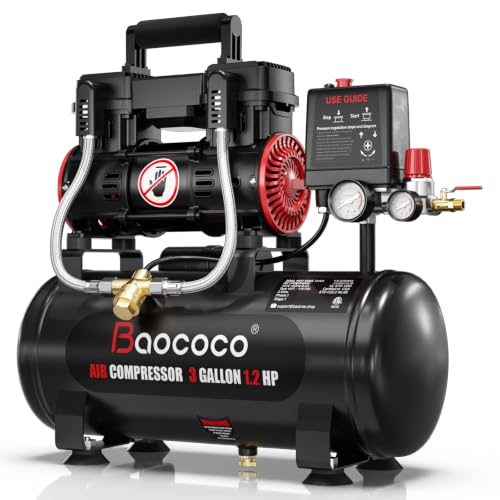 3Gallon Ultra Quiet Air Compressor with Two Quick
|
7.8/10 | Buy |
ECOMAX 3-Gallon Portable Pancake Air Compressor
Delivering 0.6 SCFM at 90 PSI with a 110 max PSI 3-gallon tank, this ultra-lightweight 16.3-pound pancake compressor is built for light-duty DIY tasks and tire inflation. It provides a convenient, low-maintenance air source complete with an 11-piece accessory kit for homeowners and hobbyists.
Pros
- Extremely lightweight at only 16.3 pounds with a balanced flip-up carry handle for easy mobility
- Generous 11-piece accessory pack provides immediate utility for tire filling, blow-off tasks, and air connections
- Oil-free pump design ensures simple, maintenance-free operation for casual home users
- Dual quick-connect couplers allow flexible setups without needing aftermarket splitters
Cons
- Rated airflow delivery of 0.6 SCFM at 90 PSI is strictly limited to intermittent fastening and inflation
- Maximum pressure threshold of 110 PSI provides less air reserve than larger 150-165 PSI contractor compressors
- Not suitable for continuous high-demand air tools like paint sprayers, sanders, or heavy impact wrenches
Ironton 3-Gallon Oil-Free Pancake Air Compressor
The Ironton 3-Gallon Oil-Free Pancake Air Compressor combines a 0.3 HP motor and 110 PSI max pressure with an ultra-portable 20.6-pound frame and fold-down handle. It is a practical, low-maintenance option for DIY homeowners and hobbyists handling light brad nailing, stapling, and tire inflation.
Pros
- Lightweight 20.6-pound build with a fold-down carry handle makes one-handed portability nearly effortless
- Wide pancake base delivers outstanding stability with a low center of gravity to prevent tipping
- Zero-maintenance oil-free pump means clean discharge air and no messy oil changes
- Protective shroud includes convenient molded wraps for both the power cord and air hose
- Large regulator knob and quick-connect coupler allow fast, intuitive line adjustments
Cons
- Modest 0.3 HP motor and 110 PSI ceiling cannot support continuous high-CFM air tools like sanders or sprayers
- 3-gallon capacity requires occasional recovery pauses during rapid fastener firing
- Bare-tool setup does not include an air hose, tire chuck, or pneumatic nailer out of the box
Practical Capabilities and Operating Boundaries of a 3 Gallon Air Compressor
Operating a compact pneumatic system requires an accurate understanding of what pressurized air can achieve in limited volumes. A three-gallon air compressor bridges the gap between pocket-sized tire inflators and cumbersome workshop tanks. It stores sufficient pressurized volume to drive mechanical fasteners and maintain household equipment without requiring heavy electrical circuits. Examining the real-world boundaries of this tank size helps craft realistic expectations for DIY maintenance, woodworking, and light automotive tasks.
Intermittent Fastening: Brad Nailers, Finish Staplers, and Pinners
Pneumatic finish tools represent one of the most effective use cases for a three-gallon compressor tank. Brad nailers, narrow-crown staplers, and 23-gauge pin nailers consume air in brief, intermittent bursts rather than continuous streams. Each actuation of an 18-gauge brad nailer consumes a small fraction of a cubic foot of air at standard operating pressures between 70 and 90 PSI. Because the tool pauses while the operator positions the next workpiece, the air tank maintains adequate line pressure without triggering continuous motor recovery.
Trimming baseboards, assembling picture frames, building custom cabinetry, and installing crown moulding fit comfortably within these performance parameters. Compact units like the ECOMAX Air Compressor 3 Gallon 110 PSI Pancake and the Ironton Oil-Free Pancake Air Compressor, 0.3 HP deliver adequate cycling volume for single-user finish work. While a high-production framing crew driving hundreds of three-inch framing nails per minute would outpace the recovery pump, an individual finish carpenter or hobbyist will rarely encounter pressure starvation during detail joinery. The low volume demand of finish nailers lets the compressor cycle on and off naturally without overheating.
Inflation and Pressure Maintenance: Tires, Sports Gear, and Small Air Bladders
Inflating passenger vehicle tires, trailer tires, wheelbarrows, and sports equipment is another standard function where three-gallon tanks thrive. Standard automotive tires typically require operating pressures between 32 and 38 PSI, which falls well below the 110 to 150 PSI maximum pressure range of these compact tanks. The pressurized buffer inside the steel vessel allows you to top off multiple tires without waiting for the motor to restart after every wheel. When pressure drops below the automatic cut-in threshold, the pump restarts quickly to replenish the tank volume.
Small portable compressors eliminate the need to drive to gas station air pumps or struggle with sluggish 12-volt vehicle inflators. With models such as the Portable Air Compressor with 3 Gallon Steel Tank, dual pressure gauges allow operators to monitor tank reserve pressure and line output simultaneously. This pressure regulation prevents accidental over-inflation of delicate bicycle tires, sports balls, and inflatable recreational gear. For complete tire seatings on large truck tires or heavy agricultural equipment, the tank volume remains limited, but routine pressure maintenance on everyday vehicles is handled with ease.
Air Blow Guns and Surface Dusting Around the Workshop
Pneumatic blow guns provide an efficient method for clearing fine sawdust from woodworking machinery, cleaning dry engine bays, and drying metal parts after solvent degreasing. A three-gallon tank provides an intense, focused jet of clean air that easily dislodges stubborn debris from tight crevices. The initial blast delivers full regulated line pressure, making short cleaning tasks remarkably swift and effective. This makes the compressor a valuable cleaning asset next to benchtop jointers, miter saws, and drill presses.
Operators must recognize that continuous blowing rapidly exhausts a three-gallon volume buffer. An unrestricted blow nozzle consumes several cubic feet of air per minute when held wide open, which drops tank pressure within twenty to thirty seconds. Once the tank depletes, air velocity drops to match the pump output, which typically delivers less than one CFM at high pressure. Using brief, controlled trigger pulses preserves tank pressure and allows the motor to maintain working velocity without running continuously.
Understanding Air Delivery: Why CFM at 90 PSI Defines Real Capability
Air delivery measured in cubic feet per minute at 90 PSI is the most critical metric for evaluating pneumatic power potential. While tank size dictates how much air sits immediately in reserve, the pump CFM rating determines how quickly the system replaces that air during active tool operation. The products in this category showcase a wide spectrum of delivery ratings suited for different workloads. For instance, the ECOMAX delivers 0.6 SCFM at 90 PSI, the FORNAX 3 Gallon Portable Air Compressor with Kits produces 0.8 CFM, and the Baococo unit delivers up to 2.2 CFM at working pressures.
Continuous pneumatic tools such as dual-action orbital sanders, high-speed die grinders, and HVLP paint sprayers typically require between 4.0 and 12.0 CFM at 90 PSI. Connecting these air-hungry tools to a small three-gallon compressor causes an immediate pressure drop that stalls the tool motor within seconds. The compressor pump will run continuously without ever catching up to the tool consumption rate, causing severe motor heat and poor finishing results. Anyone planning extensive spray painting or automotive body sanding will need a large stationary workshop compressor rather than a portable three-gallon unit.
Conversely, tools that operate on short duty cycles match the delivery curves of these smaller units cleanly. Air caulking guns, fluid evacuators, pneumatic staplers, and pneumatic riveters consume air in small increments that never outpace recovery capacity. Matching the tool consumption rating to the pump delivery rating ensures that the pressure switch cycles properly between its cut-in and cut-out thresholds. Checking the tool manufacturer specification sheet for average CFM consumption before connecting to the air line prevents unexpected stalls.
Tank Geometry and Portability: Pancake Versus Hot Dog Configurations
Physical form factor plays an influential role in how easily a small air compressor fits into your working environment. Pancake configurations, such as the FORNAX Pancake Air Compressor, 3 Gallon and the Ironton unit, feature wide, flat bases that keep the center of gravity low. This low profile provides exceptional tip resistance on jobsite subfloors, uneven garage slabs, and moving workbenches. Pancake compressors are simple to tuck under lower shelves or transport in vehicle trunks without tipping during transit.
Hot dog configurations utilize a cylindrical horizontal tank that often provides a narrower horizontal footprint. For example, the FORNAX hot dog unit weighs only 17.9 pounds, making it exceptionally nimble for carrying up ladders or navigating tight staircases. Many designs incorporate integrated handle shrouds, cord wraps, and hose retainers directly into the housing to keep accessories tidy. Choosing between pancake stability and cylindrical portability depends primarily on where you intend to store and operate the unit most frequently.
Operational Noise Levels: Quiet Dual-Piston Pumps Versus High-Speed Universal Motors
Acoustic performance is one of the most noticeable differences among modern small air compressors. Traditional jobsite compressors often use high-RPM universal motors that spin at speeds exceeding 4,000 RPM, producing noise levels around 85 to 90 decibels. High operational volume can cause severe ear fatigue in enclosed spaces like basements, utility rooms, and small residential garages. In contrasting fashion, modern low-RPM quiet compressors have reshaped the indoor woodworking and DIY landscape.
Premium quiet units utilize dual-piston pump mechanisms that run at lower rotational speeds to reduce vibration and operational clatter. The Makita MAC320Q Quiet Series 1-1/2 HP, 3 Gallon operates at a remarkably low 60 decibels while running at just 1,750 RPM. Similarly, the STEALTH Air Compressor 3 Gallon generates only 65 decibels, and the 3Gallon Ultra Quiet Air Compressor with Two Quick registers around 70 decibels with a 1.2 HP motor. These lower decibel ratings allow normal conversation in the workshop without requiring industrial ear protection for quick fastening tasks.
Selecting a quiet compressor is especially valuable when working in occupied residential homes, multi-family apartment buildings, or attached garages where family members are resting. The muted sound signature reduces neighborhood irritation while delivering dependable pneumatic power for interior trim work. In addition, lower motor rotational speeds generally subject mechanical bearings and piston seals to less frictional stress over time. If indoor comfort is a primary concern, prioritizing low decibel ratings provides an immediate upgrade in overall usability.
Oil-Free Pump Mechanics and Duty Cycle Management
Modern three-gallon air compressors overwhelmingly rely on oil-free pump designs with Teflon-coated piston rings and precision cylinders. Oil-free architecture provides distinct advantages for residential owners because it eliminates regular oil level checks, messy oil changes, and the risk of oil contamination in paint lines. These units also start much more reliably in cold weather because there is no thickened crankcase oil resisting initial motor rotation. This maintenance-free construction makes them convenient tools for occasional DIYers who store the compressor for months between uses.
Despite their convenience, oil-free pumps require strict adherence to manufacturer duty cycle recommendations. Most consumer-grade portable compressors operate on a 50 percent duty cycle, meaning the pump motor should rest for as much time as it runs during heavy cycles. Exceeding this duty cycle generates intense friction inside the cylinder walls, which can trigger thermal overload protection switches or degrade piston rings prematurely. Allowing the pump to cool naturally between extended pressurization cycles preserves mechanical longevity and maintains steady performance over years of service.
Tank Condensation and Moisture Management
Compressing ambient air inevitably draws airborne moisture into the steel storage tank through the intake filter. As hot pressurized air cools against the steel inner walls of the three-gallon reservoir, water condenses and settles at the bottom of the cylinder. If left unaddressed, stagnant moisture accelerates internal tank corrosion, reduces usable storage volume, and eventually sprays down the hose into connected pneumatic tools. Moisture inside nail guns can wash away factory lubricants and corrode delicate internal o-rings.
Regular draining through the bottom tank drain valve is an essential maintenance habit after every work session. Many models feature bottom-mounted drain petcocks or quarter-turn brass valves designed to expel collected water rapidly under low residual pressure. Depressurizing the tank slightly before opening the valve blows trapped moisture out cleanly without violent air discharge. Leaving the drain valve slightly cracked open during seasonal storage keeps the tank interior dry and dramatically extends the structural life of the steel vessel.
Practical Air Tool Compatibility Summary
Reviewing tool suitability before starting a project prevents equipment damage and ensures clean craftsmanship. A three-gallon compressor is fully capable of running 18-gauge brad nailers, 16-gauge finish nailers, 23-gauge micro pinners, pneumatic staplers, air grease guns, and tire inflation chucks. It also handles air brushes for hobby craft models, low-volume detail texture touch-ups, and intermittent blow gun dust removal with complete reliability. For these low-consumption tools, the three-gallon tank provides an ideal combination of rapid mobility and steady pressure regulation.
Conversely, users should avoid pairing a three-gallon unit with continuous high-demand pneumatic tools. Rotary air sanders, cut-off wheels, half-inch impact wrenches, pneumatic die grinders, air chisels, and full-size HVLP automotive paint sprayers demand far more continuous CFM than these compact pumps can produce. Attempting to run high-torque tools on a small tank leads to immediate torque drop, uneven finishes, and continuous pump strain. For heavy mechanical repair and continuous surface preparation, stepping up to a 20-gallon or 60-gallon stationary compressor system remains the appropriate engineering choice.
A three-gallon air compressor serves as an outstanding, versatile solution for DIY homeowners, finish carpenters, and automotive hobbyists who require portable, intermittent pneumatic power. By matching realistic tool CFM demands to the pump capacity, you can enjoy dependable fastener driving, rapid tire maintenance, and hassle-free cleanup without sacrificing floor space or budget. Respecting duty cycle limits, draining accumulated moisture regularly, and pairing the unit with appropriate low-demand tools ensures this compact workhorse remains a reliable fixture in your workshop for years to come.
About the author
Glenda Taylor has extensive experience in residential construction, remodeling, home improvement, and tool use. Her practical approach to equipment evaluation focuses on usability, performance, safety, and value—helping DIYers and workshop users make better-informed decisions about compressors and related tools.