
How Big of Air Compressor Do I Need: Sizing Guide for 2026
Determine how big of air compressor do i need for paint sprayers, nailers, and impact wrenches. Review CFM and tank sizing needs for October 2026.
 By Tony Carrick
Updated October 8, 2026
By Tony Carrick
Updated October 8, 2026
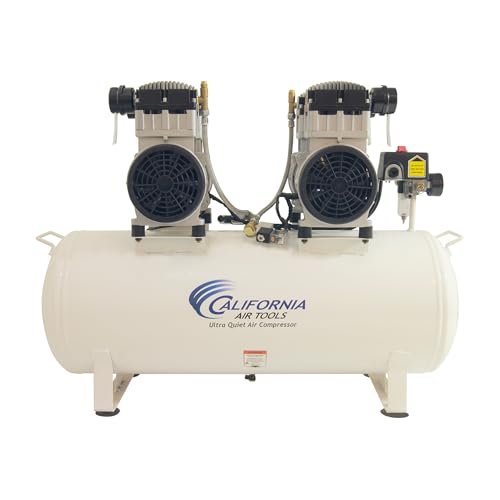
Pneumatic tools sputtering or stalling midway through a project usually signals a severely starved air line. Many workshop owners struggle to determine how big of air compressor do i need because marketing labels frequently emphasize peak motor ratings rather than continuous air delivery. Choosing the proper air compressor requires understanding the direct relationship between tool air consumption, storage tank capacity, and electrical circuit limits. A sizing mismatch can lead to continuous motor cycling, sudden line pressure drops, or tripped circuit breakers on standard household outlets.
Air demand is primarily measured in cubic feet per minute at specific operating pressures, typically 90 PSI for heavy pneumatic tools and 40 PSI for finishing equipment. While portable units handle intermittent fasteners like brad nailers with minimal air reserves, continuous tools quickly overwhelm undersized tanks. Matching your planned pneumatic workload to continuous pump output and usable tank volume ensures steady pressure delivery across long sessions. Evaluating your specific garage or jobsite demands helps identify the exact compressor configuration needed to keep your pneumatic tools running smoothly.
| Award | Product | ACR Score About ACR ScoreThe ACR Score is our own rating from 0 to 10, based on performance, design and build, ease of use, and value. It reflects independent research and is never influenced by manufacturers, retailers, or affiliate commissions. Learn more › | |
|---|---|---|---|
| Best Overall |
California Air Tools 20040C Powerful 4.0 HP
|
9.2/10 | Buy |
| Best Budget |
 California Air Tools 2010A 1.0 HP Ultra Quiet
|
9.1/10 | Buy |
| Best Value |
 California Air Tools CAT-4610S Ultra Quiet
|
9.1/10 | Buy |
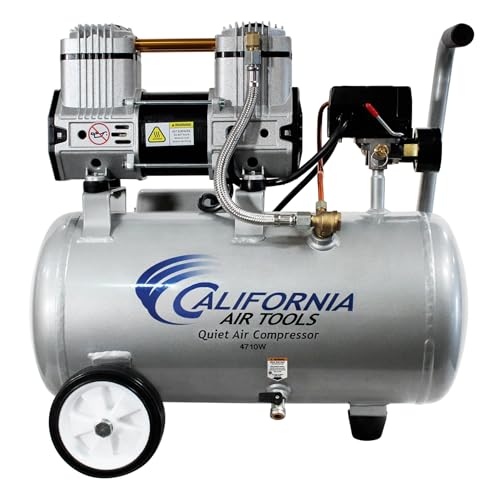 California Air Tools CAT-4710W 1.0 HP Quiet
|
8.3/10 | Buy | |
 California Air Tools 4620AC Powerful 2.0 HP
|
8.1/10 | Buy | |
| Best Premium |
 California Air Tools 20015HP 1.5 HP Ultra Quiet
|
8.1/10 | Buy |
 California Air Tools CAT-60040CAD 4.0 HP
|
8.1/10 | Buy | |
 BUNKER INDUST 12V Air Compressor
|
8.0/10 | Buy | |
 California Air Tools 20020 2.0 HP Ultra Quiet
|
7.8/10 | Buy |
Essential Engineering Metrics for Sizing an Air Compressor
Sizing an air compressor accurately prevents premature motor burnout, frustrating workflow delays, and inadequate pneumatic tool performance. Compressed air systems rely on a balanced relationship between pump air displacement, working pressure, reservoir storage, and available electrical power. Matching compressor output to your highest-demand pneumatic tool ensures consistent operating pressure across all workshop projects. Reviewing the core engineering metrics below will clarify exactly what size compressor your garage or jobsite demands.
CFM Versus PSI: The Foundation of Compressor Sizing
Pneumatic tools require a specific volume of compressed air delivered at a designated pressure level to function at their rated capacity. Pounds per square inch, commonly abbreviated as PSI, measures the pressure of the air stream, while cubic feet per minute, or CFM, measures the continuous flow volume. Most heavy pneumatic workshop tools require 90 PSI to achieve full driving torque or fastening depth, whereas light-duty finishing equipment often operates near 40 PSI. When an air compressor fails to deliver the required CFM at 90 PSI, line pressure drops rapidly and the connected tool stalls.
Compressor manufacturers rate pump output at distinct pressure levels to reflect real-world pneumatic demands. For example, a 1.0 horsepower pump like the one on the California Air Tools 2010A delivers 3.10 CFM at 40 PSI but steps down to 2.20 CFM at 90 PSI. Higher-output units like the California Air Tools 4620AC deliver 6.40 CFM at 40 PSI and 5.30 CFM at 90 PSI. Comparing your pneumatic tool ratings directly against the compressor output at 90 PSI ensures you evaluate realistic air delivery rather than unrestricted free-air claims.
Air Consumption Profiles: Intermittent Versus Continuous Tools
Pneumatic equipment falls into two distinct operational categories based on air consumption profiles. Intermittent tools include finish staplers, brad nailers, and framing guns, which consume air only in quick, momentary pulses. Because these fastening tools discharge air for a fraction of a second per cycle, compact compressors with modest CFM ratings can support them effectively. Automotive impact wrenches used for occasional wheel changes also fall into this category because the motor operates in brief working bursts between fasteners.
Continuous-demand tools require an uninterrupted flow of compressed air to maintain rotational speed and mechanical torque. Random orbital sanders, die grinders, abrasive cut-off wheels, and paint spray guns consume large amounts of air throughout the entire operating period. Running a continuous-draw tool on an undersized compressor causes line pressure to collapse almost immediately, forcing the operator to wait while the pump recovers. To prevent pressure starvation, calculate the air requirement of your highest-consumption tool and add a 25 percent safety margin before selecting a compressor.
Tank Capacity and Buffer Volume: Delaying Line Pressure Drop
Air storage tank capacity serves as a pressurized pneumatic buffer that stores energy between active pumping cycles. A larger storage tank does not generate additional airflow volume, but it provides a reservoir of compressed air that delays pressure drop during heavy tool use. Compact tanks between 2.0 and 4.7 gallons, such as the California Air Tools CAT-4710W or California Air Tools CAT-4610S, work exceptionally well for trim carpentry where jobsite mobility is critical. However, continuous tools quickly drain small air tanks, forcing the electric motor to run constantly without cooling down.
Larger air storage vessels extend tool operating intervals and allow the compressor pump to cycle within safe thermal limits. A 20-gallon tank, such as the one featured on the California Air Tools 20020, provides ample buffer capacity for automotive mechanics running air ratchets and moderate impact wrenches. Dedicated workshops tackling full-panel automotive spraying or heavy woodworking benefit from massive reservoirs, like the 60-gallon ASME tank on the California Air Tools CAT-60040CAD. This extensive volume absorbs continuous tool demand without subjecting the motor to rapid start-stop cycling.
Tank Fill Times and Pressure Switch Recovery Differentials
Tank recovery speed measures how quickly a compressor recharges its storage tank from cut-in pressure back up to cut-out pressure. Pressure switches typically activate the electric motor when tank pressure drops to approximately 90 PSI and shut it off once pressure reaches 120 PSI or higher. The California Air Tools 2010A demonstrates rapid cycling performance, recovering its 2.0-gallon aluminum tank from 90 PSI to 120 PSI in only 14 seconds. Rapid recovery minimizes waiting periods during repetitive nailing, allowing tradespeople to maintain efficient installation tempos.
Initial tank fill time represents the duration required to pressurize an empty receiver vessel from zero up to the factory cut-out threshold. A portable model like the California Air Tools CAT-4710W pressurizes its 4.7-gallon steel tank in approximately 78 seconds from a completely empty state. When tank volume increases to 20 or 60 gallons, initial pressurization takes several minutes, but the resulting air reserve cushions against sudden pressure drops. Evaluating cycle times helps you strike the right balance between portable rapid-recovery units and high-capacity stationary air receivers.
Single-Stage Versus Two-Stage Compression Mechanics
Compression pump architecture influences both maximum operating pressure and the density of stored air. Single-stage air compressors draw atmospheric air into a cylinder and compress it in a single piston stroke up to maximum operating pressures between 120 and 125 PSI. These systems remain popular in home garages and light commercial jobsites due to their mechanical simplicity and dependable operation. Most portable electric compressors utilize single-stage pumps, providing solid airflow for nailers, airbrushes, and tire inflators.
Two-stage compressors compress intake air in a primary low-pressure cylinder before routing it through an intercooler into a smaller high-pressure cylinder. The California Air Tools 20015HP utilizes an oil-free two-stage pump mechanism that achieves maximum operating pressures up to 175 PSI. Storing air at 175 PSI packs significantly more air mass into a 20-gallon vessel than a standard 125 PSI receiver can hold. This elevated storage pressure creates an extended operating buffer before the tank regulator drops below the working pressure needed for pneumatic tools.
Evaluating Motor Horsepower: Continuous Running HP Versus Peak Labels
Motor horsepower ratings on consumer air compressors can mislead buyers when peak marketing labels overshadow true continuous mechanical power. Inflated peak horsepower numbers often reflect the momentary surge power drawn at startup rather than continuous operating output. Inspecting the continuous running horsepower rating provides an accurate indicator of pump capacity and sustained airflow delivery. A true 1.0 horsepower motor, like the design on the California Air Tools CAT-4610S, reliably delivers 2.20 CFM at 90 PSI without exaggerating its sustained capability.
Higher true motor horsepower directly increases the volume of air compressed per minute across all working pressures. Upgrading to a 2.0 horsepower motor, found on models like the California Air Tools 20020, boosts air delivery up to 5.30 CFM at 90 PSI. Heavy industrial installations require substantial mechanical power, such as the twin 2.0 horsepower motors on the California Air Tools CAT-60040CAD that produce 10.60 CFM at 90 PSI. Focusing on verified running horsepower helps you avoid underpowered machines that struggle during demanding shop tasks.
Low-RPM Dual-Piston Pumps and Noise Reduction
Pump rotational speed directly impacts friction, operating heat, acoustic output, and long-term mechanical wear. Traditional contractor compressors frequently run universal motors at speeds exceeding 3,400 RPM, generating intense mechanical friction and high-pitched noise. In contrast, oil-free dual-piston pumps from California Air Tools operate at a low 1680 RPM. These reduced rotational speeds lower friction and operating temperatures, allowing piston rings and cylinder sleeves to achieve lifespans exceeding 3000 operating hours.
Lower operating speeds also yield remarkable noise reductions in enclosed workshop spaces and residential garages. The California Air Tools 20040C uses a 4.0 horsepower motor spinning at 1680 RPM, maintaining sound output at a manageable 75 decibels. Furthermore, dual-piston configurations balance reciprocating forces across opposing cylinders, reducing cabinet vibration and floor hum. Selecting a low-RPM dual-piston pump provides a quiet workspace environment while substantially extending pump durability.
Electrical Circuit Compatibility: Amperage Draw and Voltage Needs
Electrical circuit compatibility is an essential consideration when selecting an air compressor for a home garage or workshop. Standard residential wall outlets provide 110V or 120V power on 15-amp or 20-amp branch circuits. Compact compressors like the California Air Tools CAT-4710W draw only 7.5 amps, allowing trouble-free operation on shared household outlets. Similarly, the California Air Tools CAT-4610S operates on 8.5 amps, making it compatible with portable generators rated for 2500 watts on remote jobsites.
Larger 2.0 horsepower compressors draw closer to circuit thresholds and require dedicated electrical lines. The California Air Tools 4620AC and California Air Tools 20020 pull 14 amps during full compression load, which can trip a 15-amp breaker if lighting or other tools share the branch circuit. High-output commercial units like the California Air Tools 20040C require a dedicated 220V 60Hz circuit supplying a 14-amp draw. Confirming your workshop electrical infrastructure prevents frustrating breaker trips and protects compressor motor windings from low-voltage overheating.
High-Volume Mobile Inflation and 12V Direct-Drive Systems
Vehicle tire inflation and off-road support present specialized airflow requirements that differ from workshop pneumatic piping. Off-road trucks and sport utility vehicles that air down for traction require rapid reinflation before returning to high-speed highways. Dedicated 12V direct-drive inflators like the BUNKER INDUST 12V Air Compressor eliminate bulky storage tanks by delivering pressurized air straight to the tire valve. Supplying up to 12.36 CFM and 150 PSI, this dual-cylinder inflator seats tire beads and inflates large 4WD tires from 18 to 38 PSI in slightly over one minute.
Mobile 12V direct-drive inflators incorporate specialized alloy cylinders and external cooling fins to dissipate operational heat during extended inflation cycles. Heavy-duty Anderson-style electrical plugs ensure stable power transfer directly from the vehicle battery without melting standard auxiliary power sockets. Built-in electronic safety systems protect against overheating, overcurrent, and overpressure during intense outdoor operation. For off-road trail recovery and vehicle tire maintenance, a high-CFM direct-drive 12V unit often provides better utility than transporting an electric tank compressor.
Operational Decibels and Workspace Placement Considerations
Sound pressure ratings determine whether an air compressor can operate indoors without disrupting household living spaces or causing hearing strain. Conventional high-speed jobsite compressors regularly emit sound levels between 80 and 85 decibels, creating an intense roar in enclosed garages. Low-noise models like the California Air Tools 2010A and California Air Tools CAT-4610S operate at an ultra-quiet 60 decibels. At 60 decibels, the pump generates sound comparable to normal conversation, allowing trim carpenters to work inside occupied homes comfortably.
Larger stationary compressors have also adopted acoustic mitigation to create pleasant working environments. Mid-sized 20-gallon units like the California Air Tools 20015HP and California Air Tools 20020 operate at 70 decibels, which remains quiet enough for attached garage workshops. Even heavy-duty 4.0 horsepower machines, such as the California Air Tools CAT-60040CAD, produce only 75 decibels under full compression load. Choosing a low-decibel machine eliminates the need for expensive sound baffles or detached compressor sheds.
Moisture Accumulation, Condensation Drainage, and Tank Maintenance
The physics of air compression naturally forces ambient atmospheric moisture to condense along the interior walls of steel storage tanks. If left undrained, accumulated moisture pools at the bottom of the receiver, accelerating internal rust and degrading structural tank integrity over time. Water vapor carried down pneumatic hoses can also ruin spray paint finishes, contaminate woodworking projects, and corrode internal pneumatic tool mechanisms. Regularly purging moisture from the storage tank is essential for maintaining dry air delivery and preventing internal corrosion.
Draining methods depend heavily on the specific tank design and valve hardware installed on the unit. Portable compressors typically feature manual drain valves that operators should open at the end of each working day to purge pooled condensation. Commercial stationary models, such as the California Air Tools CAT-60040CAD, incorporate factory-installed EZ-1 automatic drain valves with programmable timers. This automatic valve purges condensation on a preset schedule, eliminating manual maintenance while ensuring the large 60-gallon ASME tank stays free from standing water.
Matching Compressor Size to Specific Workshop and Jobsite Tasks
Selecting the right compressor size ultimately requires matching your specific pneumatic tool inventory to realistic compressor output metrics. Finish carpenters running brad nailers, pinners, and small staplers require only 1.0 to 2.0 CFM at 90 PSI with a compact 2-gallon to 4.7-gallon tank. Framing contractors and roofing crews operating multiple pneumatic nailers simultaneously need between 4.0 and 6.0 CFM at 90 PSI supported by a 4.6-gallon twin tank or larger reservoir. Home mechanics using impact wrenches intermittently benefit from a 20-gallon tank delivering 4.0 to 5.3 CFM at 90 PSI.
Demanding applications like continuous automotive sanding, abrasive blasting, and full-vehicle painting require commercial-grade air volume of 10.0 CFM or higher at 90 PSI. A stationary 60-gallon compressor or a 4.0 horsepower pump system prevents the severe pressure drops that stall sanders and ruin spray finishes. Meanwhile, off-road enthusiasts achieve optimal mobile performance using dedicated high-output 12V inflators engineered for vehicle tire inflation. Sizing your compressor based on sustained CFM consumption rather than tank size alone ensures dependable pneumatic performance across every application.
Balancing CFM delivery, storage tank volume, operating noise levels, and electrical circuit capacity ensures your compressed air system matches your actual mechanical requirements. Always verify that your garage electrical panel supports the compressor running amperage, and check manufacturer CFM ratings for your highest-draw air tools before making a purchase. Choosing an air compressor with adequate airflow reserves guarantees smooth operation, reduces pump wear, and keeps your pneumatic tools performing at their best.
About the author
Tony Carrick is an experienced product researcher and writer specializing in tools, home improvement, automotive maintenance, and consumer equipment. With extensive experience reviewing tools and tackling hands-on renovation projects, he brings a buyer-focused perspective to compressor performance, usability, and overall value.