
What Size Air Compressor for Impact Wrench: Sizing and Setup Guide for 2026
What size air compressor for impact wrench jobs you need depends on CFM output, tank capacity, and operating pressure in November 2026.
 By Bob Beacham
Updated October 8, 2026

Struggling with a stubborn lug nut that refuses to break loose often points to an underpowered pneumatic air supply rather than a faulty impact gun. Pneumatic impact wrenches require a sudden surge of high-volume airflow to spin internal twin-hammer mechanisms and strike with peak torque. When a supply tank runs dry within seconds, line pressure plummets, leaving heavy-duty tools like the Ingersoll Rand 231C or AEROPRO tools starving for air. Understanding what size air compressor for impact wrench requirements means looking past simple tank storage and evaluating true dynamic air delivery at ninety pounds per square inch.
Most home mechanics mistakenly assume that any small portable pancake unit can run automotive tools, only to discover constant motor cycling and stalled fasteners. Matching your pneumatic wrench to the right compressor involves balancing continuous CFM output against practical receiver tank buffers. If you need a complete breakdown of tank dimensions across various garage tools, our guide on sizing an air compressor for an impact wrench explores how tank volume impacts fastener breakaway power. Taking the time to evaluate airflow requirements, operating pressure, and air hose diameter ensures your tools deliver their advertised breakaway torque every time you pull the trigger.
| Award | Product | ACR Score About ACR ScoreThe ACR Score is our own rating from 0 to 10, based on performance, design and build, ease of use, and value. It reflects independent research and is never influenced by manufacturers, retailers, or affiliate commissions. Learn more › | |
|---|---|---|---|
| Best Overall |
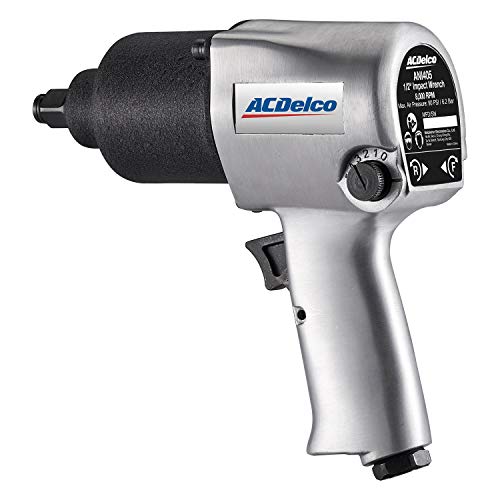
ACDelco ANI405A Heavy Duty 1/2-Inch Pneumatic
|
9.2/10 | Buy |
| Best Premium |
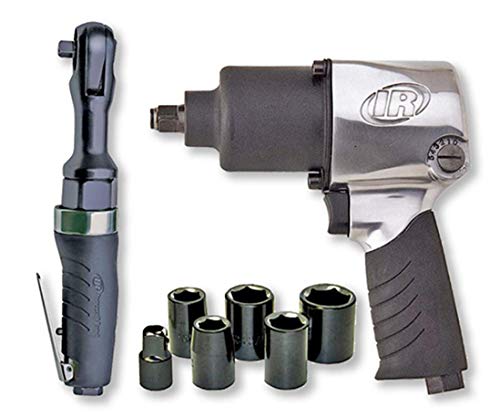 Ingersoll Rand Edge Series 2317G 1/2-Inch Air |
9.1/10 | Buy |
| Best Value |
 VEVOR 1/2-Inch 1400 Ft-Lb Air Impact Wrench |
8.9/10 | Buy |
 Ingersoll Rand 231C 1/2-Inch Air Impact Wrench |
8.9/10 | Buy | |
 Dynamic Power 50-Piece Pneumatic Air Tool Kit |
8.8/10 | Buy | |
| Best Budget |
 AEROPRO 1/2-Inch Air Impact Wrench |
8.6/10 | Buy |
 BESWELL BW-112BN 1/2-Inch Air Impact Wrench |
8.3/10 | Buy | |
 AEROPRO A398 1/2-Inch Air Impact Wrench |
8.3/10 | Buy | |
 Trivd Frol 1/2-Inch Air Impact Wrench |
8.3/10 | Buy | |
 Ingersoll Rand 231HA-2 1/2-Inch Drive Air Impact |
8.3/10 | Buy |
ACDelco ANI405A Heavy Duty 1/2-Inch Pneumatic
The ACDelco ANI405A is a heavy-duty 1/2-inch pneumatic impact wrench engineered with a twin hammer clutch mechanism that delivers up to 500 ft-lbs of torque with a 5-speed regulator for controlled shop fastening. It offers dependable lug nut busting power and workshop utility for auto mechanics, DIYers, and garage hobbyists paired with a compatible air compressor setup.
Pros
- Rugged twin hammer mechanism delivers dependable impact force rated up to 500 ft-lbs
- Integrated 5-speed regulator provides adjustable power control for diverse fastening tasks
- Substantial 5.72-pound chassis provides durable metallic heft for demanding mechanical work
- Standard 1/2-inch square drive accepts widely available automotive impact sockets
Cons
- Requires an air compressor with adequate air volume and storage to maintain continuous operating pressure during heavy duty cycles
- At 5.72 pounds, it may cause hand fatigue during extended overhead mechanical jobs compared to lightweight composite alternatives
Ingersoll Rand Edge Series 2317G 1/2-Inch Air
The Ingersoll Rand Edge Series 2317G combo kit pairs a 500 ft-lb 1/2-inch impact wrench and a 2.6-pound air ratchet for dependable vehicle maintenance. It is a practical, durable pneumatic package for garage hobbyists and DIY mechanics with a capable air supply.
Pros
- Delivers up to 500 ft-lbs of maximum torque to break loose stubborn vehicle lug nuts and suspension bolts
- Lightweight 2.6-pound air ratchet maneuvers easily inside cramped engine bays and beneath dashboards
- Twin hammer mechanism provides smooth, balanced impact force with reduced internal vibration
- Complete kit includes five utility sockets and a durable blow-molded carrying case
Cons
- High rotary airflow demand exceeds the continuous capacity of compact 1-gallon to 6-gallon pancake air compressors
- Does not include quick-connect air fittings, whip hoses, or thread sealant out of the box
- Air ratchet top speed of 170 RPM requires manual initial breakaway for extremely over-torqued fasteners
VEVOR 1/2-Inch 1400 Ft-Lb Air Impact Wrench
Delivering up to 1,400 foot-pounds of nut-busting torque, this pneumatic impact wrench pairs high breakaway power with a compact 4.6-pound body. The included 11-piece CR-V metric socket set and dedicated carry case make it a practical kit for automotive maintenance.
Pros
- High 1,400 ft-lbs breakaway torque for tough fasteners
- Lightweight 4.6-pound body reduces arm fatigue
- Includes 11 durable CR-V impact sockets
- Four-position regulator provides straightforward power control
- Integrated lubrication adaptor simplifies tool oiling
Cons
- Requires an external air compressor to operate
- Socket set includes metric sizes only without SAE options
Ingersoll Rand 231C 1/2-Inch Air Impact Wrench
The Ingersoll Rand 231C is a classic 1/2-inch pneumatic impact wrench delivering up to 600 foot-pounds of reverse torque with a durable twin-hammer mechanism. Requiring a minimum 90 PSI air supply and a 3/8-inch hose, it is an ideal choice for DIY mechanics and garage workshops tackling tire rotations and bolt extraction.
Pros
- Up to 600 foot-pounds of reverse breakaway torque easily removes stubborn vehicle lug nuts and seized bolts
- Durable twin-hammer mechanism delivers smooth, reliable impacts with reduced tool vibration
- Adjustable power regulator offers precise forward power selection to prevent over-tightening
- Manageable 5.8-pound weight and 7.3-inch length allow convenient access in tight automotive spaces
- Pressure-fed lubrication system promotes long-term mechanical reliability in busy garage settings
Cons
- Requires an air compressor capable of maintaining at least 90 PSI and a 3/8-inch air hose (sold separately)
- Small portable or pancake air compressors will quickly deplete their air reserve during extended burst cycles
- Front exhaust port can blow loose dust and debris forward toward the work surface if positioned close to dirty components
Dynamic Power 50-Piece Pneumatic Air Tool Kit
The Dynamic Power D-W3-50K 50-piece pneumatic air tool kit bundles an impact wrench, ratchet wrench, air hammer with chisels, and a blow gun into a portable 17-pound organized case. It is a practical starter set for DIY garage owners and home mechanics who need versatile air tools for fastening, cutting, and workshop cleanup.
Pros
- Comprehensive 50-piece pneumatic tool and accessory selection for diverse garage and DIY jobs
- Includes core air tools: an impact wrench, ratchet wrench, air hammer with 5 chisels, and a blow gun
- Sturdy organized blow-molded carrying case ensures quick access and secure vehicle transport
- Practical all-in-one value for home mechanics setting up their first pneumatic workshop collection
Cons
- Requires pairing with an adequately sized workshop air compressor to sustain continuous tool operation
- Compact pancake air compressors may struggle to supply sufficient continuous CFM for the impact wrench and air hammer
- Does not include an air hose inside the carrying case
AEROPRO 1/2-Inch Air Impact Wrench
The AEROPRO 1/2-inch air impact wrench delivers up to 1,200 ft-lbs of loosening torque with a lightweight 4.64-pound housing and twin hammer mechanism operating at 90 PSI. It is an ideal addition for garage workshop owners and DIY mechanics who already maintain a reliable pneumatic air supply and need serious breakaway force for vehicle maintenance.
Pros
- High 1,200 ft-lbs loosening torque breaks free stubborn vehicle lug nuts and rusted suspension bolts
- Lightweight 4.64-pound body substantially reduces arm fatigue compared to traditional all-metal impact wrenches
- Three-speed forward dial provides regulated speed control to prevent over-torquing during initial fastener seating
- Rear exhaust port keeps air blast and debris directed away from the technician
Cons
- Requires an external air compressor with sufficient air volume delivery that is not included with the bare tool
- Not practical for small 1-to-6 gallon pancake compressors due to the high intermittent CFM demand of 1/2-inch rotary air tools
- Bare-tool configuration requires users to supply their own 1/4-inch quick-connect fitting, 3/8-inch air hose, and impact sockets
BESWELL BW-112BN 1/2-Inch Air Impact Wrench
Built for heavy-duty automotive and industrial jobs, this pneumatic wrench delivers 1,180 ft-lbs of nut-busting torque in a manageable 4.62-pound composite frame. Its twin-hammer mechanism and three-speed forward regulator give mechanics balanced power and vibration control for all-day use.
Pros
- High breakaway torque quickly frees seized fasteners
- Lightweight composite frame reduces arm fatigue
- Smooth twin-hammer design dampens operating vibration
- Internal cooling system supports prolonged heavy use
Cons
- Requires a compatible high-pressure shop air compressor
- Full-size housing can be cumbersome in tight clearances
AEROPRO A398 1/2-Inch Air Impact Wrench
The AEROPRO A398 is a 1/2-inch pneumatic impact wrench delivering up to 1380 ft-lbs of loosening torque and 810 ft-lbs of working torque at 90 PSI via a twin-hammer mechanism. Weighing 5.28 pounds with an aluminum body, it suits DIY mechanics and garage hobbyists who have an air compressor capable of supplying steady 90 PSI pneumatic line pressure.
Pros
- High breakaway power with up to 1380 ft-lbs of loosening torque at 90 PSI
- Twin-hammer design delivers balanced, smooth impact strikes on heavy fasteners
- Manageable 5.28-pound aluminum body reduces fatigue during vehicle maintenance
- Rear exhaust directs exhaust air and debris away from the immediate work area
- Includes a 1/4-inch NPT air fitting, spanner, and oil bottle out of the box
Cons
- Requires a dedicated air compressor with sufficient CFM reserves, as small pancake units can only manage very short bursts
- Pneumatic tool oil is not pre-installed, requiring routine manual oiling before each use
- High torque output demands caution on smaller automotive fasteners to avoid stripped threads
Trivd Frol 1/2-Inch Air Impact Wrench
The Trivd Frol 1/2-inch air impact wrench combines a twin-hammer mechanism with a lightweight 4.73-pound composite body, delivering up to 1500 ft-lbs of advertised torque at 90 PSI. It is a practical, budget-conscious choice for garage hobbyists and DIY auto mechanics tackling lug nuts and suspension hardware with a capable pneumatic air setup.
Pros
- High advertised torque output of up to 1500 ft-lbs for breaking loose seized vehicle fasteners and stubborn lug nuts
- Lightweight 4.73-pound composite housing reduces user arm and wrist strain compared to heavier all-metal impact guns
- Twin-hammer impact mechanism and 45mm cylinder provide balanced, smooth blows during heavy fastener work
- Multi-speed adjustment knob offers three forward speeds and full reverse power for precise fastening control
Cons
- Requires a substantial air supply at 90 PSI; compact pancake compressors will struggle to sustain air volume during continuous impact use
- Manufacturer indicates reaching maximum torque requires higher airflow and pressure than standard 90 PSI regulation
- Bare-tool package requires users to provide their own air hose, quick-connect fittings, and pneumatic tool oil
Ingersoll Rand 231HA-2 1/2-Inch Drive Air Impact
The Ingersoll Rand 231HA-2 is a heavy-duty 1/2-inch pneumatic impact wrench delivering up to 600 ft-lbs of reverse torque with an extended 2-inch anvil and twin-hammer mechanism. Designed for automotive garages and workshop tire service, it requires an air compressor supplying at least 90 PSI through a 3/8-inch air hose.
Pros
- Delivers up to 600 ft-lbs of reverse torque for breaking loose stubborn lug nuts and heavy chassis hardware.
- Twin-hammer mechanism and pressure-fed lubrication provide reliable durability and smooth power delivery.
- The 2-inch extended anvil offers practical clearance when servicing deep wheel wells and automotive rims without extra adapters.
- Adjustable power regulator gives operators straightforward forward torque management.
Cons
- Requires a minimum of 90 PSI and a 3/8-inch air hose, demanding more continuous air volume than standard compact pancake compressors can typically sustain.
- Sold as a bare tool without pneumatic couplers, air hose, or air compressor included.
- At 6.1 pounds, extended one-handed overhead use under a vehicle lift may contribute to arm fatigue.
Essential Air Compressor Sizing Factors for Pneumatic Impact Wrenches
Core Sizing Thresholds: Delivered CFM and Receiver Tank Volume
Determining the correct compressor size for an air impact wrench centers on two key specifications: airflow delivery measured in cubic feet per minute and receiver tank storage measured in gallons. Most standard half-inch pneumatic impact wrenches require an air volume between four and five CFM at ninety PSI under sustained load. A compressor capable of supplying at least five CFM at ninety PSI ensures that the impact mechanism maintains its full rotational force during prolonged fastener removal. While smaller compressors can occasionally spin an impact anvil, they frequently starve the tool of air before seized bolts break free.
Tank capacity acts as an essential buffer that supplies the initial burst of air before the electric motor kicks in to replenish the vessel. For general automotive maintenance, a receiver tank between twenty and thirty gallons offers the ideal balance of reserve air and practical footprint. If your workload involves only occasional tire rotations or single-fastener removals, an eight to ten gallon portable tank can suffice. However, relying on a small tank means pausing frequently to let the pump rebuild pressure between wheels.
Operating pressure also plays a direct role in maintaining the rated torque of pneumatic tools. Half-inch impact wrenches, including models from Ingersoll Rand and ACDelco, are engineered to operate at a working pressure of ninety PSI at the tool inlet. A compressor tank that charges up to one hundred thirty-five or one hundred fifty PSI creates a usable pressure differential above that ninety PSI threshold. That stored pressure difference allows you to work continuously without suffering immediate torque dropouts.
Delivered CFM at Ninety PSI Versus Peak Horsepower Labels
Air delivery ratings provide the most reliable metric of whether a compressor pump can keep up with pneumatic power tools. Manufacturers often list standard cubic feet per minute alongside simple CFM, which can create confusion for prospective buyers. What matters most for an automotive impact wrench is the delivered volume specifically calculated at ninety PSI. If a compressor only advertises high output at forty PSI, its actual output at working pressure will be significantly lower.
Marketing materials often emphasize peak surge horsepower rather than continuous running horsepower. Peak ratings represent the momentary surge an electric motor draws at startup before settling into its normal running speed. A motor labeled with an inflated peak rating may actually produce less than two true running horsepower on a standard household outlet. Focusing strictly on certified CFM at ninety PSI cuts through misleading labels and gives an honest picture of capability.
When an impact wrench consumes more air than the pump can compress, the tank pressure steadily declines while the motor runs non-stop. This air starvation causes the twin-hammer mechanism to slow down, drastically reducing the tool’s breakaway torque. To prevent this performance bottleneck, aim for a pump output that meets or slightly exceeds your impact wrench’s average air consumption. Having a twenty percent safety margin in CFM delivery keeps the tool running at peak velocity without overworking the pump.
Receiver Tank Capacity and Usable Air Reserve Buffers
The physical size of the air tank determines how long you can operate your impact wrench before the pump must cycle on. Impact wrenches operate intermittently, meaning you squeeze the trigger for a few seconds to loosen a bolt, release it, and move to the next fastener. A twenty-gallon reservoir holds enough compressed air to absorb these rapid trigger bursts across multiple lug nuts without dropping line pressure. Without adequate tank volume, the line pressure drops below operating standards almost immediately.
Compact pancake and hot-dog compressors holding six gallons or less are designed primarily for trim nailers and tire inflation. While a six-gallon unit can break loose a single loose bolt, stubborn suspension hardware will drain the tank in seconds. Once pressure dips below the ninety PSI regulator setting, the wrench loses its hammering momentum. Waiting for a small pump to recover between individual bolts quickly turns a simple wheel change into an exercise in frustration.
Larger vertical stationary tanks holding sixty gallons eliminate recovery delays entirely for busy home workshops. These large receivers store enough pressurized air that an impact gun can run through extensive mechanical teardowns without stressing the motor. The pump cycles on less frequently, which reduces heat buildup within the pump head and extends valve life. For most residential garages, a portable twenty to thirty gallon horizontal tank strikes the practical middle ground between continuous airflow and workshop floor space.
Dynamic Pressure Drop and Supply Line Plumbing Restrictions
Even a massive commercial air compressor will fail to power an impact wrench properly if the plumbing restricts air delivery. Dynamic pressure drop refers to the pressure loss that occurs inside hoses and fittings while air is actively moving. While your regulator gauge may display ninety PSI when the wrench is idle, that pressure can plunge to sixty PSI the moment you pull the trigger. Undersized air lines and restrictive quick-connect fittings are the primary culprits behind this invisible power loss.
Standard pneumatic tools frequently ship with quarter-inch air hose fittings, but high-torque impact wrenches perform far better with three-eighths-inch internal diameter hoses. A three-eighths-inch hose delivers significantly more air volume over a fifty-foot run than a narrow quarter-inch line. Tools like the Ingersoll Rand 231HA-2 or the Trivd Frol high-torque impact wrench require unrestricted airflow to reach their maximum reverse torque ratings. Upgrading your air lines to high-flow couplers and wider hoses ensures the tool receives the full volume stored in the tank.
Air pressure regulators can also introduce bottlenecks if their internal orifices are too small. Budget pressure regulators often struggle to pass more than three or four CFM without causing severe pressure drops across the valve seat. Installing an industrial-grade regulator with clear working and tank pressure gauges helps maintain consistent downstream pressure. Always set your regulator with the tool trigger depressed to verify that working pressure remains steady at ninety PSI during actual operation.
Single-Stage Versus Two-Stage Compressor Pump Mechanics
Understanding pump architecture helps you choose a compressor that matches your automotive workload. Single-stage compressors draw atmospheric air into a cylinder and compress it to final tank pressure in a single piston stroke. These single-stage units typically shut off between one hundred twenty-five and one hundred fifty PSI, which works well for standard consumer tools. For an overview of how diverse air tools match with different compressor configurations, our air compressor sizing for pneumatic tools guide breaks down CFM demands across common workshop equipment.
Two-stage compressors use two cylinders of differing sizes connected by an intercooler tube to compress air in sequential steps. The first cylinder compresses ambient air to an intermediate pressure before sending it to a smaller cylinder that boosts it up to one hundred seventy-five PSI. Storing air at one hundred seventy-five PSI provides a much larger reservoir of usable air before the pressure switch triggers a motor restart. This higher pressure storage makes two-stage compressors exceptionally capable of running heavy half-inch and three-quarter-inch impact guns without hesitation.
While two-stage compressors deliver superior performance and cooler operating temperatures, they are typically larger stationary units requiring dedicated wiring. A robust single-stage compressor with a cast-iron pump often provides plenty of capacity for home mechanics working on cars during weekends. Consider a two-stage unit if you plan to expand into continuous pneumatic tools like orbital sanders or sandblasting cabinets alongside your impact wrench. Evaluating your broader tool collection ensures you invest in an air supply that handles future projects seamlessly.
Oil-Free Dual-Piston Versus Cast-Iron Oil-Lubricated Pumps
The mechanical design and lubrication method of the compressor pump directly influence its duty cycle and operating noise. Consumer oil-free compressors utilize Teflon-coated piston rings and aluminum cylinders that require zero oil additions. These units are convenient and lightweight, but they generate considerable mechanical noise and carry lower duty cycle ratings. Running an impact wrench on a small oil-free unit can push the pump past its recommended fifty percent duty cycle, leading to excessive heat and early seal wear.
Cast-iron, oil-lubricated pumps remain the gold standard for durability in automotive garages and professional repair bays. Splash-lubricated crankshafts and heavy cast-iron cylinders dissipate friction heat far more effectively than dry aluminum assemblies. These pumps can handle higher duty cycles, allowing them to run longer without thermal overload shutdowns. Regular oil level checks through a sight glass and scheduled fluid changes protect internal bearings against friction breakdown.
Maintaining clean, non-detergent synthetic oil in a lubricated pump prevents carbon buildup on delicate reed valves and keeps compression efficiency high. For detailed instructions on pump lubrication schedules and oil selection, reviewing proper air compressor pump maintenance helps protect your mechanical investment over years of use. If you prioritize a quiet working environment, modern dual-piston quiet oil-free compressors offer an attractive alternative that operates at low decibel levels without demanding oil monitoring. Selecting between these pump architectures depends largely on how frequently you plan to tackle demanding mechanical overhauls.
Electrical Circuit Demands and Garage Power Management
Powering an air compressor capable of driving a half-inch impact wrench requires careful attention to garage electrical circuits. Electric compressor motors draw substantial inrush current during the first few seconds of startup as the motor overcomes internal tank head pressure. A portable compressor pulling fourteen running amps on a standard one hundred twenty volt line can easily trip a fifteen-amp breaker during cold morning startups. Plugging into a dedicated twenty-amp branch circuit provides the extra electrical headroom needed to start reliably without nuisance tripping.
Using long, light-duty extension cords is one of the most common mistakes that damages compressor motors and reduces performance. Narrow extension cords cause severe voltage drop between the wall receptacle and the compressor motor windings. This voltage drop forces the motor to draw higher current to produce torque, which overheats the windings and trips the thermal overload protector. Instead of using an extension cord, plug the compressor directly into the wall outlet and use a longer fifty-foot air hose to reach your vehicle.
Larger stationary compressors featuring three to five running horsepower motors generally require a dedicated two hundred forty volt electrical connection. A two hundred forty volt circuit delivers high electrical efficiency while keeping current draw manageable across heavy-gauge copper wiring. Installing a dedicated line requires professional electrical planning, but it unlocks the power needed to run two-stage commercial pumps. For homeowners with standard garage panels, a heavy-duty one hundred twenty volt compressor running on a twenty-amp circuit remains the most practical configuration.
Moisture Condensation Management and Air Line Protection
Compressing atmospheric air naturally generates substantial moisture as water vapor condenses inside the steel receiver tank. When ambient air is compressed, its ability to hold water decreases, causing condensation to collect along the bottom of the tank walls. If this moisture is neglected, it travels down the air hose directly into the precision internal vanes of your pneumatic impact wrench. Water washing away pneumatic tool oil leads to internal corrosion, sluggish motor rotation, and premature twin-hammer failure.
Draining the receiver tank after every work session is essential for preventing internal rust and extending tank structural life. Compressors equipped with bottom-mounted quarter-turn brass ball valves make this maintenance chore fast and mess-free compared to stiff threaded needle petcocks. Always depressurize the tank partially before opening the drain valve, allowing the escaping air to blow accumulated sludge and water out completely. Leaving water pooled inside the vessel accelerates corrosion and reduces usable air storage volume over time.
Installing an inline water separator or filter-regulator unit directly on the compressor discharge manifold adds an extra layer of moisture defense. Adding two to three drops of dedicated pneumatic tool oil into the impact wrench air inlet before each use keeps the internal cylinder and rotor lubricated. Combining clean, moisture-separated air with regular oiling ensures that tools like the AEROPRO or BESWELL impact wrenches deliver crisp, powerful hammering action. A dry air system protects your tools and guarantees consistent torque output on every job.
Matching Compressor Size to Specific Automotive Workloads
Selecting the ideal compressor size ultimately depends on the specific types of automotive tasks you plan to undertake. If your work consists of emergency tire changes, seasonal wheel swaps, or occasional lawnmower blade maintenance, an eight to ten gallon portable unit producing three to four CFM at ninety PSI can handle brief trigger bursts. You will need to pause briefly between wheels to let the receiver tank recover, but the compact form factor fits easily under a garage workbench.
For weekend mechanics tackling brake jobs, strut replacements, and heavy chassis work, a twenty to thirty gallon horizontal or vertical compressor delivering five to six CFM at ninety PSI represents the sweet spot. This configuration provides enough continuous air volume to run tools like the Ingersoll Rand 2317G kit or VEVOR impact wrench through stubborn suspension bolts without stalling. You can work around an entire vehicle without waiting for the pump to catch up, significantly speeding up repair times.
Full restoration projects and multi-bay home workshops demand a stationary sixty-gallon compressor generating ten or more CFM at ninety PSI. This heavy-duty air supply powers continuous air ratchets, die grinders, and high-torque impact wrenches simultaneously without any pressure drop. While stationary units require dedicated floor space and electrical wiring, they offer unmatched reliability and virtually zero recovery downtime. Sizing your compressor to your actual mechanical workload ensures you spend your garage time working efficiently rather than waiting for air pressure to build.
About the author
Bob Beacham is an experienced tools and workshop writer with deep knowledge of power equipment, mechanical systems, and practical DIY applications. His coverage of air compressors, welding equipment, saws, and workshop tools helps translate technical specifications into useful guidance for homeowners and serious DIYers.