
How Big a Compressor for Air Impact Wrench: Sizing and Setup Guide for 2026
Learn how big a compressor for air impact wrench tasks you need in November 2026, covering CFM ratings, tank sizes, and dynamic pressure.
 By Bob Beacham
Updated October 8, 2026
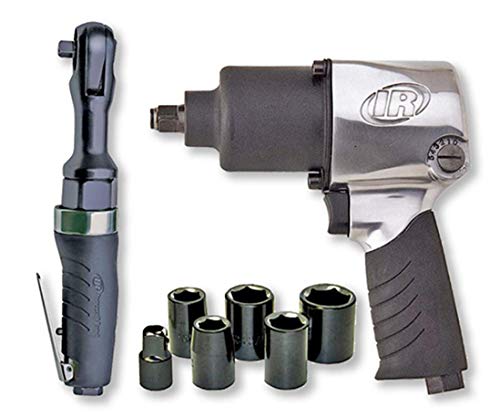

Operating a pneumatic impact wrench without sufficient airflow quickly leads to sluggish hammer strikes and stubborn fasteners that refuse to budge. Many garage mechanics assume that high tank pressure alone provides adequate power, but dynamic airflow measured in cubic feet per minute determines whether a tool can sustain its rated torque. When determining how big a compressor for air impact wrench operation is necessary, evaluating continuous air delivery alongside tank storage capacity helps prevent sudden pressure collapse during heavy automotive repair. Matching your compressor output to your tool prevents the pump from cycling continuously, while proper sizing an air compressor for car tires and lug nuts protects motor components from severe thermal overload.
Pneumatic impact wrenches consume air in short, aggressive bursts that can quickly deplete undersized air receivers. While a compact compressor might break loose a single loose wheel fastener, tackling seized suspension components or multi-lug assemblies demands a reliable buffer of pressurized air. Inadequate air delivery often causes the tool to stall mid-job, leading users to incorrectly assume their impact wrench is defective. High air demand also generates heat and moisture inside the pump cylinder, making it essential to manage excess moisture buildup in compressor tanks before water migrates through hoses and degrades internal pneumatic components.
| Award | Product | ACR Score About ACR ScoreThe ACR Score is our own rating from 0 to 10, based on performance, design and build, ease of use, and value. It reflects independent research and is never influenced by manufacturers, retailers, or affiliate commissions. Learn more › | |
|---|---|---|---|
| Best Overall |
Ingersoll Rand Edge Series 2317G 1/2-Inch Air
|
9.1/10 | Buy |
| Best Value |
 VEVOR 1/2-Inch 1400 Ft-Lb Air Impact Wrench |
8.9/10 | Buy |
| Best Premium |
 Ingersoll Rand 231C 1/2-Inch Air Impact Wrench |
8.9/10 | Buy |
 Dynamic Power 50-Piece Pneumatic Air Tool Kit |
8.8/10 | Buy | |
| Best Budget |
 AEROPRO 1/2-Inch Air Impact Wrench |
8.6/10 | Buy |
 AEROPRO 3/8-Inch 50 Ft-Lb Air Ratchet Wrench |
8.3/10 | Buy | |
 BESWELL BW-112BN 1/2-Inch Air Impact Wrench |
8.3/10 | Buy | |
 AEROPRO A398 1/2-Inch Air Impact Wrench |
8.3/10 | Buy | |
 Trivd Frol 1/2-Inch Air Impact Wrench |
8.3/10 | Buy | |
 Ingersoll Rand 231HA-2 1/2-Inch Drive Air Impact |
8.3/10 | Buy |
Ingersoll Rand Edge Series 2317G 1/2-Inch Air
The Ingersoll Rand Edge Series 2317G combo kit pairs a 500 ft-lb 1/2-inch impact wrench and a 2.6-pound air ratchet for dependable vehicle maintenance. It is a practical, durable pneumatic package for garage hobbyists and DIY mechanics with a capable air supply.
Pros
- Delivers up to 500 ft-lbs of maximum torque to break loose stubborn vehicle lug nuts and suspension bolts
- Lightweight 2.6-pound air ratchet maneuvers easily inside cramped engine bays and beneath dashboards
- Twin hammer mechanism provides smooth, balanced impact force with reduced internal vibration
- Complete kit includes five utility sockets and a durable blow-molded carrying case
Cons
- High rotary airflow demand exceeds the continuous capacity of compact 1-gallon to 6-gallon pancake air compressors
- Does not include quick-connect air fittings, whip hoses, or thread sealant out of the box
- Air ratchet top speed of 170 RPM requires manual initial breakaway for extremely over-torqued fasteners
VEVOR 1/2-Inch 1400 Ft-Lb Air Impact Wrench
Delivering up to 1,400 foot-pounds of nut-busting torque, this pneumatic impact wrench pairs high breakaway power with a compact 4.6-pound body. The included 11-piece CR-V metric socket set and dedicated carry case make it a practical kit for automotive maintenance.
Pros
- High 1,400 ft-lbs breakaway torque for tough fasteners
- Lightweight 4.6-pound body reduces arm fatigue
- Includes 11 durable CR-V impact sockets
- Four-position regulator provides straightforward power control
- Integrated lubrication adaptor simplifies tool oiling
Cons
- Requires an external air compressor to operate
- Socket set includes metric sizes only without SAE options
Ingersoll Rand 231C 1/2-Inch Air Impact Wrench
The Ingersoll Rand 231C is a classic 1/2-inch pneumatic impact wrench delivering up to 600 foot-pounds of reverse torque with a durable twin-hammer mechanism. Requiring a minimum 90 PSI air supply and a 3/8-inch hose, it is an ideal choice for DIY mechanics and garage workshops tackling tire rotations and bolt extraction.
Pros
- Up to 600 foot-pounds of reverse breakaway torque easily removes stubborn vehicle lug nuts and seized bolts
- Durable twin-hammer mechanism delivers smooth, reliable impacts with reduced tool vibration
- Adjustable power regulator offers precise forward power selection to prevent over-tightening
- Manageable 5.8-pound weight and 7.3-inch length allow convenient access in tight automotive spaces
- Pressure-fed lubrication system promotes long-term mechanical reliability in busy garage settings
Cons
- Requires an air compressor capable of maintaining at least 90 PSI and a 3/8-inch air hose (sold separately)
- Small portable or pancake air compressors will quickly deplete their air reserve during extended burst cycles
- Front exhaust port can blow loose dust and debris forward toward the work surface if positioned close to dirty components
Dynamic Power 50-Piece Pneumatic Air Tool Kit
The Dynamic Power D-W3-50K 50-piece pneumatic air tool kit bundles an impact wrench, ratchet wrench, air hammer with chisels, and a blow gun into a portable 17-pound organized case. It is a practical starter set for DIY garage owners and home mechanics who need versatile air tools for fastening, cutting, and workshop cleanup.
Pros
- Comprehensive 50-piece pneumatic tool and accessory selection for diverse garage and DIY jobs
- Includes core air tools: an impact wrench, ratchet wrench, air hammer with 5 chisels, and a blow gun
- Sturdy organized blow-molded carrying case ensures quick access and secure vehicle transport
- Practical all-in-one value for home mechanics setting up their first pneumatic workshop collection
Cons
- Requires pairing with an adequately sized workshop air compressor to sustain continuous tool operation
- Compact pancake air compressors may struggle to supply sufficient continuous CFM for the impact wrench and air hammer
- Does not include an air hose inside the carrying case
AEROPRO 1/2-Inch Air Impact Wrench
The AEROPRO 1/2-inch air impact wrench delivers up to 1,200 ft-lbs of loosening torque with a lightweight 4.64-pound housing and twin hammer mechanism operating at 90 PSI. It is an ideal addition for garage workshop owners and DIY mechanics who already maintain a reliable pneumatic air supply and need serious breakaway force for vehicle maintenance.
Pros
- High 1,200 ft-lbs loosening torque breaks free stubborn vehicle lug nuts and rusted suspension bolts
- Lightweight 4.64-pound body substantially reduces arm fatigue compared to traditional all-metal impact wrenches
- Three-speed forward dial provides regulated speed control to prevent over-torquing during initial fastener seating
- Rear exhaust port keeps air blast and debris directed away from the technician
Cons
- Requires an external air compressor with sufficient air volume delivery that is not included with the bare tool
- Not practical for small 1-to-6 gallon pancake compressors due to the high intermittent CFM demand of 1/2-inch rotary air tools
- Bare-tool configuration requires users to supply their own 1/4-inch quick-connect fitting, 3/8-inch air hose, and impact sockets
AEROPRO 3/8-Inch 50 Ft-Lb Air Ratchet Wrench
Delivering 50 ft-lbs of torque at 160 rpm, this compact 2.6-pound pneumatic ratchet is built to tackle automotive maintenance in cramped engine bays. Its 360-degree directional exhaust and included 1/2-inch adapter make it a practical pneumatic addition for home mechanics.
Pros
- Lightweight 2.6-pound design fits into cramped spaces
- 360-degree rotating exhaust keeps airflow away from user
- Includes a 1/2-inch adapter for broader socket compatibility
- Solid 50 ft-lbs torque output for automotive maintenance
Cons
- Requires at least a 1HP air compressor to operate
- 160 rpm speed is modest for pneumatic ratchets
- 12.23-inch tool length may restrict clearance in tight spots
BESWELL BW-112BN 1/2-Inch Air Impact Wrench
Built for heavy-duty automotive and industrial jobs, this pneumatic wrench delivers 1,180 ft-lbs of nut-busting torque in a manageable 4.62-pound composite frame. Its twin-hammer mechanism and three-speed forward regulator give mechanics balanced power and vibration control for all-day use.
Pros
- High breakaway torque quickly frees seized fasteners
- Lightweight composite frame reduces arm fatigue
- Smooth twin-hammer design dampens operating vibration
- Internal cooling system supports prolonged heavy use
Cons
- Requires a compatible high-pressure shop air compressor
- Full-size housing can be cumbersome in tight clearances
AEROPRO A398 1/2-Inch Air Impact Wrench
The AEROPRO A398 is a 1/2-inch pneumatic impact wrench delivering up to 1380 ft-lbs of loosening torque and 810 ft-lbs of working torque at 90 PSI via a twin-hammer mechanism. Weighing 5.28 pounds with an aluminum body, it suits DIY mechanics and garage hobbyists who have an air compressor capable of supplying steady 90 PSI pneumatic line pressure.
Pros
- High breakaway power with up to 1380 ft-lbs of loosening torque at 90 PSI
- Twin-hammer design delivers balanced, smooth impact strikes on heavy fasteners
- Manageable 5.28-pound aluminum body reduces fatigue during vehicle maintenance
- Rear exhaust directs exhaust air and debris away from the immediate work area
- Includes a 1/4-inch NPT air fitting, spanner, and oil bottle out of the box
Cons
- Requires a dedicated air compressor with sufficient CFM reserves, as small pancake units can only manage very short bursts
- Pneumatic tool oil is not pre-installed, requiring routine manual oiling before each use
- High torque output demands caution on smaller automotive fasteners to avoid stripped threads
Trivd Frol 1/2-Inch Air Impact Wrench
The Trivd Frol 1/2-inch air impact wrench combines a twin-hammer mechanism with a lightweight 4.73-pound composite body, delivering up to 1500 ft-lbs of advertised torque at 90 PSI. It is a practical, budget-conscious choice for garage hobbyists and DIY auto mechanics tackling lug nuts and suspension hardware with a capable pneumatic air setup.
Pros
- High advertised torque output of up to 1500 ft-lbs for breaking loose seized vehicle fasteners and stubborn lug nuts
- Lightweight 4.73-pound composite housing reduces user arm and wrist strain compared to heavier all-metal impact guns
- Twin-hammer impact mechanism and 45mm cylinder provide balanced, smooth blows during heavy fastener work
- Multi-speed adjustment knob offers three forward speeds and full reverse power for precise fastening control
Cons
- Requires a substantial air supply at 90 PSI; compact pancake compressors will struggle to sustain air volume during continuous impact use
- Manufacturer indicates reaching maximum torque requires higher airflow and pressure than standard 90 PSI regulation
- Bare-tool package requires users to provide their own air hose, quick-connect fittings, and pneumatic tool oil
Ingersoll Rand 231HA-2 1/2-Inch Drive Air Impact
The Ingersoll Rand 231HA-2 is a heavy-duty 1/2-inch pneumatic impact wrench delivering up to 600 ft-lbs of reverse torque with an extended 2-inch anvil and twin-hammer mechanism. Designed for automotive garages and workshop tire service, it requires an air compressor supplying at least 90 PSI through a 3/8-inch air hose.
Pros
- Delivers up to 600 ft-lbs of reverse torque for breaking loose stubborn lug nuts and heavy chassis hardware.
- Twin-hammer mechanism and pressure-fed lubrication provide reliable durability and smooth power delivery.
- The 2-inch extended anvil offers practical clearance when servicing deep wheel wells and automotive rims without extra adapters.
- Adjustable power regulator gives operators straightforward forward torque management.
Cons
- Requires a minimum of 90 PSI and a 3/8-inch air hose, demanding more continuous air volume than standard compact pancake compressors can typically sustain.
- Sold as a bare tool without pneumatic couplers, air hose, or air compressor included.
- At 6.1 pounds, extended one-handed overhead use under a vehicle lift may contribute to arm fatigue.
Compressor Sizing Requirements for Pneumatic Impact Wrenches
Choosing the right air compressor for a pneumatic impact wrench comes down to balancing volumetric airflow with adequate storage reserve. A compressor that is too small leaves your impact gun struggling against tight fasteners, while an oversized unit takes up unnecessary garage space. Understanding the exact relationship between cubic feet per minute, receiver volume, and dynamic air pressure ensures your pneumatic tools deliver their advertised breakaway power.
Delivered CFM Versus Peak Air Consumption Rates
A standard half-inch pneumatic impact wrench typically requires between 4 and 5 CFM at 90 PSI under average operating conditions. However, manufacturers calculate that average consumption rating around an intermittent 25 percent duty cycle, which assumes roughly fifteen seconds of active hammering per minute. When you encounter a rusted axle nut or seized suspension bolt, the instantaneous airflow consumption immediately spikes to 15 to 25 CFM.
An air compressor that delivers only 2 to 3 CFM at 90 PSI cannot replenish the air receiver quickly enough to sustain working pressure during continuous use. High-torque pneumatic tools like the Ingersoll Rand 231C 1/2″ Drive Air Impact Wrench and the AEROPRO TOOLS 1/2-Inch Air Impact Wrench rely on sustained volume to keep their internal motor vanes spinning at maximum speed. Running a high-draw tool on an undersized pump causes severe airflow starvation, forcing you to stop repeatedly while the motor attempts to recover.
For basic home garage maintenance and seasonal tire swaps, a compressor delivering at least 4 to 5 CFM at 90 PSI represents the practical minimum. If your workshop tasks involve continuous mechanical teardowns or using accompanying tools like the AEROPRO TOOLS 3/8″ Professional Air Ratchet Wrench, selecting a unit producing 6 to 9 CFM at 90 PSI provides essential operational headroom. This additional air delivery prevents the pump from running constantly under heavy demand.
Tank Storage Volume and Usable Air Buffer Capacity
While pump output dictates continuous air volume, the storage tank acts as an essential buffer that absorbs sudden bursts of air consumption. A compact 6-gallon pancake tank provides enough stored air to break loose three or four lug nuts before tank pressure plummets below the tool’s required threshold. Once that stored volume is depleted, the small air reserve collapses and the impact wrench loses its striking energy.
For general automotive service and garage fabrication, an air receiver between 20 and 30 gallons offers an optimal operational balance. Exploring dedicated workshop air compressor tanks shows how substantial storage volume cushions the dramatic airflow spike created when an impact wrench hammers on frozen bolts. A 30-gallon reservoir allows you to complete a full four-wheel tire rotation or suspension overhaul without waiting for the motor to recover between wheels.
Dedicated automotive service bays and commercial tire shops generally rely on 60-gallon or 80-gallon stationary vertical tanks. Large receiver tanks effectively isolate the immediate demand of the air tool from the continuous output of the compressor pump. With a generous reservoir of pressurized air available, heavy-duty tools like the BESWELL BW-112BN 1/2-Inch Air Impact Wrench can operate through demanding shifts without exposing the motor to rapid, repeated pressure switch cycling.
Operating Pressure Thresholds and Dynamic Line Drop
Most pneumatic impact wrenches are calibrated to deliver their peak torque output at a working pressure of 90 PSI. Models such as the Trivd Frol Air Impact Wrench 1/2“ and the AEROPRO TOOLS 1/2-Inch Aluminum Air Impact specify 90 PSI as the baseline for their multi-cylinder twin-hammer mechanisms. Certain high-output tools, including the BESWELL BW-112BN, can utilize operating pressures ranging from 90 to 120 PSI to break through stubborn, rust-seized fasteners.
A frequent source of confusion among automotive enthusiasts is the difference between static tank pressure and dynamic working pressure. When your regulator display shows 90 PSI while the tool is resting on the workbench, that reading indicates static pressure inside the line. The moment you pull the trigger on an impact gun, rushing air creates friction through fittings and hoses, causing dynamic pressure to drop by 15 to 30 PSI at the tool inlet.
To overcome dynamic pressure drop, garage pressure regulators are usually adjusted to deliver 100 to 110 PSI static line pressure. This setting ensures that when the pneumatic motor draws heavy airflow, the actual operating pressure at the tool inlet remains at the required 90 PSI. Operating a pneumatic impact wrench significantly below 90 PSI dynamic pressure reduces its hitting frequency and drastically lowers breakaway torque.
Air Hose Diameter and Fitting Restrictions
Even a large workshop compressor will fail to power an impact wrench effectively if the air delivery line restricts mass airflow. Standard consumer accessory kits often include narrow 1/4-inch inner diameter hoses, which severely throttle air delivery to high-volume tools. Heavy-duty tools like the Ingersoll Rand 231HA-2 1/2″-Drive Air Impact specify a minimum 3/8-inch inner diameter air hose to transfer sufficient volume to the internal rotor.
Internal friction increases substantially as compressed air travels through long, narrow hoses. Running a 50-foot 1/4-inch hose can choke a high-torque pneumatic wrench down to a fraction of its capability, turning a powerful tool into a sluggish ratchet. Upgrading to a flexible 3/8-inch or 1/2-inch rubber hose minimizes internal wall drag, delivering the volumetric airflow necessary to drive rapid twin-hammer strikes.
Quick-connect couplers represent another common airflow restriction in residential workshops. Traditional 1/4-inch automotive or industrial couplers have internal passages as small as 3/16 inch, creating an aggressive localized flow restriction. Replacing standard fittings with high-flow couplers or larger 3/8-inch NPT connections allows unrestricted airflow, instantly improving the torque output of tools like the VEVOR 1/2-Inch Air Impact Wrench.
Compressor Pump Architecture and Motor Duty Cycles
Understanding compressor pump engineering helps determine how long a machine can run before requiring a cooling interval. Oil-free compressors feature Teflon-coated piston seals and typically operate at high rotational speeds exceeding 3,000 RPM. While these compact units offer zero-maintenance convenience for occasional nailing and tire inflation, their thermal limits generally restrict them to a 50 percent duty cycle to prevent motor burnout.
Oil-lubricated cast-iron pumps run at lower rotational speeds, often between 1,000 and 1,750 RPM, which drastically reduces friction and internal heat generation. A splash-lubricated pump can comfortably sustain duty cycles between 70 and 100 percent, making it far better suited for intensive automotive repair. When powering comprehensive pneumatic sets like the DYNAMIC POWER 50 Pieces Air Tool Kit, an oil-lubricated pump provides dependable thermal endurance throughout long garage projects.
Electrical circuit capacity also places hard physical limits on compressor output in residential garages. Standard 120-volt, 15-amp or 20-amp household circuits can safely support motors producing roughly 1.5 to 2 continuous running horsepower without tripping circuit breakers. Stationary compressors designed to deliver 10 or more CFM at 90 PSI require dedicated 240-volt electrical circuits to accommodate both continuous running amperage and initial startup inrush current.
Single-Stage Versus Two-Stage Workshop Configurations
Compressor staging describes how many compression steps the pump mechanism uses to generate final tank pressure. Single-stage compressors draw ambient air into one or more cylinders, compress it in a single stroke, and discharge it directly into the receiver at maximum pressures between 125 and 150 PSI. These units represent the standard choice for home mechanics servicing passenger cars and light-duty trucks.
In contrast, exploring high-demand workshop configurations through two-stage compressor systems reveals how dual-stage compression benefits heavy pneumatic workflows. Two-stage pumps compress air in a large low-pressure cylinder, route it through an intercooler tube to shed heat, and compress it again in a smaller high-pressure cylinder. This multistage design efficiently elevates storage pressure to 175 PSI, packing roughly 30 percent more air mass into the same tank volume.
That elevated storage pressure creates an expanded air reserve that delays the compressor cut-in cycle. When using high-torque impact guns through intensive chassis teardowns, a two-stage setup maintains consistent line pressure without frustrating mid-job drops. For standard residential garages, however, a well-built single-stage compressor with a 20 to 30-gallon tank remains more than adequate for seasonal maintenance.
Air Treatment, Filtration, and Motor Lubrication
Pneumatic impact wrenches require clean, dry, and properly lubricated air to preserve their internal motor tolerances and power output. When an air compressor compresses atmospheric air, relative humidity condenses into liquid water inside the storage receiver. If that moisture is left unmanaged, it travels into your air tools, washing out internal bearing grease and corroding precision motor vanes.
Installing an inline particulate filter and moisture trap at the compressor regulator captures condensed water before it enters the tool hose. Draining the compressor tank after every work session is equally important to prevent internal tank corrosion. Easily accessible quarter-turn brass ball valves simplify daily moisture draining compared to stiff, recessed thumb petcocks that are prone to seizing over time.
Routine motor lubrication is just as vital for maintaining pneumatic tool performance. Applying several drops of specialized air tool oil into the 1/4-inch air inlet before each use keeps internal rotor vanes sealing tightly against the motor cylinder. Certain modern tools, such as the VEVOR 1/2-Inch Air Impact Wrench, feature integrated lubrication adaptors that make regular oiling straightforward, protecting the internal mechanism from premature friction wear.
Matching Compressor Capabilities to Specific Mechanical Tasks
The ideal compressor size depends largely on whether your garage work involves intermittent maintenance or continuous automotive restoration. For light DIY chores like rotating passenger car tires and replacing brake pads, a 10 to 20-gallon compressor producing 4 CFM at 90 PSI handles standard lug nuts reliably. Because you only loosen five fasteners per wheel with natural pauses between corners, the compressor pump has sufficient time to recover.
Home mechanics working on truck suspension lifts, rusted exhaust hardware, or farm machinery require a more capable setup. These demanding jobs frequently require sustained hammering with tools like the Ingersoll Rand 2317G 1/2″ Drive Air Impact Wrench to break loose stubborn, high-torque fasteners. For this workload, a compressor delivering 5 to 7 CFM at 90 PSI paired with a 30-gallon tank prevents annoying delays and pressure drops.
Professional repair shops and intensive restoration garages demand a continuous, uninterrupted air supply. In these settings, impact wrenches operate alongside continuous-draw tools like pneumatic die grinders, cutoff wheels, and dual-action sanders. Supporting these intensive commercial workloads requires a stationary compressor delivering at least 10 to 14 CFM at 90 PSI with a 60-gallon receiver to ensure consistent shop productivity.
Practical Verification and Diagnosing Insufficient Impact Torque
When a pneumatic impact wrench feels weak or fails to break loose standard fasteners, systematic testing can quickly identify the restriction. Start by checking dynamic line pressure using an inline pressure gauge connected directly at the tool inlet while running the motor freely. If the pressure gauge drops below 90 PSI while the trigger is pulled, the system is suffering from air starvation, an undersized hose, or an overly restrictive regulator.
Inspect the entire air line setup for leaking quick-connect couplers, damaged hose walls, or sharp bends that choke mass airflow. Verify that the compressor pressure switch operates correctly, ensuring that the pump engages before line pressure falls below your tool’s minimum working requirement. If the cut-in pressure is set too low, the impact gun will lose power before the motor turns on to restore tank pressure.
Finally, confirm that the impact wrench receives sufficient lubrication and that the adjustable power regulator is set to full power. Clear any accumulated debris from the exhaust deflector, as restricted exhaust airflow creates backpressure that slows the internal rotor. By combining an appropriately sized air compressor with 3/8-inch supply lines and clean, regulated airflow, your pneumatic impact wrench will reliably deliver its full rated torque.
Selecting the right air compressor for your pneumatic impact wrench ensures that every fastener removal job goes smoothly without stalling or tool damage. Focus on securing at least 4 to 5 CFM at 90 PSI paired with a 20 to 30-gallon tank for home garage automotive repair. When backed by high-flow 3/8-inch air lines, proper moisture separation, and regular tool oiling, your pneumatic setup will deliver dependable, heavy-duty fastening power for years to come.
About the author
Bob Beacham is an experienced tools and workshop writer with deep knowledge of power equipment, mechanical systems, and practical DIY applications. His coverage of air compressors, welding equipment, saws, and workshop tools helps translate technical specifications into useful guidance for homeowners and serious DIYers.