
How Much Oil Does Air Compressor Need: Practical Guide for 2026
Learn how much oil does air compressor need, how to read sight glasses, and proper crankcase capacity for workshop pumps in November 2026.
 By Kenny Koehler
Updated October 8, 2026


Reciprocating air compressor pumps rely on splash lubrication to shield moving parts from severe friction and extreme operating heat. The spinning crankshaft dips into a dedicated oil reservoir, flinging lubricant across cylinder walls, wrist pins, and connecting rod bearings during every cycle. Knowing exactly how much oil does air compressor need protects your machine from premature pump wear and keeps your workshop running efficiently. While modern oil-free air compressor models eliminate liquid maintenance entirely, oil-lubricated cast-iron pumps demand consistent fluid levels to survive high duty cycles.
Operating a pump with an improper fluid volume creates severe mechanical headaches that compromise tool performance and shop productivity. Underfilling starves internal bearings and causes rapid thermal breakdown, whereas overfilling pushes excess fluid past piston rings and into downstream pneumatic lines. Most single-stage and two-stage reciprocating pumps require between eight and thirty-two ounces of specialized non-detergent lubricant, depending on overall crankcase dimensions. Checking your pump sight glass or dipstick before firing up your machine ensures smooth pressurization and protects sensitive pneumatic air tools from unexpected oil contamination.
| Award | Product | ACR Score About ACR ScoreThe ACR Score is our own rating from 0 to 10, based on performance, design and build, ease of use, and value. It reflects independent research and is never influenced by manufacturers, retailers, or affiliate commissions. Learn more › | |
|---|---|---|---|
| Best Overall |
Mag 1 1-Gallon Air Compressor Oil
|
9.2/10 | Buy |
| Best Budget |
 Triax Kompressor ISO 46 SAE 20 Full Synthetic Air |
9.1/10 | Buy |
| Best Premium |
 Triax Kompressor ISO 100 SAE 30 Oil (4 Gal) |
9.1/10 | Buy |
 Triax Kompressor ISO 100 SAE 30 Oil (5 Gal) |
9.1/10 | Buy | |
| Best Value |
 Milton 1002 SAE 30W Compressor Oil, 1 Gallon |
8.8/10 | Buy |
 TRIAX Kompressor ISO 46 SAE 20 Full Synthetic Air |
8.8/10 | Buy | |
 Campbell Hausfeld ST1253 Compressor Oil (16 oz) |
8.6/10 | Buy | |
 TRIAX Kompressor ISO 68 Full Synthetic Air |
8.6/10 | Buy | |
 Ingersoll Rand All Season Select Lubricant, 1L |
8.6/10 | Buy | |
 Milton 1002-32 ISO-100 Compressor Oil, 32 oz |
8.4/10 | Buy |
Mag 1 1-Gallon Air Compressor Oil
Formulated for reliable workshop maintenance, Mag 1 Air Compressor Oil uses refined petroleum base stocks paired with anti-foam additives to maintain stable lubrication. The generous one-gallon volume makes it a practical choice for keeping reciprocating or stationary compressors running smoothly over time.
Pros
- Anti-foam additives maintain steady lubrication
- Refined petroleum stocks promote smooth operation
- Formula helps extend compressor service life
- Generous 1-gallon volume handles multiple refills
Cons
- Jug weighs 7.25 pounds and can be heavy to pour
- One-gallon size may exceed small top-off needs
Triax Kompressor ISO 46 SAE 20 Full Synthetic Air
Triax Kompressor ISO 46 SAE 20 is a commercial-grade, full synthetic non-detergent compressor oil engineered for oil-lubricated reciprocating, rotary screw, and vane pumps operating in temperatures from -49°F to over 140°F. It provides exceptional thermal protection and extended component life for garage mechanics and shop owners maintaining heavy-duty pneumatic systems.
Pros
- Extreme all-weather operating range from -49°F to 140°F+ prevents cold-start motor stalling and high-heat viscosity breakdown
- Non-detergent full synthetic formula protects internal bearings and provides up to 20,000 hours of service longevity
- Lowers operating pump temperatures by 30% and actively sheds condensation to prevent internal crankcase rust
- Compatible with oil-lubricated reciprocating, rotary screw, and rotary vane compressor pumps from major manufacturers
Cons
- Not suitable for oil-free or maintenance-free dual-piston compressor designs that do not use crankcase oil
- Explicitly prohibited for use in breathing air systems, oxygen compressors, or liquid natural gas (LNG) units
- Single-quart volume may require purchasing multiple bottles for larger stationary 60-gallon or 80-gallon shop pump crankcases
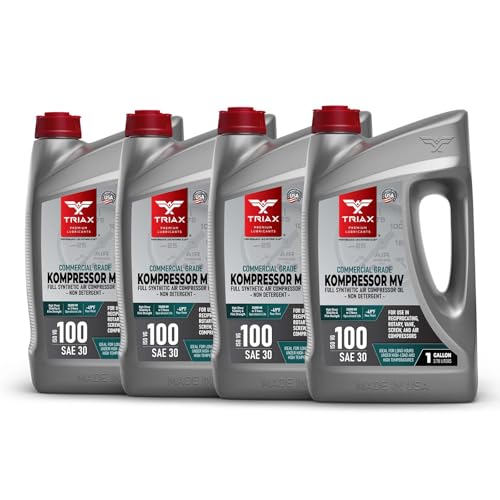
Triax Kompressor ISO 100 SAE 30 Oil (4 Gal)
Engineered for rotary, vane, screw, and reciprocal compressors, this full synthetic ISO 100 fluid delivers up to 20,000 hours of commercial service life. Its non-detergent formula lowers operating temperatures and resists moisture to protect internal bearings under extreme workloads.
Pros
- Rated for over 20,000 hours of service life
- Broad temperature tolerance from -49°F to 140°F
- Reduces operating temperatures by up to 30%
- Compatible with rotary, vane, screw, and reciprocating models
Cons
- Not compatible with oxygen air or LNG compressors
- Four-gallon bulk packaging is excessive for smaller home tools
Triax Kompressor ISO 100 SAE 30 Oil (5 Gal)
Engineered for rotary, vane, screw, and reciprocating systems, this industrial-grade synthetic fluid provides up to 20,000 hours of continuous service across extreme temperatures. Its non-detergent formula lowers operating heat by 30 percent while guarding vital bearings against friction and moisture.
Pros
- Extended 20,000-hour life span minimizes maintenance cycles
- Reliable all-season operation across wide temperature swings
- Substantially reduces operating temperatures and oil burnoff
- Non-detergent blend prevents bearing wear and vibration
Cons
- Not compatible with oxygen air or LNG compressors
- Large 5-gallon volume exceeds small workshop requirements
Milton 1002 SAE 30W Compressor Oil, 1 Gallon
Milton 1002 is a non-detergent ISO-100 SAE 30W conventional lubricant engineered specifically for reciprocating air compressors. The one-gallon capacity makes it a sensible option for regular workshop equipment upkeep.
Pros
- Non-detergent formula tailored for reciprocating compressors
- Standard ISO-100 SAE 30W viscosity rating
- Generous one-gallon volume covers multiple refills
Cons
- Conventional mineral formula instead of synthetic blend
- Heavy container can be awkward to pour directly
TRIAX Kompressor ISO 46 SAE 20 Full Synthetic Air
TRIAX Kompressor ISO 46 SAE 20 is a commercial-grade, full-synthetic non-detergent lubricant engineered for oil-lubricated reciprocating, rotary screw, and vane air compressors. It provides reliable extreme-temperature wear protection and multi-viscosity all-season performance, making it an excellent maintenance choice for auto shops, contractors, and home garage workshops.
Pros
- Full synthetic non-detergent formulation extends pump life across severe operating conditions
- True all-season multi-viscosity rating maintains fluid flow from -49 deg F up to 140 deg F+
- Formulated to lower operating temperatures by up to 30% and eliminate oil vapor odor
- Compatible with a wide array of compressor pumps including reciprocating and rotary screw designs
Cons
- Not formulated for oil-free air compressors, breathing air systems, oxygen setups, or LPG gas pipelines
- Users must verify whether their pump manufacturer specifically calls for ISO 46 (SAE 20) rather than heavier ISO 68 or ISO 100 weights
- Requires careful manual crankcase draining and filling without an included pour spout
Campbell Hausfeld ST1253 Compressor Oil (16 oz)
Formulated for workshop and industrial setups, this 30-weight lubricant protects compressor pumps against rust, sludge, and component wear. The compact 16-ounce bottle makes routine top-offs and crankcase servicing straightforward.
Pros
- Formulated specifically for compressor pumps and motors
- 30-weight viscosity helps minimize component wear
- Inhibits rust, sludge, and internal corrosion
- Compact bottle enables controlled, mess-free pouring
Cons
- 16-ounce volume may require multiple bottles for large units
- Single 30-weight viscosity is not suitable for all models
TRIAX Kompressor ISO 68 Full Synthetic Air
TRIAX Kompressor ISO 68 is a commercial-grade, full synthetic compressor lubricant engineered for oil-lubricated reciprocating, rotary screw, and vane pumps operating between -49°F and 140°F+. It is an excellent maintenance solution for auto mechanics, shop owners, and contractors seeking lower pump operating temperatures and up to 20,000 hours of service life.
Pros
- Extended 20,000-hour service life minimizes routine maintenance intervals on high-demand shop compressors
- All-season stability from -49°F to 140°F+ prevents cold-morning motor drag and high-heat viscosity breakdown
- Non-detergent formulation separates condensation cleanly to safeguard internal crankcase bearings
- Broad compatibility across major reciprocating, rotary screw, and rotary vane compressor manufacturers
Cons
- Not suitable for maintenance-free oil-free compressor designs or oxygen and Liquid Natural Gas (LNG) systems
- One-gallon container size exceeds the immediate refill capacity of small single-stage DIY splash-lube pumps
Ingersoll Rand All Season Select Lubricant, 1L
Engineered as an all-weather OEM fluid, this synthetic lubricant protects reciprocating compressors during continuous duty while resisting carbon buildup on critical valves. It is a solid pick for equipment owners who want fewer oil changes and reliable year-round operation.
Pros
- Maintains stable viscosity in hot and cold seasons
- Lasts four times longer than petroleum oil
- Keeps valves and rings free of carbon deposits
- Protects bearings under continuous duty cycles
Cons
- Formulated specifically for reciprocating compressor systems
- One-liter bottle requires buying multiples for large pumps
Milton 1002-32 ISO-100 Compressor Oil, 32 oz
Formulated specifically for oil-lubricated reciprocating compressors, this ISO-100 non-detergent lubricant shields pumps against wear and deposit buildup. It separates easily from moisture and remains fluid down to -15°F for dependable cold-weather starts.
Pros
- Protects internal components against wear and corrosion
- Non-detergent formula resists foaming and separates water
- Inhibits sludge and carbon deposit formation
- Maintains fluidity in temperatures down to -15°F
Cons
- Designed strictly for reciprocating pump mechanisms
- Conventional oil base rather than full synthetic
Understanding Air Compressor Oil Capacity and Maintenance
Determining proper crankcase fluid capacity is one of the most critical maintenance tasks for any workshop mechanic or contractor using an oil-lubricated compressor. Reciprocating pumps do not use a universal fluid volume because crankcase dimensions vary by displacement and cylinder count. Most portable cast-iron units hold between eight and sixteen ounces of oil, whereas stationary workshop pumps require one to two quarts. Checking the physical level through a clear sight glass or calibrated dipstick provides the only reliable verification for safe pump operation.
Typical Oil Capacities Across Compressor Types
Small portable compressors designed for jobsite finish carpentry and tire inflation typically feature compact, single-cylinder pumps. These direct-drive or small belt-drive units usually feature crankcases that hold between eight and twelve fluid ounces of oil. Because these smaller sumps contain a limited volume of liquid, even minor oil burnoff can quickly starve internal surfaces. Keeping a sixteen-ounce bottle, such as Campbell Hausfeld ST1253 pump lubricant, on hand allows you to top off small crankcases without storing excessive open fluid containers in your garage.
Mid-sized belt-drive compressors equipped with single-stage cast-iron pumps generally require between sixteen and twenty-four fluid ounces to reach optimal levels. These units are common fixtures in home garages and automotive workshops running impact wrenches, ratchets, and inflators. Their larger crankcases manage thermal loads better than direct-drive pumps, but they still require precise fluid management to maintain proper splash lubrication. Checking the pump level before starting extended sanding or spraying jobs ensures the reciprocating assembly stays cool under load.
Stationary commercial machines, including high-output two-stage air compressor systems, utilize substantial multi-cylinder pumps that demand thirty-two to sixty-four ounces of lubricant. These industrial cast-iron pumps generate significant heat while compressing air up to one hundred seventy-five PSI, requiring substantial oil reserves to disperse thermal energy across the crankcase housing. Maintaining these large systems often involves purchasing gallon containers, such as Milton 1002 or Mag 1 compressor oil, for complete flushes. In contrast, industrial circulating coolant reservoirs in a rotary screw pump mechanisms setup can hold several gallons of specialized fluid to seal and lubricate the spinning rotors.
How to Read Sight Glasses and Dipsticks Accurately
Most modern reciprocating compressors feature an acrylic or glass sight gauge threaded into the lower portion of the cast-iron crankcase. This optical window allows you to inspect both fluid level and visual clarity without opening the crankcase breather plug. Standard sight glasses feature an embossed red circle or solid red dot positioned dead center on the lens. The ideal oil fill level sits directly at the center of this red indicator mark when the compressor rests on a level surface.
Reading a sight glass requires proper timing relative to compressor operation. Checking the oil level immediately after the motor shuts off provides a false low reading because liquid remains suspended across cylinder walls and splash dippers. Allow the pump to rest for ten to fifteen minutes so lubricant drains back down into the sump. Checking the gauge while the compressor sits on an uneven workshop floor or a sloped driveway also produces inaccurate readings that could lead to accidental overfilling.
Compressors fitted with traditional threaded dipsticks require a slightly different verification technique. Unscrew the dipstick plug, wipe the metal stem clean using a lint-free shop rag, and insert it back into the crankcase opening without threading it down. Remove the stick and examine where the oil film aligns with the crosshatched operating zone between the minimum and maximum lines. The lubricant should sit comfortably in the upper half of the safe zone without surpassing the top boundary mark.
The Mechanical Consequences of Underfilling the Crankcase
Operating a reciprocating pump with insufficient oil leads directly to accelerated friction and rapid component failure. Reciprocating air compressors do not incorporate pressurized automotive oil pumps, relying instead on small splash dippers attached to the connecting rods. When the oil level falls below the reach of these dippers, the spinning crankshaft cannot fling lubricating mist onto cylinder walls or wrist pins. This lack of fluid boundary causes immediate metal-to-metal contact between internal moving parts.
Extreme heat builds up rapidly inside an oil-starved pump cylinder during continuous compression cycles. As temperatures spike, the aluminum piston expands faster than the surrounding cast-iron cylinder sleeve, drastically reducing operating clearances. This thermal expansion causes piston rings to drag violently against the cylinder bore, resulting in severe scoring. In severe situations, the piston can gall directly to the cylinder wall, locking the pump mechanism completely and tripping your electrical circuit breaker.
Connecting rod bearings and crankshaft journals also experience catastrophic wear when fluid levels drop below manufacturer thresholds. Without an unbroken hydraulic film to absorb reciprocating shock loads, rod bearings quickly deform and develop excessive clearance. This bearing play manifests as a rhythmic knocking noise whenever the pump operates under compression load. Once bearing knock begins, repairing the damage requires a complete pump teardown and replacement of expensive internal components.
Dangers of Overfilling: Aeration, Carryover, and Valve Damage
Adding too much lubricant to your compressor crankcase can be just as destructive as letting the sump run dry. When the oil level rises significantly above the center red dot, connecting rods strike the oil pool with excessive force on every downstroke. This violent agitation whips air bubbles into the liquid reservoir, turning clean lubricant into a frothy emulsion. Aerated oil contains pockets of compressible air that destroy lubricating film strength, paradoxically causing bearing wear despite an overfilled crankcase.
Overfilling also creates excessive oil carryover past piston compression rings and into the air stream. The high oil level floods cylinder walls, overwhelming oil control rings and forcing liquid mist upward into the cylinder head. From there, atomized oil enters the discharge tube and settles inside your receiver tank. This oil accumulation contaminates air lines, ruins delicate pneumatic nailer seals, and causes fish-eye defects in automotive paint spraying applications.
Excess liquid oil reaching the hot cylinder head creates severe carbon deposits across internal valve plates and reed valves. Under intense compression temperatures, pooled oil cooks into hard carbon crusts that prevent reed valves from sealing flat against their seats. Leaking reed valves reduce CFM output, extend recovery cycle times, and cause compressed air to backflow into the crankcase. In worst-case scenarios, liquid oil trapped above the piston causes hydraulic lock, bending connecting rods and cracking cylinder heads.
Selecting the Proper Viscosity and Non-Detergent Formulation
Choosing the correct lubricant requires understanding why standard automotive motor oil is entirely unsuitable for air compressor pumps. Automotive engine oils contain aggressive detergent additives designed to suspend combustion soot until the oil filter captures them. In an air compressor crankcase without an oil filter, these detergent packages cause fluid to foam aggressively and trap moisture from air condensation. Dedicated compressor oils utilize non-detergent base stocks enriched with anti-foam chemistry that allow condensed water to separate cleanly at the bottom of the sump.
Viscosity selection depends primarily on your ambient working environment and compressor manufacturer specifications. Standard workshop environments operating between forty and one hundred degrees Fahrenheit generally call for ISO 100 or thirty-weight non-detergent oils, such as Milton 1002 or Campbell Hausfeld formulations. For colder unheated garages or winter jobsites where freezing temperatures cause thick fluids to drag on electric motors, a lighter ISO 46 or twenty-weight oil provides easier cold-weather starting. Multi-viscosity synthetic fluids like TRIAX Kompressor perform reliably across broad temperature ranges from extreme cold to intense workshop heat.
Full synthetic compressor lubricants offer substantial advantages over conventional petroleum stocks for demanding commercial environments. Synthetic formulations, including Ingersoll Rand All Season Select, maintain stable viscosity across wide temperature fluctuations and actively resist carbon formation on discharge valves. Premium synthetic oils can operate for up to four times longer than conventional petroleum fluids, reducing maintenance downtime and waste. Synthetic fluids also feature higher flash points and superior thermal resistance, making them ideal for heavy continuous-duty cycles.
Step-by-Step Procedure for Checking and Adding Compressor Oil
Before servicing your compressor pump, prepare the machine properly to ensure safety and accurate measurements. Disconnect the electrical power cord or switch off the dedicated circuit breaker to prevent accidental motor startup while you work. Open the tank drain petcock to relieve any residual air pressure stored in the receiver tank, ensuring the pneumatic system is completely depressurized. Position the compressor on a solid, level concrete floor so fluid settles evenly across the crankcase window.
Wipe down the crankcase exterior and the surrounding area of the oil fill plug with a clean shop towel. Removing external grit, sawdust, and metallic debris prevents harmful abrasives from falling directly into the open crankcase reservoir during refilling. Carefully remove the plastic breather cap or threaded fill plug, inspecting the vent hole to verify that it remains clear of hardened dirt. Insert a small, dedicated funnel with a narrow spout directly into the fill port to avoid spilling oil onto motor housings.
Add your chosen non-detergent lubricant slowly, pouring only two to three fluid ounces at a time. Because viscous compressor oil takes several minutes to flow down internal passages into the lower sump, pouring too quickly can cause accidental overfilling. Pause between additions to monitor the sight glass, watching for the fluid line to rise toward the center red dot. Once the liquid rests squarely across the center indicator, reinstall the breather plug securely and reconnect electrical power.
Routine Maintenance Schedules and Warning Signs to Watch
Establishing a strict maintenance schedule protects your equipment and ensures reliable pneumatic output year after year. For a brand new compressor or newly rebuilt pump, perform an initial break-in oil change after the first twenty to fifty operating hours. This initial service flush removes microscopic metal particles and casting burrs that shed from new cast-iron cylinders during early break-in cycling. After break-in service, standard petroleum lubricants should be changed every one hundred to three hundred operating hours, or twice a year in typical home workshops.
High-performance synthetic compressor lubricants extend these service intervals significantly, often providing between one thousand and two thousand operating hours before requiring a fluid change. Regardless of logged hours, you should inspect the sight glass visually before every work session. Monitoring oil appearance allows you to catch contamination issues before mechanical components suffer damage. Clean compressor oil should appear amber and transparent, with zero cloudiness or floating particulate matter.
If the oil inside your sight glass appears milky or creamy, moisture condensation has emulsified within the crankcase fluid. This moisture buildup occurs frequently in humid climates or when a compressor runs in short, intermittent bursts that never reach full operating temperature. Emulsified oil loses its lubricating capability and accelerates internal rust on crankshaft journals, requiring an immediate fluid flush. Blackened or burnt-smelling oil indicates severe thermal breakdown, signaling that the pump has exceeded its rated duty cycle.
Taking the time to verify your air compressor oil capacity and maintaining proper crankcase levels protects critical pump components from preventable failure. Always consult your specific equipment manual for exact fluid ounce recommendations, but trust the physical sight glass or dipstick reading as your definitive guide during maintenance. Using high-quality non-detergent compressor oil and replacing degraded fluid on a consistent schedule ensures your pneumatic equipment delivers reliable pressure for years of workshop service.
About the author
Kenny Koehler is a power-tool specialist with more than a decade of hands-on evaluation experience and a science-based approach to product testing. His expertise in repeatable testing, tool performance, impact wrenches, and professional equipment brings a practical, data-focused perspective to compressor and pneumatic-tool comparisons.