
How to Keep Moisture out of Air Compressor: A Practical Guide for 2026
Learn how to keep moisture out of air compressor tanks and air lines with proven filtration, dryers, and drain valves in October 2026.
 By Bob Beacham
Updated October 8, 2026
By Bob Beacham
Updated October 8, 2026
Water spraying unexpectedly from a paint nozzle or dripping through the exhaust of an air tool is an immediate sign of pneumatic trouble. When ambient air is drawn into a compression chamber, rising temperatures force atmospheric humidity to condense into liquid water inside the storage tank and distribution lines. Understanding how to keep moisture out of air compressor systems protects internal components, prevents abrasive oxidation inside expensive air tools, and maintains steady downstream pressure. Without a deliberate water management routine, standing liquid compromises tank integrity and ruins delicate pneumatic tasks like sandblasting or automotive finishing.
Moisture accumulation varies directly with workshop ambient temperature, relative humidity, and overall pump duty cycle. Compact single-stage pumps and heavy stationary units alike compress air into hot vapor that cools rapidly as it enters downstream steel or rubber hoses. Installing the right combination of particulate water separators, inline desiccant dryers, and dedicated drain valves stops water vapor before it reaches downstream equipment. Implementing reliable drainage and filtration habits ensures clean, dry air delivery for every project in your garage or shop.
| Award | Product | ACR Score About ACR ScoreThe ACR Score is our own rating from 0 to 10, based on performance, design and build, ease of use, and value. It reflects independent research and is never influenced by manufacturers, retailers, or affiliate commissions. Learn more › | |
|---|---|---|---|
| Best Overall |
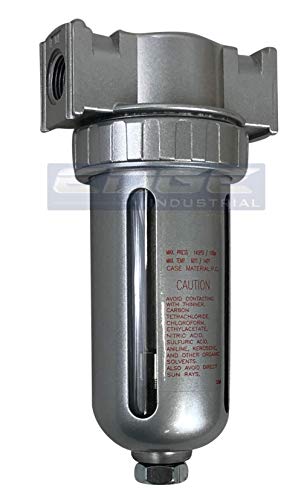
In LINE Desiccant AIR Dryer for Compressed AIR
|
9.2/10 | Buy |
| Best Budget |
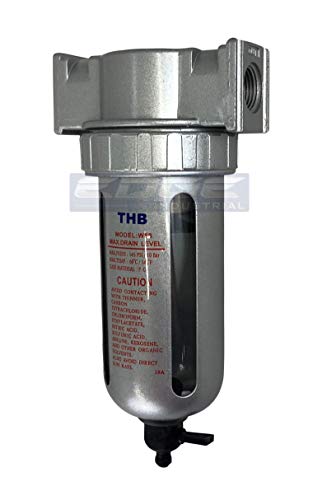 1/2" Particulate filter water trap seperator
|
9.1/10 | Buy |
| Best Value |
 NANPU Zinc Alloy Desiccant Dryer
|
9.1/10 | Buy |
| Best Premium |
 1/2" NPT Air Compressor Dryer
|
9.1/10 | Buy |
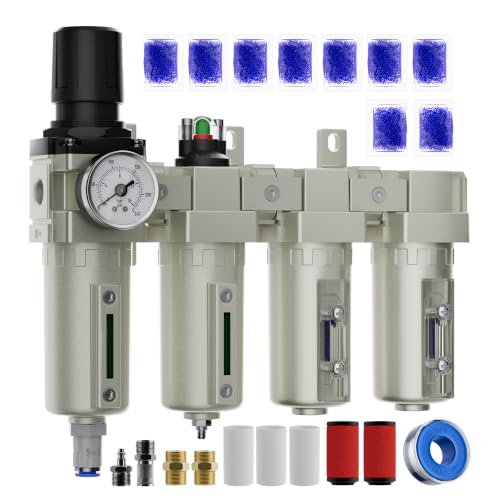 1/2" NPT Air Dryer for Compressor
|
8.9/10 | Buy | |
 RIH 1/4" NPT Air Dryer for Compressor
|
8.3/10 | Buy | |
 3/4" NPT Air Compressor Water Separator
|
8.3/10 | Buy | |
 NANPU Industrial Grade Heavy Duty Compressed Air
|
8.1/10 | Buy | |
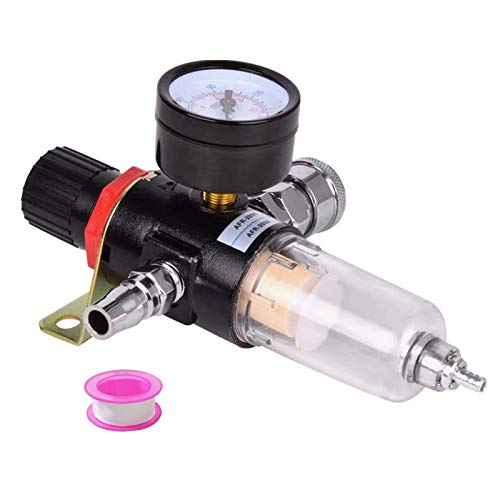 Hotusi 1/4" BSP Air Compressor Moisture Filter
|
7.8/10 | Buy |
Complete Guide to Eliminating Compressed Air Moisture
Compressed air systems generate substantial moisture as an unavoidable physical consequence of drawing ambient humidity into a pressurized chamber. Air loses its capacity to hold water vapor as it compresses and cools, leaving gallons of liquid condensate inside receiver tanks and downstream pipe circuits over extended runtimes. Eliminating this water requires a layered defense combining mechanical drainage, layout physics, and multi-stage air filtration. Implementing the correct equipment setup protects valuable pneumatic equipment, prevents internal tank rust, and delivers clean air for any shop application.
Why Moisture Forms Inside Compressed Air Systems
Ambient atmospheric air naturally contains suspended water vapor that varies depending on local climate and garage humidity levels. When an air compressor pump pulls in large volumes of this air, mechanical compression drastically raises air temperature while squeezing the air into a fraction of its original volume. As this hot, pressurized air moves into the receiver tank and begins to cool toward ambient room temperature, its relative humidity reaches 100 percent. The air quickly passes its dew point, forcing water vapor out of suspension and turning it into liquid condensate.
High ambient humidity accelerates this condensation rate significantly during long operational sessions. An air compressor running continuously in a warm, humid garage can easily produce several fluid ounces of liquid water per hour of operation. Because air storage tanks are constructed from steel, standing water initiates internal oxidation and scale formation if left unmanaged. Air flowing past accumulated tank moisture also carries droplets into rubber air hoses, directly exposing pneumatic tools, valves, and workpieces to corrosive water.
Daily Tank Drainage and Drain Valve Configurations
The bottom of the receiver tank serves as the primary reservoir for condensed water in any compressed air setup. Purging accumulated liquid daily prevents tank floor rust and stops standing water from reaching the distribution port located near the tank manifold. Most factory compressors ship with simple threaded brass petcocks or thumb twist valves installed in the lowest bung. These factory petcocks frequently seize up from internal corrosion or debris, making regular draining awkward and messy.
Upgrading to an accessible quarter-turn brass ball valve or installing an automatic tank drain drastically simplifies daily maintenance routines. A quarter-turn ball valve provides an instant, wide-bore discharge path that blows out dirty water, scale, and oil emulsion without binding. Automatic electronic timer drains open for several seconds at scheduled intervals, expelling liquid automatically during long work shifts without operator intervention. Always remember to depressurize the receiver tank completely before removing or servicing any tank fittings to prevent high-pressure injury.
Workshop Piping Layout and Condensation Drop Legs
Physical plumbing layout within a garage or workshop acts as the secondary line of defense against air line moisture. Running flexible rubber or PVC hoses directly from the compressor outlet carries hot air directly to tools before vapor has enough time to cool and condense. Installing rigid piping made from copper, aluminum, or properly rated metallic tubing allows compressed air to shed thermal energy against the pipe walls. As the air cools over extended pipe runs, water droplets collect along the inner circumference rather than traveling straight into your pneumatic tools.
Piping runs should always slope slightly downward away from the compressor toward dedicated vertical drop legs. Each vertical drop leg should extend downward past the tool take-off tee and terminate with a manual drain valve at the bottom floor level. Meanwhile, tool supply hoses should always connect to the main overhead distribution line using top-mounted inverted loops or risers. This geometry forces liquid water to obey gravity and settle harmlessly into the lower drain leg while clean air feeds upward into your hose reels.
Particulate Filters and 5-Micron Centrifugal Water Separators
Mechanical water separators installed directly upstream of workstations remove bulk liquid water through centrifugal separation and porous filtration. Units like the 1/2″ Particulate filter water trap seperator utilize internal baffles that spin incoming pressurized air, slinging heavier liquid droplets outward against the bowl walls. Once separated, liquid drains into the bottom sump while air passes through a 5-micron filter element designed to catch pipe scale and particulate matter. The semi-automatic drain on this filter unit retains liquid under line pressure and releases it automatically when pressure drops overnight.
Compact workstations running lighter tools can rely on smaller units such as the RIH 1/4″ NPT Air Dryer for Compressor with its AF2000-02 body and 5-micron brass element. Rated for up to 20 SCFM at 90 PSI, this aluminum-bodied unit captures rust flakes and condensed liquid droplets before they foul small nailers or tire inflators. Polycarbonate bowls allow quick visual inspection of accumulated liquid levels, though workshops with flying solvents should opt for bowls with metal guards. Basic 5-micron mechanical traps effectively strip out up to 95 percent of liquid droplets, providing essential baseline protection across standard garage circuits.
Coalescing Filters for Aerosol Mist and Oil Extraction
Standard particulate filters effectively capture large liquid drops, but fine moisture mists and oil aerosols bypass coarse 5-micron media. Oil-lubricated compressor pumps naturally vaporize minute amounts of crankcase oil, which mixes with condensed moisture to form an acidic, creamy emulsion inside airlines. Coalescing filters feature dense microfiber elements rated down to 0.01 microns that force tiny suspended droplets to collide, combine, and form heavier liquid masses. This tight filtration captures up to 99.98 percent of airborne water aerosols and residual lubricant vapors.
Removing oil aerosols is particularly vital before feeding air into chemical desiccant beds or sensitive pneumatic controls. If oil mist enters a desiccant dryer, it coats the porous bead surfaces, permanently destroying their moisture absorption capacity. Multi-stage assemblies like the 1/2″ NPT Air Compressor Dryer place a 0.01-micron coalescing filter immediately after the 5-micron particulate stage. This arrangement ensures that downstream desiccant media receives clean air free from oil contamination, preserving the drying performance of the system over months of heavy use.
Inline Desiccant Dryers and Chemical Adsorption
Desiccant dryers provide the deepest level of moisture extraction by using silica gel or molecular sieve beads to adsorb gaseous water vapor. Unlike mechanical water traps that only collect liquid droplets, inline desiccant units strip invisible humidity from the airstream, drastically lowering the pressure dew point. The NANPU Zinc Alloy Desiccant Dryer incorporates a rigid metal bowl filled with desiccant beads capable of drying airflow up to 105 SCFM at 90 PSI. As compressed air filters through the bead chamber, moisture molecules bond to the porous silica surfaces.
Visual monitoring makes maintaining desiccant systems straightforward for workshop owners. High-quality desiccant beads shift color from bright blue to soft pink as they become saturated with captured water vapor. Systems like the In LINE Desiccant AIR Dryer for Compressed AIR feature transparent polycarbonate bowls or visible sight glasses so operators can monitor bead color changes instantly. Once beads turn completely pink, users can replace them or regenerate the media by baking it in a dedicated oven according to manufacturer instructions.
Configuring Multi-Stage Filtration Systems
Demanding shop operations benefit most from an integrated multi-stage filtration assembly mounted to the garage wall. Complete packages like the 1/2″ NPT Air Dryer for Compressor combine particulate removal, oil separation, dual desiccant chambers, and pressure regulation into one unified station. The first stage uses a 5-micron filter to catch liquid slugs and pipe scale, followed immediately by a 0.01-micron coalescing stage to strip oil mists. The third and fourth stages hold high-capacity desiccant charges, ensuring that air reaching downstream tools possesses near-zero humidity.
Integrated regulators and clear pressure gauges allow operators to fine-tune delivery pressures across a broad range up to 240 PSI. A locking regulator knob prevents accidental pressure drift during continuous painting, plasma cutting, or automotive restoration tasks. Automatic drain mechanisms on the primary stages expel separated liquids without requiring manual valve turning during busy workdays. Combining these four distinct stages eliminates line moisture systematically, delivering professional-grade air purity for moisture-intolerant tools.
Port Sizing, CFM Ratings, and Airflow Restrictions
Matching filter port sizes to tool air consumption prevents unwanted pressure drops across your air treatment hardware. Compact inline units like the Hotusi 1/4″ BSP Air Compressor Moisture Filter suit light-duty applications running 30 to 120 PSI, but their small bore restricts continuous high-volume tools. Heavy equipment like sandblasters, commercial paint guns, and multi-operator distribution manifolds require high-flow ports to maintain adequate CFM delivery. Installing an undersized moisture trap chokes airflow, causing severe downstream dynamic pressure drops during tool operation.
High-demand industrial setups should utilize 3/4-inch NPT hardware such as the 3/4″ NPT Air Compressor Water Separator or the NANPU Industrial Grade Heavy Duty Compressed Air desiccant unit. The NANPU heavy-duty unit handles flow rates up to 140 CFM while withstanding operating pressures between 7 and 215 PSI. Its heavy metal bowl construction with visible sight glasses provides robust protection against workshop impacts and high pressure surges. Selecting 1/2-inch or 3/4-inch NPT plumbing ensures your air treatment hardware removes maximum moisture without starving CFM-hungry pneumatic tools.
Matching Moisture Control to Specific Pneumatic Applications
Different air tools require vastly different levels of moisture suppression to operate safely and effectively. Intermittent pneumatic fasteners like framing nailers, brad nailers, and staplers tolerate modest ambient moisture if they are oiled regularly before and after each work session. For these intermittent tools, a simple 5-micron particulate water trap and daily tank draining provide adequate defense against premature piston rust. However, running continuous air tools or specialized finishing equipment demands far stricter moisture control standards.
Automotive spray painting and CNC plasma cutting represent two of the most moisture-sensitive pneumatic tasks in any workshop. Water droplets in a spray paint line cause blistering, fisheyes, and severe finish defects that ruin expensive automotive clear coats. In plasma cutting, moisture in the air supply rapidly erodes plasma torch electrodes, degrades arc stability, and creates dross-covered, jagged metal cuts. Operating these tools requires a multi-stage system equipped with coalescing filtration and dedicated desiccant drying to guarantee completely dry, oil-free delivery.
Routine Inspection and Filter Maintenance Practices
Maintaining dry compressed air requires routine inspection of all filtration stages, drain ports, and desiccant media. Sump bowls on particulate traps should be inspected weekly for excessive sludge, rust particulate, or emulsion accumulation that could overwhelm automatic drain valves. Brass filter elements, such as the 5-micron element on the RIH AF2000-02, should be removed periodically, washed in mild solvent, and blown clean with low-pressure air. Coalescing filter elements cannot be cleaned and must be replaced whenever internal pressure drop indicators signal excessive media loading.
Desiccant beds require continuous observation to prevent moisture breakthrough into delicate downstream tools. When blue desiccant beads shift to pink through visible sight glasses, immediate replacement or thermal regeneration is necessary to maintain dry lines. Check thread seals on NPT fittings regularly using soapy water to identify minor air leaks that waste compressor power and introduce ambient moisture. Consistent maintenance across your tank drains, pipe drop legs, and filter assemblies guarantees dependable, rust-free air power for years to come.
About the author
Bob Beacham is an experienced tools and workshop writer with deep knowledge of power equipment, mechanical systems, and practical DIY applications. His coverage of air compressors, welding equipment, saws, and workshop tools helps translate technical specifications into useful guidance for homeowners and serious DIYers.